

A Guide to Under Counter Fridge Dimensions for Restaurant Professionals
When you're outfitting a commercial kitchen, every inch of space counts. Standard undercounter refrigerators are designed to fit seamlessly into your workflow, typically measuring 32 to 34.5 inches in height, 15, 18, or 24 inches in width, and a standard 24-inch depth. These dimensions are no accident—they're made to slide right under most commercial countertops, making kitchen planning and staying on top of industry trends a whole lot easier for chefs and operators.
Your Quick Guide to Standard Undercounter Fridge Dimensions
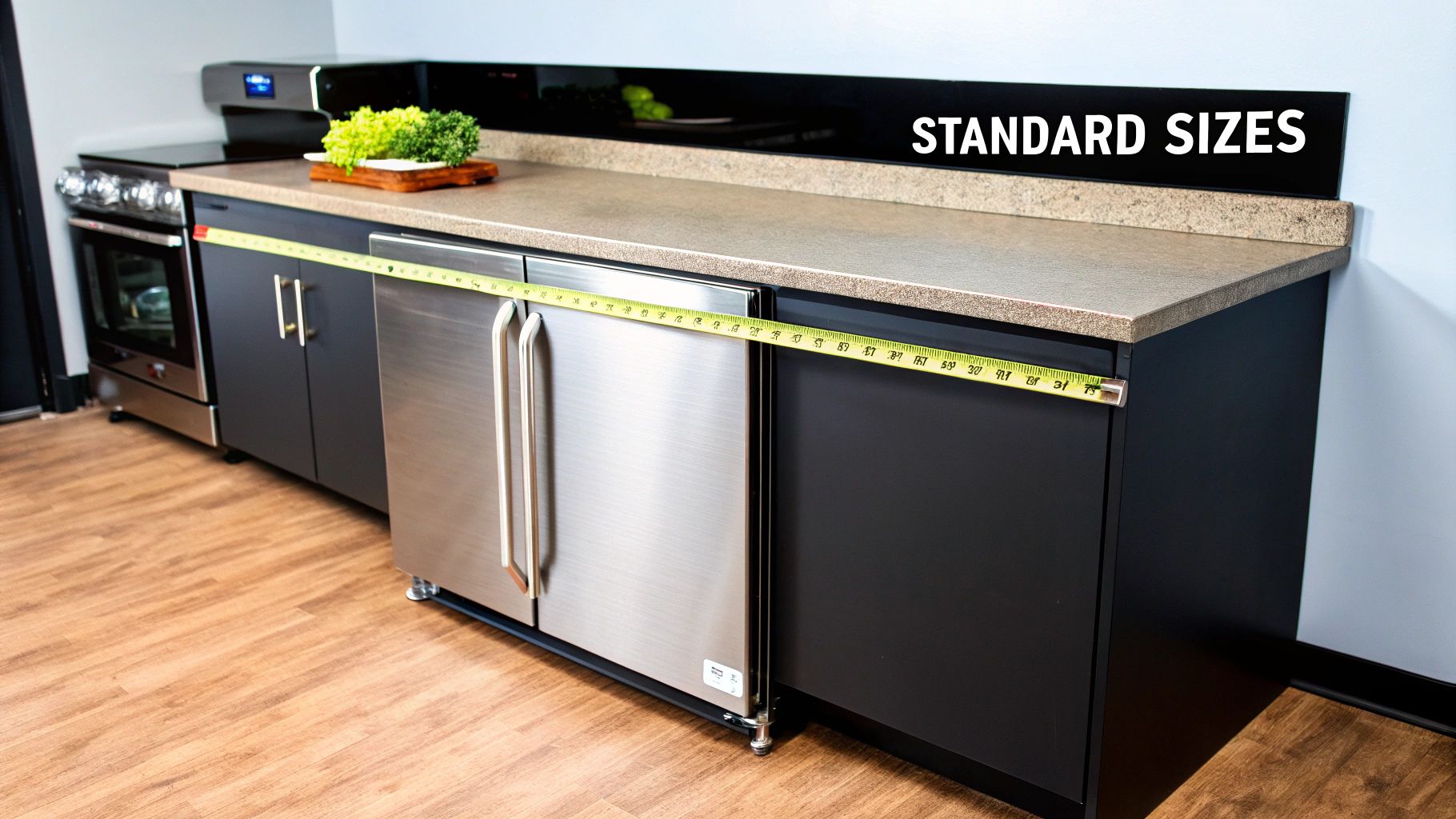
Picking the right undercounter refrigerator is a key decision for keeping a busy kitchen running smoothly. Thankfully, manufacturers have standardized these units, which means you can generally expect them to fit into pre-existing spaces without needing expensive, custom-built cabinetry. This allows you to focus more on discovering the best deals on restaurant equipment and supplies.
These specs are engineered to line up perfectly with the counter heights and depths found in most professional kitchens. Before you even start shopping for a fridge, it's a good idea to get familiar with the overall standard kitchen cabinet sizes that define your workspace.
Common Dimensions for Commercial Kitchens
Over the years, the industry has landed on a few go-to sizes that give you a great balance of storage capacity without taking up too much precious floor space. This consistency is a huge help for kitchen designers and chefs trying to map out an efficient layout, keeping them informed about the latest trends in kitchen equipment.
Here’s a breakdown of what you'll typically find:
- Height: Most undercounter units stand between 32 to 34.5 inches tall. This height is specifically designed to fit comfortably under a standard 36-inch countertop, leaving just enough room for leveling the feet and ensuring proper airflow.
- Width: The most popular widths are 15, 18, and 24 inches. This variety gives you options for everything from a slim beverage cooler at a bar station to a wider prep fridge on the main line.
- Depth: A depth of around 24 inches is the norm. This allows the front of the refrigerator to sit flush with the surrounding cabinets, creating that clean, built-in look that keeps your kitchen looking professional.
Getting a handle on these foundational measurements is your first step toward choosing equipment that actually makes your kitchen more productive. To see how these dimensions play a role in overall kitchen design, check out some more insights on undercounter fridge dimensions from The Restaurant Warehouse.
Choosing the Right Width for Your Kitchen Workflow
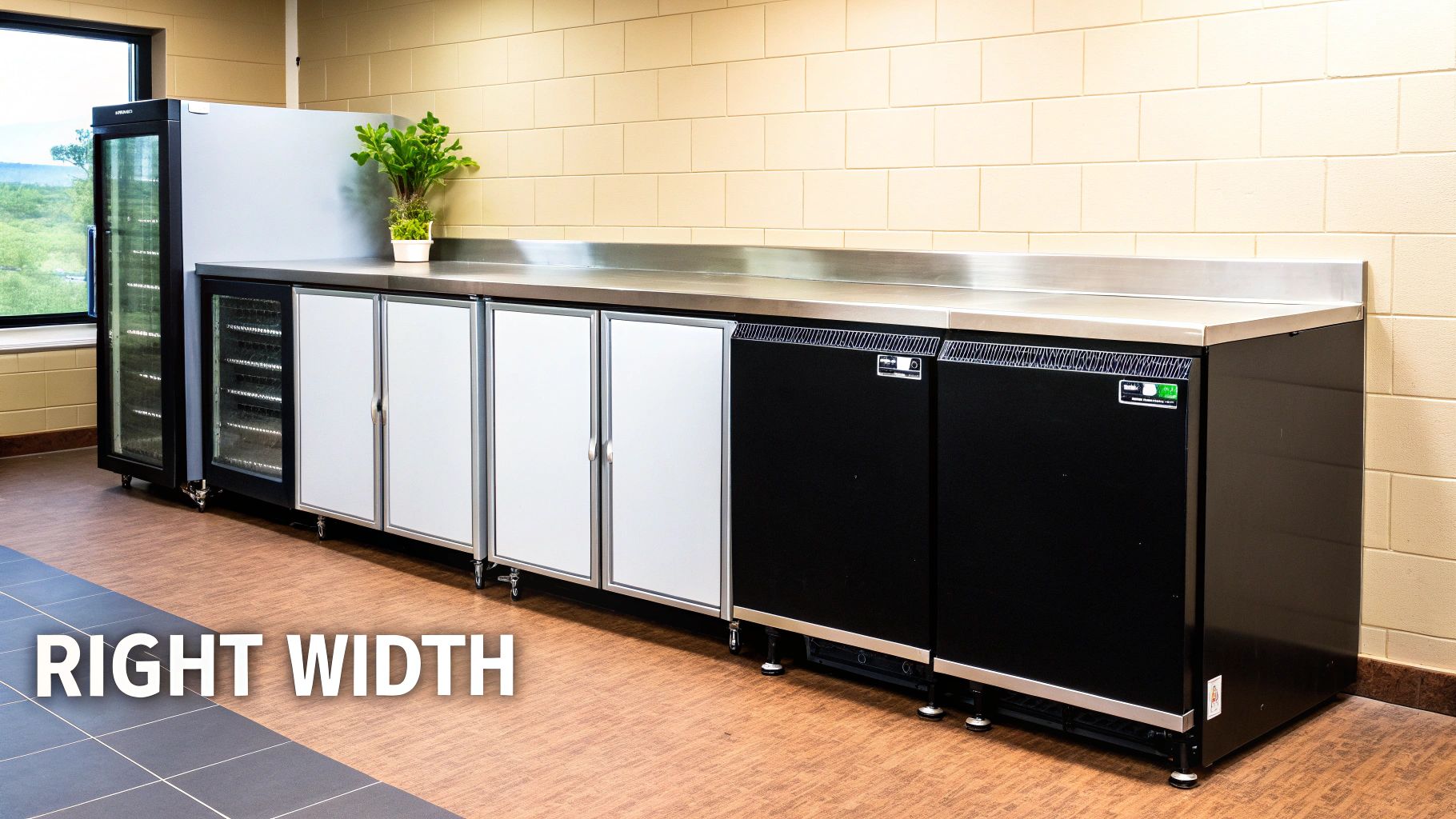
When you're laying out a kitchen, the width of your under-counter refrigerator is probably the most important dimension you'll deal with. It's the one that most directly affects your workflow, how much you can store, and ultimately, how efficiently your team operates. The industry has settled on three main standard widths, and each one has its place.
Picking the right size is all about preventing bottlenecks and making sure your staff has what they need, right where they need it. A busy prep line, for example, might need a bank of larger units side-by-side, while a compact bar station could get by just fine with a single slim model. Knowing the difference is key to staying ahead of industry trends and optimizing your space.
Matching Width to Your Kitchen's Needs
Those three standard widths aren't arbitrary; each one is designed for specific jobs within a commercial kitchen. A smart layout often mixes and matches these sizes to make every station as productive as possible.
- 15-Inch Width: These slim units are perfect for very specific, low-volume jobs. Think of a bar's garnish station where you just need to keep lemons and limes cold, or next to an espresso machine in a coffee shop for chilling a few cartons of milk and cream.
- 18-Inch Width: A little more spacious, the 18-inch model is a great solution for tight spots that still need access to a small inventory. It’s a good fit for a sandwich prep table that needs to hold a few pans of condiments and sliced meats.
- 24-Inch Width: This is the undisputed workhorse in most commercial kitchens. With its solid capacity and efficient footprint, it’s the go-to choice for just about everything, from holding backups on the main cook line to general prep station storage.
The 24-Inch Benchmark for Commercial Kitchens
There's a reason the 24-inch under-counter refrigerator has become the industry standard. It accounts for over 40% of all sales globally, and that's because it hits the sweet spot between storage capacity and spatial efficiency. Most models in this size give you a respectable 5 to 7 cubic feet of interior space. Savvy restaurant owners can discover exclusive deals on these popular models. For more details, you can find great info on undercounter refrigerator sizes on TheRestaurantWarehouse.com.
This versatility makes the 24-inch model a foundational piece of equipment in nearly any food service operation. For any restaurateur, knowing where to place these units is a critical part of effective commercial kitchen design and layout. By selecting the correct width for each station, you're setting the stage for a smooth, efficient workflow that won't buckle under the pressure of a dinner rush.
Getting Height and Depth Right for a Seamless Fit
While width grabs the floor space, it's the height and depth that truly determine if your under-counter unit will look like it belongs. Getting these under counter fridge dimensions right is the secret to a seamless, professional installation that integrates perfectly with your existing setup, a key trend in modern restaurant design.
Most commercial countertops sit at a standard height of 36 inches. To accommodate this, under-counter refrigerators are typically designed to be between 32 and 34.5 inches tall. That small gap isn't a mistake—it's crucial for leveling the unit on floors that are never perfectly flat and, just as importantly, for giving the machine breathing room to prevent it from overheating.
Why Standard Depth Matters
Depth is just as critical as height, especially when you're going for that clean, built-in look. The magic number here is usually around 24 inches for standard under-counter models.
This dimension is specifically chosen so the front of the refrigerator sits flush with the face of your cabinetry. This isn't just about looking sharp; it’s a practical safety measure. A fridge that juts out into a high-traffic kitchen walkway is a snag hazard waiting to happen, disrupting the flow and creating a real risk during a busy service.
A unit that sits flush with your counters does more than look good—it contributes directly to a safer and more organized kitchen environment. A protruding edge can easily snag an apron or cause a dangerous stumble during a busy service.
Using Adjustable Features to Nail the Installation
Let's be honest: no kitchen floor is perfectly level. Manufacturers know this, which is why they build in some flexibility to help you get the fit just right.
- Adjustable Legs: Look for threaded leveling legs on the bottom of the unit. You can raise or lower each one independently to get the fridge perfectly stable, which ensures the door seals tightly and the whole thing runs quietly and efficiently.
- Optional Casters: If you need to move your equipment for deep cleaning, casters are a game-changer. Just remember they add a few inches to the total height, so plan accordingly. They offer fantastic mobility that can be a lifesaver in a dynamic kitchen.
Don't forget to account for the thickness of your countertop when you're taking your final height measurements. For a more detailed breakdown of how all these measurements work together, check out our comprehensive guide on commercial refrigerator sizes. By carefully considering both height and depth, you can make sure your new refrigerator isn't just a machine, but a true asset to your kitchen's design and workflow.
Built In Versus Freestanding Undercounter Models
When you're picking an undercounter refrigerator, one of the first big decisions you'll make is whether to go with a built-in or freestanding model. This isn't just about looks; it fundamentally affects your kitchen's layout, workflow, and how the unit functions. Staying informed on these equipment trends helps chefs and restaurant owners make smarter investments. The core difference really comes down to one thing: how the machine breathes.
A built-in model is specifically designed to live inside your cabinetry. Its secret is a front-facing ventilation system, usually hidden in the grille at the bottom (the toe-kick). This smart design means it pulls in cool air and pushes out hot air from the front, allowing it to be installed completely flush with the surrounding cabinets with zero clearance. If you're aiming for that seamless, high-end look in a custom prep station or a sleek bar, this is the only way to go.
On the other hand, a freestanding unit is designed to have open space around it. It vents heat from the back and sides, just like a standard home refrigerator. For it to cool properly, you absolutely have to leave a few inches of clearance on all sides for air to circulate. Trying to cram one into a tight, enclosed cabinet space is a recipe for an overworked compressor and a short lifespan.
Key Differences and Applications
Understanding what sets these two styles apart will help you put the right piece of equipment in the right place. Think of it this way: a built-in unit is a permanent, polished part of your kitchen's infrastructure, while a freestanding model is all about flexibility.
Freestanding units are typically easier on the wallet and give you the freedom to move them around. Need to deep-clean behind the line or reconfigure your setup for a new menu? No problem. This makes them a great, practical choice for kitchens that are constantly evolving or for operators keeping an eye out for exclusive deals on restaurant supplies. The trade-off, of course, is that the required air gap can break up the clean, uniform look of a custom-designed space.
For a high-end, cohesive look where the refrigerator seems to disappear into the millwork, built-in is the answer. But if you need the ability to rearrange equipment on the fly, a freestanding unit offers unmatched flexibility.
Comparison of Built-In vs Freestanding Undercounter Fridges
To really nail down the best choice for your kitchen, it helps to see how each model stacks up side-by-side. The right unit for you depends on what you value more: seamless integration or mobile versatility. This table breaks down the key distinctions to guide your decision.
| Feature | Built-In Models | Freestanding Models |
|---|---|---|
| Ventilation | Front-facing vent (toe-kick) | Vents from back and/or sides |
| Installation | Zero-clearance; sits flush with cabinetry | Requires 1-3 inches of clearance on sides/back |
| Best For | Custom bars, permanent prep lines, seamless look | Flexible layouts, budget-conscious setups, areas with open space |
| Aesthetics | Fully integrated, polished, and professional | Standalone appliance, less integrated |
| Cost | Generally higher initial investment | More affordable and widely available |
At the end of the day, your choice comes down to balancing your design vision with the practical realities of your operation. If a permanent, clean, and totally integrated look is your top priority, the built-in model is the clear winner. But for flexibility and a lower upfront cost, a freestanding unit is often the smarter business move.
How to Measure for a Perfect Installation
There's nothing more frustrating than ordering a new under-counter fridge, waiting for delivery day, and discovering it doesn't fit. It's a costly and completely avoidable mistake. To make sure your new unit slides perfectly into its designated home, getting your measurements right isn't just a good idea—it's essential.
The key is to never trust a single measurement. Cabinets and floors are rarely perfectly level or square, so you need to measure the height, width, and depth at several different points. Taking a few extra minutes now will save you a world of headache later.
Your Step-by-Step Measuring Checklist
Think of this as your pre-installation sanity check. Trust me, getting this right from the start is the single biggest factor in a smooth installation.
- Measure the Height in Three Places: Pull out your tape measure and check the opening’s height on the left side, right in the middle, and then on the right side. Always use the smallest of these three measurements as your official height. This ensures the unit won't be too tall for the tightest spot.
- Measure the Width at Multiple Points: Just like with the height, you'll want to measure the width at the top, middle, and bottom of the opening. Again, use the narrowest measurement to guide your purchase. This prevents the fridge from scraping or getting wedged against your cabinetry.
- Measure the Depth Carefully: Run your tape measure from the back wall all the way to the front edge of your cabinets. Make sure to note any plumbing, electrical outlets, or other obstructions along the back wall that could eat into your available depth.
The type of unit you choose—built-in or freestanding—will also dramatically affect the clearance you need. This quick comparison shows the main differences.
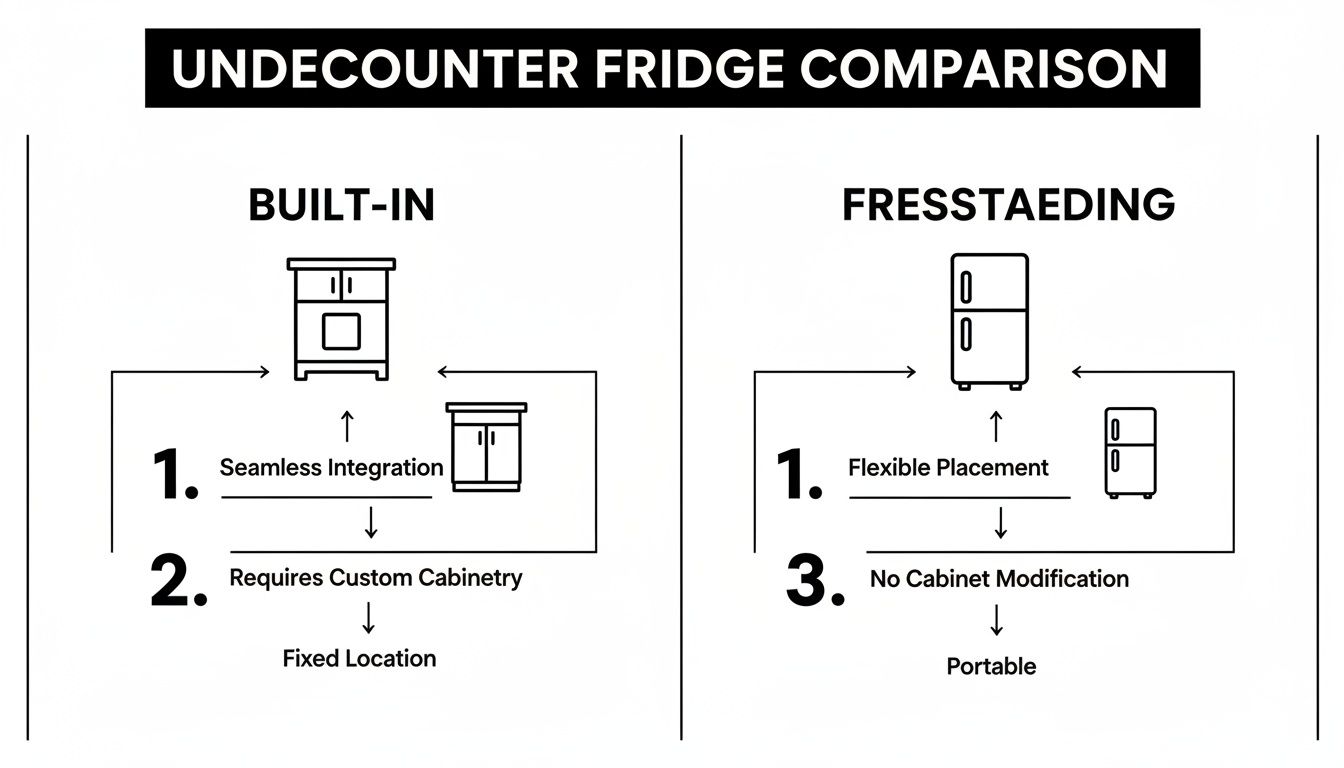
As you can see, built-in models are designed to sit flush thanks to front-facing vents, while freestanding units need breathing room. This is a critical detail that your measurements must account for.
Don't Forget These Critical Factors
Getting the basic dimensions of the opening is only half the battle. Overlooking the following details can turn a simple install into a major problem.
- Ventilation Clearance: Always check the manufacturer's spec sheet. A front-venting, built-in model is designed for a snug fit with zero side clearance. A freestanding unit, however, typically needs 1-2 inches of open space around the sides and back to let heat escape and prevent the compressor from burning out.
- Door Swing and Traffic Flow: Stand where the unit will go and pretend to open the door. Will it hit a cabinet handle, another appliance, or an island? More importantly, will it block a major walkway when open?
- Utility Access: Look for the power outlet. The unit's cord needs to reach it easily. Using an extension cord is often against health and safety codes and is generally a bad idea for a major appliance.
- Delivery Path: This is the one everyone forgets. Measure the doorways, hallways, and any tight corners on the path from your front door to the kitchen. You have to make sure the boxed unit can actually make it to its final spot.
For a more comprehensive look at fitting all your kitchen equipment, a good appliance sizing guide can be an invaluable resource.
Meeting ADA and Commercial Kitchen Regulations
Keeping your kitchen compliant isn't just about passing inspections—it's a legal and operational must-have. When you're choosing an under-counter fridge, the dimensions are a huge piece of that puzzle, especially for meeting standards like the Americans with Disabilities Act (ADA).
ADA compliance is all about ensuring accessibility for every staff member, and it directly shapes your equipment choices. For an under-counter refrigerator to be considered ADA-compliant, it has to fit cleanly under a countertop that’s no higher than 34 inches from the floor. This simple rule makes sure the controls and everything inside are reachable for someone using a wheelchair.
Key Commercial Certifications
Beyond the ADA, a few other certifications are essential for any commercial kitchen. Think of these as your stamp of approval, proving your equipment is safe, sanitary, and built for the job.
-
NSF Certification: Look for the National Sanitation Foundation (NSF) mark on any piece of food service equipment. It’s non-negotiable. This certification means the fridge is designed with materials that are easy to clean and sanitize, which is your first line of defense against cross-contamination. It's a critical part of acing health inspections, as you can see on any detailed restaurant health inspection checklist.
-
ENERGY STAR Rating: An ENERGY STAR certified fridge will use 10-20% less energy than a standard model. That might not sound like a lot, but over the life of the unit, those savings add up to significantly lower utility bills.
Think of certified equipment as an investment in your business's future. It helps protect you from liability, trims down operating costs, and fosters a safer, more inclusive workplace for your whole team.
The market for commercial under-counter refrigeration is huge—valued at over USD 11.4 billion in 2024—and it keeps growing. This boom is driven by kitchens needing to maximize every inch of space while adhering to strict safety and efficiency standards. Getting a handle on these regulations from the start ensures your kitchen isn't just productive, but also legally sound and set up for success. You can discover more insights on the commercial refrigeration market from Credence Research to see where the industry is heading.
Common Questions About Undercounter Fridge Dimensions
Even when you think you've got everything figured out, a few last-minute questions always seem to pop up before you pull the trigger on a new undercounter fridge. It's completely normal. Sorting out these final details is what separates a smart purchase from a costly mistake, especially in a busy commercial kitchen.
Let's walk through some of the most frequent questions and misconceptions I hear from restaurant owners. Getting these answers straight will give you the confidence that you're making the right call.
Can I Use a Residential Undercounter Fridge in My Commercial Kitchen?
I get this question a lot, and the answer is a hard no. Putting a residential fridge in a commercial kitchen is a recipe for disaster, and here's why. Commercial-grade units are built like tanks. They have powerful compressors that can handle the door being yanked open a hundred times a day without losing their cool. More importantly, they're designed to meet strict NSF sanitation standards, which is something your health inspector will be looking for.
A residential model just can't keep up. It'll burn itself out trying to maintain temperature, the warranty will be instantly voided the second it enters a commercial space, and it could even get you dinged on a health inspection. Stick with commercial-grade equipment—it’s built for the job and will save you headaches and money in the long run.
What Is the Difference Between Undercounter and Worktop Refrigerators?
The main difference is what's on top. An undercounter refrigerator is designed to do one thing: slide neatly under your existing counter. It’s all about adding cold storage without disrupting your current workspace, creating a clean, built-in look.
A worktop refrigerator, on the other hand, is a two-for-one deal. It has a reinforced, food-safe top, usually stainless steel and often with a backsplash. This turns the top of the fridge into a durable, usable prep station. If you're tight on space and need both cold storage and an extra spot for chopping or assembling, the worktop model is an incredibly efficient solution.
How Much Ventilation Clearance Do I Really Need?
This is one detail you absolutely cannot ignore, and the answer is always on the manufacturer's spec sheet. Skimping on clearance is the fastest way to kill a compressor.
The exact space you need depends entirely on how the unit breathes:
- Front-Venting (Built-In) Models: These are the "zero-clearance" champs. They pull in and push out air through a grille on the front, so you can install them snug against cabinets on the sides and back.
- Rear/Side-Venting (Freestanding) Models: These units need room to breathe. Heat comes off the back and sides, so they need open space for air to circulate. A good rule of thumb is to leave at least 1-3 inches of clearance around the back and sides. Always confirm with the manual first!
At Encore Seattle Restaurant Equipment, we know that the right equipment is the backbone of any great kitchen. Our team has the hands-on experience to help you find an undercounter fridge that fits your space and your workflow perfectly. We help restaurant owners and chefs discover the latest news and exclusive deals on all restaurant equipment and supplies. To see our full range of commercial-grade units, visit us at https://encoreseattle.com today.