
Stainless steel table commercial: Your Ultimate Guide to Durable Kitchen Tables
A commercial stainless steel table isn't just a piece of furniture—it’s the heart of your kitchen. It's where your culinary vision starts to take shape, providing a clean, tough, and corrosion-resistant surface that’s absolutely critical for safe food prep. Think of it as a long-term investment in your kitchen’s efficiency, cleanliness, and overall workflow. Getting this choice right from the start is a game-changer. For restaurant owners and chefs looking to stay ahead, we'll also touch on the latest industry trends and exclusive insights into restaurant equipment and supplies.
Why the Right Stainless Steel Table Is Your Kitchen’s Unsung Hero
If you’re a restaurant owner or a chef, you know that in the chaos of a busy service, every single piece of equipment has to pull its weight. While the big-ticket items like ovens and walk-in coolers get all the attention, I’d argue that the humble stainless steel table is the true MVP of your kitchen. It’s the silent workhorse where everything happens—from chopping vegetables and butchering proteins to plating the final dish.
This guide is designed to help you cut through the noise and pick a table that actually makes your team more productive, keeps the health inspector happy, and can take a beating day in and day out. A bad choice here can create workflow nightmares, sanitation headaches, and the need for a costly replacement sooner than you think. But the right table? It practically becomes a seamless part of your kitchen's flow, reflecting current industry trends toward maximum efficiency and durability.
Key Factors to Guide Your Decision
When you're shopping for a stainless steel table, it really boils down to three core considerations: how you'll use it, how tough it needs to be, and how easy it is to keep clean.
-
Durability and Strength: Will you be pounding out dough, butchering heavy cuts of meat, or just doing some light assembly work? The thickness of the steel, known as its gauge, is what determines whether it will stand up to heavy impact without denting or bowing under pressure.
-
Primary Application: Is this table destined for a wet area next to the dishmachine, a dry storage spot, or general food prep where it will come into contact with acidic ingredients like citrus and vinegar? The grade of the steel dictates its ability to fight off rust and corrosion from moisture and harsh chemicals.
-
Sanitation and Compliance: Let's be honest, how easy is this thing to clean and sanitize? A non-porous surface is a must, but features like coved corners and integrated backsplashes are what really make maintaining a hygienic, code-compliant kitchen a whole lot easier.
This flowchart can help you visualize how to weigh these factors based on what you need the table to do.
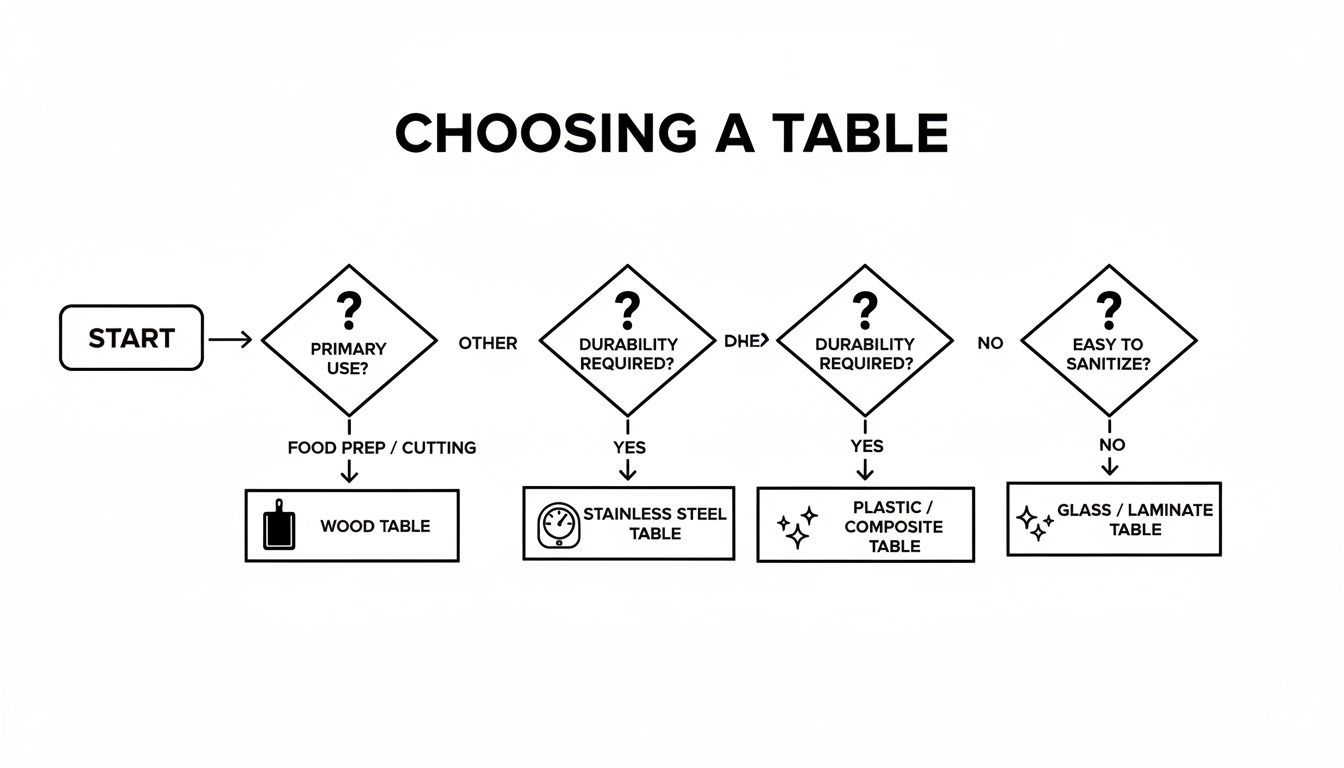
As you can see, the table's primary job directly points you toward the right durability and sanitation features you should be looking for. It's all about making a smart investment. Next, we’ll dive deeper into why choosing the correct steel grade, gauge, and overall configuration is so critical for the future of your restaurant.
Decoding Steel Grades and Gauges for Lasting Durability
When you're outfitting a kitchen, choosing the right stainless steel table commercial operators need means looking past the shiny surface. You've got to understand the metal itself. Not all stainless steel is the same, and the small differences in grade and gauge will determine if your table lasts a decade or becomes a dented, rusty mess in a year.
Let's cut through the technical jargon.
Think of the steel grade as its recipe. Metallurgists mix iron with other elements, like chromium and nickel, to give the steel specific strengths—kind of like how a chef balances ingredients. In the foodservice world, it really boils down to two main players: 304 and 430 grade.
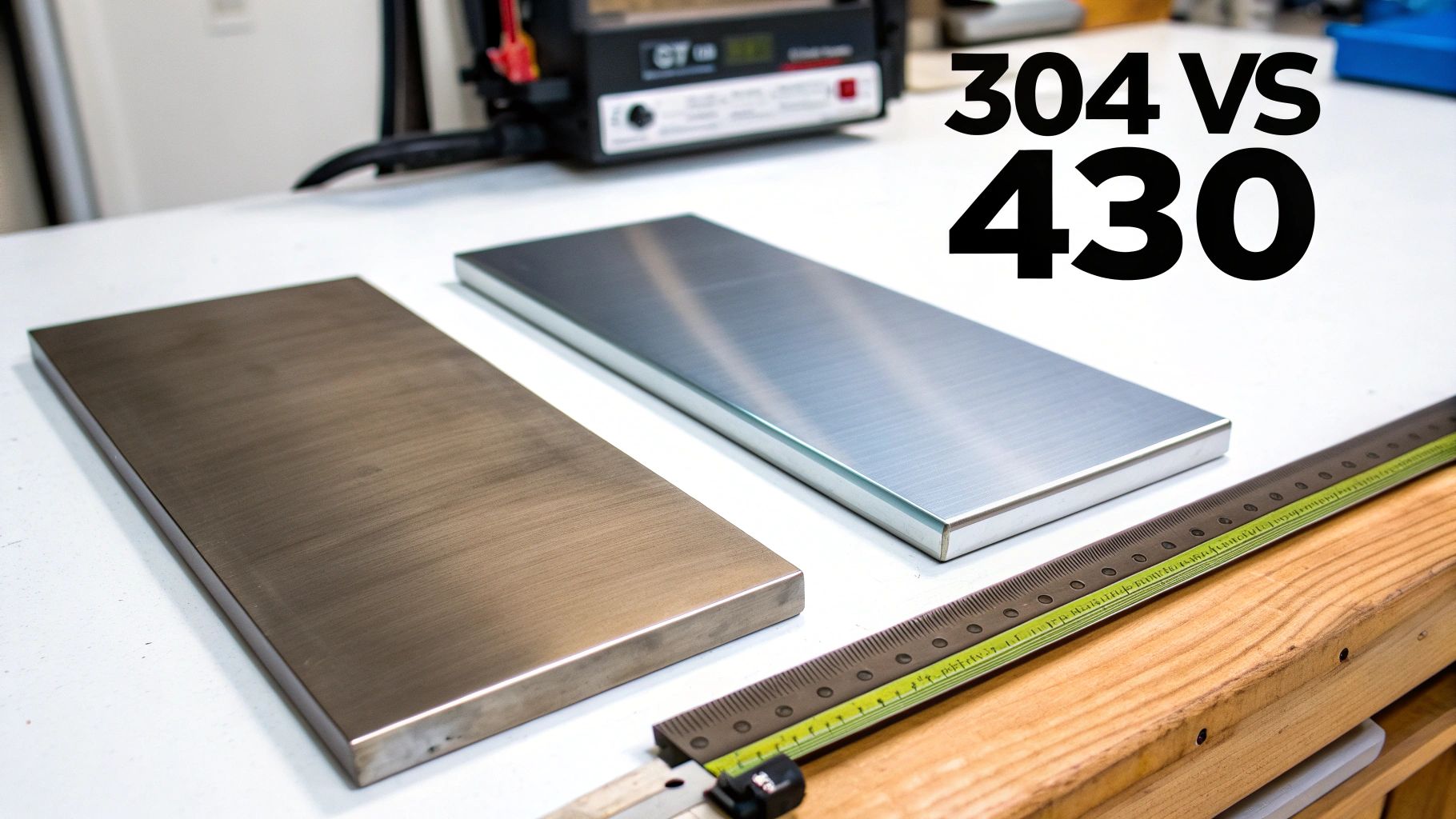
The Workhorse Grades: 304 vs. 430
Getting the difference between these two is probably the single most important decision you'll make. It’s all about matching the table to its environment.
304 Grade Stainless Steel is the undisputed king of most kitchen applications. Picture it as a marine-grade shield. It's packed with 18% chromium and a crucial 8% nickel, a combo that gives it incredible resistance to rust and corrosion.
- Best For: Wet prep areas, dishwashing stations, and any surface that gets hit with acidic foods like tomatoes, citrus, or vinegar.
- Why it Matters: That nickel content is the secret weapon. It fights off corrosive stuff, so the table stays pristine even with constant moisture and harsh cleaning chemicals. This is exactly why 304 is the industry standard for sinks and busy prep tables.
430 Grade Stainless Steel is a solid, budget-friendly alternative. It has plenty of chromium but almost no nickel. This means it's strong, but it's also more likely to rust over time if it’s constantly wet.
- Best For: Dry storage areas, equipment stands, or general-purpose work surfaces where you’re not dealing with a lot of moisture.
- Why it Matters: A 430-grade table might not belong on the prep line, but it’s perfect for holding a mixer, a microwave, or stacks of dry goods. Choosing it for the right spot lets you stretch your budget without compromising on quality where it counts.
In bustling commercial kitchens around the globe, stainless steel tables are essential. The 304 grade variety, in particular, dominated the market in 2023, holding a major share of the global stainless steel tables sector. This grade's popularity is expected to climb through 2033, thanks to its unmatched durability in high-traffic environments. You can discover more market trends in the full report from Cognitive Market Research.
Understanding Steel Gauge
If grade is the recipe, gauge is the thickness. This is where people often get tripped up because the numbering system feels backward: the lower the gauge number, the thicker and stronger the steel.
It’s like using a meat slicer. A thick, hearty slice is a low number (setting #1), while a paper-thin slice is a high number (setting #10). Steel works the same way.
Here’s a quick rundown of common gauges for a commercial stainless steel table:
- 14-Gauge: This is the heavyweight champion. It's incredibly thick and built like a tank, designed for the toughest jobs—think heavy-duty butchering, pounding out cutlets, or holding up extremely heavy equipment without a hint of bowing.
- 16-Gauge: This is your versatile all-rounder and the most popular pick for general prep work. It strikes the perfect balance between strength and cost, easily handling daily chopping, mixing, and plating.
- 18-Gauge: This is a lighter-duty option, best for tasks that don't involve a lot of impact. It’s a great choice for a finishing station, light assembly, or as a stand for smaller appliances. The same principles apply to other fixtures, as you can see in our guide to commercial stainless steel shelves.
By matching the grade to the environment and the gauge to the job, you’re making a smart investment. You’re ensuring the table you buy is perfectly equipped to handle the unique grind of your kitchen for years to come.
Matching Table Features and Design to Your Workflow
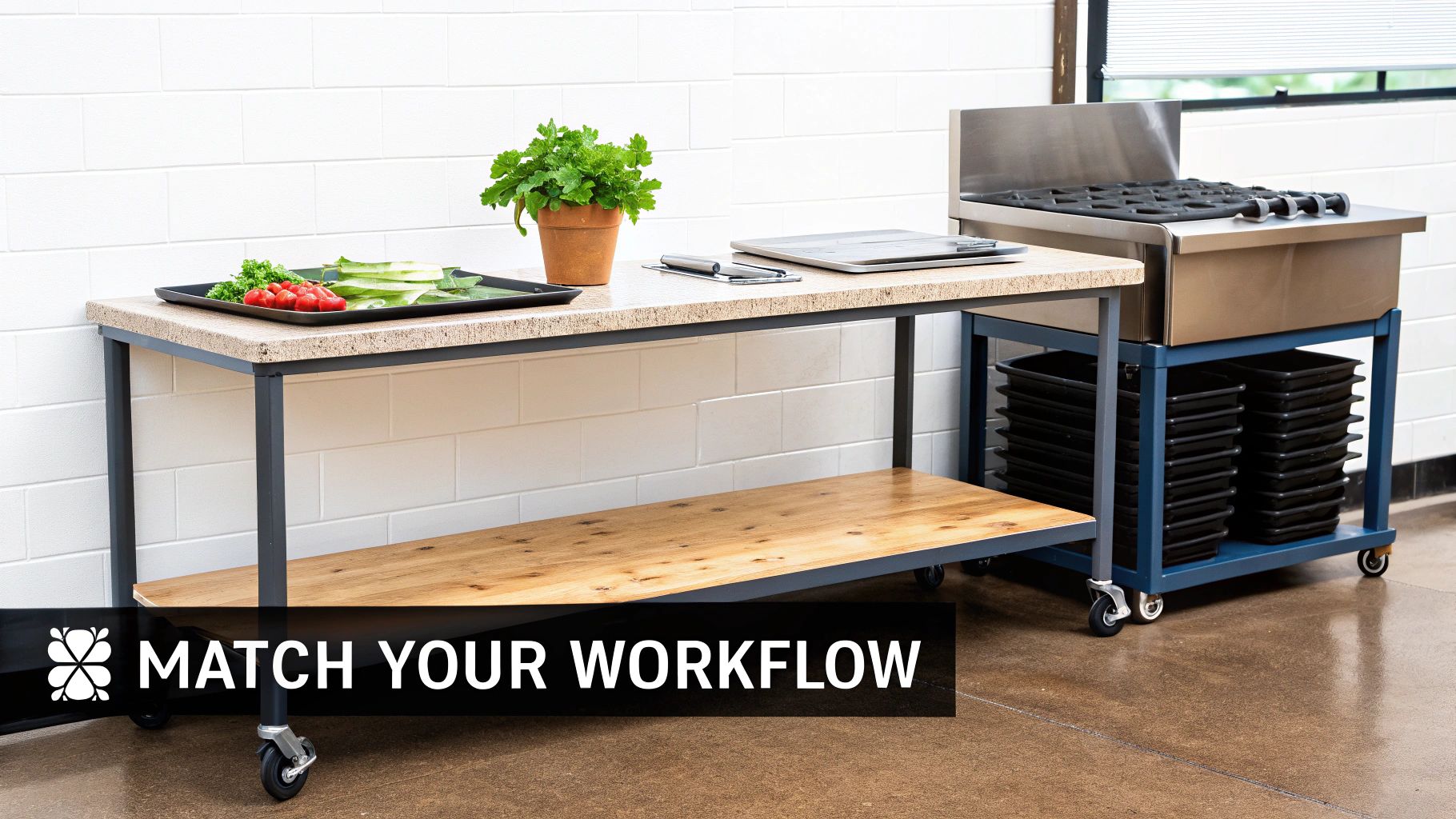
The best stainless steel table a commercial kitchen can have is one that feels like a natural extension of your team. It shouldn't create roadblocks; it should anticipate your every move. When you stop thinking "one-size-fits-all," you can start designing a workspace that genuinely improves your kitchen's rhythm and gets the most out of your crew.
A table is never just a table. It’s your prep station, an equipment stand, a landing zone for hot pans, or a storage hub. Picking the right configuration means looking at what your team actually does all day and matching those tasks to features that cut down on wasted steps, keep clutter at bay, and make the whole operation safer. The endgame is a space where your staff can just flat-out work faster and smarter.
Core Configurations for Every Kitchen Task
Every professional kitchen has its zones, and each zone needs a different kind of surface to function well. A standard flat-top work table is your do-it-all foundation—great for general prep and assembly. But getting into specialized designs is where you really start to solve those nagging workflow problems.
-
Prep Tables with Integrated Sinks: These are absolute game-changers for any station dedicated to washing produce or dealing with raw proteins. Combining the sink and the prep surface means no one is trekking across the kitchen with dripping food, which is a huge win for safety and speed.
-
Heavy-Duty Equipment Stands: Built with a lower gauge (thicker) steel, these tables are rock-solid platforms for your heavy hitters—think planetary mixers, commercial slicers, or immersion circulators. They're engineered to handle vibrations and concentrated weight without a hint of wobbling or bowing.
-
Wood-Topped Baker's Tables: While stainless steel is king in most kitchens, bakeries have different needs. A wood top offers a fantastic surface for kneading dough and pastry work. It stays warmer than steel, which keeps dough from getting too cold, and it has a natural, non-stick quality that bakers love.
Smart Add-Ons That Boost Efficiency
Beyond the basic shape, a few strategic features can turn a simple table into a high-performance workstation. These aren't just bells and whistles; they’re designed to squeeze every last bit of utility out of your space and simplify the daily grind.
An undershelf is probably the most essential add-on you can get. It instantly doubles your storage without eating up more floor space. A solid undershelf is great for stashing small appliances and containers, while a slatted or wire version allows for air circulation—perfect for cooling off baked goods or storing onions and potatoes.
A well-planned prep table isn't just a surface; it's a system. The right features can reduce physical strain on your staff, cut down on cleaning time, and create a more organized, less chaotic environment during the busiest service hours.
The Power of Backsplashes and Mobility
A backsplash is such a simple feature, but it makes a world of difference. That small raised edge at the back of the table stops food, liquids, and utensils from falling into that black hole behind your equipment. This doesn't just keep your walls cleaner; it saves you from the nightmare of deep cleaning those hard-to-reach crevices, which is a huge plus when the health inspector shows up.
Finally, never underestimate the value of putting your tables on wheels. Adding casters gives you incredible flexibility. You can reconfigure your kitchen layout on the fly for a special event or just roll everything out of the way for a proper, deep clean of the floors. To learn more about getting your workspace just right, check out our complete guide on choosing the perfect prep table for your restaurant. With mobility, no corner of your kitchen ever has to be left dirty.
Mastering Sanitation and Maintenance for Peak Performance
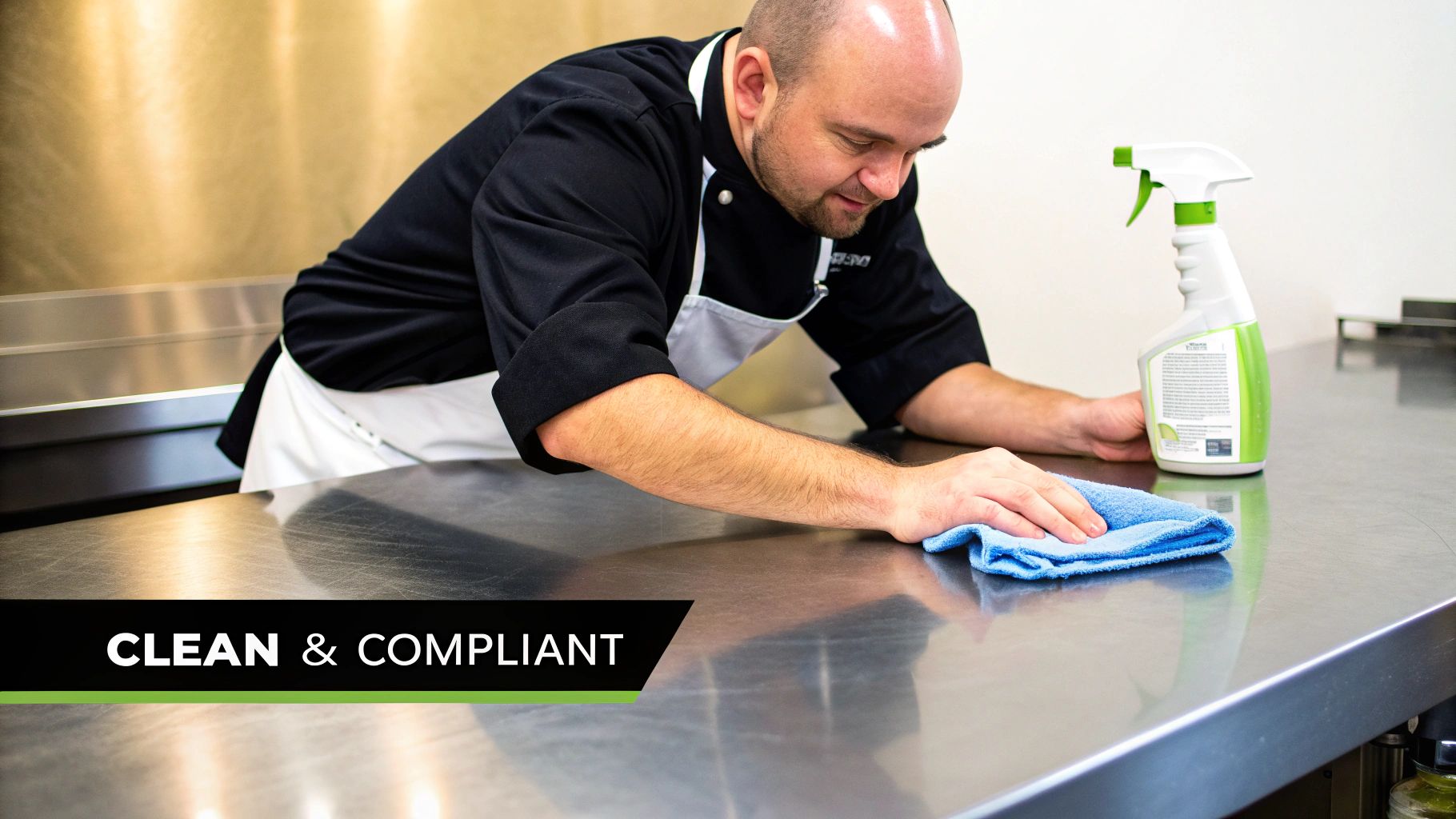
A pristine stainless steel table commercial kitchens depend on is more than just a shiny surface—it’s your first line of defense in food safety. Nailing your cleaning routine protects your investment from stains and rust, but more importantly, it ensures you’re always ahead of health code standards.
Think of your table's surface as having an invisible shield. Stainless steel contains chromium, which creates a thin, "passive" layer when it reacts with the air. This is what gives it its rust-resistant superpower. But things like dirt, grease, deep scratches, and harsh chemicals can break down that barrier, leaving the steel exposed and vulnerable. Your daily cleaning isn't just about wiping away crumbs; it's about maintaining and restoring that protective shield.
Your Daily and Weekly Cleaning Playbook
Consistency is everything. A simple daily wipe-down prevents most common issues, while a more thorough weekly clean keeps things in top shape for the long haul.
Daily Cleaning Protocol:
- Clear and Scrape: First, get rid of any loose food bits and gunk. A soft plastic or nylon scraper works perfectly.
- Wash with Mild Detergent: Grab a soft cloth or sponge, warm water, and a mild detergent. Always wipe in the direction of the steel's grain to avoid creating tiny scratches.
- Rinse Thoroughly: Next, rinse the surface with clean water. You want to get all the soap residue off, as it can be surprisingly damaging if left to sit.
- Dry Completely: This last step is critical. Use a clean, dry cloth or a squeegee to get the surface totally dry. This prevents water spots, especially if you have hard water.
This quick process keeps your surfaces sanitary and ready for whatever the next service throws at them.
Tackling Tough Stains and Avoiding Damage
Even with the best daily habits, tough stains and caked-on grease happen. It's tempting to reach for a heavy-duty cleaner, but that can cause permanent damage to the steel's finish.
The demand for stainless steel has shot up, largely driven by post-pandemic hygiene standards. Its non-porous surface is exactly what food safety regulations call for, with these materials now required in 80% of inspected commercial kitchens. With production capacities growing by 10% each year, operators have great access to tables that can last 20+ years with proper care. You can discover more insights about the global market for stainless steel on IndexBox.io.
For stubborn messes, try making a simple paste with baking soda and water. Apply it to the stain, let it sit for a few minutes, then gently scrub with a soft brush, always moving with the grain. Oily fingerprints? A basic glass cleaner does the trick, but make sure you rinse and dry the area right after.
Cleaners and Tools to Absolutely Avoid:
- Chlorine-Based Cleaners: Anything with bleach will attack that protective chromium layer, causing pitting and rust.
- Abrasive Powders: Harsh scouring powders will scratch the surface, creating little crevices where bacteria can hide and corrosion can start.
- Steel Wool or Brillo Pads: Not only do these scratch the finish, but they can leave behind tiny iron particles that will rust almost immediately.
Restoring and Protecting Your Investment
Sooner or later, you might notice small rust spots, often from a wet metal can or utensil left sitting on the table. Don't panic—it doesn't mean the table is ruined. The process of getting rid of these spots and restoring that protective layer is called passivation.
You can use a specialized, non-abrasive stainless steel cleaner or polish to gently buff out the rust. This also helps the chromium layer reform, basically hitting the reset button on its corrosion resistance. For a deeper dive into keeping all your gear in top shape, check out our guide on commercial kitchen equipment maintenance. Stick with these routines, and your stainless steel table will remain a safe, durable, and compliant workhorse for years to come.
Smart Budgeting and Buying Strategies for Your Kitchen
Investing in the right stainless steel commercial table for your kitchen doesn't mean you have to empty your wallet. It's all about smart financial planning. The trick is to look past the initial price tag and think about what the table will really cost you over its entire life in your kitchen.
Let's get down to brass tacks. The final price of any stainless steel table comes down to four key things: its grade, gauge, size, and the brand name on the label. A big, beefy 14-gauge table made from top-tier 304 grade steel is obviously going to have a higher upfront cost than a smaller, lighter 18-gauge table made from 430 grade. Once you understand how these factors affect the price, you can see exactly where your money is going and avoid paying for overkill features you simply don't need.
New vs. Used: Weighing Your Options
One of the first big questions you'll face is whether to buy brand new or go for quality used equipment. Both paths have their perks, and the right answer really boils down to your budget and how quickly you need the gear.
-
Buying New: This is the straightforward route. You get a perfect, untouched table straight from the factory, complete with a full manufacturer's warranty. It’s a great feeling, but it definitely requires a larger initial cash outlay.
-
Buying Used: Working with a trusted supplier like Encore Seattle can be a game-changer for your budget. You can often land a premium, heavy-duty table from a well-respected brand for a fraction of what it cost new. This lets your money go a lot further. The crucial part is making sure your supplier has thoroughly inspected and stands behind their used inventory.
Calculating the Total Cost of Ownership
Smart budgeting is all about playing the long game. That cheap table might look like a great deal today, but if it can't handle the heat (literally and figuratively), it'll turn into a constant money pit. This is where the idea of total cost of ownership (TCO) is so important.
TCO isn't just the sticker price. It's the full story: the initial purchase cost plus all the money you'll spend on repairs, maintenance, and eventually, a replacement. A well-built table pays for itself by making those future costs disappear, allowing you to invest in other areas of your business.
Picture this: you try to save a few hundred bucks by putting a flimsy 18-gauge table at your heavy-duty butchering station. Before you know it, that table is dented, warped, and needs to be replaced. On the other hand, if you had invested a bit more upfront in a tough 14-gauge, 304-grade table, it would easily take that daily beating for a decade or more. That initial investment ends up saving you a ton of money and headaches down the road.
This isn't just a kitchen-level observation; it's a massive market trend. Stainless steel is so fundamental to commercial operations that the global market is projected to hit USD 261.5 billion by 2033. A big part of that growth comes from the post-2020 focus on hygiene, where stainless steel tables can cut cleaning time by up to 30% compared to other materials. You can read the full research about these market dynamics to see why this material is the undisputed champ for commercial durability worldwide.
In the end, you’re aiming for a solid financial decision that helps your kitchen run smoothly without wrecking your budget. By carefully balancing the price against the table's grade, gauge, and long-term grit, you can find a true workhorse for your team.
Making a Foundational Investment in Your Kitchen's Success
Choosing the right stainless steel table commercial kitchens rely on is so much more than a simple equipment purchase. It's a cornerstone decision that directly shapes your kitchen's daily workflow, its safety standards, and ultimately, its bottom line. Think of it less as a piece of furniture and more as the bedrock of your entire operation.
When you get this choice right, you're not just buying a table; you're securing a durable, reliable workhorse that will anchor your culinary team for years, maybe even decades. This isn't just a surface—it’s the backbone of your prep line, a sanitary and unshakeable platform that supports your crew’s hard work, service after service.
Your Final Buying Checklist
Before you pull the trigger on a purchase, run through these final questions. This quick mental check will ensure you bring in a true asset, not a future headache.
- Does the Steel Grade Match the Job? Did you spec out the corrosion-resistant 304 grade for wet prep stations and the more budget-friendly 430 grade for dry storage and light-duty tasks?
- Is the Gauge Tough Enough? Is the steel's thickness—whether it's heavy-duty 14-gauge or standard 16 or 18-gauge—truly up to the task you have in mind?
- Do the Features Fit Your Workflow? Will a backsplash save you from constant wall cleaning? Is an undershelf essential for storage, or do you need casters to create a mobile workstation?
- Are You Committed to Maintenance? Do you have a solid plan for daily cleaning to protect the steel's passive layer and guarantee it lasts?
A commercial stainless steel table isn't just another line item on an invoice; it's a strategic investment in kitchen efficiency and safety. By prioritizing the right materials and design from the start, you're building a smoother, safer, and more profitable kitchen from the ground up.
The importance of picking the right workstation isn't unique to kitchens; it's a critical decision in any professional setting where durability and hygiene are non-negotiable. For instance, this comprehensive guide to lab workstations and tables dives into similar considerations around planning and materials, showing just how universal these principles are.
Armed with this knowledge, you’re ready to choose a table that won't just meet your needs today, but will stand strong as a vital part of your success for years to come.
Your Top Stainless Steel Table Questions Answered
Even when you've got the basics down, a few specific questions always seem to come up right when you're about to pull the trigger on a new stainless steel table commercial kitchens rely on. Here are the most common things we hear from chefs and owners, with straight-up answers to help you connect the dots.
What Is the Real-World Difference Between 304 and 430 Steel?
It’s like choosing between a heavy-duty raincoat and a light windbreaker.
304 grade steel is your all-weather raincoat. It contains nickel, which is a game-changer for fighting off rust and corrosion. Think about all the stuff that gets splashed around a kitchen: water, tomato sauce, citrus juice, and strong cleaning chemicals. 304 steel stands up to all of it, making it the only real choice for your main prep line, the dish pit, or anywhere that’s constantly wet.
On the other hand, 430 grade steel is the windbreaker. It’s plenty strong, but it doesn't have that extra layer of nickel protection. It's perfectly fine for dry jobs—think equipment stands, dry goods storage, or a landing table for boxed inventory. But if you put a 430 table in a wet zone, you’re just asking for rust to show up sooner or later.
How Do I Safely Remove Rust Spots Without Damaging the Table?
Don't panic when you see a rust spot. It happens, and it’s usually an easy fix. The most important rule is to be gentle and avoid anything that will scratch the surface, because that just creates more places for rust to form.
- Make a Paste: Mix some baking soda with a little water until you have a thick paste.
- Apply and Wait: Dab the paste right onto the rust spot and let it sit for about 15-30 minutes.
- Scrub Gently: Grab a soft nylon brush or a microfiber cloth and gently scrub the area. Here's the pro tip: always move in the direction of the steel’s grain, not against it.
- Rinse and Dry: Rinse the spot thoroughly with clean water, then dry it completely with a soft towel. Getting it bone-dry is key, as this allows the steel’s natural protective layer to reform.
Whatever you do, stay away from steel wool or gritty scouring powders. They will leave permanent scratches on the finish.
Are Casters a Smart Choice for Any Kitchen Table?
Wheels can be a huge help, but they aren't the right call for every table. It all comes down to what that table's job is going to be.
Casters are an excellent choice for:
- General Prep Tables: Need to change your kitchen layout for a big event or a different menu? Wheels make it easy.
- Tables in Awkward Spots: Mobility makes cleaning behind and under equipment a breeze, which is a massive win for health inspections.
- Receiving Stations: You can roll the table right up to the delivery door, making unloading supplies faster and saving your team's backs.
But for a table that holds a 200-pound mixer or one you’ll be using for heavy-duty butchering, casters are a bad idea. For those tasks, you need the rock-solid stability that only stationary legs can provide. Safety first.
Ultimately, casters are about flexibility. The most efficient kitchens we see often have a smart mix: stationary tables for the heavy-duty work zones and mobile ones for all the dynamic prep areas.
Ready to find the perfect workhorse for your kitchen? The experts at Encore Seattle Restaurant Equipment can help you select the ideal new or used stainless steel table that fits your workflow and budget. Explore our extensive inventory today at https://encoreseattle.com.