
A Restaurant Owner's Guide to Commercial Stainless Steel Shelves
If you're running a busy restaurant, you know that commercial stainless steel shelves are a lot more than just a place to put things. They’re the foundation of an efficient, clean, and up-to-code kitchen. Getting your shelving right from the start means a smoother workflow, fewer food safety risks, and a storage system that can handle the nightly rush, year after year. Stay informed about the latest equipment trends and find exclusive deals to give your kitchen the competitive edge it deserves.
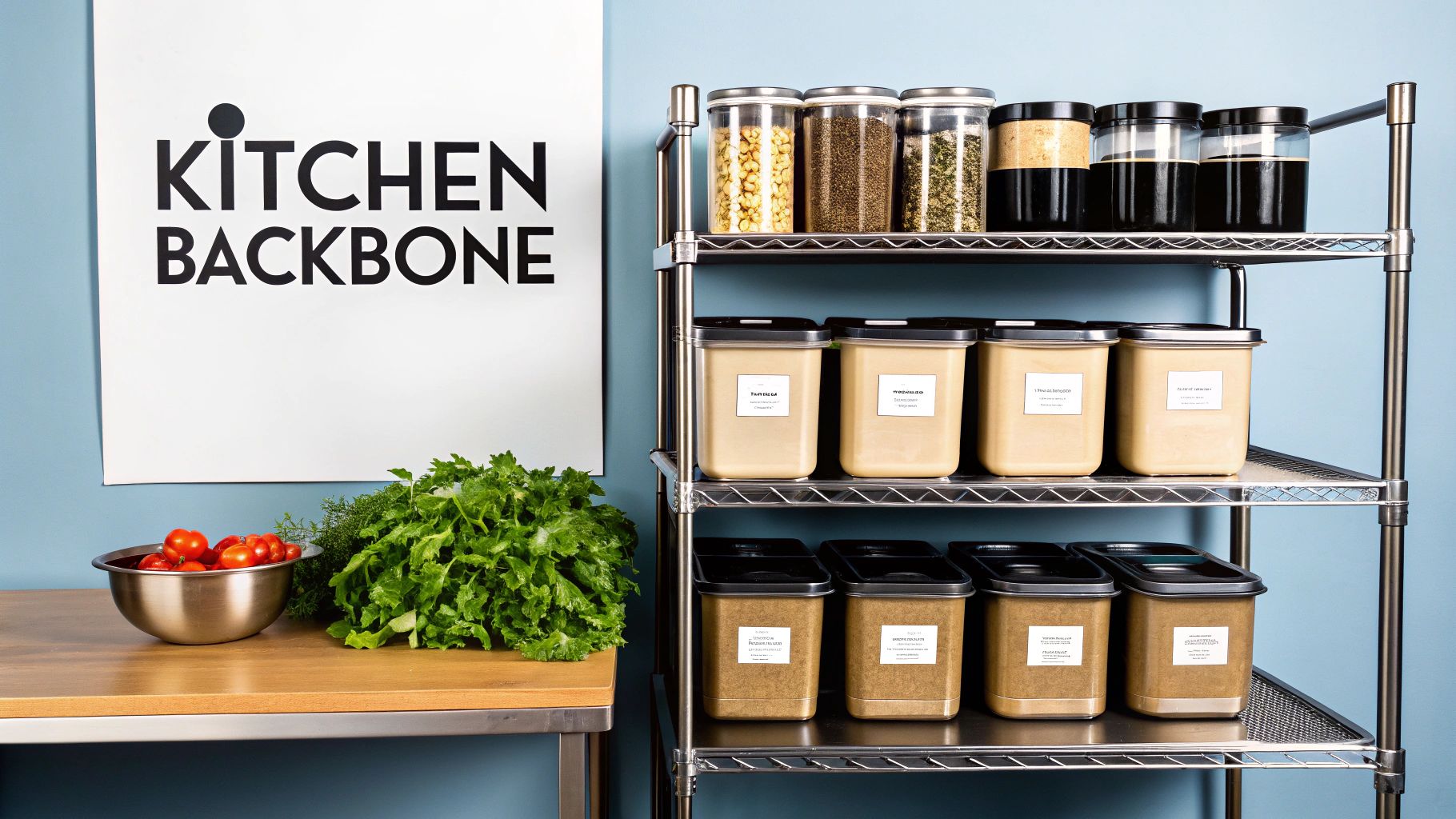
Why the Right Shelving Is Your Kitchen's Backbone
In the controlled chaos of a commercial kitchen, every single detail counts. The high-tech combi oven or the powerful planetary mixer might get all the glory, but the humble shelf is just as vital to your success. Think of your shelving as the unsung hero that keeps everything organized—ensuring ingredients, tools, and pans are right where your team needs them, exactly when they need them. This isn't just about being neat; it's about speed, safety, and ultimately, your profitability.
It’s no surprise that the demand for these workhorses is on the rise. The global market for stainless steel shelves was valued at around USD 5.2 billion in 2023 and is expected to climb to USD 8.1 billion by 2032. This isn't just a random statistic; it’s a key industry trend showing how much professional kitchens rely on durable, hygienic infrastructure to stay competitive. You can read more about the expanding commercial shelving market to see where the industry is headed.
This guide will help you sort through the options and make smart choices for your kitchen. We'll cover everything you need to know to pick shelving that genuinely works for your space and your team.
Here’s a look at what we’ll get into:
- Decoding Steel Grades: We'll break down the practical differences between Type 304 and Type 430 steel and where each one shines.
- Matching Shelf Types to Your Workflow: Figuring out whether wall-mounted, mobile, wire, or solid shelves fit your specific tasks.
- Load Capacities and Safety: How to correctly estimate weight needs to avoid dangerous (and expensive) collapses.
- NSF Compliance: Making sure your setup will pass health inspections with flying colors.
At the end of the day, investing in the right stainless steel shelves commercial kitchens depend on is an investment in your whole operation. A smart layout cuts down on staff stress, makes prep and plating faster, and creates a safer, more productive environment for everyone. Let’s get you set up with a kitchen that works as hard as you do.
Decoding Steel Grades for Your Kitchen
When you're outfitting a commercial kitchen, you'll quickly realize that "stainless steel" isn't a one-size-fits-all term. Picking the wrong grade of steel for your shelves is like trying to bake a delicate cake with bread flour—the final result just won't hold up. The specific grade of steel is the single most important factor determining its durability, corrosion resistance, and where it truly belongs in your kitchen.
Getting this right from the start saves you a massive headache and the expense of replacing rusted-out shelves a few years down the road. It's about making a smart investment that can handle the daily chaos, from the steamy, high-humidity dish pit to the sub-zero temperatures of a walk-in freezer. This isn't just about shelving; it's about building a functional, compliant, and long-lasting kitchen.
Type 304: The All-Purpose Workhorse
If you need one go-to, do-it-all option, Type 304 is it. Think of it as the cast-iron skillet of your kitchen—incredibly durable and reliable for almost any task. What makes it so tough? It's the blend of chromium and, most importantly, nickel. This combination gives it fantastic protection against rust and corrosion, making it the industry standard for most commercial kitchen applications.
Its resilient nature means it thrives in environments with lots of moisture and wild temperature swings.
- Walk-In Coolers and Freezers: The constant condensation and cold don't stand a chance against Type 304's anti-corrosive shield.
- Dishwashing Areas: It easily withstands the daily assault of hot water, steam, and harsh sanitizing chemicals.
- Food Prep Stations: Its non-porous surface is perfect for messy prep work, shrugging off spills from acidic foods like citrus marinades or tomato sauces.
Sure, it costs a bit more upfront, but the long-term value is a no-brainer. Investing in Type 304 for your wet and demanding areas is buying yourself peace of mind and a shelf that will last for years.
Type 430: The Smart, Economical Choice
Now, if Type 304 is the all-star workhorse, Type 430 is the savvy, budget-friendly specialist. The main difference here is the lack of nickel, which makes it magnetic and less resistant to rust. But that doesn't make it a bad option—it just means you have to be strategic about where you use it.
For dry storage areas, Type 430 provides the strength and professional look of stainless steel at a more accessible price. It’s a smart, economical decision where moisture isn't a constant threat.
Put Type 430 shelving where things stay consistently dry, and you can stretch your budget without sacrificing quality. It’s perfect for dry-stock pantries holding bulk bags of flour, sugar, and canned goods, or for closets where you store clean linens and paper products. By using it strategically, you get the performance you need without overspending.
Finishes That Affect Cleaning and Aesthetics
Beyond the grade of steel, the finish on your stainless steel shelves commercial unit also matters. It impacts how easy they are to clean and the overall look of your kitchen. The two most common finishes each have their own practical advantages.
A Tale of Two Finishes
| Finish Type | Best For | Maintenance Notes |
|---|---|---|
| Brushed Finish | High-traffic areas, prep stations | A real champ at hiding fingerprints and small scratches, keeping things looking sharp even during a busy service. Simple to wipe clean. |
| Polished Finish | Customer-facing areas, open kitchens | Delivers a bright, reflective shine that looks high-end. It does show smudges and water spots more easily, so it needs more frequent buffing. |
Ultimately, choosing between a brushed or polished finish is a balancing act between aesthetics and practicality. The brushed finish is forgiving and built for the back-of-house hustle, while a gleaming polished finish can really elevate the look of an open kitchen where your guests see everything.
Matching Shelf Types to Your Kitchen Workflow
Think of your kitchen as a finely tuned machine. The right shelf in the right place isn't just about storage—it’s a specialized gear that can turn chaos into a smooth, efficient operation. An intuitive layout supports your team, cuts down on wasted steps, and keeps service humming along, even during the peak rush.
When you're mapping out a full restaurant kitchen workflow design, matching shelf types to specific tasks is absolutely essential. A smart layout eliminates bottlenecks and puts everything your staff needs within arm's reach. What was once a frantic search becomes a choreographed dance.
Wall-Mounted Shelves for High-Traffic Zones
In a busy kitchen, floor space is gold. Wall-mounted stainless steel shelves are brilliant for claiming that unused vertical real estate without adding another obstacle to navigate around. They are perfect for placing directly above prep tables, the cooking line, or the dish pit.
Placing shelves here keeps the most-used items in plain sight and easy to grab, which is a huge boost for speed and efficiency.
- Above Prep Stations: Imagine spices, oils, and mixing bowls right where your prep cooks are working. It’s a simple change that can shave precious seconds off every single ticket.
- On the Cooking Line: Keep finishing salts, garnishes, and plating tools close at hand. This lets chefs finish dishes without ever having to turn their backs on the stove.
- Near the Dish Pit: Use them to organize soaps, sanitizers, and drying racks to keep that critical area clear and running smoothly.
Getting those essentials off the countertops and onto the walls instantly creates a cleaner, more manageable workspace, especially when you're slammed.
Freestanding Units: The Backbone of Bulk Storage
Freestanding stainless steel shelves are the true workhorses of any commercial kitchen. You'll find them in dry goods pantries, walk-in coolers, and equipment storage areas for a reason. Their biggest advantages are their impressive load capacity and their modular, adaptable design.
This flexibility is a lifesaver in a kitchen where inventory can shift from one week to the next. The ability to adjust shelf height on the fly means you can easily store anything from short stacks of #10 cans to tall, bulky stock pots. For a deeper dive into organizing your space, check out our guide on commercial kitchen storage solutions.
Wire vs. Solid Shelves: Environment Matters
The decision between wire and solid shelving comes down to two things: where it's going and what you're putting on it. Each style has clear benefits that make it the right choice for different zones in your kitchen.
Wire Shelving for Air Circulation
For any refrigerated area, wire shelves are a must. The open-grid design lets cold air circulate freely, which is critical for keeping temperatures consistent throughout a walk-in cooler or freezer. This airflow helps produce stay fresh longer and ensures hot foods cool down safely and evenly—a non-negotiable part of food safety.
Solid Shelving for Containment and Stability
For dry storage areas or places where spills are likely, solid shelves are the way to go. The flat surface provides a stable foundation for small or odd-shaped items that could easily tip or fall through a wire rack. Even more importantly, a solid shelf will contain spills from a leaky bottle or a torn bag of flour, making cleanup a breeze and preventing cross-contamination.
Don't Let Your Shelves Become a Hazard: Understanding Load Capacity
Overloading a shelf is one of those silent but serious risks in a commercial kitchen. It's a gamble that can end in disaster—costly inventory ruined, equipment smashed, or worse, a team member getting seriously hurt. Knowing the load capacity of your commercial stainless steel shelves isn't about getting a degree in engineering; it's about making sure your kitchen is safe and functional.
When you see a weight rating on a shelf, it’s almost always for a Uniformly Distributed Load (UDL). This is a crucial concept. It means the weight needs to be spread out evenly across the entire shelf, not all piled up in the middle. Picture a frozen lake: if a group of people stand close together, the ice is far more likely to crack than if they spread their weight out. Your shelf works the same way.
Turning Pounds into Practical Kitchen Storage
So, how do those UDL numbers translate to what you're actually storing? A pretty standard commercial shelf might be rated for 600 pounds. That sounds like a ton, but it gets used up faster than you'd think.
Let's break it down with common kitchen staples:
- A 50-pound sack of flour or sugar
- A case of #10 cans of tomatoes (which clocks in around 45 pounds)
- A full 5-gallon Cambro of stock (that’s about 40 pounds)
On that 600-pound shelf, you could theoretically store about 12 sacks of flour or 13 cases of canned goods—but only if you place them evenly from end to end. If you just stack them all in the center, you’re creating a dangerous weak point and asking for trouble.
Sizing and Spacing: The Keys to a Safe, Smart Workflow
It’s not just about how much weight a shelf can hold. The dimensions and where you put them are just as important for a safe and efficient kitchen. A shelf has to do more than just hold stuff; it has to fit into the flow of a busy service. That means thinking about clearance, movement, and what you’re storing.
This diagram shows how different shelves fit into the distinct zones of a kitchen, from prep and cooking to cold storage.
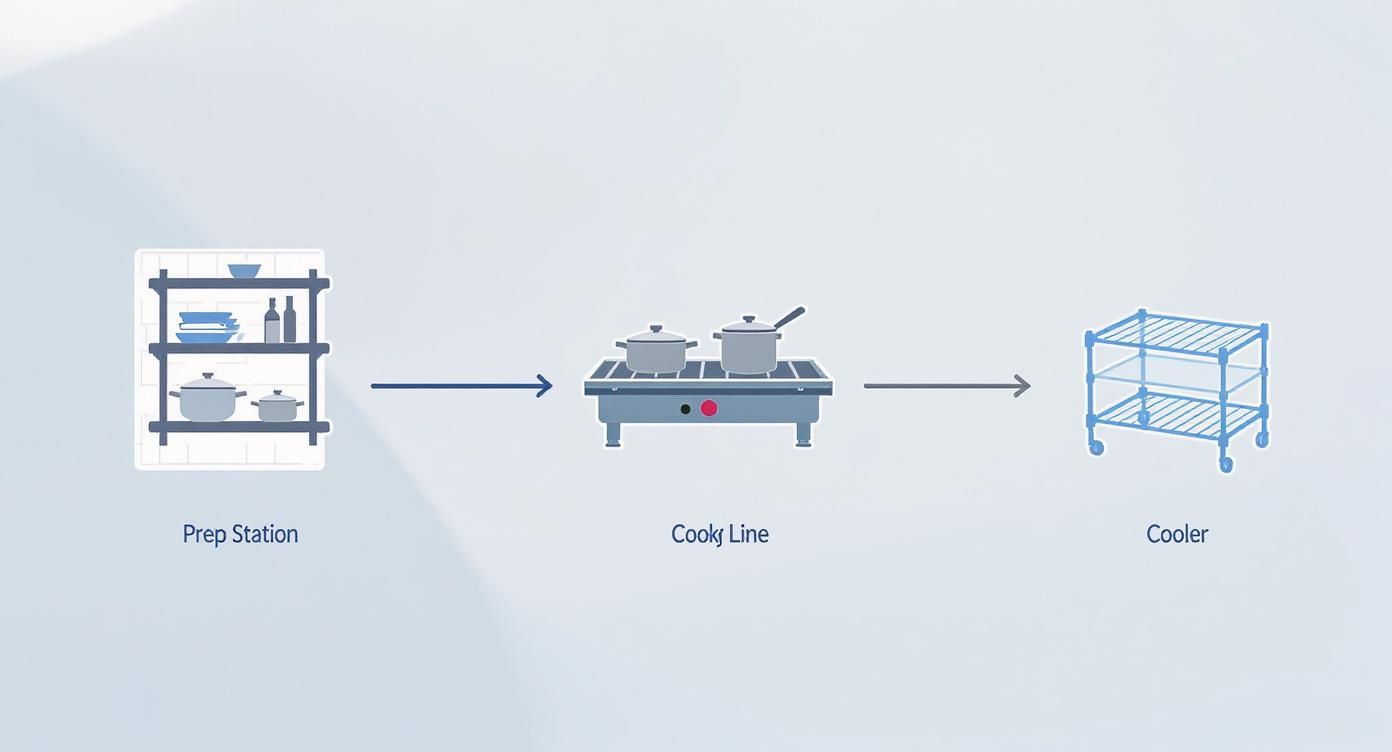
As you can see, the right shelf makes all the difference. Wall-mounted shelves keep ingredients handy at prep stations, solid shelves stand up to the heat on the cook line, and wire shelving promotes crucial airflow in the walk-in. It's all about creating a seamless path from A to B.
Expert Tip: Always choose a shelf with a load capacity well above what you think you'll need. This gives you a built-in safety margin that accounts for busy rushes or unexpected deliveries, and it prevents the kind of long-term metal fatigue that leads to collapse.
When you're mapping out your storage, make sure you leave plenty of clearance around equipment and in high-traffic walkways. You also need enough vertical space between shelves so your staff can grab what they need without scraping their knuckles or struggling with heavy, awkward containers. Smart spacing doesn't just prevent accidents; it makes everyone's job a little easier and your kitchen more productive. In the end, a well-planned system of commercial-grade stainless steel shelves is the backbone of any safe and reliable kitchen.
Installing Shelves for Safety and Efficiency
Even the toughest stainless steel shelves commercial kitchens use are only as good as their installation. A shelf that's not mounted properly is a ticking time bomb. It’s a genuine risk for collapsed inventory, broken equipment, and—worst of all—injuries to your team. Getting the installation right isn't just about putting screws in a wall; it’s about building a safer, more efficient kitchen from the ground up.
The first step is always finding the right anchor points. Think of your wall studs as the building's skeleton—they provide the backbone for a rock-solid installation. Just screwing into drywall is a classic mistake and a recipe for disaster. Drywall simply can't handle the weight of commercial supplies and will crumble under the load.
A stud finder is your best tool for locating these hidden supports. Once you’ve marked where the studs are, you can anchor your brackets directly into the kitchen's structural frame. This is the only way to ensure your shelves can safely hold their rated capacity without putting dangerous stress on the wall itself.
The Importance of a Level Foundation
With your brackets secured to the studs, the next crucial step is making sure every shelf is perfectly level. An uneven shelf is an unstable shelf. Items can slide, spill, or even fall off completely. It also puts uneven strain on the mounting hardware, which can cause it to fail over time.
A simple carpenter's level is your best friend for this part of the job. Before you tighten every screw, place the level on the shelf and adjust it until the bubble is dead center. Taking a few extra minutes to get this right will save you from countless headaches down the road, from wobbly stock pots to messy, dangerous spills.
Designing a Layout for Maximum Kitchen Flow
Once the hardware is solid, the real art begins: laying out your shelving for a better workflow. A well-planned system does more than just hold stuff; it actively makes your kitchen run smoother. The goal is to create an intuitive layout that cuts down on wasted steps and helps get orders out faster.
The old "kitchen work triangle" is a great place to start, connecting your prep, cooking, and storage areas. Your shelving should support this natural flow, putting the right items exactly where your team needs them.
By strategically placing your stainless steel shelves commercial units, you can create a seamless flow between key work zones. This approach dramatically reduces staff movement, which in turn speeds up ticket times and boosts overall kitchen productivity.
This means putting your most-used spices and oils on a wall shelf right above the prep station. It means having clean pans on a rack right next to the line. These small, thoughtful placements add up to huge efficiency gains during a busy service. And when you need a flexible way to move items between stations, mobile solutions like those covered in this guide to bread rack shelving can add another layer of efficiency.
Smart Placement Tips for a Productive Kitchen
To really dial in your space, think about how your staff actually moves and works. The best layouts are designed with real people in mind.
Here are a few practical tips to get you started:
- Zone Your Storage: Keep similar items together. Create a dedicated baking zone with your flour, sugar, and pans, or set up a plating station with all your garnishes and finishing oils in one spot.
- Prioritize by Frequency: Put the things you grab most often at eye level and within easy reach. The heavy, less-used items can go on the bottom shelves, and lightweight supplies can go up high.
- Maintain Clear Pathways: Make sure your shelving doesn't create traffic jams. You need to leave plenty of room for staff to move around safely, especially when they're carrying hot pans or heavy stock pots.
When you combine a secure installation with a smart layout, your shelving stops being just storage and becomes a key part of your kitchen’s success.
Meeting NSF Standards for Food Safety
In a commercial kitchen, that little blue NSF logo on your equipment isn't just a sticker. It’s a seal of approval. For a health inspector, seeing that mark on your stainless steel shelves commercial units instantly signals that you’ve invested in equipment designed for hygiene and safety. Frankly, understanding what this standard means is non-negotiable if you want to pass inspections and keep your customers safe.
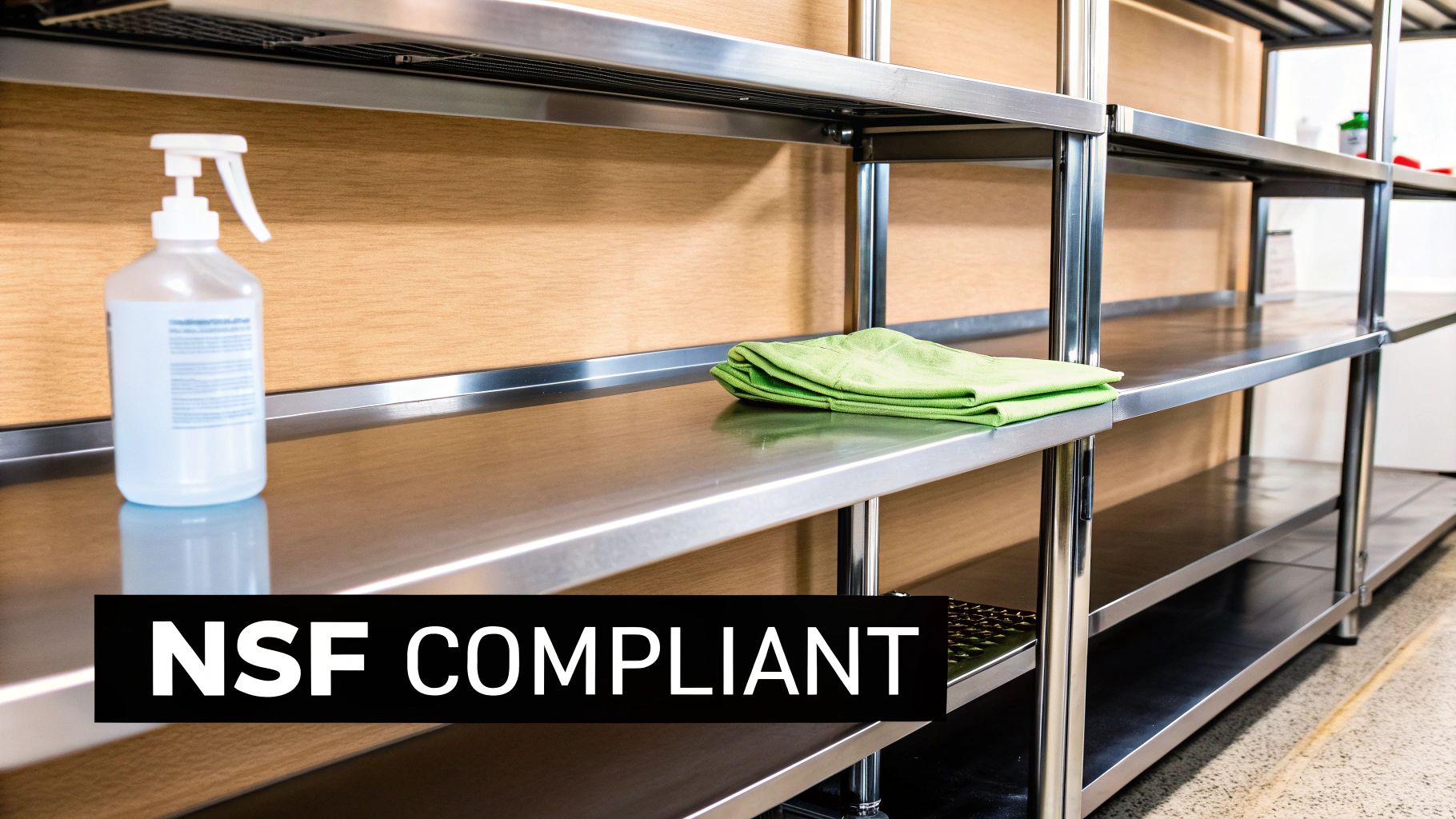
The National Sanitation Foundation (NSF) sets incredibly high standards for foodservice equipment. When a shelf is NSF-certified, it means the materials and the design itself have been put through the wringer—tested to ensure they're easy to clean and won't harbor nasty bacteria.
What NSF Certification Really Means
Think of NSF standards as a detailed blueprint for a germ-free design. Shelving has to meet some very specific criteria to earn that certification, and every single requirement is about eliminating places where germs can hide out.
This level of detail is a critical piece of a much larger food safety puzzle. To see how these standards fit into your kitchen's daily grind, it’s worth checking out our guide on what HACCP food safety is and its core principles.
Here are the big things NSF looks for:
- Smooth, Non-Porous Surfaces: The steel needs to be perfectly smooth. No cracks, no pits, no tiny crevices where food bits and bacteria can get stuck. This makes wiping down and sanitizing a breeze.
- Rounded Corners and Edges: Sharp 90-degree angles are a cleaning nightmare. NSF-certified shelves have coved or rounded corners, so there are no hard-to-reach spots for grime to build up.
- Corrosion Resistance: The shelf’s material has to be tough enough to handle constant cleaning with powerful sanitizers without rusting or breaking down.
This smart, proactive design ensures your shelving is an asset to your cleanliness protocols, not a liability.
Practical Cleaning and Maintenance Schedules
Keeping your shelves in NSF-compliant shape comes down to a consistent cleaning routine. A simple, repeatable schedule is all it takes to make sure your storage areas stay sanitary and are always ready for an impromptu inspection.
An established cleaning protocol is your first line of defense against cross-contamination. Regular maintenance not only ensures compliance but also extends the life of your stainless steel, protecting your investment.
This table provides a great starting point for your team's daily and weekly tasks.
Weekly Stainless Steel Shelf Maintenance Checklist
Here's a straightforward checklist kitchen staff can follow to keep shelving sanitary and compliant with all food safety standards.
| Task | Frequency | Procedure | Approved Cleaners |
|---|---|---|---|
| Wipe Down Spills | Immediate | Use a soft cloth with a mild detergent to clean any spills as soon as they happen, especially acidic ones like tomato sauce. | Non-abrasive, non-chlorine commercial cleaner. |
| Daily Sanitizing | Daily | After service, wipe all food-contact surfaces with a food-safe sanitizer. Let it air dry completely. | Quat-based or chlorine-based sanitizers. |
| Deep Cleaning | Weekly | Empty the shelves entirely. Scrub all surfaces, giving extra attention to corners and the posts. | Degreaser followed by a sanitizing solution. |
Remember, true food safety involves the whole kitchen. Integrating other best practices, like preventing mold in grill areas, helps create a spotless and fully compliant operation.
By truly understanding and sticking to NSF standards, you can operate with confidence, knowing your kitchen is built on a solid foundation of safety.
Your Top Commercial Shelving Questions, Answered
When you're outfitting a commercial kitchen, the world of stainless steel shelves can feel surprisingly complex. It's easy to get bogged down in the details, but getting clear answers is the first step toward making a smart investment. Here are some of the most common questions we hear from chefs and restaurant owners, with straightforward, practical answers.
What’s the Real Difference Between Type 304 and Type 430 Stainless Steel?
The short answer? It all comes down to rust resistance.
Type 304 stainless steel includes nickel in its alloy, which acts as a fantastic shield against corrosion. This makes it the undisputed champion for any area that sees moisture—think walk-in coolers, dishwashing stations, or prep areas where you're dealing with acidic foods.
On the other hand, Type 430 steel is nickel-free. This makes it a more budget-friendly option, but it also means it's more likely to rust in damp conditions. It’s a perfectly solid choice for dry storage areas like pantries or for holding equipment in a back office. Think of it like this: 304 is for the wet zones, and 430 is for the dry.
How Do I Figure Out the Right Load Capacity?
First, picture the heaviest items you'll store on a single shelf. A case of #10 cans, for example, is around 45 lbs, and a big 50-lb sack of flour is a kitchen staple. If you plan on stacking ten of those cases on one shelf, you’ll need a capacity well over 450 lbs to stay on the safe side.
Always check the manufacturer's Uniformly Distributed Load (UDL) rating. This is crucial: the rating assumes the weight is spread evenly, not all piled in the middle. Over-spec'ing your capacity is never a bad idea; it gives you a critical safety buffer.
Can I Actually Prevent Rust on My Stainless Steel Shelves?
You absolutely can. Your best weapon against rust is consistent, smart cleaning. The golden rule is to wipe up spills the moment they happen, especially acidic things like citrus juice, vinegar, or tomato sauce. Those can eat away at the steel's protective layer if left to sit.
For regular cleaning, just follow these simple steps:
- Use a soft cloth with a gentle, non-chlorine-based cleaner. Abrasive powders or bleach are the enemy—they can damage the finish and invite rust.
- Always wipe with the grain of the steel. This helps you avoid tiny surface scratches.
- After washing, dry the shelves completely with a clean cloth. This prevents water spots and mineral deposits that can eventually lead to corrosion.
With Type 430 steel, prevention is even simpler: just keep it dry. Position it away from steam, sinks, and condensation, and it will serve you well for years. A little bit of proactive care makes all the difference.
Ready to build a kitchen that’s organized, efficient, and up to code? The team at Encore Seattle Restaurant Equipment has seen it all. We help chefs and restaurant owners discover the latest trends and exclusive deals on the restaurant equipment and supplies they need. We can help you pick out the perfect commercial shelving for your space and budget, ensuring you get a durable, high-quality solution at a great price. Explore our extensive inventory of new and used equipment today!