
Your Guide to Stainless Steel Kitchen Prep Tables
Walk into any successful commercial kitchen—from a high-end restaurant in downtown Portland to a popular food truck in Seattle—and you'll find the same unsung hero holding the whole operation together. It’s not the fancy six-burner range or the gleaming convection oven. It's the simple, sturdy stainless steel prep table.
This is where the magic really starts. It's the foundational workspace where raw ingredients become signature dishes, where efficiency is born, and where culinary creativity takes shape. Stay informed on industry trends like these and get exclusive deals on essential restaurant equipment by keeping up with the latest news.
The Foundation of Kitchen Productivity
Think of your prep table as the central hub of your kitchen. It’s the stage where vegetables are chopped, fish is filleted, and finished plates are composed. But its job goes way beyond just being a surface to work on. A good prep table is the critical link in your kitchen’s workflow, connecting your walk-in cooler, your cookline, and your dish pit into one seamless, efficient system.
The right table doesn't just hold your cutting boards and mixing bowls. It organizes your space, cuts down on wasted steps, and saves precious seconds when you're deep in the weeds during a dinner rush. This guide will give you the practical, real-world knowledge you need to choose the perfect stainless steel table for your specific operation.
More Than Just a Surface
It's hard to overstate just how much a good prep table impacts daily operations. Since they became a kitchen staple in the mid-20th century, these tables have been essential for keeping food safe and kitchens running smoothly. The market for them is huge for a reason; the global stainless steel kitchenwares sector hit USD 29,980 million in 2024 and is expected to climb to USD 39,770 million by 2032. You can dig into more stainless steel market growth insights on intelmarketresearch.com. That kind of growth tells you just how much professional kitchens continue to rely on this durable, sanitary equipment.
A great prep table is the silent partner in your kitchen. It supports every task, withstands the pressure of a busy service, and provides a safe, clean foundation for your food—day in and day out.
Choosing the right one isn't just a purchase; it's an investment in your kitchen's future. Here’s what you need to be thinking about:
- Durability and Longevity: The right grade and gauge (thickness) of steel means your table will stand up to years of heavy use without denting, bowing, or failing.
- Hygiene and Food Safety: Stainless steel has a non-porous surface, which makes it incredibly easy to clean and sanitize. This is non-negotiable for meeting health department standards.
- Workflow Optimization: Do you need an undershelf for storage? A backsplash to protect your walls? Casters to make it mobile? The right features can make a world of difference in your day-to-day operations.
Decoding Steel Grades and Gauges
Trying to make sense of the technical specs for stainless steel kitchen prep tables can feel like learning a new language. But don't worry, it's actually pretty straightforward once you get the hang of it. Think of steel grades like different fabrics—some are built tough for heavy wear, while others are better for specific, less demanding jobs. Getting this right means you'll invest in a table that can handle your kitchen's workload without paying for features you don't need.
This isn't just about one table, either. Stainless steel is the backbone of the modern commercial kitchen. Even as the market for refrigerated prep tables—worth USD 3.48 billion in 2024—continues to expand, the classic stainless work surface remains essential. The whole stainless steel kitchenware market, valued at USD 23.5 billion in 2023 and expected to hit USD 35.7 billion by 2032, is built on the hospitality industry's non-negotiable need for durable, hygienic surfaces. You can dig deeper into the refrigerated prep table market trends to see how the industry is evolving.
The Two Most Common Steel Grades
In any professional kitchen, you're almost always going to run into two main grades of stainless steel. Each one has its place, and choosing the right one is a key decision for both your daily operations and your budget.
-
304 Grade (The Industry Workhorse): This is the undisputed champion for any surface that touches food. It has more chromium and nickel mixed in, which gives it fantastic protection against rust and corrosion from things like salt, acidic ingredients (think tomatoes and citrus), and strong cleaning chemicals. If you’re prepping food directly on the surface, a 304-grade top is a must-have.
-
430 Grade (The Cost-Effective Choice): This grade is easier on the wallet because it has less nickel, which also means it’s a bit more susceptible to corrosion over time. You wouldn't want it for your main prep area, but 430 grade is a smart, economical choice for table legs, undershelves, or stands for dry equipment where it won't be constantly exposed to moisture.
The image below sums up why stainless steel is so fundamental to kitchen operations, highlighting its role in efficiency, hygiene, and sheer durability.
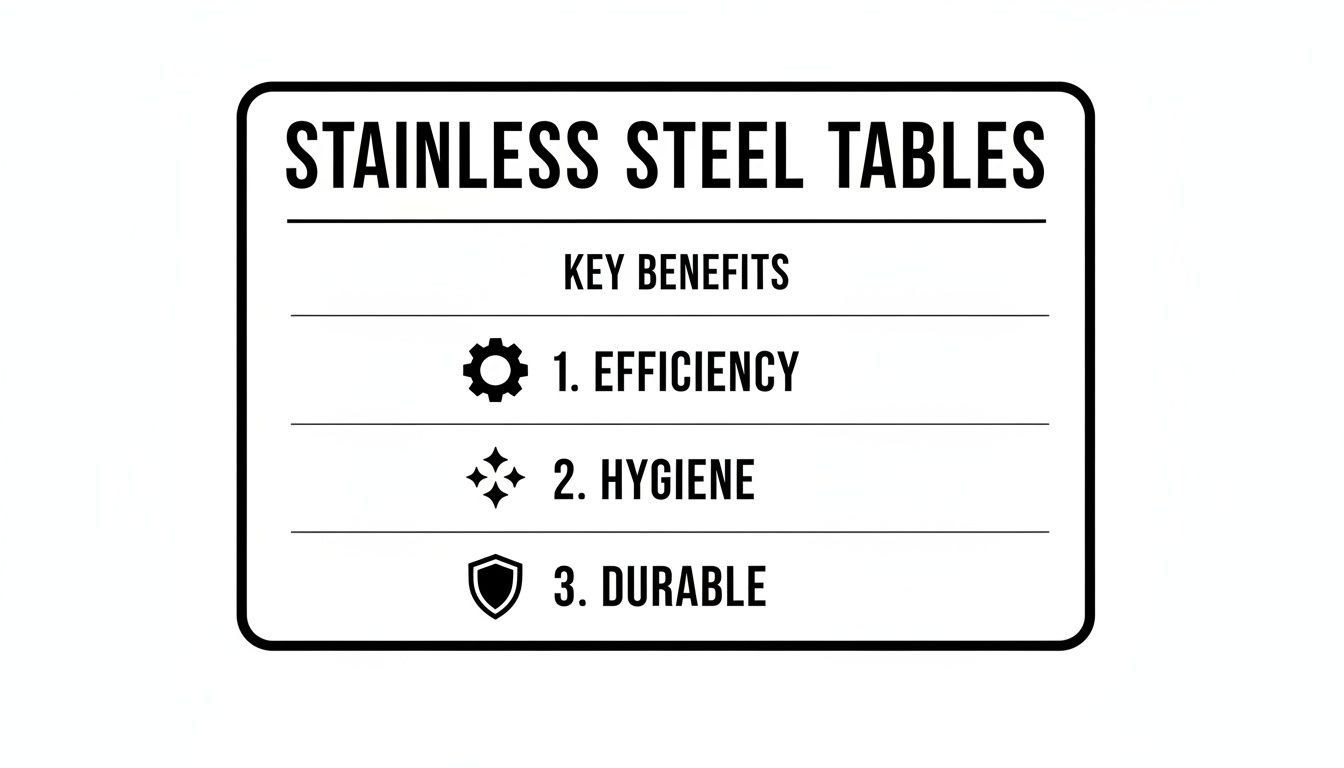
As you can see, picking the right material isn't just a technical detail—it directly impacts how safe, productive, and long-lasting your kitchen setup will be.
To make things a bit clearer, here's a quick rundown of how these grades stack up.
A Practical Comparison of Steel Grades
| Steel Grade | Key Composition | Corrosion Resistance | Common Use Case |
|---|---|---|---|
| 304 | 18% Chromium, 8% Nickel | Excellent | Tabletops, food-contact surfaces, sinks |
| 430 | 17% Chromium, 0% Nickel | Good | Legs, undershelves, equipment stands, dry storage |
Ultimately, a smart strategy is to mix and match: invest in a 304-grade top where it matters most and save money with 430-grade components for the rest of the table.
Understanding Steel Gauge Thickness
Just as critical as the grade is the steel's gauge, which is simply how thick it is. This is where things can get a little counterintuitive: the lower the gauge number, the thicker and stronger the steel. It's like the difference between a flimsy piece of paper and a sturdy piece of cardstock.
Choosing the right gauge is a balancing act between durability and cost. A thicker gauge provides a more stable work surface that resists dents and warping, making it a better long-term investment for high-impact tasks.
Here’s how the common gauges typically break down in a commercial kitchen:
-
14 Gauge: This is the heavyweight champion. It's the thickest and toughest option you’ll find, built for serious abuse. Think butchering stations, supporting a massive 60-quart mixer, or any job where things are getting dropped or slammed down. A 14-gauge table is an investment in brute strength.
-
16 Gauge: This is the all-rounder and the most popular choice for a reason. 16-gauge steel offers a fantastic middle ground of strength, durability, and price. It's perfect for general prep work, assembly lines, and holding most medium-weight equipment. For most restaurants, this is the sweet spot.
-
18 Gauge: As the thinnest and most budget-friendly option, 18-gauge steel is best for light-duty applications. It works well for things like dishtables, holding bins, or as a work surface in a low-volume spot like a small coffee shop or concession stand.
By thoughtfully pairing the right grade and gauge to the specific jobs in your kitchen, you can build out a workspace that's perfectly tailored to your needs—and your budget. You’ll get the performance you need where it counts and save money where you can, all while ensuring your equipment stands up to the daily grind for years to come.
Choosing Features That Fit Your Workflow
Picking the right material and gauge for your stainless steel kitchen prep tables is a solid start, but the features you add are what really turn a simple surface into a kitchen workhorse. A table isn't just a flat top; it's a living, breathing part of your kitchen's ecosystem. The right components can make a huge difference in your efficiency, organization, and cleanliness, directly impacting your day-to-day grind.
This isn't about adding bells and whistles for the sake of it. It’s about being smart and designing a workspace that matches the unique rhythm of your kitchen. A high-volume bakery in Portland is going to need a very different setup than a compact food truck operating in Seattle, and getting that right means you’re investing in a table that works as hard as you do.
Backsplashes for Cleanliness and Protection
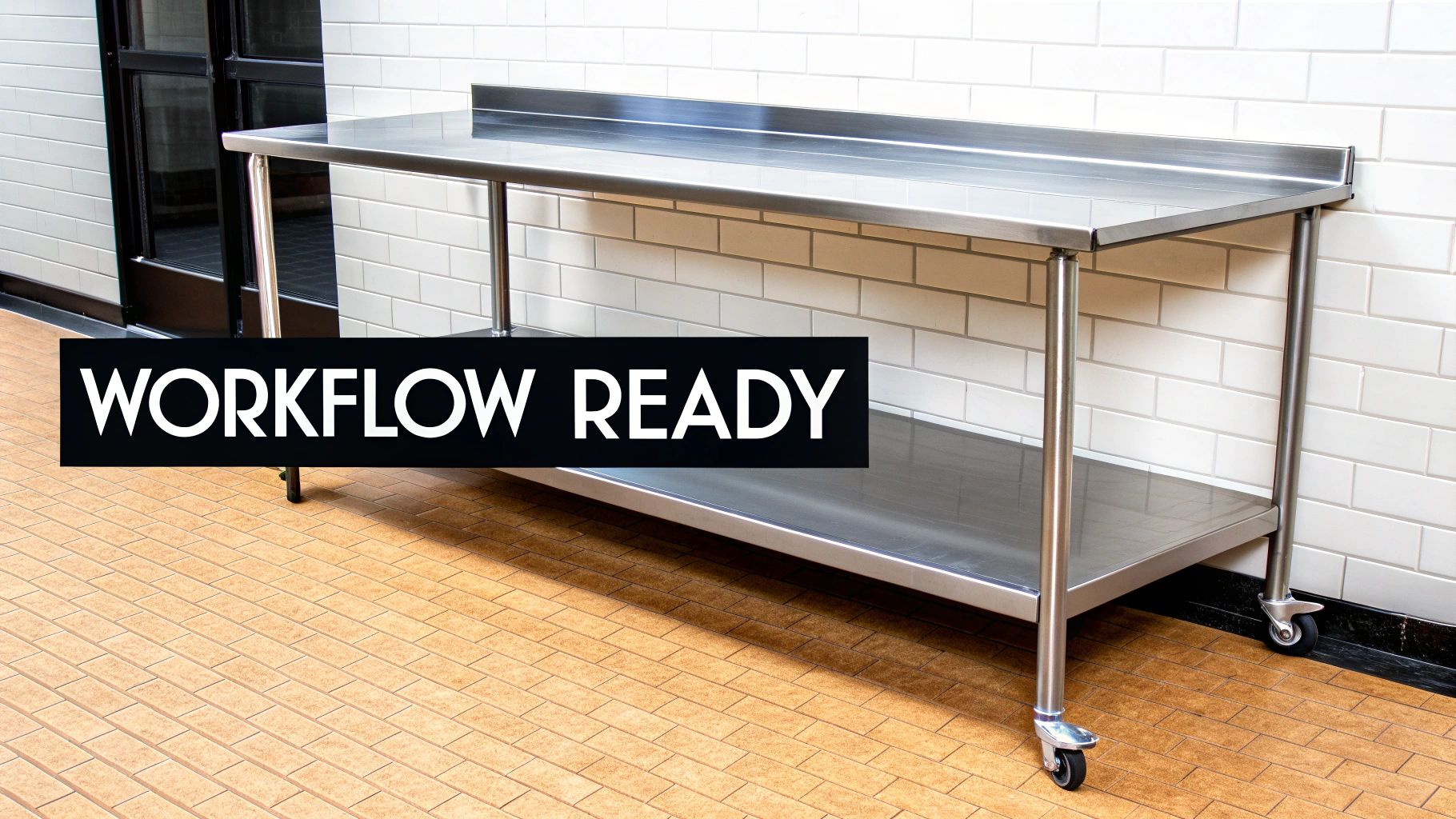
One of the most practical add-ons you can get is a backsplash. It’s that raised edge, usually a few inches high, that runs along the back of the table. Its job is simple but absolutely critical: stop food, liquids, and utensils from falling into that awful, hard-to-clean gap between the table and the wall.
If your table is going up against a wall, a backsplash is a no-brainer. Not only does it keep your floors cleaner, but it also protects the wall from splashes and stains—a must for keeping the health inspector happy. On the other hand, if you’re planning to use the table as a central island where staff work from all sides, a flat-top design is the way to go for better access and collaboration.
Undershelves for Maximum Storage
In any commercial kitchen, floor space is gold. An undershelf is one of the smartest ways to boost your storage without taking up another square foot. That lower shelf gives you a convenient spot to stash everything from small appliances and bulk ingredients to pots and pans.
An undershelf essentially doubles your table's value. It transforms a single-purpose surface into a complete prep and storage station, cutting down on clutter and saving your staff countless steps during a chaotic dinner rush.
You've got a few options for undershelf styles:
- Solid Undershelf: The best choice for storing smaller items that could slip through a wire rack. It’s also a breeze to wipe down.
- Slatted or Tubular Undershelf: This style allows for better air circulation, which is great for storing produce like onions or potatoes. Spills also pass right through, making for a quicker cleanup on the floor below.
- Enclosed Undershelf (Cabinet Base): For maximum protection from dust and debris, a cabinet base gives you a sanitary, enclosed space for clean tools or sensitive ingredients.
Casters for Mobility and Flexibility
Deciding between stationary legs and wheels comes down to one thing: how adaptable does your kitchen need to be? Slap a set of casters on a table, and it instantly becomes a mobile workstation. You can roll it out for deep cleaning, shift it around for different prep tasks, or move it completely to make room for an event.
This kind of flexibility is a game-changer for catering businesses, food trucks, or any kitchen with a layout that changes. Just make sure you get locking casters—that’s non-negotiable for keeping the table stable and safe while you work. Conversely, a busy restaurant with a fixed kitchen line will probably prefer the unshakeable stability of stationary legs, which are often adjustable to handle uneven floors.
Integrated Sinks and Specialized Features
For the ultimate workflow, some prep tables come with integrated features that pack multiple tasks into a single station. These specialized tables are all about streamlining your process and saving precious space.
- Tables with Built-in Sinks: Combining your prep surface with a sink is perfect for washing produce or rinsing tools. This setup means your staff isn't constantly walking between a prep area and a separate washing station.
- Tables with Drawers: Integrated drawers offer a tidy, enclosed spot for hand tools like knives, whisks, and peelers. It keeps your essential gear organized and right where you need it, cutting down on countertop clutter.
- Baker's Tables: Often designed with a classic wood top for working with dough, these tables might also have built-in bins for flour and sugar, creating a dedicated and incredibly efficient baking station.
By taking a hard look at how your team operates and spotting the bottlenecks in your current setup, you can pick the features that will give you the biggest bang for your buck. The right choices will boost productivity and create a more organized, functional kitchen.
Designing for Kitchen Layout and Food Safety
A stainless steel kitchen prep table isn't just a surface—it's the heart of your kitchen's workflow. Where you place it and how you use it directly shapes your team's performance, food safety practices, and overall speed. It's about designing a space that flows, not fights.
Great kitchen layouts are all about eliminating wasted motion. Think about ergonomics from day one. A table at the right height, usually between 34 and 36 inches, saves your staff from the constant bending and straining that leads to fatigue during a long shift. A comfortable chef is a productive chef.
Building a Modern Work Triangle
That old "work triangle" idea connecting the sink, fridge, and stove? In a commercial kitchen, it evolves. It becomes a streamlined "workflow line" or a dedicated station, and your prep tables are the critical bridge between cold storage and the hot line.
Picture this: a cook pulls produce from the walk-in, takes a few steps to the prep table to wash and chop, then pivots directly to the range. That’s a logical flow. It cuts out the chaotic dance of crisscrossing staff, which is absolutely vital for a smooth, safe service. A smart layout can shave precious minutes off prep times and drastically reduce the chance of accidents. For a deeper dive, take a look at our complete guide on commercial kitchen design and layout.
The Cornerstone of Food Safety
Let's be blunt: food safety is everything. It's the bedrock of your restaurant's reputation, and your prep table is ground zero in that battle. Stainless steel's biggest advantage is its non-porous surface, which gives bacteria, mold, and other nasty pathogens nowhere to hide—unlike wood or plastic.
This natural hygiene is a huge reason why 304 Grade stainless steel tables were the go-to choice in 2023. This material's resistance to bacteria is essential, especially when a single food-safety violation can result in fines upwards of $10,000 in major cities. With revenue from stainless steel cookware in restaurants expected to grow at a 6.7% CAGR through 2030, these tables are central to high-volume operations where durability can reduce equipment downtime by up to 40%.
Proper sanitation isn't just about passing inspections; it's about protecting your customers and your reputation. The cleanability of stainless steel makes it the ideal surface for maintaining the highest standards of food safety with minimal effort.
To truly capitalize on these benefits, a disciplined cleaning protocol isn't optional—it's mandatory. Regular sanitization is your best defense against cross-contamination, ensuring your workspace is always ready for service.
Daily Cleaning and Maintenance Best Practices
Keeping your stainless steel tables in top shape isn't complicated, but it does require consistency. That protective chromium layer is tough, but it needs a little help to stay that way. A simple daily routine will keep your surfaces sanitary, compliant, and looking good for years to come.
Here's a straightforward checklist to make sure nothing gets missed. Following these steps helps maintain the integrity of the steel and ensures you're always meeting health code standards.
| Task | Frequency | Recommended Product or Method | Why It Matters |
|---|---|---|---|
| Clear and Scrape | After each shift | Use a plastic or rubber scraper | Removes large food particles and prevents them from drying on the surface. |
| Wash | Daily | Warm water with mild soap; soft cloth or nylon sponge | Cleans the surface without scratching the steel. Always wipe with the grain. |
| Rinse | Daily | Clean, warm water | Removes soap residue that can tarnish the steel or affect food taste. |
| Sanitize | Daily | Food-safe, non-chlorine sanitizer | Kills harmful bacteria and pathogens, preventing cross-contamination. |
| Dry | Daily | Clean, dry microfiber cloth | Prevents water spots and mineral buildup, protecting the steel's finish. |
Making this checklist a non-negotiable part of your closing duties is the easiest way to protect your investment and, more importantly, your customers. It's a small habit that pays huge dividends in safety and compliance.
Sizing Your Table and Ensuring Stability
Two of the most crucial details that can make or break your investment in a stainless steel kitchen prep table are its size and stability. Get these right, and the table becomes the heart of your workflow. Get them wrong, and it’s a constant source of frustration. This isn't just about finding a spot where it fits; it's about choosing a piece of equipment that genuinely improves how your kitchen runs.
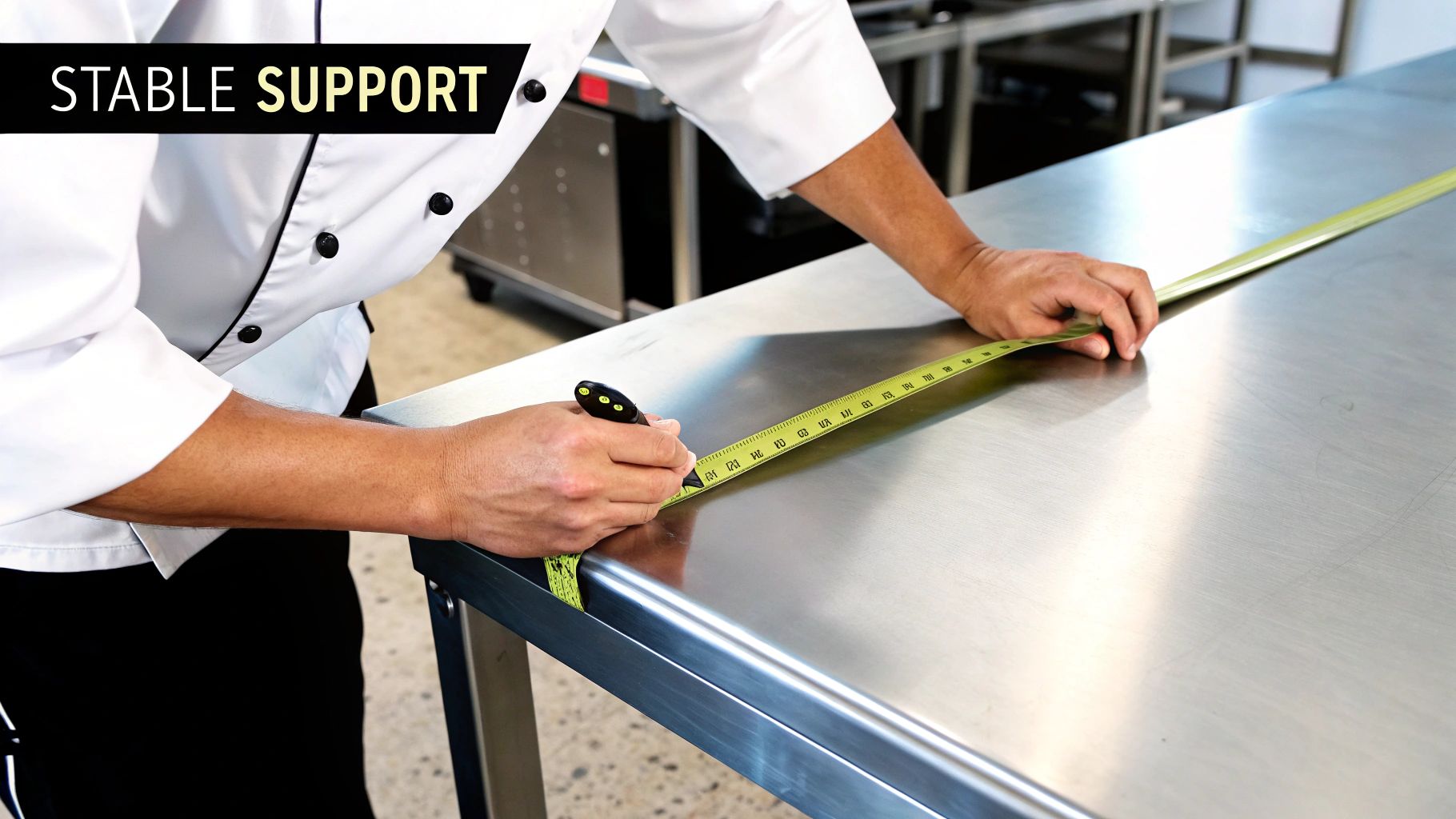
Before you even start browsing, grab a tape measure and map out your kitchen floor. Figure out the absolute maximum length and width a table can be while still leaving plenty of room to move. The golden rule in any commercial kitchen is to maintain at least a 36-inch clearance on all sides. This isn't just a suggestion—it's essential for preventing traffic jams and keeping your staff safe when they're hustling with hot pans or full stock pots.
Matching Dimensions to Your Workflow
With your maximum dimensions in hand, start thinking about how you’ll actually use the table day in and day out. A long, skinny table is a godsend for a plating line, but a baker needing to roll out huge sheets of dough would be better served by something shorter and wider.
Think through these common kitchen needs:
- High-Volume Production: For a busy line where multiple cooks work shoulder-to-shoulder, a 96-inch or even a 120-inch table gives everyone the elbow room they need to be efficient.
- Dedicated Stations: A compact 48-inch table works perfectly for a specialized task, like a coffee bar or a separate station for prepping fish, which helps keep things organized and avoid cross-contamination.
- Tight Spaces: In a food truck or a cozy PNW café, every single inch matters. Opting for a 30-inch deep table instead of a standard 36-inch model can free up critical floor space without sacrificing too much work surface.
Calculating Load Capacity for Heavy Equipment
Next up is weight. You absolutely have to consider what's going on the table, not just what's happening at it. This is its load capacity, and overlooking this detail is asking for trouble. A standard-duty table is great for dicing onions, but it will buckle under the strain of heavy equipment.
Think of load capacity like the weight limit on a bridge. Push it too far, and you’re not just risking damage to the table—you’re creating a serious safety hazard. A collapsing table can injure staff and destroy thousands of dollars in equipment.
A big commercial stand mixer can weigh over 150 pounds, and a deli slicer can easily be 100 pounds or more. Always, always check the specs from the manufacturer for both your equipment and the table to make sure the top and any undershelves can handle the combined load.
Installation for Wobble-Free Stability
Finally, a table is only as good as its installation. Let’s be honest, most commercial kitchen floors—especially in older buildings around here—are anything but level. A wobbly prep surface isn’t just annoying; it’s dangerous.
Look for tables that come with adjustable, bullet-style feet. These let you level each leg individually to create a rock-solid, wobble-free workspace. If you're still struggling with a shaky setup, knowing how to fix a wobbly table can offer some permanent solutions. A secure, level surface is the foundation of any productive and safe prep station.
Making a Smart Investment in Your Next Prep Table
Choosing the right stainless steel kitchen prep table is one of the most practical, nuts-and-bolts decisions you'll make for your kitchen. We've walked through the weeds of steel grades, gauges, and all the add-on features. Now, it's time to put it all together. This isn't just about finding a table that fits a space; it's about choosing a workhorse that will boost your team's efficiency and serve your business for years to come.
A smart purchase starts with a simple reality check. By running through a few key questions, you can cut through the noise and pick a table that delivers real, lasting value for your specific workflow.
Your Final Purchase Checklist
Before you pull the trigger, do one last gut check on these points. A few minutes now can save you years of frustration down the road.
- Grade and Gauge: Are you prepping food directly on the surface? If so, 304-grade is a must. Is this table going to hold a heavy stand mixer or a commercial slicer? Then you'll want the beefier 16-gauge steel to handle the load without bowing.
- Size and Layout: Get out the tape measure one more time. Have you confirmed your space can accommodate the table while leaving at least a 36-inch walkway? Does the length and depth actually work for the tasks you have in mind?
- Essential Features: Will the table sit against a wall where a backsplash is critical for cleanliness? Or do you need the flexibility of casters to move it around for cleaning or different prep runs?
- Load Capacity: Don't just guess. Check the specs and confirm the table can safely support the weight of your heaviest equipment. The last thing you want is a wobbly foundation for a thousand-dollar appliance.
New vs Used and Long-Term Value
Let's talk budget. A brand-new table is a beautiful thing—a perfectly clean slate with a full manufacturer's warranty. That peace of mind is worth a lot. But don't sleep on high-quality used equipment. Sourced from a trusted supplier who's already inspected and vetted it, a used table can be an incredible value. Discovering exclusive deals on both new and used restaurant equipment can make a significant impact on your bottom line.
No matter which path you take, never compromise on warranty and support. A good warranty is your shield against defects, and responsive customer service is a lifesaver when you run into an unexpected issue. Think of this as a long-term asset, not a one-time purchase. It's even worth exploring different ways to acquire it; it's always good to understand the benefits of renting vs. owning business equipment.
A prep table isn’t just an expense; it’s a foundational piece of your kitchen’s infrastructure. The goal isn’t to find the cheapest option, but the best value—that sweet spot of price, durability, and features that will pay you back every single day.
The market backs this up. Stainless steel kitchen prep tables are the backbone of efficient foodservice, and demand is only growing. The 304 Grades segment led the market in 2023 and is expected to stay on top through 2033, which just shows how much the industry values quality and durability. And if your needs are a bit more specialized, you might also want to check out our guide on refrigerated prep tables.
Answering Your Top Questions
Even the most seasoned kitchen pros have questions when outfitting a new space or upgrading equipment. Getting the right answers from the start can save you a lot of headaches and help you get the most out of your stainless steel kitchen prep tables. Here are some of the most common things we get asked by chefs and operators.
How Do I Get Scratches Out of My Stainless Steel Prep Table?
For light scuffs, the fix is usually pretty simple. Grab a non-abrasive cleaner and a soft microfiber cloth. The key is to always wipe with the grain of the steel, not against it. This simple trick often makes minor scratches virtually disappear.
If you're dealing with a deeper gouge, you may need to look into a dedicated stainless steel scratch removal kit. But please, never use steel wool or any kind of harsh scouring pad. You’ll just end up with a bigger, more noticeable mess. Honestly, the best defense is a good offense—always use cutting boards and keep the surface clean.
Can I Set a Hot Pan Directly on the Table?
Absolutely. That’s one of the best things about stainless steel. Its heat resistance is phenomenal, so you can take a sizzling pan straight off the range and set it down without a second thought. You don't have to worry about scorch marks, melting, or nasty fumes like you would with other materials.
Now, while the steel itself is tough, keep in mind that slamming extremely hot items onto a thinner gauge table over and over again could, in theory, lead to some minor warping over time. It's not a common problem, but if you're pulling something from a 500-degree oven, throwing a trivet down first is just smart practice for the long haul.
A key reason stainless steel dominates commercial kitchens is its ability to handle intense heat. It gives your crew a safe, durable landing spot for hot cookware, which is non-negotiable during the chaos of a busy service.
What's the Right Size Prep Table for My Kitchen?
Figuring this out is a two-part puzzle. First, get out the measuring tape. You need to know exactly how much floor space you have to work with, and you absolutely must leave at least a 36-inch walkway around the table. Anything less becomes a safety hazard and a major workflow bottleneck.
Second, think hard about what you'll be doing at that table. If you're setting up an assembly line for multiple cooks, a long 72-inch or 96-inch table makes sense. But for a single-purpose station, like plating desserts or prepping for the coffee bar, a compact 36-inch or 48-inch table is probably all you need. And don't forget to think vertically—an undershelf can literally double your storage without eating up another square foot of floor space.
Should I Get a Table with a Backsplash?
A backsplash is a game-changer if the table is going against a wall. It’s a must-have in that situation. That little raised edge stops food, liquids, and the occasional runaway utensil from falling into that grimy, impossible-to-clean gap between your table and the wall. It’s a huge plus for sanitation and makes cleanup so much easier.
On the other hand, if you're creating a central island that your team needs to access from all sides, a backsplash just gets in the way. For that kind of open layout, a simple flat top is far more practical. It allows for better collaboration and lets your staff work from any angle.
Ready to find the right workhorse for your kitchen? The team at Encore Seattle Restaurant Equipment lives and breathes this stuff. We can walk you through all the options and help you pick the perfect stainless steel prep table that fits your space, your workflow, and your budget. Come check out our huge selection of new and used equipment and stay informed about the latest industry trends and supplies.