
A Restaurant Owner's Guide to Leasing an Ice Machine
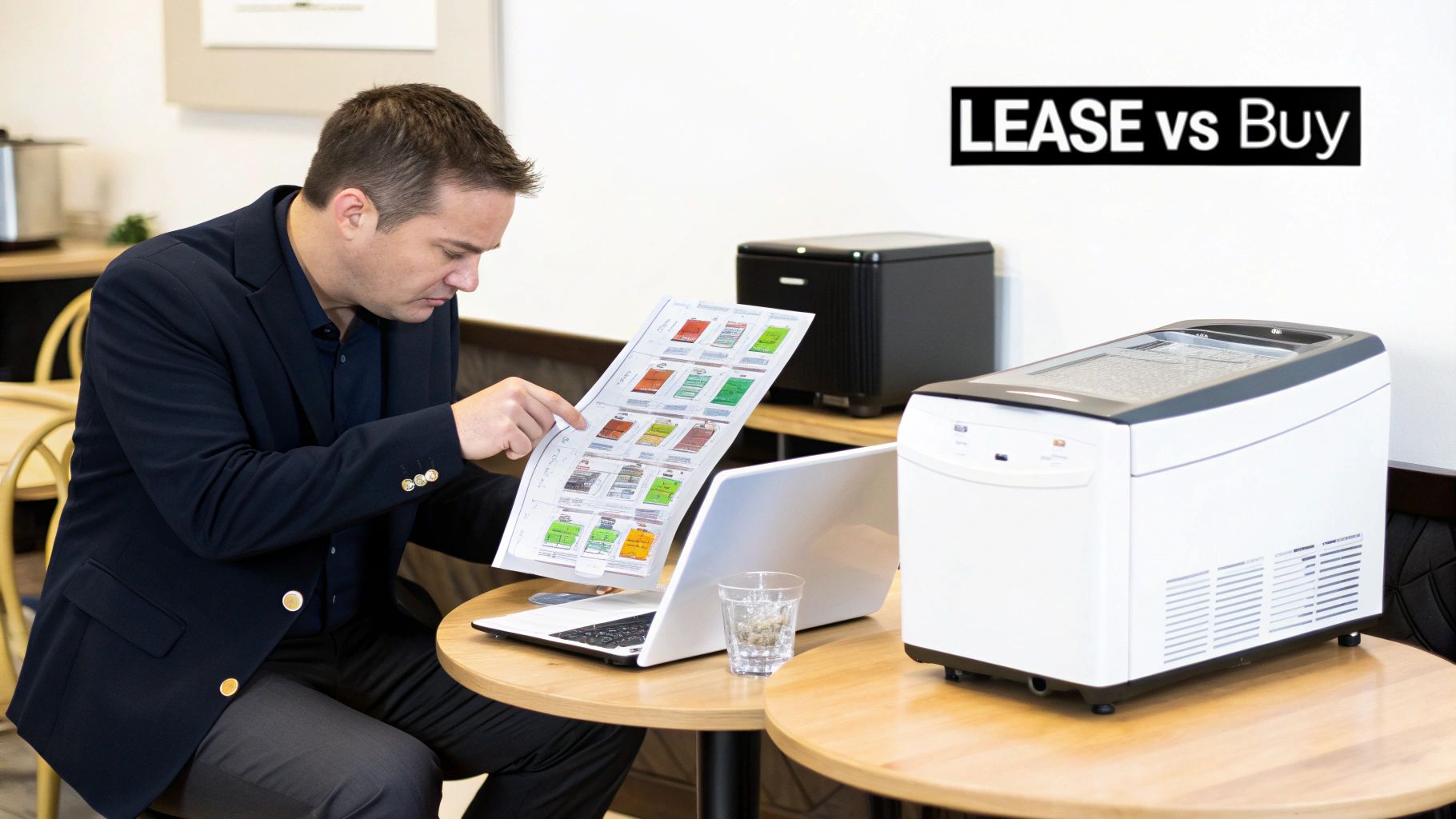
For any restaurant owner, cash flow is king. When it comes to essential equipment like an ice machine, the decision to lease or buy can feel like a major fork in the road. Buying means a hefty upfront investment, but you own the asset. Leasing, on the other hand, keeps that cash in your pocket with predictable monthly payments that often roll in maintenance and repairs.
For many chefs and restaurateurs I've worked with, it’s not just about the money upfront; it’s about choosing immediate financial flexibility versus building long-term equity in their equipment. As industry trends evolve, staying informed about the latest equipment and exclusive deals is crucial for maintaining a competitive edge.
When Leasing an Ice Machine Is the Smart Financial Play
Every equipment decision you make has a ripple effect on your restaurant's bottom line. The classic "lease versus buy" debate for an ice machine isn't just a numbers game—it's a strategic move. While owning a machine seems straightforward, leasing is often the more agile and financially savvy path, especially in a few common scenarios.
Guarding Your Capital as a New Restaurant
If you're just starting out, protecting your startup capital is priority number one. Dropping thousands of dollars on a new ice machine can put a serious dent in a budget that’s already stretched covering rent, initial inventory, and payroll. Leasing transforms a huge capital expense into a manageable operating expense. This frees up critical cash for marketing, hiring another line cook, or simply having a cushion to survive those unpredictable first few months.
Staying Flexible with Seasonal Demand and Growth
Leasing isn't just for newcomers. Established businesses find a lot of strategic value here, too. Think about a seasonal beachfront bar that's slammed in the summer but quiet in the winter, or a catering company with a constantly shifting event schedule. Leasing lets you scale your ice production up or down to meet demand without getting stuck with an oversized, underutilized machine during the slow season. It’s all about having the right tool for the job, exactly when you need it.
This simple decision tree can help you visualize which path makes the most sense for where your business is right now.
As you can see, leasing is often the default choice for new ventures trying to protect their cash reserves. For established businesses with stable capital and predictable needs, purchasing can start to make more sense.
Getting a Handle on the True Cost of Ice
The commercial ice machine market is no small niche—it hit USD 1.45 billion globally and is expected to climb to USD 2.28 billion by 2032. This explosive growth just underscores how vital ice is to our industry.
Within this market, leasing and rental options have become incredibly popular. Savvy owners can discover exclusive deals where a short-term rental for an event might run a $500 deposit and $250 a month, while a longer-term lease could drop that deposit to $200 with maintenance baked in. You'll even see lease-to-own plans with $0 down for around $180 per month.
The real comparison isn't just the sticker price versus the monthly payment. It's about accounting for every single expense over the machine's entire life.
This is where understanding the Total Cost of Ownership becomes critical. When you buy, you’re on the hook for every middle-of-the-dinner-rush repair, every routine maintenance visit, and the eventual replacement. A good full-service lease bundles all those unpredictable costs into one fixed payment, giving you budget certainty and a whole lot more peace of mind.
Leasing vs Buying An Ice Machine At a Glance
To make the choice even clearer, this table breaks down the key differences. It’s a quick way to see the financial and operational trade-offs side-by-side.
| Consideration | Leasing an Ice Machine | Buying an Ice Machine |
|---|---|---|
| Upfront Cost | Low to none. Typically just the first month's payment and a small security deposit. | High. Full purchase price is due upfront, often requiring a significant capital outlay. |
| Monthly Payments | Predictable, fixed monthly payment that fits into your operating budget. | None, after the initial purchase. However, you face unpredictable repair costs. |
| Maintenance & Repairs | Usually included in the monthly fee. The leasing company handles all service calls. | Your responsibility. You pay for all parts, labor, and emergency service out-of-pocket. |
| Equipment Upgrades | Easy to upgrade to a newer or larger model at the end of the lease term. | Costly. You must sell the old unit (often at a loss) and purchase a new one. |
| Tax Implications | Lease payments are typically 100% tax-deductible as an operating expense. | You can depreciate the asset over time, which provides a smaller tax benefit. |
| Long-Term Cost | Can be higher over the full term compared to buying and owning for many years. | Lower total cost if the machine is reliable and you own it for a long time. |
| Flexibility | High. Great for seasonal businesses or those expecting growth and changing needs. | Low. You're locked in with the equipment you purchased, for better or worse. |
Ultimately, the best option depends entirely on your specific circumstances—your cash flow, your risk tolerance, and your long-term business goals.
Understanding Lease Types and Hidden Costs
So you've decided leasing an ice machine is the right move for your business. Great! But now comes the part where you need to get into the details, because not all leases are created equal. The contract language can feel a bit dense, but figuring out the key differences now will save you from some serious headaches and unexpected costs later on.
You'll generally come across two main options: a Fair Market Value (FMV) lease or a Lease-to-Own agreement.
I tell my clients to think of an FMV lease like renting an apartment. You get a lower monthly payment for a fixed term, and when it’s over, you can simply walk away, sign a new lease for an updated model, or buy the machine for whatever it’s worth at that time. This is a fantastic option if you want to keep your monthly costs down and love the idea of upgrading to the latest tech every few years.
A Lease-to-Own plan, on the other hand, is more like buying a house with a mortgage. The monthly payments are usually a bit higher, but you’re building equity with every check you write. At the end of the term, the machine is yours for a symbolic fee, often just $1. This is the go-to for anyone who knows they want to own the equipment eventually but can’t stomach the huge upfront cost right now.
Uncovering Costs Beyond the Monthly Payment
That monthly payment number is just the headline—the real story is always hiding in the fine print. When you're looking at an ice machine lease, what you don't see can hit your budget just as hard as what you do. The smart move is to look past that single number and start asking about all the other potential costs before you even think about signing.
These little surprises can quickly turn a good deal into a financial nightmare. A good leasing partner will be upfront about everything, but it's on you to ask the right questions.
Here’s what I always tell people to look for:
- Installation and Delivery Fees: Does that price include a professional setup? Don't try to save a few bucks here—improper installation can void your warranty in a heartbeat.
- Mandatory Water Filtration Systems: Just about every commercial ice machine needs a specific water filter to run properly and keep the warranty valid. You need to confirm if the filter and its regular replacements are part of your monthly payment or an extra charge.
- Early Termination Penalties: Business needs change. What happens if you have to get out of the lease early? These penalties can be brutal, sometimes forcing you to pay off a huge chunk of the remaining balance.
- End-of-Lease Fees: If you have an FMV lease, get clarity on what it costs to de-install the unit, ship it back, or pay any "refurbishing" fees they might try to tack on.
I’ve seen this play out time and again. Commercial kitchen designers and food truck owners, for example, really lean towards lease-to-own plans. By staying informed about the latest industry news, they can find exclusive deals like $0 down and $180/month for three years. It just makes sense to partner with a good supplier and avoid the $120/year in surprise repair costs that can pop up.
Structuring Your Lease for Success
Getting the right lease isn't just about finding the lowest cost; it’s about making sure the agreement actually fits how your business operates. The perfect lease for a high-volume diner that’s slammed year-round will look totally different from what a seasonal ice cream stand needs.
Don't let a vendor push you into a one-size-fits-all contract. Your lease should be a tool that supports your operational rhythm, not a financial burden that restricts it.
For instance, a busy downtown café might go for a 36-month FMV lease on a solid mid-capacity machine. This keeps their operating expenses low and predictable, and it gives them the freedom to upgrade to a bigger, better model as they grow.
On the flip side, a new food truck owner might be better off with a 48-month lease-to-own deal. That slightly higher monthly payment is a smart trade-off for building equity in an asset they’ll rely on for years. When you think through these scenarios, you can better navigate the various restaurant equipment leasing companies out there and find a partner who truly gets what you're trying to build.
Choosing the Right Machine and Leasing Partner
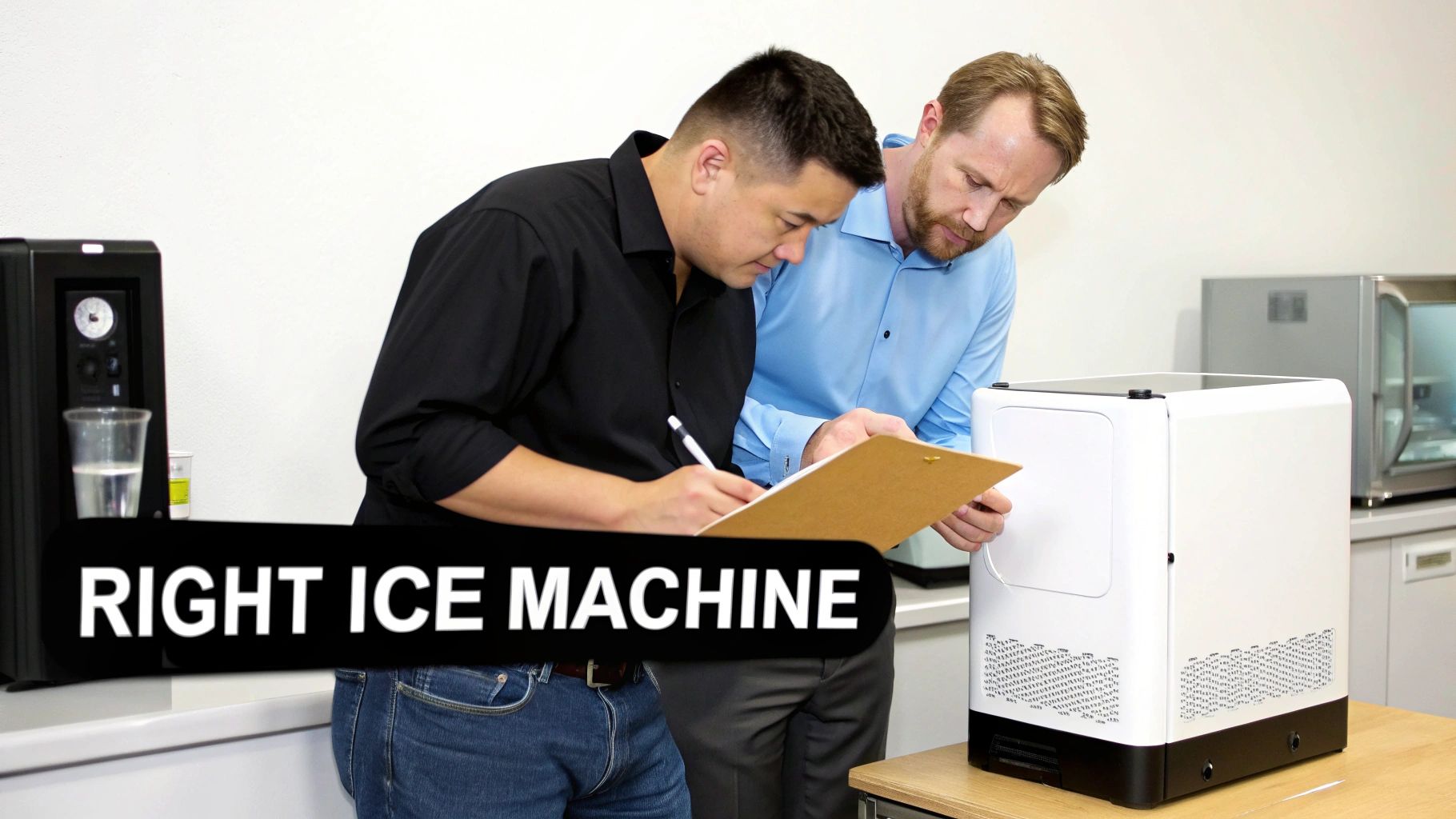
Getting your ice machine situation right comes down to two things: picking the right equipment for your actual needs and finding a leasing partner you can count on. If you drop the ball on either one, you're setting yourself up for headaches and costs you didn't see coming. This isn't just about chasing the lowest monthly payment; it's a strategic move that affects everything from the quality of your drinks to your bottom line.
A good lease starts with a machine that's perfectly sized for your business. A unit that’s too small will have you running out for bagged ice during a Saturday night rush, which looks unprofessional and eats into your profits. On the flip side, an oversized machine just burns through electricity and water, inflating your utility bills for no good reason.
How Much Ice Do You Really Need?
Before you even start browsing for models, you need a realistic handle on your daily ice consumption. Don't pull a number out of thin air. A solid rule of thumb is to base it on your customer volume and what you're serving. For instance, a packed bar might blow through 1.5 lbs of ice per customer, while a quick-service cafe might just need a few ounces per drink.
Think specifically about your peak times. Are you a lunch-focused deli that gets slammed from 11 AM to 2 PM? Or a late-night spot where the real demand kicks in after 9 PM? Your machine needs to produce enough ice over a 24-hour cycle, but just as importantly, its storage bin has to be big enough to carry you through those intense periods without running dry.
Matching the Ice to Your Menu
Believe it or not, not all ice is the same. The type you choose has a direct impact on how your drinks look, taste, and feel to the customer. You'll mostly be choosing between cube, nugget, and flake.
- Cube Ice (Full or Half-Dice): This is the industry standard for a reason. It's dense, melts slowly, and is the go-to for chilling everything from sodas and iced tea to classic cocktails. Full cubes are timeless, while half-dice cubes cool a bit faster and let you pack more into a glass.
- Nugget Ice: Often called "chewable ice" or "Sonic ice," this stuff is softer and more porous. It’s a game-changer for blended drinks and smoothies since it's easier on blender blades and soaks up the beverage's flavor.
- Flake Ice: You're looking at small, soft, irregular ice chips here. You’ll see flake ice blanketing seafood displays, chilling salad bars, and preserving produce. It molds perfectly around items, providing fantastic cooling without bruising delicate food.
The right ice does more than just cool a drink; it becomes part of the presentation. Choosing nugget ice for a mint julep or crystal-clear cube ice for an old-fashioned shows a level of detail your customers will notice.
Once you know your capacity and the type of ice you want, you can start digging into specific models. A smart move is to prioritize machines with an ENERGY STAR certification. These units can be 15% more energy-efficient and 10% more water-efficient than their standard counterparts, which translates directly into lower utility bills month after month. To get a better feel for different setups, it’s worth learning about the flexibility a modular ice machine can offer.
To help you get started, here’s a quick guide to pairing ice types with different businesses.
Which Ice Type Is Right For Your Business
| Business Type | Recommended Ice Type | Typical Daily Ice Need (lbs) |
|---|---|---|
| Coffee Shop/Café | Half-Dice Cube | 150 - 300 |
| Bar/Nightclub | Full Cube or Gourmet | 300 - 1,000+ |
| Fast Casual Restaurant | Nugget or Half-Dice Cube | 200 - 500 |
| Fine Dining | Full Cube or Gourmet | 250 - 600 |
| Hotel/Lodging | Half-Dice Cube | 400 - 1,500+ |
| Healthcare Facility | Nugget or Flake | 500 - 2,000+ |
This table is just a starting point, of course. Your own traffic, menu, and climate will ultimately determine the perfect fit for your operation.
Vetting Your Leasing Partner
With a specific machine in mind, your attention should turn to finding the right company to lease from. This partner is more than just a supplier; they're your lifeline when equipment fails. A cheap lease from a company with a bad service reputation is a disaster waiting to happen.
First, do your homework on their reputation. How long have they been around? What are other local restaurant owners saying about them? Check online reviews, sure, but don't be afraid to ask for a few references you can actually call.
Then, really dig into the details of their service agreement. This is what separates a great partner from a mediocre one.
- Guaranteed Response Time: What’s the plan when your machine dies on a Friday night? A solid partner should commit to a clear service window, like getting a technician out to you within 24-48 hours.
- Maintenance Plan Details: Find out exactly what's included. Does the lease cover routine professional cleaning, descaling, and filter changes? These are absolutely critical for food safety and keeping the machine running smoothly. A true "full-service" lease should handle all of it.
- Contract Clarity: The lease agreement itself should be easy to understand. If the terms are confusing or the salesperson gets cagey about details like early termination fees or what happens at the end of the lease, that's a huge red flag.
Putting in the time to choose the right machine and a trustworthy partner is the single most important investment you can make in this process. It ensures you have a steady supply of quality ice and a team that has your back, so you can stay focused on what really matters—running your business.
Navigating the Lease Agreement Like a Pro
The fine print in an equipment lease is where a good deal becomes a great one—or a potential nightmare. This document isn't just a formality; it's the rulebook for your relationship with the leasing company. You need to review your contract with the same critical eye you use on your own profit and loss statement.
Diving into a legal document can feel intimidating, but you don't need a law degree to spot the important parts. The goal is simple: know exactly what you're signing, what's covered, and what's left on your plate. A great way to get familiar with the standard language and structure is to review an equipment lease agreement template before you even see the official one from your vendor.
Key Clauses You Cannot Afford to Skim
Certain sections of your lease carry more weight than others. These are the clauses that directly impact your daily operations and your budget. Don't be shy about asking for clarification until you're completely comfortable with the terms.
Here are the non-negotiable clauses to scrutinize:
- Maintenance and Repair Inclusions: Does the lease specify who pays for parts and labor? Look for language that confirms the leasing company is responsible for all repairs not caused by user error.
- Service Response Time: A vague promise of "prompt service" won't cut it when you're out of ice during a dinner rush. The contract needs a firm commitment, like a technician on-site within 24-48 hours.
- Warranty Coverage: You need to understand where the manufacturer's warranty ends and the leasing company’s service plan begins. Make sure there are no gaps that could leave you on the hook for a major component failure.
- Liability for Damages: The agreement will outline your responsibility for damage from accidents or neglect. Get a clear definition of "neglect" so you can train your staff properly and avoid disputes.
What a True Full-Service Lease Should Cover
The term "full-service" gets thrown around a lot, but its meaning can vary wildly between providers. A genuinely comprehensive lease should feel like a partnership, taking the entire burden of machine ownership off your shoulders. It’s more than just financing; it’s an operational support system.
A great lease agreement isn't about restricting you; it's about protecting you. It should provide clarity and predictability, allowing you to focus on your customers instead of your equipment.
A top-tier full-service lease should bundle several key services into your single monthly payment. Beyond just fixing the machine when it breaks, it should proactively keep it running perfectly.
This includes:
- Preventative Maintenance: Regular, scheduled visits from a technician to clean, descale, and inspect the unit are non-negotiable. This is vital for food safety and preventing major breakdowns.
- Filter Replacements: The agreement should explicitly include the cost and labor for changing water filters on the manufacturer's recommended schedule.
- All-Inclusive Repairs: This is the big one. You want 100% coverage for both parts and labor on any mechanical failure, with no hidden deductibles or trip charges.
Making Leasing Accessible with Smart Financing
For many new or growing businesses, getting the right equipment is a huge hurdle. Even with the clear benefits of leasing an ice machine, the upfront process can seem daunting. This is where modern, flexible financing solutions come into play, making essential equipment accessible without draining your cash reserves.
The best financing partners understand the unique challenges of the food and beverage industry. They look beyond a simple credit score to see the real health and potential of your business. By using more realistic approval criteria, these partners can get you the equipment you need to operate safely and grow.
This approach is a lifesaver for businesses that might not qualify for a conventional bank loan, like a new food truck or a café in its first year. By securing a manageable lease through a tailored financing program, you preserve your cash for inventory, marketing, and payroll—the things that actually fuel your growth. It's about getting the tools you need to succeed, right when you need them most.
Best Practices for Maintaining Your Leased Machine
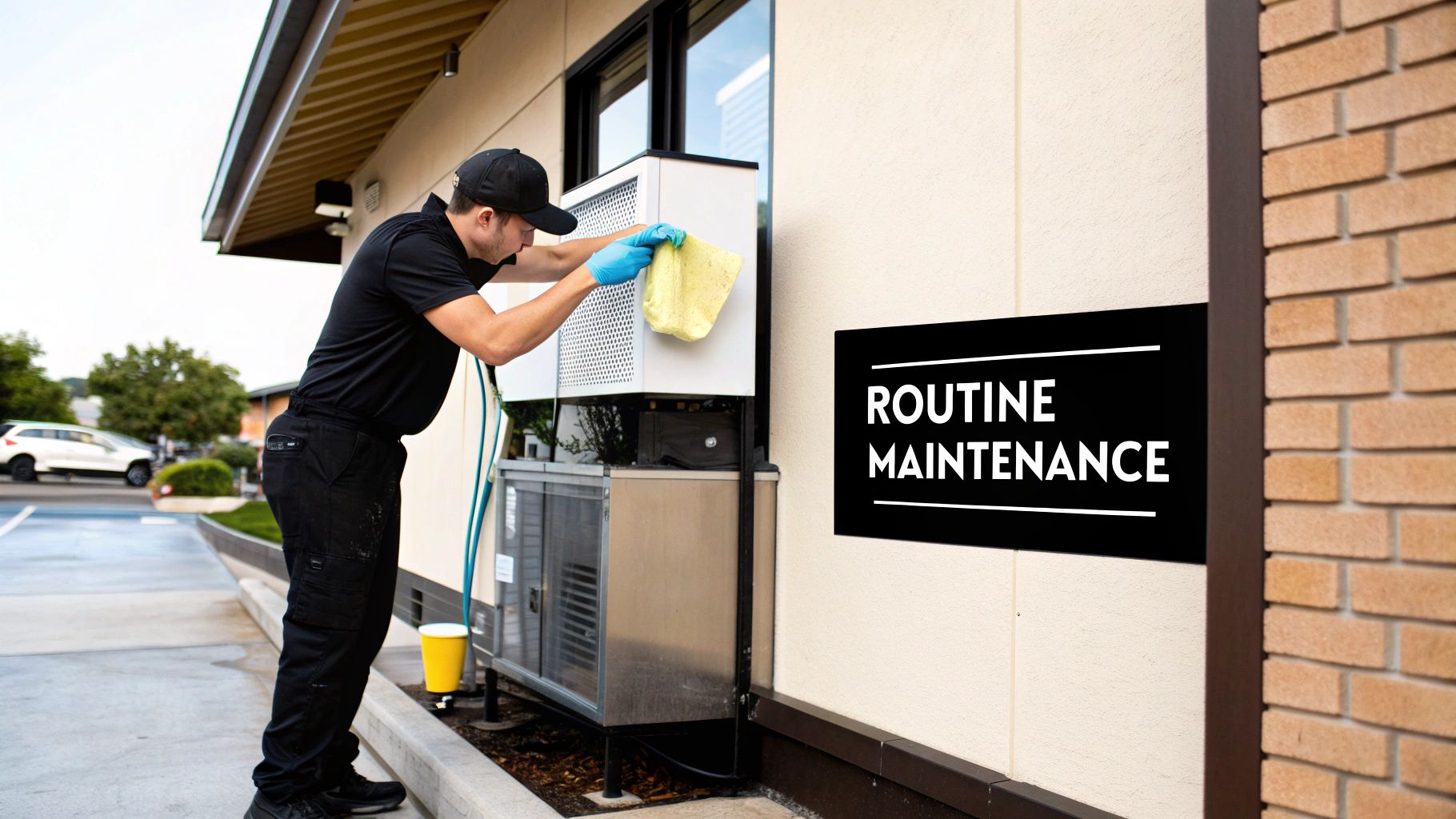
Even when your lease includes full-service maintenance, a little daily care from your team can go a long way. Think of it like this: the leasing company is your mechanic for the big, scheduled tune-ups, but your staff handles the day-to-day checks. This simple habit keeps your machine running like a top, ensures you’re always meeting health codes, and prevents surprise breakdowns between professional service calls.
Good daily upkeep isn't just about appearances; it's smart business. A well-maintained machine is far less likely to die on you in the middle of a Friday night dinner rush, saving you from the headache of downtime and lost sales. Plus, it shows your leasing provider you're a responsible partner.
Simple In-House Tasks for Your Staff
The best way to make this happen is to build a few quick tasks right into your opening or closing checklists. These things take maybe five minutes, but they're absolutely critical for good-tasting ice and a long-lasting machine.
Get your team in the habit of performing these quick checks:
- Wipe Down the Exterior: A quick wipe of the outside surfaces, door, and handle with a food-safe cleaner prevents grimy buildup that can easily find its way into your ice.
- Inspect the Bin: Every day, someone should peek inside the storage bin. Look for any signs of slime, mold, or anything else that doesn't belong. The bin needs to be emptied and sanitized regularly based on manufacturer and health department rules.
- Check Air Filters: Air-cooled machines have filters that act like magnets for kitchen grease and dust. A quick glance to make sure they aren't clogged helps the machine run cool and efficiently.
These little habits are your front line of defense. For a closer look at what the pros do, you can learn more about the specific ice machine cleaners and sanitizers they use for deep cleaning.
Recognizing Early Warning Signs
The single most important thing you can do is teach your staff to spot trouble before it becomes a crisis. They're the ones using the machine all day, every day, so they're in the perfect position to notice the small things that signal a bigger problem is brewing. Catching it early means a quick service call instead of a catastrophic failure.
Don't wait for the ice to stop dropping completely. The second you or your team notice something's off, call your leasing provider. Trust me, they would much rather fix a small problem on a Tuesday afternoon than deal with your emergency call on a packed Saturday night.
Train everyone—from your bartenders to your line cooks—to keep an eye and an ear out for these red flags.
Common Trouble Indicators:
- Changes in Ice Quality: Is the ice suddenly cloudy, wet, or smaller than it used to be? That often points to a problem with the water filter or other internal parts.
- Slower Production: If the bin just isn't filling up as fast as it normally does, the machine could be struggling with a clog or a failing component.
- Unusual Noises or Odors: Grinding, squealing, or loud clicking noises are never a good sign. The same goes for any musty or mildew-like smells, which mean it's time for an immediate deep clean.
- Visible Leaks or Frost: A puddle of water around the machine or a heavy layer of frost on the evaporator plate is a clear signal to call for service right away.
When you empower your team with this knowledge, they stop being just users and become guardians of a critical piece of your operation. This culture of proactive care is what ensures you always have clean, safe ice on hand and keeps your entire kitchen running smoothly.
Answering Your Top Questions About Leasing an Ice Machine
Even after laying everything out, I find most people still have a few lingering questions before they're ready to sign a lease. It’s a big decision. Let’s walk through some of the most common things I get asked by chefs and restaurant owners. Getting these details ironed out will help you make a choice that truly benefits your business.
What Happens If My Leased Ice Machine Breaks Down?
This is usually the first question, and for good reason—a broken ice machine on a busy night is a nightmare. This is where a good lease really shines. When the machine goes down, it’s not your emergency to fix; it’s the leasing company’s. All you have to do is make one phone call.
A reputable provider will have a guaranteed service response time baked right into the contract. This means a technician will be on their way promptly. More importantly, your agreement should state that all parts and labor are covered, saving you from unexpected repair bills that can easily top several hundred dollars.
Can I Upgrade My Ice Machine During the Lease?
Of course. Any smart leasing company knows that business needs evolve. If your restaurant takes off and you find yourself constantly running out of ice, you aren’t stuck.
Most agreements have a clause allowing you to upgrade your equipment. You can typically trade in your current machine for a model with a higher production capacity. The key is to discuss the specifics—like how it will affect your monthly payment—before you sign the initial contract so there are no surprises down the road.
Is Leasing More Expensive Than Buying in the Long Run?
It's a common misconception. If you just add up the monthly payments over a few years, it might look like you’re paying more than the machine’s sticker price. But that’s not the whole story. You have to consider the total cost of ownership.
A quality lease isn't just a rental; it’s a full-service package. It bundles in all the routine maintenance, deep cleanings, filter changes, and repair costs. When you own the machine, every single one of those expenses comes directly out of your pocket. Leasing provides a predictable, fixed operating cost and protects your cash flow from the shock of a sudden, expensive breakdown.
What Kind of Ice Do I Need for My Bar or Café?
This all comes down to your menu. There isn't a one-size-fits-all answer; the right ice depends entirely on what you’re serving.
- For bars and most restaurants: Classic cube ice, either full or half-dice, is the workhorse. It’s perfect for cocktails and soft drinks because it melts slowly and cools effectively without watering things down too quickly.
- For cafés, healthcare, or smoothie shops: Softer nugget ice (sometimes called "chewable ice") or flake ice is often the better choice. It's much easier on blender blades and gives blended drinks a smoother, more appealing texture.
After you decide on the type, the next critical step is calculating your daily ice needs. A good supplier won't just sell you a machine; they’ll help you analyze your peak hours and menu to make sure you get one that can keep up.
Ready to explore leasing an ice machine without the upfront financial burden? At Encore Seattle Restaurant Equipment, we offer premium equipment with tailored financing solutions to get your kitchen the tools it needs. Discover our selection and find the perfect fit for your restaurant at https://encoreseattle.com.