
Restaurant Equipment Leasing Companies: Smart Partners for Your Kitchen Growth
Getting your kitchen kitted out is one of the biggest checks you'll write, but it doesn't have to empty your accounts. For restaurant owners and chefs, the real challenge is getting the essential gear without tying up all their cash. This is exactly where restaurant equipment leasing companies come in, helping you stay informed about industry trends and discover exclusive deals on the latest equipment. Think of them as financial partners who can help you get what you need without the massive upfront cost.
Why Smart Restaurant Owners Lease Their Equipment
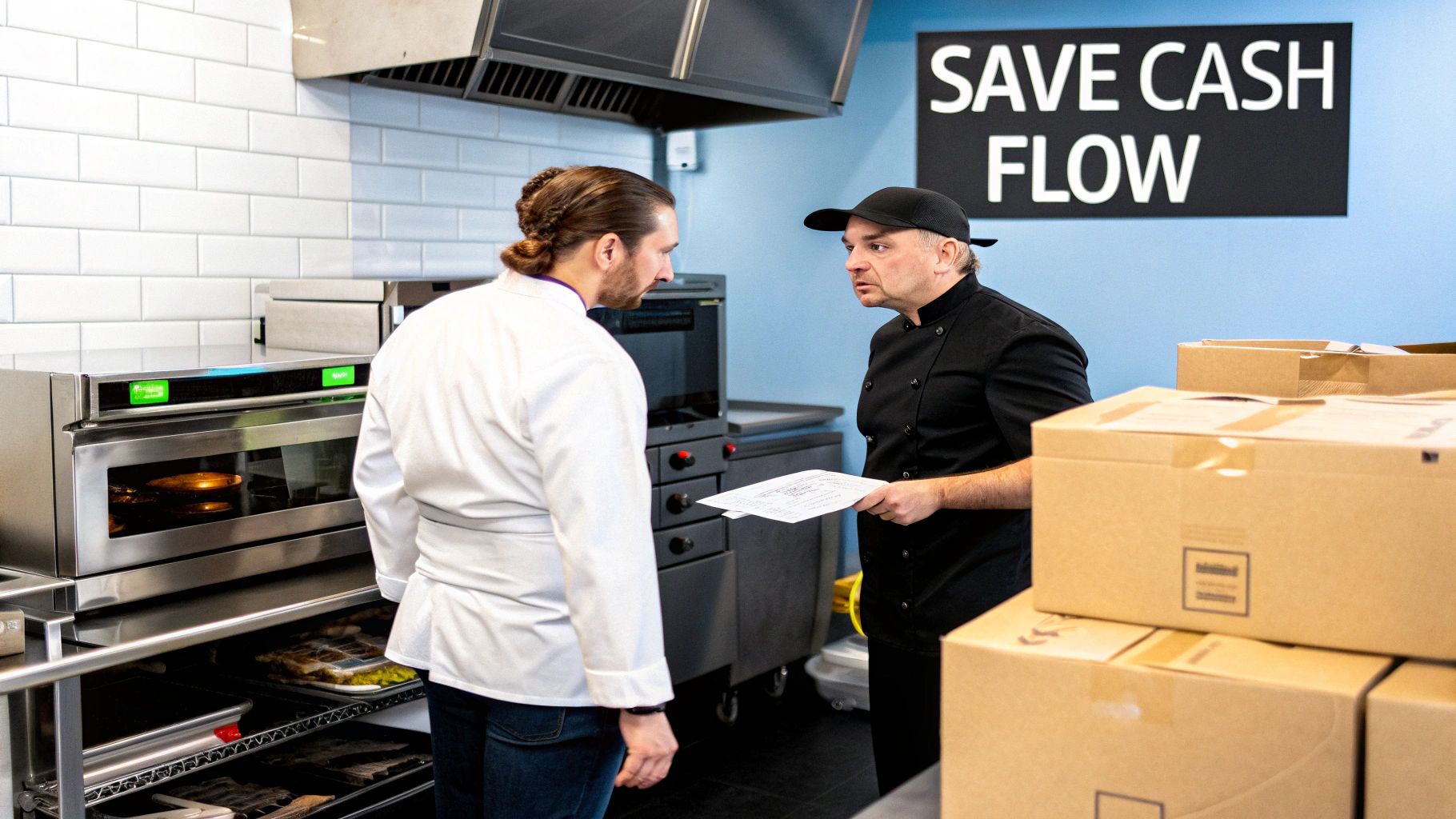
It helps to think about leasing less like a rental and more like a subscription for your kitchen. Instead of dropping a huge sum of money on a new oven or walk-in freezer—money that's then locked into that piece of metal—you get top-of-the-line equipment for a predictable monthly payment. This smart approach keeps you up-to-date with the latest news on restaurant equipment and supplies without draining your capital.
This simple shift frees up your cash for the things that actually drive your business forward. We're talking about hiring a fantastic front-of-house team, sourcing better ingredients, or running that marketing campaign you've been dreaming about. It's a strategic move that keeps you nimble and focused on growth, not just ownership.
Preserving Capital for What Matters Most
Every dollar you sink into a piece of equipment that starts losing value the moment it's installed is a dollar you can't use to build your brand. Leasing completely changes that dynamic.
By turning a huge capital expense into a manageable operating expense, you keep your financial options open. It means you can say "yes" to opportunities—like a last-minute catering contract or the chance to open a pop-up—without worrying about being cash-strapped.
For anyone just starting out, from aspiring chefs to entrepreneurs figuring out how to start a supper club, getting a handle on these financing options is a game-changer.
The "Streaming Service" Analogy for Your Kitchen
Think of it like this: leasing is the Netflix or Spotify for your kitchen tools. You get immediate access to a massive library of high-performance equipment, from state-of-the-art combi ovens to industrial mixers, without the burden of owning any of it. It's an easy way for busy chefs to stay informed about industry trends in equipment and technology.
The advantages are pretty clear:
- Access to the Best Gear: You can get your hands on the newest, most efficient models that might have been out of reach if you had to buy them.
- Predictable Budgeting: Those fixed monthly payments make it so much easier to plan your finances and avoid surprises.
- Easy Upgrades: When your lease term is up, you can easily swap out for newer technology or equipment that better fits your evolving menu.
This model lets you focus on what you do best—creating amazing food—with the right tools for the job. It's why restaurant equipment leasing companies have become such essential partners for today's kitchens.
Decoding the Different Types of Equipment Leases
When you start talking to restaurant equipment leasing companies, you'll find that "lease" isn't a one-size-fits-all term. The two main flavors you'll encounter are Capital Leases and Operating Leases. Getting a handle on how they work is the first step to making sure your financing strategy actually fits your restaurant's bigger picture.
Think of a Capital Lease like a rent-to-own plan for your kitchen. You make steady payments on that brand-new convection oven or walk-in cooler, and the whole point is that you'll own it outright when the lease is up. It’s all about building equity in the equipment that makes your restaurant run.
An Operating Lease, on the other hand, is much more like a straightforward long-term rental. This is a brilliant option for gear that gets outdated fast—like POS systems—or for owners who just want the freedom to swap out equipment as their menu or concept evolves.
The Capital Lease: Your Path to Ownership
A Capital Lease, which you'll often hear called a lease-to-own plan, is built from the ground up to make you the owner at the end of the road. For accounting purposes, it’s treated almost like you bought it from day one, meaning the equipment shows up as an asset on your balance sheet.
This is the perfect route for foundational, built-to-last equipment. You get that essential, high-dollar piece of gear in your kitchen without draining your bank account on a massive upfront purchase. Plus, you still get to claim tax depreciation on it, just as if you’d paid cash. If you're running a mobile kitchen, a lease-to-own concession trailer works on this exact principle to get your business rolling.
At the end of a capital lease, the buyout is typically very small, often just $1. This makes it a popular choice for restaurateurs who are confident they’ll need that specific piece of equipment for years to come.
The Operating Lease: Your Strategy for Flexibility
An Operating Lease is a true rental agreement, plain and simple. The leasing company holds onto ownership, and you pay for the right to use the equipment for a specific amount of time. From an accounting standpoint, these payments are just an operating expense, which can make bookkeeping a lot simpler.
This is the go-to choice for technology that changes every year or for niche equipment you might only need for a limited time. It keeps your operation nimble, giving you the power to upgrade to the latest and greatest without getting stuck trying to sell old gear. In a similar vein, some businesses are even exploring new models like an appliance subscription service, which offers another way to access equipment without the burdens of ownership.
When an operating lease ends, you usually have a few options:
- Return the equipment: Hand it back and walk away, no strings attached.
- Renew the lease: Keep using the gear, often at a new, lower rate.
- Purchase the item: Buy it from the leasing company at its current fair market value.
Picking the right lease really comes down to your business strategy—are you playing the long game of building assets, or do you need the flexibility to adapt and pivot quickly?
Capital Lease vs Operating Lease at a Glance
To make it even clearer, here’s a quick side-by-side comparison. It breaks down the fundamental differences to help you see which path aligns better with your restaurant's goals.
| Feature | Capital Lease (Lease-to-Own) | Operating Lease (Fair Market Value) |
|---|---|---|
| Primary Goal | Equipment Ownership | Temporary Use & Flexibility |
| Balance Sheet | Appears as an asset and a liability | Does not appear on the balance sheet |
| Tax Treatment | You can claim depreciation and interest | Payments are treated as an operating expense |
| End of Term | You own it after a small buyout (often $1) | Return, renew, or buy at market value |
| Best For | Core, long-lasting equipment (ovens, freezers) | Tech or equipment with a short lifespan (POS) |
Ultimately, there's no single "best" choice—only the one that’s best for you. Understanding these key distinctions is the first step toward making a smart financial decision for your kitchen.
The Real-World Benefits of Leasing Your Kitchen Equipment
Deciding how to equip your kitchen isn't just about saving cash on day one. When you work with restaurant equipment leasing companies, you're making a strategic choice that can build a more resilient, competitive, and financially nimble business for the long haul. It's how savvy chefs stay informed on the latest trends and discover exclusive deals.
One of the biggest perks? You get to protect your borrowing power. Every time you take out a loan to buy a big-ticket item, you chip away at your available line of credit. Leasing keeps that credit line open and ready for when you really need it—think true emergencies, or a golden opportunity to open a second location.
Budget with Confidence and Lower Your Bills
Leasing turns a huge, scary capital expense into a predictable, fixed operating cost. You know exactly what you'll pay each month. That stability makes budgeting a breeze and gets rid of the financial guesswork that trips up so many restaurant owners.
But the financial upside doesn't stop there. Leasing also gets you immediate access to the latest, most energy-efficient equipment on the market—the kind of gear you might not be able to afford if you were buying it outright.
Think about it: modern leased equipment is often built with energy-saving tech that can seriously cut your monthly utility bills. Those operational savings can actually help offset the lease payment itself, creating a much smarter financial cycle for your business.
This flexible model is a lifeline for operators, which is why the global rental market has ballooned to $4.8 billion. We're seeing new, energy-efficient equipment cut utility bills by as much as 30%, a saving that goes straight to your bottom line. You can dig deeper into how leasing helps operations in this detailed restaurant equipment market report.
Stay Ahead of the Technology Curve
The food world evolves at lightning speed. New health codes, cooking trends, and customer demands all require modern equipment. Leasing is your secret weapon for keeping up without constantly sinking your capital into new purchases. It's the best way to stay informed about restaurant equipment and supplies.
Instead of being stuck with an outdated oven for a decade, an operating lease lets you swap it out for a newer model at the end of your term. This keeps your kitchen ready to meet new standards, embrace better technology, and improve everything from food quality to ticket times.
This flowchart breaks down the fundamental choice you'll face, all based on what you want to do with the equipment in the long run.
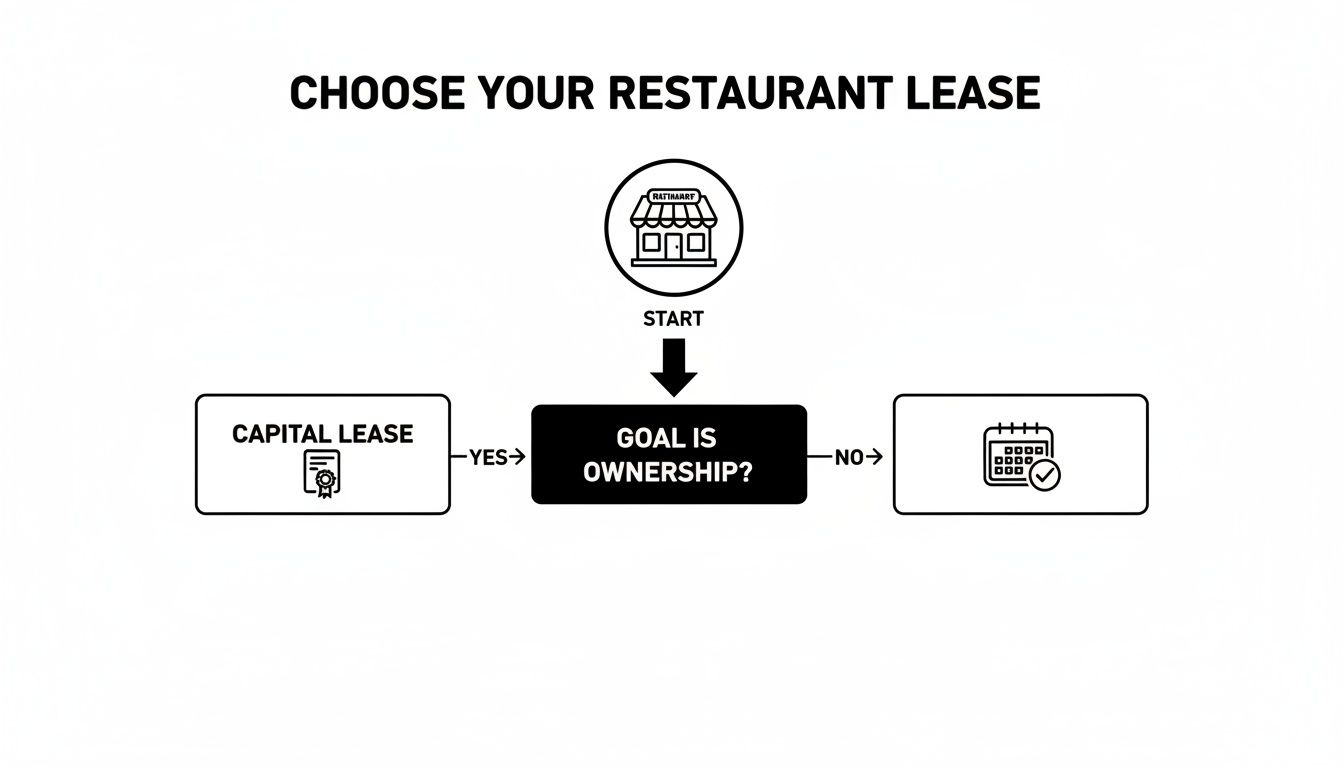
As you can see, the decision really comes down to one question: is owning the equipment your ultimate goal? If yes, a Capital Lease is your path. If flexibility is more important, you'll look at other options.
Your Step-by-Step Guide to the Leasing Process
Getting new equipment into your kitchen doesn't have to be a headache. While it might seem complicated at first, the leasing process is actually a series of clear, straightforward steps. Once you know the path, working with restaurant equipment leasing companies becomes a much smoother ride.
This checklist will walk you through everything, from the initial "we need a new oven" conversation to the day it arrives at your door.
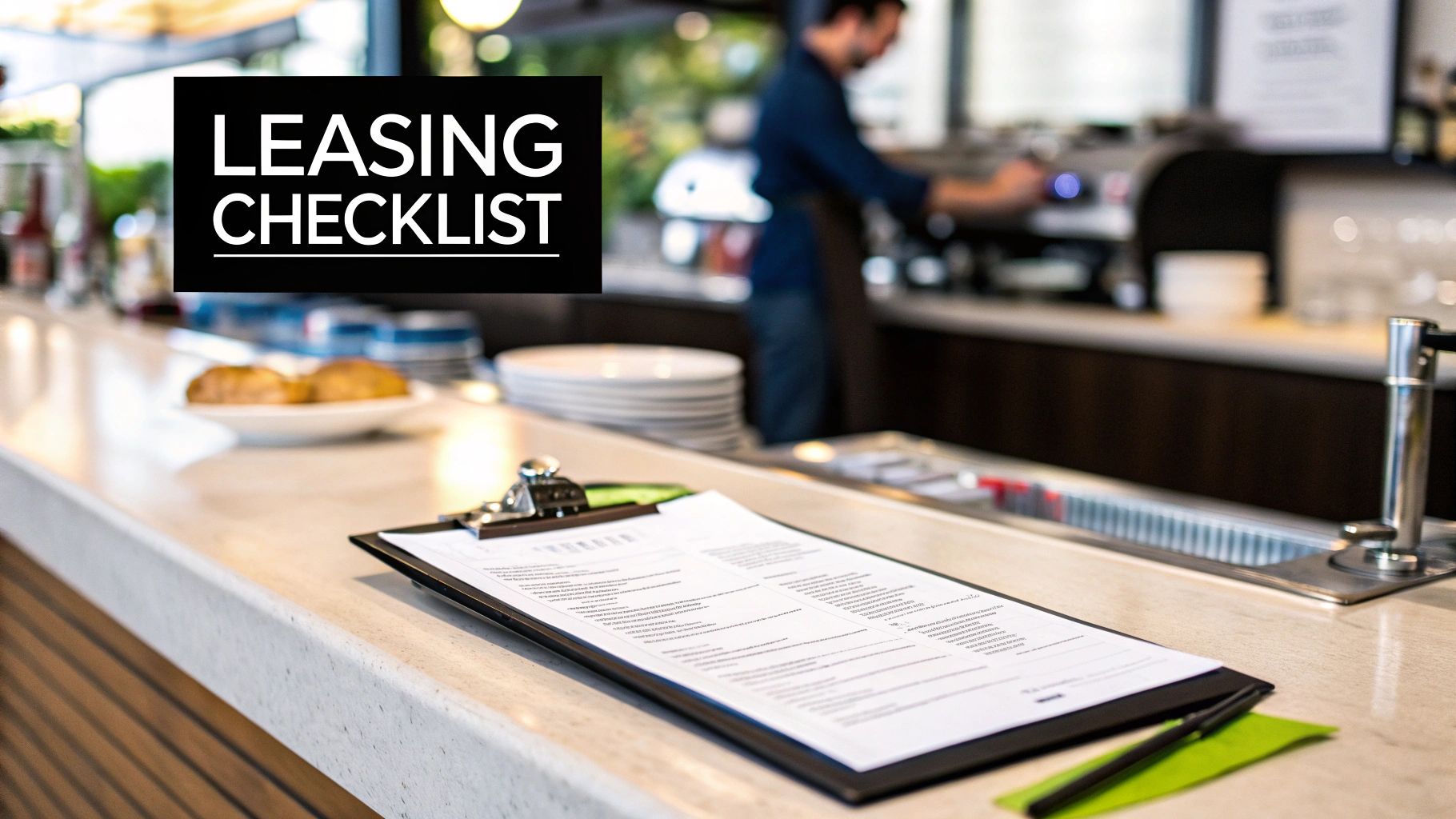
Think of it like getting your mise en place ready before service. A little prep work upfront makes the entire cooking—or in this case, leasing—process go off without a hitch.
Laying the Groundwork
Before you start calling leasing companies, you need to get your own house in order. A bit of planning here will save you a ton of time and back-and-forth later.
-
Pinpoint Your Exact Equipment Needs: Get specific. Don't just write down "ice machine." Write down the type of ice machine, the brand you're eyeing, and the production capacity you need. Is it a high-volume combi oven or a specialized blast chiller? The more detail, the better.
-
Assemble Your Financial Snapshot: Time to gather your paperwork. Most leasing partners will ask for your business plan (a must for startups), a few months of bank statements, and your profit and loss statements. This gives them confidence that you’re running a tight ship.
Finding and Securing Your Lease
Okay, your list is made and your documents are ready. Now it's time to find the right partner to make it happen. This is where you'll do your homework to find a company that truly gets the restaurant business.
-
Find and Vet Specialized Leasing Partners: Don't just go to a general lender. Look for companies that live and breathe the restaurant industry. They get that you have busy and slow seasons, and their terms are often built around the realities of our business. They can be a great source for industry trends and exclusive deals.
-
Submit a Clean Application: Fill out the application completely. Double-check everything. Missing info is the number one cause of delays. A complete, accurate application shows you’re a professional operator who’s serious about the partnership.
Once you get an offer, it's time to put on your reading glasses. This is the most important part. Go through that lease agreement line by line. Look at the interest rate, the term length, what your options are at the end, and sniff out any hidden fees. Don't sign a thing until you understand it all.
There's a reason leasing is so popular. The global restaurant equipment market was valued at $3.88 billion and is expected to climb to $5.72 billion by 2029. Much of that growth comes from operators like us needing to keep up with food safety standards and new technology.
- Seal the Deal and Schedule Delivery: Once you've signed on the dotted line, you're in the home stretch. The final step is simply coordinating with your equipment dealer and the leasing company to get that delivery on the calendar. Before you know it, your new gear will be rolling into the kitchen.
Following these steps will help you handle the leasing process with confidence. If you're looking at a specific piece of equipment, like a warewasher, our guide on how commercial dishwasher leases work is a great next read.
How to Choose the Right Leasing Partner for Your Restaurant
Picking the right leasing partner is just as important as choosing the perfect location for your restaurant. Your equipment strategy—and ultimately, a big part of your success—depends on finding a true ally, not just another faceless lender. The best restaurant equipment leasing companies get the unique rhythm of the food service industry and act more like a strategic partner in your growth, helping you discover the latest news and deals.
Your ideal partner should have deep industry experience. This means they understand the controlled chaos of a dinner rush, the reality of seasonal cash flow, and why a dependable ice machine isn't a luxury—it's essential. They won't just see a credit score; they'll look at your business plan and understand the vision you're trying to build.
Look for Flexibility and Transparency
A one-size-fits-all lease agreement just doesn't work for most restaurants. Your cash flow in August is probably worlds apart from what it is in January. A great leasing partner gets this and will offer flexible payment structures that can adapt to your seasonal business cycle, so you aren't financially squeezed during the slower months.
Just as crucial is complete transparency. You should never have to dig through the fine print to find hidden fees or confusing clauses. A good partner will give you clear, upfront terms, including:
- The exact monthly payment amount.
- The total cost over the entire life of the lease.
- A clear explanation of your options at the end of the term (buyout, return, or renew).
A trustworthy partner lays all their cards on the table. If the terms feel murky or overly complex, that’s a huge red flag. It's time to walk away and look at other options.
Evaluate Reputation and Equipment Options
Before you sign on the dotted line, do your homework. Check online reviews and, if you can, talk to other local restaurant owners about who they've worked with. A solid reputation within the local food community is one of the best indicators of a quality leasing company.
The best partners also offer a smart mix of both new and certified used equipment. This gives you the freedom to outfit your kitchen perfectly for your specific budget. For instance, you might decide to lease a brand-new, high-tech combi oven but save some cash by opting for a warrantied used prep table. Our detailed guide on restaurant equipment financing can help you weigh these different paths.
This kind of flexibility is becoming more important than ever as sustainability and technology reshape our industry. Today, operators are actively looking for energy-efficient solutions to cut down on utility costs and meet new green regulations. This shift is driving huge growth, with the global restaurant equipment market projected to hit $10.2 billion by 2035—and leasing is a massive part of that trend. You can learn more about how market trends are influencing leasing decisions.
Your Kitchen, Your Way: Partnering with Encore Seattle
Let's be honest, figuring out how to pay for your kitchen equipment can be a huge headache. You’ve got a dozen things on your plate, and trying to decipher the fine print from national restaurant equipment leasing companies probably isn't high on your list of "fun things to do."
That’s where we come in. Here at Encore Seattle, we’re not some anonymous lender from across the country. We’ve been part of the Pacific Northwest and Alaska’s vibrant food scene since 1990. We know the local challenges because we live here, too. We help chefs and owners like you stay informed about industry trends and discover exclusive deals on restaurant equipment and supplies.
Local Roots, Big Advantages
We've teamed up with The Restaurant Warehouse to make the whole leasing process as smooth as possible. We’re talking about getting you an approval in just a few hours, not days or weeks. The goal is to get you back to focusing on your menu, not your financing paperwork.
Think of us as your local kitchen outfitter. Whether you're firing up a new food truck in Portland, keeping a beloved Seattle café buzzing, or plating up fine dining in Anchorage, we bring the regional know-how that big national companies just can't offer.
We also get that every restaurant's budget is a unique puzzle. That's why our inventory is packed with both brand-new equipment and high-quality, warrantied used gear. This lets you be strategic. You can splurge on that dream six-burner range where it really matters, but save a bundle on a perfectly good used prep table. It's a common-sense way to get the performance you need without overspending.
We Handle the Details, You Run Your Business
We’ve cut out the usual red tape to get your equipment in your hands, fast. Once you're approved, we jump on the logistics. For our customers right here in Washington state, we even offer free freight options—a real cost-saver that directly helps your bottom line.
From the first conversation about what your kitchen needs to the day your equipment arrives, we’re here to make sure you have the right tools to bring your vision to life. It’s just a smarter, more personal way to build your business.
Got Questions About Leasing Restaurant Equipment? We've Got Answers.
Jumping into the world of equipment leasing can feel a little overwhelming. You've got questions, and you need straight answers from people who get it. Let's tackle some of the most common things we hear from chefs and restaurant owners.
What Kind of Credit Score Do I Need?
This is a big one, but the answer is probably better than you think. You don't need a flawless credit history. While every leasing partner has its own criteria, most lenders who specialize in the restaurant industry are looking at the bigger picture.
A score above 600 is usually a good starting point. But honestly, factors like how long you've been in business, your recent cash flow, and a solid business plan can often carry more weight. Unlike a traditional bank, a foodservice-focused lender understands the unique rhythm of our industry and is often much more flexible.
Can I Lease Used Equipment?
Yes, and you absolutely should consider it! Leasing used equipment is one of the smartest financial moves a restaurant can make, especially for startups or anyone trying to make their capital go further. It's a fantastic way to slash your monthly payments without compromising on quality.
Here's a pro tip: Reputable suppliers and their financing partners often have a great selection of high-quality, refurbished equipment that comes with a warranty. This gear is fully eligible for leasing, giving you access to durable, premium brands for a fraction of what they'd cost new. You can build a truly high-performance kitchen for a lot less.
Think of it as getting the best of both worlds: lower costs and reliable, professional-grade equipment. It’s a strategy that savvy operators use all the time.
What Happens at the End of My Lease?
Your options are actually set from day one and are based on the type of lease you chose. There are no surprise endings here; everything is spelled out in your agreement.
Here’s how it usually breaks down:
- Capital Lease (Lease-to-Own): This one's simple. You'll make one last payment—often just a symbolic amount like $1—and the equipment is officially yours.
- Operating Lease (Fair Market Value): This option gives you more freedom. When the term is up, you can typically choose to return the equipment, renew the lease (often at a lower rate), or buy the equipment outright for its current fair market value.
Knowing these paths from the get-go helps you pick a lease that truly fits your restaurant's long-term strategy.
Ready to gear up your kitchen with a financing partner who actually understands the Pacific Northwest food scene? The team at Encore Seattle Restaurant Equipment is here to help you find the perfect new or used equipment and connect you with fast, flexible leasing. Let's build a better kitchen together. Explore your options at https://encoreseattle.com.