
How to Start a Pop Up Restaurant a Practical Guide
So, you’ve got a killer restaurant idea but aren't ready to sign a ten-year lease? That's exactly where a pop-up comes in. It's your chance to test a concept, build a brand, and actually connect with diners without the massive financial gamble of a full-scale restaurant. For aspiring restaurateurs and seasoned chefs alike, staying informed about industry trends and discovering exclusive deals on restaurant equipment is key to success.
This guide is your roadmap. We’ll walk through everything from that first spark of an idea to the buzz of a packed launch night, covering the milestones, the tough decisions, and the essential gear you'll need to make it happen. We'll also help you discover the latest news and supplies to stay ahead.
Your Blueprint for a Successful Pop-Up Restaurant
Think of pop-ups as the culinary world's lean startup. They're a brilliant way for chefs and entrepreneurs to test-drive unique food concepts, build a genuine following, and bring in revenue without the long-term chains of a brick-and-mortar spot. By staying informed about industry trends, restaurant owners can leverage pop-ups to innovate and grow.
The real beauty is in the flexibility and the drastically lower financial bar. Pop-ups have exploded in popularity because they're a cost-effective way to get your food out there. We're talking startup costs that can range from $5,000 to $20,000, a drop in the bucket compared to the $250,000 to $500,000 you might need for a traditional restaurant.
This freedom from high overhead lets you get creative. You can experiment with a wild menu, refine your kitchen workflow, and get instant, honest feedback from real customers—all in a live setting. Whether it’s for a single night, a weekend series, or a month-long residency, a pop-up is your real-world business lab.
The Path From Idea to Execution
Getting started is all about following a clear path. I like to think of it as a three-stage mission: nail down your Idea, build a rock-solid Plan, and then execute the Launch. Each phase sets the stage for the next, making sure you’ve covered your bases before the first plate goes out. This structured approach helps you sidestep common pitfalls and boosts your chances of a profitable run.
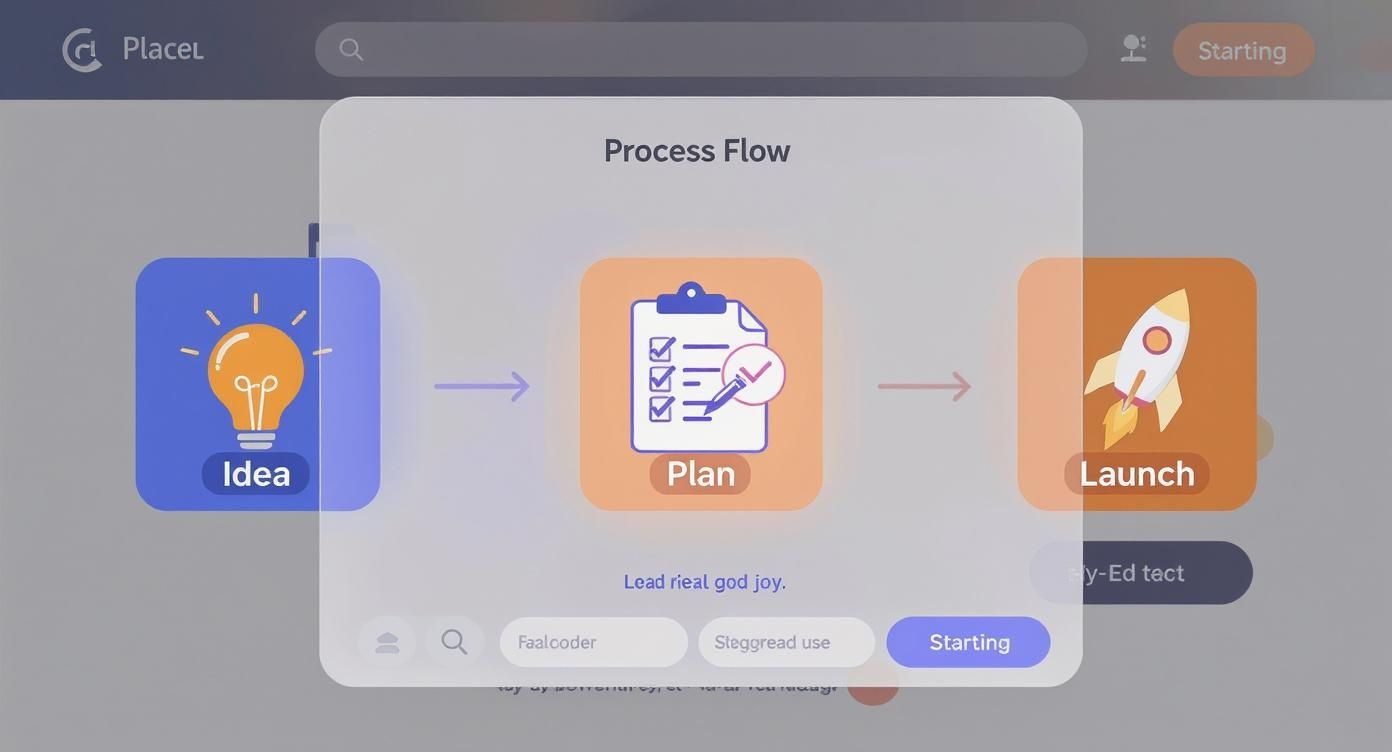
This simple flow—Idea, Plan, Launch—is the core of any successful pop-up. It all starts with a great concept, but it's the detailed planning that makes for a smooth execution.
Key Takeaway: A successful pop-up isn't just about incredible food; it’s about smart, strategic planning. It’s your opportunity to prove your concept and build an audience before you even think about making a larger investment.
The advantages of running a pop-up are hard to ignore:
- Lower Financial Risk: You need significantly less cash to get started compared to a permanent restaurant.
- Creative Freedom: Go wild with innovative menus and themes that might feel too risky for a traditional setup.
- Market Testing: See if people actually love your concept and get invaluable feedback to make it even better.
- Brand Building: Create serious buzz and a loyal customer base that will follow you to your next big thing.
To give you a clearer picture of the journey ahead, here’s a quick overview of what you'll need to tackle.
Pop-Up Restaurant Launch Checklist Overview
This table breaks down the core stages and the key actions you'll need to take to bring your pop-up to life. Think of it as your high-level project plan.
| Stage | Key Actions | Estimated Timeline |
|---|---|---|
| 1. Concept & Planning | Define your brand, develop the menu, write a business plan, and set a budget. | 4-8 weeks |
| 2. Legal & Logistics | Secure permits, licenses, and insurance. Find and book your venue. | 3-6 weeks |
| 3. Build & Prep | Source equipment and supplies. Plan your layout. Hire and train staff. | 2-4 weeks |
| 4. Marketing & Launch | Promote your event, set up online ticketing, and execute the final prep. | 2-4 weeks |
| 5. Execution & Post-Op | Run the pop-up, gather feedback, and conduct a post-event review. | 1 day - several months |
Each of these stages has its own set of critical tasks, but seeing them laid out like this helps make the whole process feel much more manageable.
As you start crunching the numbers for your budget, it's crucial to know what to expect. For a deeper dive into potential expenses, take a look at this complete restaurant startup costs breakdown. It's a great resource for anticipating where your money will go.
Nailing Down Your Concept and Menu
Before you even glance at a rental kitchen or price out a single piece of equipment, you need to get one thing crystal clear: your concept. This is your pop-up's soul. It's the story you tell, the vibe you create, and the reason people will choose you over a dozen other dinner options. Savvy restaurant owners know that a strong concept, backed by the right supplies and awareness of industry trends, is a recipe for success.
Think of it as your North Star. Are you all about those hard-to-find regional Mexican street tacos? Or maybe your thing is an elegant, plant-based tasting menu that flips every week? This core idea is what will guide every single decision, from the font on your menu to the farmers you buy your produce from.
Carving Out Your Niche
A killer idea is only as good as the market it lands in. You wouldn't open an ice cream stand in Antarctica, right? The first real work is to get out there and do some local recon. See what’s working, what's tired, and most importantly, where the gaps are.
If your town is drowning in pizza and burgers, maybe your handmade pasta or artisanal dumpling concept is the fresh air everyone’s been craving. You're looking for an audience that isn't being served.
Here’s how to find them:
- Hang out at food halls and farmers' markets. Who has the longest lines? What kind of food is noticeably missing?
- Become a social media detective. Scope out what local food bloggers and influencers are buzzing about. Search local hashtags on Instagram and TikTok to see what people are eating—and what they wish they were.
- Just talk to people. Seriously, don’t sleep on this. Ask friends, coworkers, and even the person next to you at the coffee shop what they wish they could find nearby.
This isn’t about chasing trends. It’s about finding a sweet spot where your unique culinary passion meets a real, tangible demand. Get that right, and you'll have a built-in audience from the moment you open.
Building a Menu That Actually Works
With your concept locked in, it’s time for the fun part: the menu. But a pop-up menu is a different beast entirely. This isn't the time for a sprawling, 50-item list. The secret sauce to pop-up success is a tight, focused menu that you can nail every single time, even when the line is out the door.
My two cents: Keep it small and specialized. The most successful pop-ups I've seen often have just a handful of killer items. It keeps your inventory simple, slashes food waste, and lets your team become absolute masters of each dish.
Designing a menu for a temporary space forces you to think smart. You have to balance that creative spark with cold, hard logistics. Try to build dishes around "cross-utilized" ingredients. That slow-braised beef you're using for tacos? It could also be the star in a batch of empanadas or piled high on loaded fries. This approach squeezes every last drop of value out of your inventory.
Think fast, too. Long ticket times are a pop-up's kryptonite. Your menu needs to be built for speed. Focus on dishes that can be prepped heavily in advance and then finished or assembled in a flash. A smooth, quick workflow is your best friend during a chaotic service.
Finally, you have to get your numbers right. Cost out every single ingredient in every single dish. Knowing your exact cost of goods sold (COGS) is non-negotiable for setting a profitable price. The industry standard is to aim for a food cost between 25-35% of your menu price. This buffer is what covers your rent, your staff, and your supplies—and hopefully leaves you with a profit. This isn't just about cooking great food; it's about building a business that lasts.
Getting Your Paperwork and Insurance in Order
It’s easy to get swept up in the fun parts of a pop-up—dreaming up the menu, designing the atmosphere, and imagining a line out the door. But let’s talk about the less glamorous, absolutely critical side of things: the legal stuff. Handling your licenses, permits, and insurance is the bedrock of your business. As a restaurant owner, navigating this helps you stay informed and protected.
Honestly, skipping this step is the quickest way to get shut down, slapped with a massive fine, or worse, face a lawsuit that could sink you before you even really start. The rules can seem like a confusing mess at first, but if you take it one piece at a time, it's completely doable.
The Necessary Paperwork: A Breakdown
Every town, county, and state plays by its own rules, so your first job is to become a local expert. The requirements in Portland are going to be different from those in Phoenix. Your best bet is to start with the websites for your local health department and city business license office. They are the ultimate source for what you’ll need.
While specifics vary, you'll almost certainly need a few key documents:
- Business License: This is your basic ticket to operate. It officially registers your pop-up as a real business in your city.
- Employer Identification Number (EIN): Planning to hire help, even just one person for one night? You’ll need an EIN from the IRS. It’s free and you can apply online in minutes.
- Food Handler's Permit: Everyone on your team who will touch food needs this. This usually just requires a quick online course and a test on food safety essentials.
- Temporary Event Permit: This is the big one for most pop-ups. It’s the official permission slip that allows you to sell food at a specific place for a short period.
- Health Department Permit: The health department is going to want to know that your plans for food prep, storage, and service are up to code. Be prepared for a potential site inspection before you get the green light.
And if you’re thinking about serving alcohol, get ready for another layer of complexity. A Liquor License is a whole separate beast, with a much longer application process. Don’t wait until the last minute to get started on that.
Why You Can't Afford to Skip Insurance
Think of insurance as your financial parachute. One freak accident—a customer slipping on a wet spot, an oven fire—could completely wipe out your investment and personal finances. When you're running a pop-up, you're not just an employee; you're the owner, and all the liability falls on your shoulders.
Crucial Insight: Never assume the venue's insurance has you covered. Most host venues will demand that you have your own policy and add them as an "additional insured." This protects them if something goes wrong with your operation on their property.
At the very minimum, you need General Liability Insurance. This is your coverage for slip-and-fall incidents, property damage, and other common mishaps. If booze is on the menu, Liquor Liability Insurance is non-negotiable; it protects you from issues arising from an intoxicated guest. The world of mobile food vendor insurance has a lot of crossover here and is a great resource to understand the fundamentals.
Depending on your specific setup, you might need more. If you’re a contractor popping up in various spots, it’s smart to look into what essential business insurance for contractors can offer. Taking the time to build a solid legal and insurance foundation lets you focus on the food and your guests, knowing you’re protected from the unexpected.
Finding the Perfect Venue and Essential Equipment
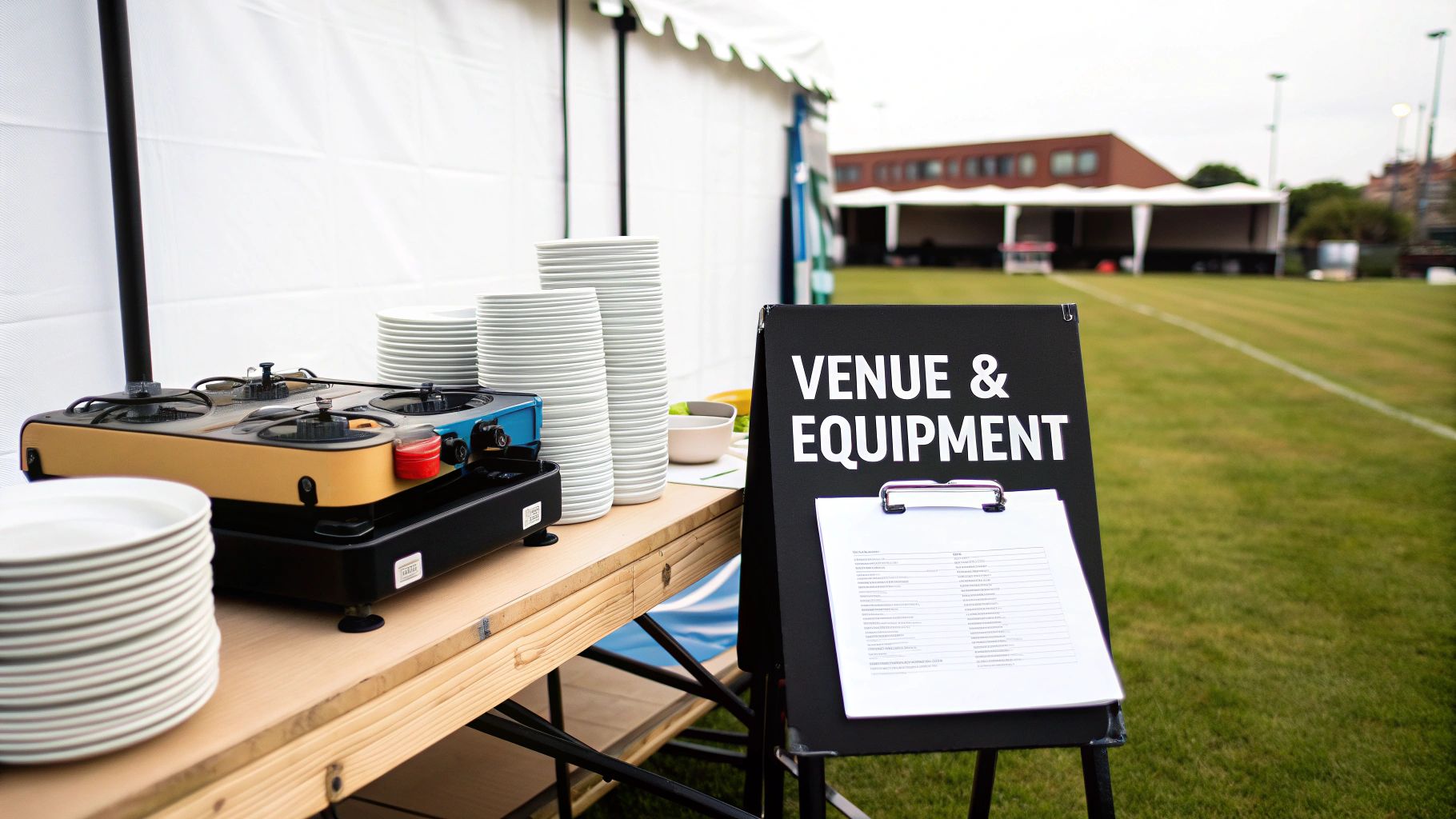
Alright, your permits are in the works and the concept is solid. Now for the fun part—the part that makes it all feel real. Where is this thing actually going to happen, and what will you be cooking with? This stage is all about securing the right restaurant equipment and supplies.
Your venue and your gear are the physical foundation of your entire pop-up. The right space sets the mood and creates the experience, while the right equipment is what allows your kitchen team to actually pull off the menu you've dreamed up. Savvy chefs know that finding exclusive deals on restaurant equipment can make or break the budget.
This is where your vision starts to take shape. Let's dig into how to find a space that truly fits your brand and equip it for a killer service without torching your budget.
Sourcing Your Pop Up Location
Think of your venue as more than just a place to serve food—it's a massive part of your brand story. The spot you choose has to match the vibe of your concept and, critically, be somewhere your ideal customers can actually find you.
My advice? Forget traditional restaurant spaces for a minute and get creative.
Some of the most successful pop-ups I've seen have come from brilliant partnerships with existing businesses. Why? Because they have complementary audiences and downtime you can take advantage of. This move alone can slash your overhead and plug you directly into a ready-made customer base.
Here are a few ideas to get you thinking:
- Breweries and Wineries: These places almost always have a built-in crowd but often lack a full kitchen. A weekend pop-up where your food is the perfect pairing for their drinks? That’s a win for everyone.
- Coffee Shops: Most cafes go dead after 4 PM. You could pitch an evening dinner series, completely transforming their space into an intimate spot for dinner.
- Art Galleries or Event Spaces: These are literally blank canvases. They often have a sophisticated, cool atmosphere that’s perfect if you're aiming for a more upscale or uniquely themed experience.
- Retail Stores: Seriously! A cool clothing boutique or a local bookstore might love the idea of hosting a pop-up to create a unique event that brings people through their doors on a slow night.
Pro Tip: When you approach a potential host, don't just ask to use their space. Frame it as a partnership that benefits them. Come prepared to show them exactly how your pop-up will bring new faces into their business and add value to their brand.
Once you’ve got a shortlist, you need to get practical. Does the space actually work? Run through a quick checklist for each option:
- Foot Traffic: Is this a place your target diners already go to or can easily get to?
- Kitchen Access: What are you working with? Is there a kitchen you can use, or are you building one from scratch? Check for the big three: ventilation, sinks, and enough power for your gear.
- Layout: Can you imagine a smooth flow for guests and staff, or is it going to be a chaotic bottleneck?
- Cost: Does the rent or revenue-share agreement fit comfortably within your budget?
Gearing Up The Smart Way
Now, let's talk about the engine room: your kitchen. The whole point of a pop-up is its temporary nature, which means you have to be incredibly strategic about equipment. Trust me, buying everything brand new is almost never the right move. Discovering the best deals on restaurant equipment and supplies is a crucial skill.
Your first task is to make a master list of every single thing you need, from a six-burner range all the way down to the salt shakers on the tables. I find it helpful to split this list into two columns: "must-haves" (what you literally cannot cook your menu without) and "nice-to-haves."
If you need a solid starting point, this comprehensive commercial kitchen equipment checklist is a great resource to make sure you don't forget something crucial.
For every pop-up operator, the big question is always rent or buy. For a short-term gig, renting the big, expensive stuff is almost always the smartest financial play. It keeps your upfront investment low and saves you the massive headache of figuring out where to store a commercial oven after your event is over.
On the other hand, for smaller, durable items you know you'll use again—your personal knives, good cutting boards, specialty small appliances—buying often makes more sense in the long run.
Renting vs Buying Pop Up Restaurant Equipment
The choice between renting and buying really comes down to the length of your pop-up and what your future plans are. To make it easier, I've broken down the decision-making process in this table.
| Equipment Type | Key Considerations for Renting | Key Considerations for Buying | Best For... |
|---|---|---|---|
| Major Cooking Appliances (Ovens, Fryers, Grills) | Lower upfront cost, no long-term storage needs, maintenance often included. Ideal for testing concepts. | High initial investment, but becomes an asset for future projects. Offers more control over specific models. | Renting for one-off events; buying for a long-term series or future restaurant. |
| Refrigeration (Fridges, Freezers) | Perfect for short-term needs, delivery and pickup included. Avoids the hassle of moving heavy units. | A sound investment if you plan multiple pop-ups or have storage. Used units can offer great value. | Renting unless you have a clear plan for repeated use. |
| Smallwares (Pots, Pans, Utensils) | Not typically cost-effective to rent individual small items. Often bundled with larger equipment. | Essential tools of the trade. Buying quality items is a long-term investment in your craft. | Almost always better to buy, focusing on quality for core items. |
| Front-of-House Items (Tables, Chairs, Linens) | Highly practical for creating a specific ambiance without a large outlay. Huge variety of styles available. | Only makes sense if you have a permanent storage solution and plan to host many events. | Renting is the standard for creating a cohesive, professional look on a budget. |
In my experience, a hybrid approach is the way to go. Rent the big, heavy equipment that’s a pain to move and store. Buy the high-quality, essential tools that form the core of your culinary kit. This keeps your startup costs manageable while you slowly build a collection of assets for whatever you decide to do next.
Creating Buzz with Smart Marketing Strategies
You can have the most incredible pop-up concept in the world, but it won't matter if you're serving to an empty room. Building real excitement and selling tickets means your marketing needs to start firing on all cylinders long before your first service. This is your chance to craft a memorable brand and get the word out. Keeping up with the latest industry news and marketing trends will give you an edge.
Your marketing isn't just about posting pretty food pics; it's about telling a story. For a pop-up, that story hinges on creating a sense of urgency and exclusivity—making people feel like they have to be there.
Nail Your Social Media Game
For pop-ups, social media isn't just helpful—it's your command center. Platforms like Instagram and TikTok are built for the kind of visual storytelling that will make your food look irresistible and your event absolutely unmissable.
First things first, define a simple but strong brand identity. Think about your logo, a consistent color scheme, and a clear tone of voice. Are you fun and casual? Sophisticated and exclusive? Let that personality shine through in every single post.
Here’s a simple game plan to get you started:
- Show the Journey: Don't just post the finished dishes. Pull back the curtain and share behind-the-scenes clips of menu testing, sourcing from a local farm, or setting up the venue. This builds a narrative and gets your followers invested.
- Focus on Killer Visuals: Your food has to look amazing. You don't need a pro photographer, but good lighting and clean composition are non-negotiable. Short videos—a satisfying cheese pull, a pan sizzling away—almost always outperform static photos.
- Talk to Your People: Jump on comments and DMs quickly. Run polls asking followers to vote on a potential menu item. The more you interact, the more the platform's algorithm will reward you with visibility.
This approach is essential for connecting with today's diners. In fact, pop-ups are a full-blown culinary trend, with 41% of 16 to 24-year-olds in the UK picking where to eat based on viral content and "Instagrammable" dishes.
Team Up with Strategic Partners
You don't have to build your audience entirely from scratch. Tapping into existing communities can give you a massive head start.
Local food influencers and bloggers can be your secret weapon. Find a few whose style genuinely matches your brand and send them a personal invite for a preview night or a special tasting. A single, authentic post from a trusted local voice can often sell more tickets than a week of your own ads.
Key Takeaway: Authentic endorsements are marketing gold. Forget about just paying for posts; focus on building real relationships. An influencer who truly loves your food will create content that’s far more passionate and convincing.
Look beyond influencers, too. Consider these partnerships:
- Your Host Venue: Cross-promote on every social channel. They have an established audience that’s already curious about what’s happening in their space.
- Ingredient Suppliers: When you post about that amazing bread or those farm-fresh eggs, tag the local bakery or farm. They’ll often share your content with their own followers, widening your reach instantly.
- Other Local Businesses: Could you partner with a nearby brewery for a beer pairing? Or a local artist to feature their work at your event? These collaborations create a richer experience and introduce you to whole new audiences.
Build a Community That Lasts
The real goal isn't just selling out one night; it's building a loyal following that will eagerly await your next move. An email list is, without a doubt, the best tool for this. This is a perfect way to share the latest news, exclusive deals, and updates on your restaurant journey.
Make it incredibly easy for people to sign up everywhere—on your ticket sales page, via a link in your social media bio, and even with a simple sign-up sheet at the event itself. This list becomes a direct line to your biggest fans.
Use it to:
- Give subscribers first dibs on tickets for future pop-ups.
- Share an exclusive recipe or a behind-the-scenes story.
- Ask for feedback to help shape your next concept.
This kind of direct communication turns one-time guests into a genuine community. And don't forget the physical world—if your pop-up has a street-facing presence, check out some captivating shop window display ideas to draw in passersby. A great display can turn foot traffic into curious customers and, eventually, new subscribers for your email list.
Common Questions About Starting a Pop Up
Even with the most buttoned-up plan, a few nagging questions can stall your progress. It’s totally normal. Every single person who’s launched a pop-up has hit this point, staring down those last-minute doubts. Let's clear up the most common ones so you can get back to what matters.
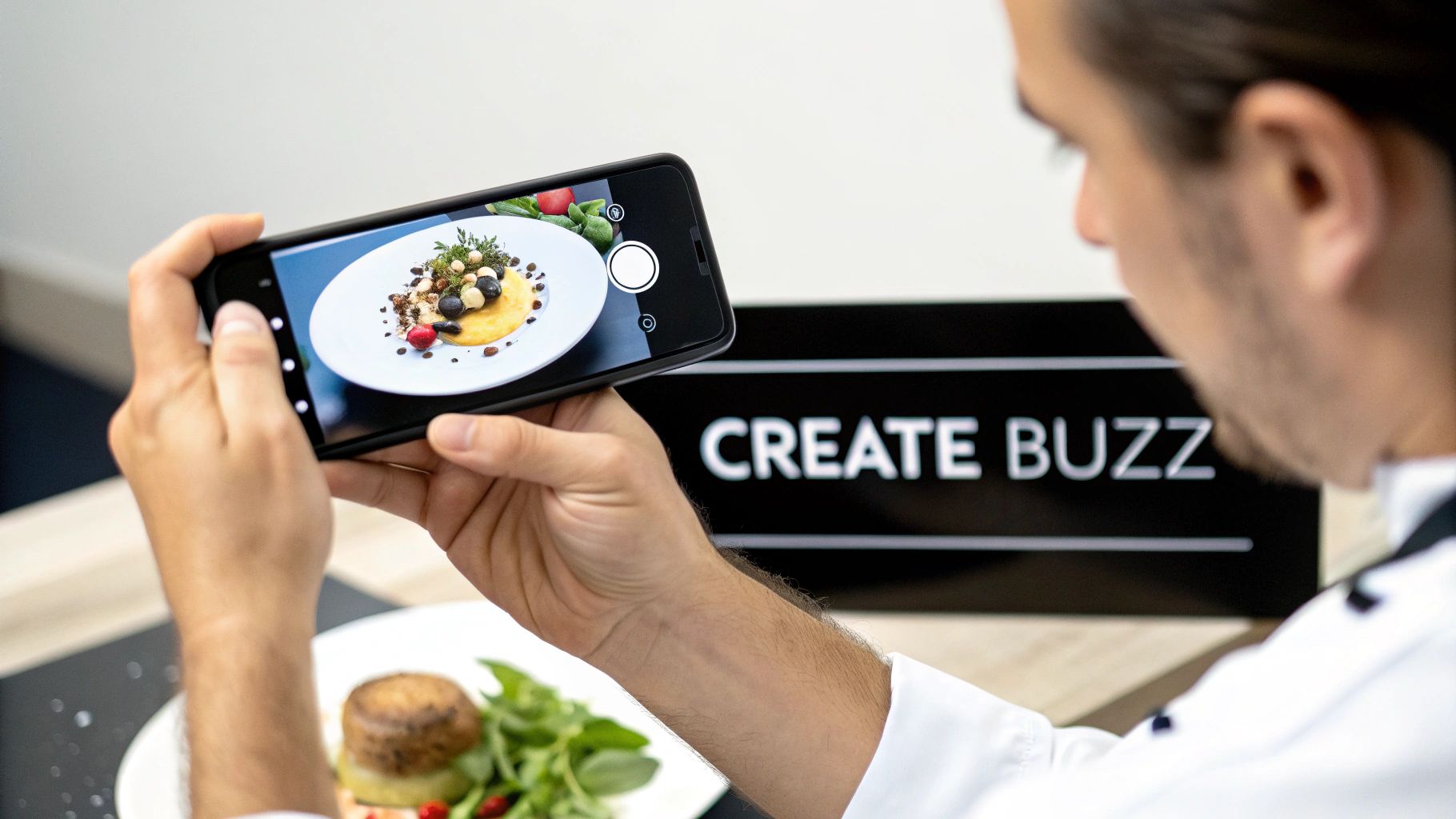
We'll cover everything from money and staffing to pricing and the controlled chaos of launch day. Think of this as the final pep talk to get you across the starting line.
How Much Does It Realistically Cost to Start?
This is the big one, isn't it? While there’s no magic number, I’ve seen successful pop-ups get off the ground for anywhere between $5,000 and $20,000. Where you land in that range comes down to your concept's ambition, your location, and how long you plan to run.
A simple, one-night taco pop-up hosted at a local brewery is going to lean toward the lower end of that budget. On the other hand, a month-long, ticketed fine-dining experience in a dedicated event space will naturally creep toward the higher end.
Your main costs will break down like this:
- Venue Rental: This is a huge variable. You might pay a few hundred bucks, a few thousand, or even work out a revenue-sharing deal where you pay nothing upfront.
- Permits and Insurance: Don't skimp here. Set aside at least $500 to $1,500 to get all your legal ducks in a row and cover your liability.
- Equipment Rentals: This is the smart play. Renting big-ticket items like commercial ovens and refrigerators saves a ton of cash. Budget around $1,000 to $5,000, depending on what your restaurant equipment and supplies require.
- Initial Food Inventory: This cost is tied directly to your menu's complexity and how many people you expect to serve.
- Marketing: You don't need a massive budget, but a little spending on social media ads and some flyers can make a world of difference.
Key Insight: The secret to keeping costs down is to start lean. A tightly focused menu and a strategic partnership with an existing business are the two most powerful ways to launch your pop-up without breaking the bank.
How Do I Price My Menu for Profit?
Pricing is part art, part science. You're trying to find that sweet spot where you cover all your costs, your guests feel they're getting good value, and you actually make some money. A solid industry benchmark is to keep your food cost percentage between 25% and 35%.
In simple terms, that means the cost of the raw ingredients on a plate should be about a third of what you charge for it.
To do this right, you have to get granular and cost out every single recipe—down to the pinch of salt and dash of oil. Once you have that "cost per plate," you can price with confidence.
For instance, if all the ingredients for your signature smash burger cost you $4.50, a fair and profitable menu price would fall somewhere between $13 and $18. Just remember to account for everything else—your staff, the rent, napkins—when you finalize those numbers.
Where Can I Find Reliable Staff for a Short-Term Gig?
Staffing for a one-off event is a unique challenge. You need people who are skilled, dependable, and can think on their feet in a brand-new setting. Posting on a standard job board often doesn't cut it for a two-night gig.
Your best bet is to tap into the local hospitality scene directly:
- Your Network: This is your first stop. Reach out to other chefs, servers, and bartenders you’ve worked with. Good people know other good people, and many are looking for extra shifts.
- Culinary Schools: Students are hungry for real-world experience. They bring a ton of energy and are eager to learn, making them a fantastic resource for kitchen help.
- Hospitality Gig Apps: There are now platforms built specifically for this. They connect restaurants with on-demand staff, which is perfect for filling temporary spots.
Just be completely transparent about the gig's short-term nature, what you're paying, and what you expect. A well-briefed, happy team is the backbone of a smooth service, even if it's just for one night.
What Are the Biggest Day-Of Challenges to Prepare For?
Trust me, no matter how perfectly you plan, something will go sideways on the day of your event. It’s a guarantee. The trick is to anticipate the common problems so a small hiccup doesn't snowball into a full-blown crisis.
Keep these potential fires in mind:
- Equipment Failure: What's your plan if a fryer dies mid-service? Can you pivot to another dish that uses the flat-top? Always have a Plan B.
- 86'ing an Item: You will run out of something. It happens. Decide ahead of time how your staff will tell guests and what they can suggest as an alternative. Selling out is a good problem to have—way better than having tons of waste.
- The Unexpected Rush: If you suddenly get slammed, how will your team handle the line? Have a clear process for taking orders and giving people a realistic wait time.
- POS Glitches: Technology fails. Always have a backup for taking payments, even if it's an old-school credit card imprinter or just a way to write down card info to run later.
A quick pre-service meeting is non-negotiable. Walk your team through these "what if" scenarios. This preparation is what makes the difference between looking like an amateur and running a professional, seamless operation.
Ready to find the perfect equipment for your pop-up kitchen? At Encore Seattle Restaurant Equipment, we help restaurant owners and chefs discover the latest news and exclusive deals on restaurant equipment and supplies. From essential cooking equipment to refrigeration and supplies, we help you get geared up the smart way. Explore our inventory, stay informed about industry trends, and get expert advice at https://encoreseattle.com.