
How to Start a Catering Service From Home A Practical Guide
So, you’re thinking about turning your passion for cooking into a real, money-making business right from your own kitchen. It’s an exciting thought, and for good reason. You're not just making food; you're building a business from the ground up, moving from a talented home cook to a savvy food entrepreneur.
The key is to get the fundamentals right from the very beginning. This means getting serious about legal permits, mastering food safety, and figuring out a profitable pricing strategy before you take on your first paid gig.
Turning Your Culinary Passion Into a Business
Making the jump from cooking for friends and family to running a professional catering service is a huge, rewarding step. It's about more than just making bigger batches of your signature dishes—it's about creating a sustainable business that runs on your skill and creativity. The good news? People are always looking for unique, high-quality food for their events, office lunches, and private parties, which opens up a massive opportunity for home-based caterers like you.
This guide is your roadmap. We’ll walk through everything you need to know to get started, from the nitty-gritty legal stuff to crafting a menu that has clients raving. Stay informed about industry trends, restaurant equipment, and supplies to make the best decisions for your new venture.
Find Your Profitable Niche
First things first: you need to find your sweet spot. The catering world is crowded, so trying to do a little bit of everything is a recipe for getting lost in the noise. The real money is in specializing. Pinpoint a specific service you can absolutely nail and become the go-to person for it.
Not sure where to start? Think about these popular areas:
- Corporate Catering: Think breakfast meetings, boxed lunches for the team, or platters for office parties. This niche is fantastic for repeat business and more predictable schedules.
- Private Events: This is where you can get really creative with intimate dinner parties, milestone birthdays, anniversaries, and holiday feasts.
- Specialized Diets: The demand for amazing vegan, gluten-free, or keto food has never been higher. If you can become an expert in a specific dietary need, you’ll stand out immediately.
Focusing on a niche does more than just set you apart. It makes your entire operation smoother. You'll find it's much easier to source ingredients, perfect your recipes, and aim your marketing right where it needs to go.
Understanding the Market Opportunity
Jumping into home-based catering means you’re tapping into a seriously booming industry. The U.S. catering market is on track to hit $14.4 billion in revenue by 2025.
A huge slice of that pie—a full 60% of the demand—comes from corporate events. With 80% of companies ordering food for the office monthly and 32% doing it every single week, the potential for consistent income is massive.
This explosive growth is your opening. In fact, 48% of caterers see corporate gigs as their number one area for expansion. Your home kitchen is perfectly positioned to become the launchpad for a business that grabs a piece of this market.
Laying the Foundation for Success
Before you even think about buying your first case of ingredients for a client, you need a solid plan. A successful catering business is built on a few key pillars, and getting them right from the start will save you a world of headaches later.
To get your business off the ground, here’s a quick look at the essential phases we'll be covering. This checklist provides a clear roadmap for what's ahead.
| Your Home Catering Startup Checklist |
| :--- | :--- | :--- |
| Phase | Key Action Items | Primary Goal |
| 1. Legal & Compliance | Research cottage food laws, get necessary permits, complete food handler certification. | Operate a fully legal and compliant food business from home. |
| 2. Kitchen & Equipment | Assess your current kitchen, list required equipment, and source suppliers. | Create a safe, efficient, and professional-grade workspace. |
| 3. Menu & Pricing | Develop a focused, scalable menu and calculate profitable price points. | Design an attractive offering that covers costs and generates profit. |
| 4. Sales & Marketing | Build a simple website/social media, define your target client, and create a marketing plan. | Secure your first paying clients and build initial momentum. |
| 5. Operations & Logistics | Establish a kitchen workflow, choose packaging, and plan your delivery strategy. | Ensure a smooth and professional client experience from prep to delivery. |
Laying this groundwork is your blueprint for turning a passion project into a professional, profitable business. While startup costs can feel daunting, a home-based setup dramatically lowers the financial barrier compared to opening a full-blown restaurant.
For a clearer picture of what to budget for, our guide on restaurant startup costs offers a detailed breakdown that can help you plan your finances effectively. Taking the time to plan these elements now is the smartest investment you can make in your future success.
Navigating Licenses, Permits, and Food Safety
When you decide to turn your passion for cooking into a catering business, you're stepping into a new world of responsibility. This is the part that isn't as glamorous as designing menus, but it's the absolute bedrock of a successful, long-lasting business: getting all your legal ducks in a row and mastering food safety. Getting this right from day one builds trust with your clients and, just as importantly, protects you from some serious risks.
Before you even think about buying ingredients for your first official gig, your very first stop needs to be your local health department. I can't stress this enough. The rules for home-based food businesses can change dramatically from one town or county to the next. What's perfectly legal for a caterer ten miles away could get you shut down where you are.
Understanding Your Local Regulations
The legal side of things can feel a bit overwhelming at first, but it usually comes down to two main types of laws for home-based food operations. Figuring out where you fit in is your first major hurdle.
- Cottage Food Laws: These are typically designed for people making low-risk items—think baked goods, jams, granola, or other foods that don't need refrigeration. They often come with limits on how much you can earn and where you can sell. For most full-service catering, which involves meats, dairy, or cooked dishes, these laws won't apply.
- Commercial Kitchen Requirements: This is where most catering businesses land. Any time you're working with perishable foods, you'll likely be required to prepare them in a licensed commercial kitchen. That doesn't mean you have to build one in your basement! Lots of caterers get their start by renting space in a shared-use or commissary kitchen.
Your local health authority is the final word on this. Give them a call or check their website—they’ll tell you exactly what you need to do.
My Two Cents: Don't ever assume your home kitchen will get the green light for professional catering. One quick phone call to the health department can save you a world of headaches and wasted money. Find out their exact requirements before you invest in anything else.
Securing Essential Permits and Certifications
Once you know the rules of the road, it’s time to get your paperwork in order. While the specifics will vary, you'll almost certainly need a few core documents to operate above board.
- Business License: This is the basic registration that makes your catering service a real, legitimate business in your city or county.
- Food Handler's Permit: Most places require that you (and anyone else handling food) have a food handler's card. It’s a straightforward course and test that covers the fundamentals of food safety.
- Catering License or Permit: Some areas require a specific license just for catering, which is separate from your general business license.
This decision tree gives a good visual of how you can narrow down your focus based on what you love to cook and who you want to serve.
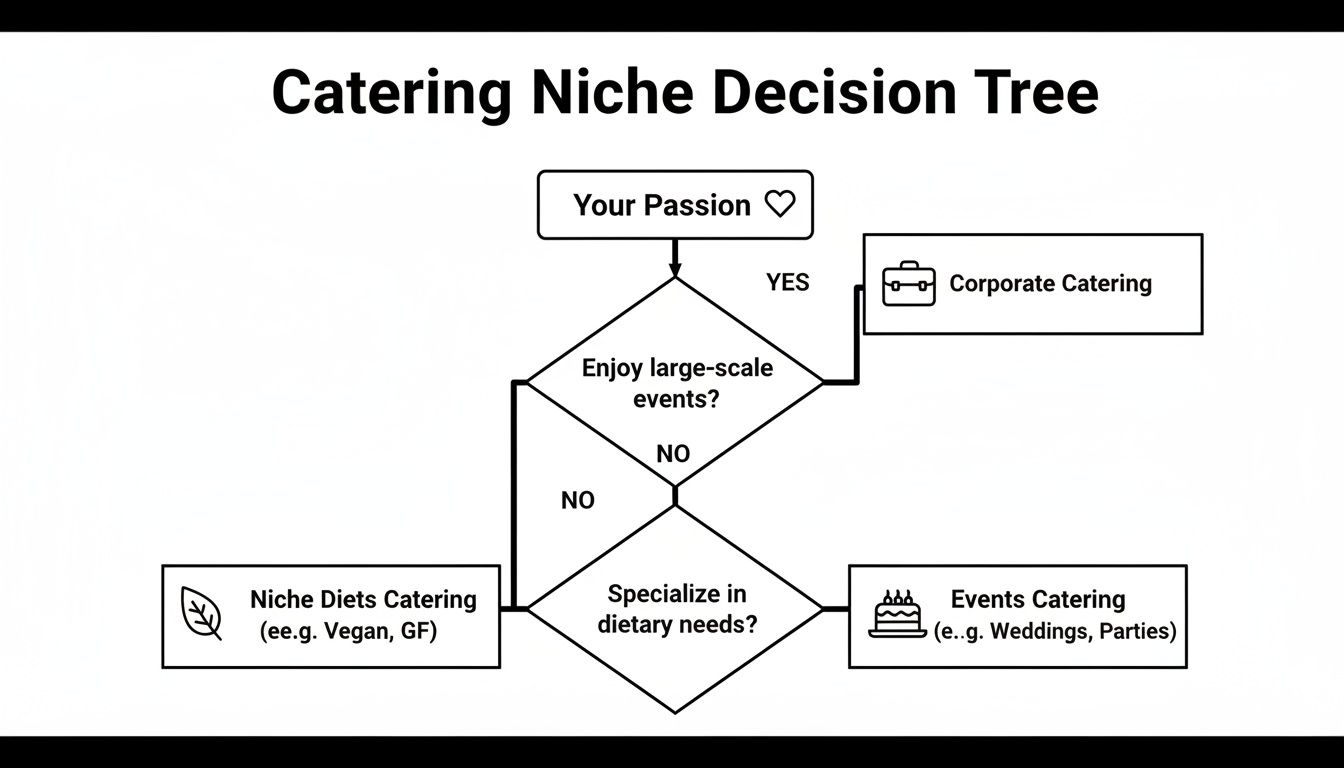
Whether you're excited by the idea of high-energy corporate lunches, elegant weddings, or crafting menus for special diets, this helps you see the path forward.
Don't Skip the Liability Insurance
This is a big one, and it's shocking how many new caterers overlook it. You absolutely need general liability insurance. Think about it: what happens if a guest claims they got food poisoning from your meal? Or if someone has a severe allergic reaction? Without insurance, a single lawsuit could jeopardize your business and even your personal savings.
Insurance is your financial safety net. It shows clients you're a serious professional and gives you the peace of mind to focus on the food.
Establishing a Food-Safe Kitchen Workflow
Finally, running a catering business means your kitchen—whether it’s at home (if allowed) or in a rented space—needs to operate at a professional level. This is all about creating strict, repeatable processes to keep your food safe.
For a fantastic overview of what inspectors look for, I highly recommend reviewing a detailed restaurant health inspection checklist. It’s a great way to start thinking like a pro.
Here are the non-negotiables:
- Prevent Cross-Contamination: This is basic but critical. Use different cutting boards, knives, and utensils for raw meat and ready-to-eat foods like fresh vegetables. No exceptions.
- Master Temperature Control: The "danger zone" is real. You have to keep detailed logs showing that cold food stays below 40°F and hot food is held above 140°F. A couple of good digital food thermometers are some of the most important tools you'll own.
- Organize Your Storage: Get religious about the "First-In, First-Out" (FIFO) method. Label and date everything so you always use older ingredients first. This cuts down on waste and prevents spoilage.
When you take the time to build this solid legal and safety foundation, you’re not just following rules—you’re building a resilient business that clients will be happy to trust and recommend.
Equipping Your Kitchen for Professional Catering
Turning your home kitchen into a legit professional workspace is one of the most exciting parts of this whole venture. It’s where all your recipes and ideas finally come to life. But, and this is a big but, it's also where you can blow your budget in a heartbeat if you're not careful.
The real goal isn't to build a five-star restaurant kitchen in your basement. It's about making smart, strategic buys that boost your efficiency, nail food safety standards, and perfectly match the kind of food you plan to make. Stay ahead by discovering the latest news and exclusive deals on restaurant equipment and supplies that fit your specific needs.
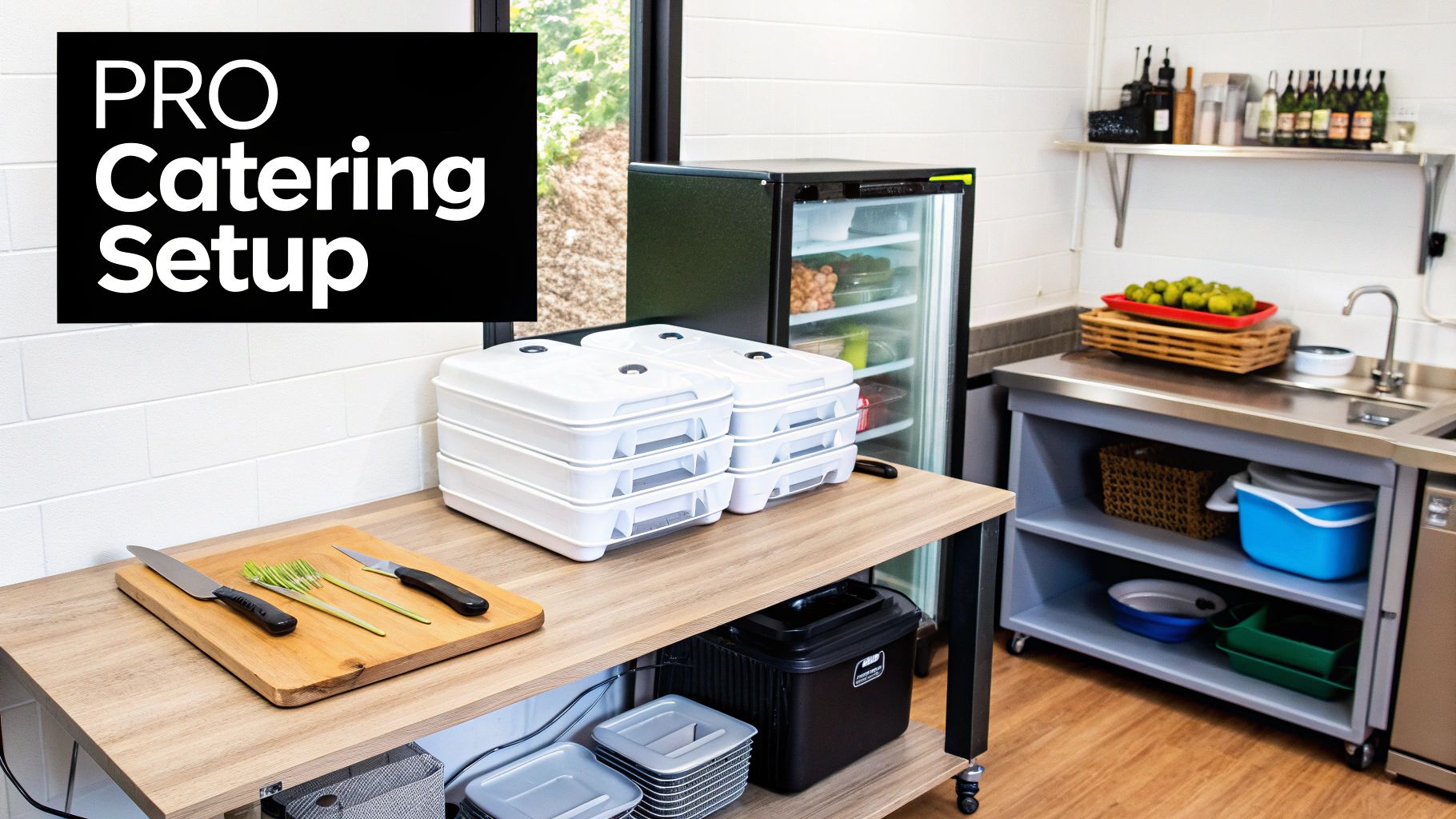
It all starts by drawing a hard line between what you absolutely need right now and what can wait. I’ve seen too many new caterers get dazzled by flashy gadgets they use twice a year. Instead, your money should go toward the workhorses—the gear that will be the backbone of your daily grind.
Must-Have Equipment Versus Nice-to-Haves
When you’re just starting out, every single dollar has a job to do. Prioritizing your purchases is the only way to make sure your cash is going toward things that actually make you money and keep the health inspector happy.
Let's get real about what you need on day one.
The Absolute Must-Haves:
- Commercial-Grade Refrigeration: Your home fridge just isn't going to cut it. Commercial units are designed to hold safe temperatures despite you constantly opening the door. This is a non-negotiable for any health department.
- High-Quality Cookware: I’m talking about durable pots, pans, and sheet pans that can handle cooking for 50 without warping or burning everything in one spot.
- A Reliable Food Processor and Stand Mixer: These two pieces of equipment will save you an unbelievable amount of prep time, whether you're chopping mountains of onions or mixing a massive batch of cake batter.
- Accurate Digital Scales and Thermometers: Catering is all about precision. You need scales for consistent portioning and good thermometers to make sure your food is cooked and held at safe temperatures.
Nice-to-Have Upgrades for Later:
- Holding Cabinets or Hot Boxes: You'll definitely need these to transport food safely, but for your first few gigs, you might be able to rent them before buying your own.
- Vacuum Sealer: An amazing tool for sous-vide and making ingredients last longer, but you can live without it at the beginning.
- High-Capacity Deep Fryer: Unless fried food is the star of your menu, you can put off buying this specialized (and bulky) piece of equipment.
For a really detailed list, check out this comprehensive catering equipment checklist. It covers everything from the tiny stuff to the major appliances.
Creating Efficient Work Zones
Even if your kitchen is on the smaller side, you can set it up to flow like a pro kitchen by creating designated zones. This is exactly how commercial kitchens avoid cross-contamination and keep things moving smoothly during a rush.
Think about the path your food will take:
- Receiving & Storage: Have a dedicated spot where deliveries come in, with a straight shot to your fridges, freezers, and pantry shelves.
- Prep Zone: This is your command center, with cutting boards, mixers, and anything else you use for prep. A crucial tip: use different colored cutting boards for raw meat and produce.
- Cooking Zone: Your stove, oven, and other cooking gear. Keep your most-used pots, pans, and utensils within arm's reach.
- Plating & Packaging Area: You need a totally clean, clear counter space that is only for assembling dishes and packing them up for clients.
- Sanitation & Dishwashing: Your sink area. Check your local health codes—you may need to set it up for a three-compartment sink method (wash, rinse, sanitize).
Sourcing Smart and Saving Money
Outfitting your kitchen doesn't mean you have to buy everything shiny and new. Honestly, one of the best moves you can make is to hunt for high-quality used equipment. You can get durable, professional-grade gear for a tiny fraction of the retail price.
A smart kitchen setup is key to hitting your numbers. You should be aiming for food costs around 28-32% of revenue, with labor at 25-35%, to hit a healthy 10-18% net profit margin. Buying used commercial gear like refrigerators and prep tables is a great way to lower startup costs while staying compliant. It's how you scale without going broke.
When it comes to supplies, don't forget about your packaging. Today's clients really notice and appreciate sustainable choices. If you want to go that route, this buyer's guide to eco-friendly packaging is a great place to start looking for options that fit your brand. By sourcing your equipment and supplies thoughtfully, you build a solid foundation for your business without draining your bank account.
Designing a Profitable and Practical Menu
Your menu is the heart and soul of your entire catering business. It’s so much more than a list of food; it's your signature, your brand, and the single biggest factor in your profitability. The real art of catering isn't just making delicious food—it's designing a menu that you can actually execute flawlessly and profitably from a home kitchen.
The trick is to strike the perfect balance between your culinary creativity and the practical realities of catering. A winning menu is scalable, cost-effective, and—this is crucial—built to travel well without falling apart or losing its quality. This is your chance to show off what you can do while making smart business choices that protect your bottom line.
Develop a Scalable Core Menu
When you’re just starting out, it feels like you need to offer a hundred different things to attract clients. Fight that urge. It's a classic rookie mistake that leads to chaotic inventory, tons of food waste, and inconsistent results. A much smarter move is to build a tight, focused menu around a core group of absolute knockout dishes.
Think about recipes that are easy to prep in large batches without needing a four-person line crew or a walk-in cooler. You’re looking for dishes that share common base ingredients, allowing you to cross-utilize your inventory. This one strategy will radically simplify your supplier orders and slash your risk of spoilage.
For instance, a perfectly roasted chicken can be the star of an elegant plated dinner. That same chicken can be shredded for gourmet sandwiches at a corporate lunch or become the base for a killer chicken salad appetizer. This kind of versatility is the secret weapon of an efficient home-based caterer.
A focused menu isn’t a limitation—it’s a strength. It lets you perfect every single dish, nail down your costs, and build a reputation for being the absolute best at what you do. Consistency builds trust, and trust builds a loyal client base.
Mastering Food Cost and Pricing Strategy
Pricing your menu can feel like a total guessing game, but it’s really just about doing the math. Pulling numbers out of thin air is the fastest way to work yourself to the bone without ever making any real money. To price with confidence, you need to know your food cost per serving for every single item you make. No exceptions.
Here’s a simple, no-fuss way to figure it out:
- List Every Ingredient: Break down your recipe into every last component. Yes, that includes the pinch of salt and the glug of olive oil.
- Calculate Cost Per Unit: Figure out what each ingredient costs you by the ounce, gram, or whatever unit you're using.
- Total the Recipe Cost: Add everything up to find out the total cost to produce one full batch of the dish.
- Divide by Servings: Divide that total cost by the number of servings the recipe makes. That's your food cost per serving.
Once you have that magic number, a tried-and-true industry rule of thumb is to multiply your food cost by three. This 3x multiplier is the industry standard for a reason: it's designed to cover the ingredients (cost of goods), your labor and overhead (like utilities and insurance), and, of course, your profit.
With your base prices set, you can package your offerings in a few ways:
- Per-Person Rates: This is the most common and easiest for clients to understand. You charge a flat fee for each guest, which makes quoting a breeze.
- Tiered Packages: Offer different levels of service, like a "Bronze," "Silver," and "Gold" package. Each tier can include more complex dishes or additional services, giving clients clear options that fit their budget.
- A La Carte Pricing: Perfect for add-ons. This lets clients customize their menu by adding an extra appetizer, a dessert station, or a premium main course for an additional fee.
Handling Dietary Needs and Seasonal Ingredients
These days, being able to handle dietary requests isn't just a nice-to-have, it's a must. Clients expect it. The best way to manage this is to build options into your core menu that are already vegetarian, gluten-free, or easily modified. It shows you're a pro who is thinking ahead.
Another pro move is to design your menu around seasonal ingredients. When you cook with what’s in season, you’re getting the absolute best flavor at the lowest possible price. It’s a win-win. This also gives you a natural excuse to refresh your menu a few times a year, which keeps things interesting for your repeat customers. Get to know your local suppliers or hit up the farmers' markets to see what’s fresh, cheap, and delicious.
Marketing Your Catering Service and Landing Clients
Let's be honest: your food can be incredible, but if nobody knows about it, you’ve just got a very well-fed hobby. Marketing is how you turn your passion into a profitable business, filling your calendar with events and building a name for yourself. The good news? You don't need a huge budget to make a real splash.
We're going to skip the expensive, flashy campaigns and focus on what actually works for a new home-based caterer. Think of this as your playbook for building a simple online footprint, mastering the art of local networking, and creating a client experience that turns one-time customers into your biggest fans.
Build Your Digital Storefront
These days, your online presence is your business card, portfolio, and first impression all rolled into one. It’s non-negotiable.
You absolutely need a simple, professional website. It doesn't have to be complicated. At a minimum, it should clearly show who you are, what you cook, and how people can hire you. Make sure it includes a gallery of your best food photos, a few core menu packages, and an easy-to-use contact form.
Your website’s best friend is social media, especially a visual platform like Instagram. This is where you tell your story. Post behind-the-scenes shots, showcase your finished dishes, and engage with potential clients. You don’t need a fancy DSLR; a modern smartphone can take stunning, mouth-watering photos that will get people booking.
Master Local Marketing and Networking
For a home-based catering service, your community is your goldmine. Using effective local marketing techniques is the fastest way to get your first clients and build a solid reputation. Your best customers are often right in your own backyard.
Get out there and start connecting with people. Here are a few ideas that have worked for countless caterers:
- Partner with Local Businesses: Offer to cater a staff lunch for a local real estate office or tech startup. It’s a direct way to let dozens of potential corporate clients taste your food.
- Connect with Event Planners: Wedding planners and corporate event coordinators are always on the lookout for reliable, talented caterers. Make a list and reach out—they can become a huge source of referrals.
- Join Local Business Groups: Show up at your local Chamber of Commerce or other networking meetings. You’ll meet other small business owners who need catering for their own events.
Your local community is your launchpad. Building a strong word-of-mouth reputation in your area will generate more consistent and profitable leads than any broad, expensive advertising campaign ever could.
To help you decide where to focus your energy first, here’s a quick breakdown of the most common marketing channels for new caterers.
Choosing Your Best Marketing Channels
A practical comparison of key marketing channels to help you prioritize your efforts and budget as a new home-based caterer.
| Marketing Channel | Best For | Cost Level | Key Tip for Success |
|---|---|---|---|
| Instagram/Facebook | Showcasing food visually, building a brand personality, and engaging with the community. | Low | Post consistently with high-quality photos/videos. Use local hashtags and engage with followers' comments immediately. |
| Local SEO & Website | Capturing "near me" searches, establishing credibility, and providing essential booking info. | Low to Medium | Set up a free Google Business Profile. Make sure your phone number and a contact form are easy to find on your site. |
| Networking Events | Building personal relationships with potential clients, vendors (planners, venues), and referral partners. | Low | Go with a goal. Bring business cards and a clear, concise "elevator pitch" about what makes your catering special. |
| Local Print/Ads | Reaching a very specific local demographic, like readers of a community magazine or event attendees. | Medium to High | Only do this if you know your ideal client reads it. Offer an exclusive discount in the ad to track its performance. |
Don't feel like you have to do everything at once. Pick one or two channels that feel right for you and your target audience, and do them really well.
Create a Seamless Client Onboarding Process
How you handle that first phone call or email sets the tone for everything. A smooth, professional process instantly builds trust and makes clients feel like they've made the right choice.
The Initial Inquiry:
Get back to people fast. When someone reaches out, respond with enthusiasm. Answer their questions clearly and send them a link to your online menu or packages. It shows you’re organized and eager for their business.
The Professional Proposal:
This is your sales tool. Create a clean, detailed proposal that outlines the menu, what's included (like setup or staffing), and a transparent breakdown of costs. This isn't just a price list; it's a professional document that reflects the quality of your service.
Securing the Booking:
Make it easy for them to say "yes." Your proposal should clearly spell out the next steps, including how to pay the deposit to lock in their date. The fewer hoops they have to jump through, the better.
This approach fits perfectly with where the industry is heading. Data shows that restaurants using dedicated catering tech can see a 9:1 return on investment within a year. Simply adopting a good customer relationship management (CRM) tool can boost revenue by 41%. With 75% of catering orders expected to happen online by 2025, having a smooth digital process isn't just nice—it's essential for grabbing your piece of the $14.4 billion U.S. market.
Answering Your Lingering Home Catering Questions
Even the most detailed business plan can't cover every little question that pops up when you're on the brink of launching. It’s completely normal to have a few last-minute "what ifs." Let's walk through some of the most common questions I hear from new caterers, so you can tackle these final hurdles with confidence.
Do I Really Need a Separate Kitchen?
This is almost always the first question, and for good reason. The answer isn't a simple yes or no—it all comes down to your local health department's regulations.
Some regions have cottage food laws that allow you to prepare certain low-risk items (think baked goods, jams, or granola) in your home kitchen. But full-service catering, with its meats, sauces, and dairy, almost always falls outside these rules.
More often than not, you'll need to work out of a licensed commercial kitchen. Don't let that stop you! You don't have to build one from scratch. A great option is to rent space by the hour at a shared commissary kitchen. Before you do anything else, your very first call should be to your local health inspector to get the exact rules for your city and county.
How Do I Figure Out Pricing for My First Gigs?
Pricing feels like a mix of art and science, and it’s stressful when you're starting out. A solid rule of thumb that has served caterers well for decades is to multiply your food cost per person by three. This simple formula is designed to cover not just the ingredients, but also your time, overhead (like insurance and kitchen rent), and a bit of profit.
Once you have that number, do some local recon. What are other caterers in your area charging for a similar style of menu and service? You need to be in the same ballpark. It’s tempting to price yourself low to get those first few jobs, and offering a small introductory discount can be a smart move to build your portfolio. Just don't undervalue your work to the point where you're not making money.
Your price is a signal of your quality. From day one, set a price that reflects the professional, high-quality service you provide. It establishes your value and attracts the kind of clients you want to work with.
What’s the Single Most Important Piece of Equipment to Buy?
Everyone thinks it’s a fancy oven or a six-burner range, but your most critical initial investment is actually commercial-grade refrigeration. Your home fridge just isn't designed for the job. It can't recover its temperature quickly enough when you're constantly opening the door during a big prep session.
Reliable cold storage is the bedrock of food safety. It protects your ingredient investment, prevents the risk of foodborne illness, and is one of the first things a health inspector will check. You can often find fantastic, NSF-certified used commercial refrigerators from reputable restaurant suppliers, which gives you the performance you need without the steep price of a brand-new unit.
How Can I Transport Food and Keep It Safe at the Event?
Your job isn't done when the food comes out of the oven. Getting it to the venue safely is just as critical. The industry standard solution is insulated food carriers, which you'll probably hear people call "hot boxes" or by the brand name Cambro. These are designed to hold hotel pans snugly and keep hot food above 140°F and cold food below 40°F for hours.
Always, always use a good digital food thermometer. Probe your food before it goes into the carrier and check it again as soon as you arrive. When you load your vehicle, make sure everything is packed tightly to prevent sliding and spilling. A smooth, organized system for loading and unloading will make you look like a pro and ensure everything gets to the table safely.
Ready to build your catering kitchen with reliable, professional-grade gear that fits your budget? Encore Seattle Restaurant Equipment has been the go-to source for the Pacific Northwest's food service industry since 1990. We help restaurant owners and chefs discover the latest news and exclusive deals on restaurant equipment and supplies.
Find the perfect equipment for your home catering service and let us help you build your dream.