
The Ultimate Catering Equipment Checklist
After years in the catering business, I’ve learned one thing: the quality of the food is only half the battle. The other half is flawless execution, and that absolutely hinges on having the right equipment in the right place at the right time. Your catering equipment checklist isn't just a to-do list; it's the strategic backbone of your entire operation. Forgetting a single set of tongs or a crucial power cord can throw a whole event into chaos and put your reputation on the line.
Your Blueprint for Flawless Catering Events
Let's break down how a meticulously crafted checklist can turn potential chaos into calm, controlled execution. It's about more than just remembering things. It’s about building a system that cuts down on stress, sidesteps expensive last-minute panics, and empowers your team to deliver an experience that feels seamless to the client. This is your roadmap for everything from initial inventory checks to the final post-event breakdown, making every single job you take on smoother and more profitable.
Honestly, this process is about elevating your service from simply "good" to truly unforgettable. To see how this fits into the bigger picture of event management, it’s worth checking out an ultimate event planning checklist which shows how all the pieces, including your equipment, come together.
Why a Checklist Is Your Most Valuable Tool
A solid, well-organized checklist is the bedrock of professional catering. It takes the guesswork out of the equation, so your team can stop worrying about logistics and start focusing on what they do best: creating amazing food and providing impeccable service. Think of it as your operational game plan for every event, no matter if it's a small corporate lunch or a huge wedding reception.
The benefits are real and they hit your bottom line directly:
- Mistake Prevention: It all but eliminates the chance of forgetting critical items, whether it's serving spoons or sanitation wipes.
- Increased Efficiency: Your packing, transport, and setup become a well-oiled machine. This saves a ton of time and labor costs when you're on-site and the clock is ticking.
- Enhanced Professionalism: When you're not scrambling, you look good. A smooth, organized process reflects incredibly well on your brand and builds that all-important client trust.
- Improved Team Accountability: You can assign parts of the list to different team members. Everyone knows exactly what they're responsible for, and nothing slips through the cracks.
The real value of a checklist isn't just in what you remember to bring, but in the mental clarity it provides. It frees you from the stress of "Did I forget something?" and allows you to focus on executing a perfect event for your client.
Over time, this checklist becomes a living, breathing document for your business. You'll tweak and refine it after every event, capturing little lessons learned and making sure you never make the same mistake twice. This proactive mindset is what separates the pros from the amateurs.
Laying the Groundwork for Your Master Checklist
Before you even think about packing a single chafer, the real work begins. This is the strategic part—turning an event's vision into a tangible equipment plan. It’s where you meticulously break down every single detail to build a master checklist that will become your bible for every gig.
This isn’t just about making a list of stuff. It’s about getting ahead of the problems you haven't had yet.
Think about the menu. A simple buffet setup is a world away from a multi-course plated dinner that needs live-action cooking stations. The guest count is obvious, sure, but it’s the venue’s quirks that usually trip people up. You absolutely must confirm power availability, what kind of kitchen access you’ll have, and the physical layout of the space before you agree to anything.
Auditing Your Current Inventory
First things first: you need a brutally honest audit of the gear you already own. A vague idea of "what's in the shed" won't cut it. You need a detailed, living inventory document you can pull up in a second. This is the only way to spot gaps in your equipment and understand what you can realistically handle before you sign a contract.
Get everything into a digital spreadsheet and categorize it by function. It just makes sense that way.
- Cooking & Holding: Ovens, hot boxes, cambros, Sterno fuel.
- Serving & Plating: Chafing dishes, platters, tongs, serving spoons.
- Beverage Service: Insulated dispensers, ice caddies, glassware.
- Safety & Sanitation: Portable handwashing stations, gloves, sanitizer, trash cans.
For every single item, log its condition. Here’s a pro tip: create a photo log of your major equipment. It's a lifesaver for insurance claims and helps you track wear and tear, so you’re never caught off guard with broken gear on game day.
Taking your inventory seriously is more important than ever. The global food service equipment market was valued at USD 39.07 billion and is expected to climb to USD 58.22 billion by 2030. That growth signals a huge industry push for better, more reliable equipment. Stay informed about these industry trends to make smarter purchasing decisions.
Your master checklist is more than an inventory list—it’s a dynamic operational tool. Assigning team members to specific categories (e.g., one person manages all 'Serving & Plating' items) fosters accountability and ensures nothing is overlooked during the chaos of packing.
To get you started, here’s a functional breakdown of how we organize our master checklist. Thinking in these categories from the start prevents things from falling through the cracks.
Core Catering Equipment Categories for Your Checklist
| Category | Key Item Examples | Checklist Consideration |
|---|---|---|
| Cooking Equipment | Portable ovens, deep fryers, grills, sous vide machines | Match with the menu. Do you have the right power source or fuel? |
| Holding & Warming | Chafing dishes, heat lamps, insulated food carriers (Cambros) | Critical for maintaining food-safe temperatures from kitchen to guest. |
| Refrigeration | Portable refrigerators, coolers, ice chests, refrigerated vans | Essential for food safety, especially for off-site events and raw ingredients. |
| Beverage Service | Coffee urns, insulated drink dispensers, bar tools, glassware | Don't forget the small stuff: ice scoops, bottle openers, and garnish trays. |
| Serving & Display | Platters, bowls, serving utensils, risers, baskets | This is all about presentation. Does it match the event's style? |
| Safety & Sanitation | Fire extinguishers, first-aid kits, handwashing stations, bussing tubs | Non-negotiable. Check local health department requirements. |
| Linens & Disposables | Tablecloths, napkins, skirting, disposable plates, cutlery, cups | Overestimate disposables slightly. Running out is not an option. |
This table isn't exhaustive, but it's the foundation of a rock-solid checklist that will save you countless headaches down the road.
Renting Versus Buying Equipment
As you build out your list, you'll quickly find things you need but don't own. Deciding whether to buy it or rent it is a crucial business decision. For a comprehensive overview, this guide to catering equipment for hire is an excellent resource.
Renting is often the smartest move for specialized gear you won't use often, like a giant paella pan or a unique set of themed serviceware. It keeps your capital free and saves you the headache of storing and maintaining something that just collects dust.
Organizing Gear for Smart Packing and Transport
A great catering checklist isn't just a piece of paper; it's the blueprint for an organized truck. This is the moment your plan becomes a physical reality, and a smart strategy here is what separates the seasoned pros from the teams scrambling at the last minute. Think of it as logistical choreography—get it right, and you’ll save a ton of time and stress on-site.
This workflow is the foundation for creating that master list that will guide every pack-out.
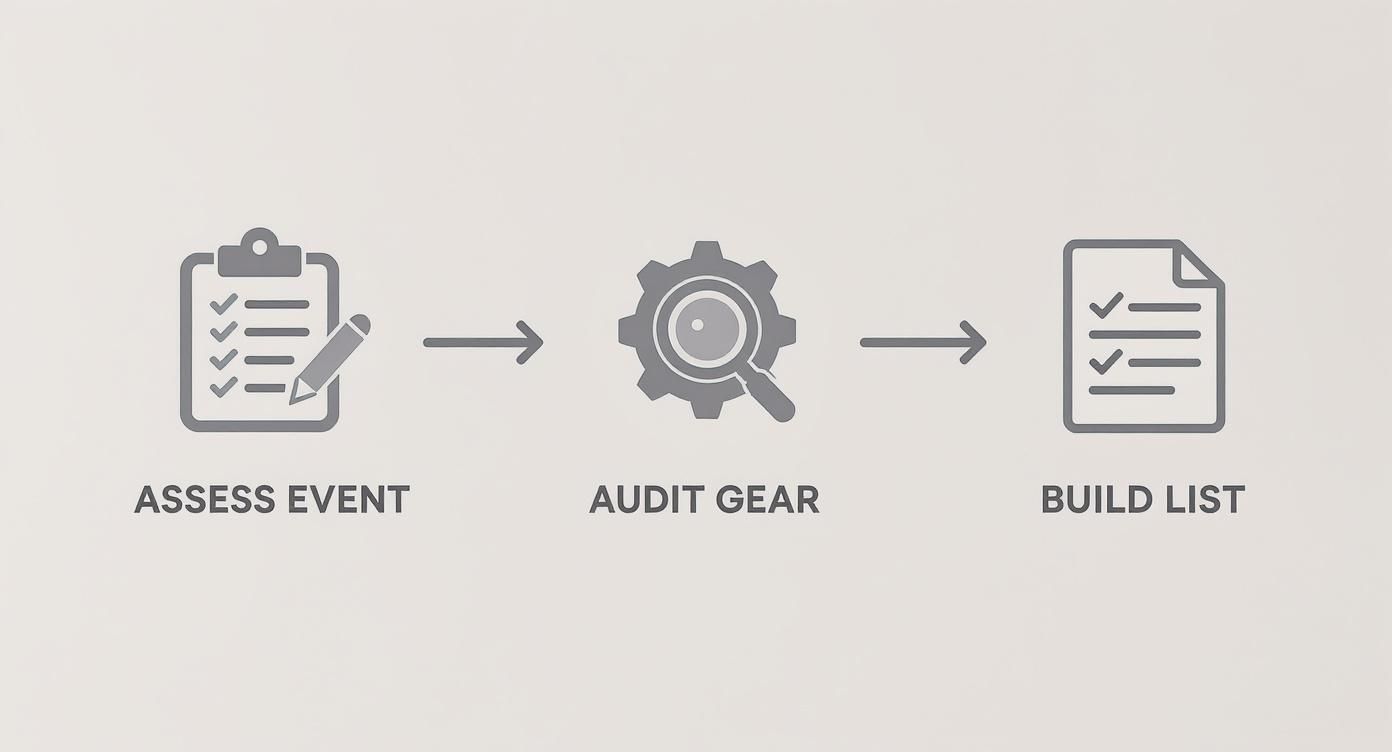
The idea is simple: a solid list comes from a deep understanding of the event and what you already have in-house. That foundation makes every job run smoother.
Zone-Based Staging for Efficiency
Forget the chaotic pile of gear. You need to think in zones. Grouping equipment by its function before it even gets near the van makes packing and unpacking a breeze. Your team can walk in, grab what they need for a specific task, and get to work without digging through a mountain of mismatched items.
Start by setting up distinct staging areas in your kitchen or warehouse:
- Cooking & Holding: This is where you'll corral your hot boxes, portable ovens, propane tanks, and extra fuel.
- Serving & Plating: Gather all the front-of-house gear here—chafing dishes, platters, serving utensils, and food risers.
- Beverage Service: This zone is for insulated dispensers, coffee urns, ice caddies, and all your bar tools.
- Safety & Sanitation: Don't forget the essentials! Group handwashing stations, fire extinguishers, first-aid kits, and trash cans.
Using this method means you can see at a glance if each part of your event is fully equipped before you load a single item. It's a simple system that has saved us from leaving critical gear behind more times than I can count.
By setting up your staging area into functional zones, you’re creating a visual double-check of your list. If the 'Serving & Plating' zone looks a little thin, you know something’s missing before it’s a crisis at the venue.
Smart Loading for a Faster Setup
How you load the truck is every bit as critical as how you've organized your bins. The golden rule is ‘last in, first out’ (LIFO). It’s a simple concept: whatever you need first at the venue should be the absolute last thing you load onto the truck.
Just walk through the event setup in your head. You can't set out chafing dishes until the tables are in place, and you can’t put down platters before the linens are on.
With that in mind, a typical loading order should look something like this:
- First In (Deep in the Truck): Heavy cooking equipment, back-of-house items, and anything you won't need until later.
- Middle: Hot boxes, beverage stations, and stacks of serving ware.
- Last In (Right at the Door): Tables, linens, chairs, and your personal setup toolkit.
This LIFO approach guarantees that the moment your crew opens those truck doors, they can immediately grab the foundational gear and start building the event space. If you're looking to round out what goes into these zones, exploring a wide array of catering supplies can give you some great ideas for what to add to your inventory.
Of course, securing everything properly is non-negotiable. Always use ratchet straps for big items like speed racks and rolling cabinets. We pack all our smallwares into clearly labeled, stackable bins—it prevents them from turning into projectiles during transit, protecting both your investment and your team.
Executing Flawlessly on Event Day
When you pull up to the venue, that checklist you spent hours perfecting is no longer just a plan—it's your playbook for the entire event. The controlled chaos of setup is where a truly great checklist shines, giving your team a clear path forward the second those truck doors swing open.
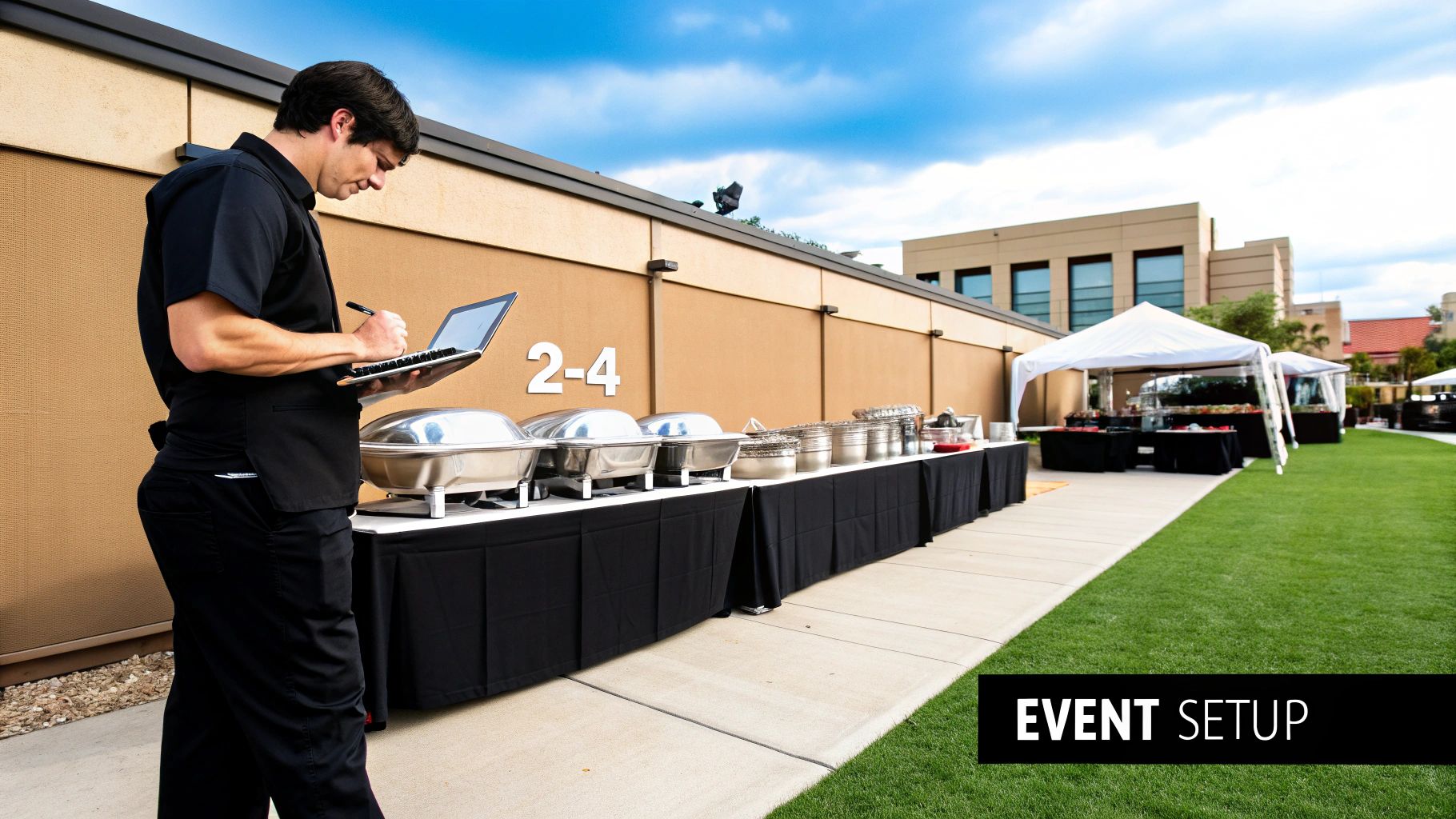
Before a single box is moved, do a walkthrough. I can't stress this enough. Walk the space, checklist in hand, and confirm everything the venue promised is actually there—from the number of power outlets to the exact dimensions of their walk-in. This is your moment to spot a problem and solve it before it derails your timeline.
From Unloading to Setup Zones
Once you've got the lay of the land, you can start unloading with a purpose. This is where your organized packing from the warehouse really pays off. Instead of just dumping gear in a pile, you're creating strategic zones that match the event's layout.
Your checklist becomes the director, telling your crew precisely where each piece goes. One corner becomes the back-of-house kitchen, another the main buffet, and another the satellite bar. This systematic approach is a game-changer; it cuts setup time in half and eliminates the "where does this go?" confusion that can stall an entire team.
- Back-of-House Zone: This is where the heavy-duty cooking and holding equipment lands. Make sure it's near power sources and has proper ventilation.
- Service Line Zone: Here, you'll stage chafing dishes, serving spoons, and everything for plating. Knowing your chafing dish sizes and their specific roles is key to a buffet that looks as good as it functions.
- Beverage Station Zone: Coffee urns, insulated drink dispensers, and ice chests should be positioned for easy guest access, ideally away from the main food line to prevent traffic jams.
Reinforcing Food Safety Protocols
Let's be clear: on-site execution is about more than just logistics. It’s your last chance to double-down on food safety. Your checklist acts as the final line of defense, prompting you to verify that every refrigerator, hot box, and steam table is at the correct temperature before any food comes out.
This isn't just about following the rules; it's about protecting your clients and your hard-earned reputation. The industry takes this seriously. In fact, cooking equipment currently leads the market with a 31% share, with refrigeration right behind it at 24%. Keeping informed about industry news, especially regarding food safety regulations and equipment innovations, is crucial for every chef and restaurant owner. There's a huge push from regulators for caterers to use NSF-compliant and ENERGY STAR-rated gear, which makes a checklist essential for tracking and proving your compliance.
Pro Tip: Use your checklist to start a temperature log the moment you power on your equipment. Jot down the time and the temp reading for each hot-holding cabinet and cold station. This simple act creates a crucial paper trail of due diligence and instills a culture of safety in your team.
This disciplined, checklist-driven approach to setup ensures everything is not just accounted for but is working perfectly. It’s how you turn all that careful planning into the kind of seamless, professional service that keeps clients coming back.
The party's not over when the last guest heads home. For a caterer, the real work of protecting your profit and setting up the next event for success begins now. This is when your catering equipment checklist proves its worth all over again, shifting from a packing list to a powerful asset management tool.
https://www.youtube.com/embed/l7qCaOfeZRQ
The first thing to do is a systematic reconciliation. As the team breaks down each station—from the bar to the buffet line and back-of-house—they should be checking items off in reverse using the original list. This isn't just about counting big items. It's a methodical process that stops small but costly things, like serving tongs or that one-of-a-kind platter, from getting tossed out with the trash. It happens more than you think.
Turning Your Checklist into a Maintenance Log
The end of an event is also the perfect time to get honest about how your gear held up. You can prevent a major equipment meltdown at the next gig with one simple habit: have your crew jot down notes right on the checklist about any problems they ran into.
- Chafing dish lid not fitting right? Note it.
- Hot box struggling to stay at temp? Write it down.
- That one wobbly wheel on the speed rack? Log it.
Suddenly, your inventory sheet becomes a living maintenance log. Back at the commissary, these notes become your repair list, ensuring everything gets fixed or replaced before it can ruin a future event. For a deeper dive, our guide on commercial kitchen equipment maintenance can help you build a solid, proactive strategy.
Protecting Your Investment in a Growing Market
Keeping your equipment in top shape is just smart business. The global catering equipment market is booming, expected to hit a staggering USD 224.66 billion by 2031. This trend, detailed in an analysis by foodhq.world, highlights a huge industry-wide demand for more sophisticated and reliable gear. Protecting the investment you've already made has never been more important. For savvy restaurant owners, staying on top of the latest news and deals on restaurant equipment is key to navigating this growth.
A disciplined breakdown process does more than prevent loss—it builds a culture of ownership and respect for the tools of your trade. When your team knows every item is tracked and its condition is monitored, they handle the equipment with greater care, extending its lifespan and reducing replacement costs.
By making this final check an unshakable part of your workflow, you truly close the loop on the event. You're not just confirming that every fork and pan made it back home; you're gathering the intel needed to keep your operation running like a well-oiled machine for years to come.
Answering Your Top Catering Equipment Questions
Even with a rock-solid checklist, questions always pop up in the heat of planning. Let's be honest, figuring out the answers to these common hurdles is what separates a smooth event from a chaotic one. I've been in the trenches, and here are some straight-up answers to the questions caterers like us deal with every single day.
Should I Rent or Buy Specialized Catering Equipment?
This is the big one, isn't it? The constant tug-of-war between investment and convenience. My philosophy is pretty simple: buy your workhorses, rent your show ponies.
Buying makes total sense for the core gear you use week in and week out. Think about your essential chafing dishes, those indestructible insulated food carriers, and the serving utensils you can't live without. If an item is part of your foundational kit, owning it is the way to go.
Renting, however, is a lifesaver for those one-off or specialty requests. Got a client who absolutely must have a chocolate fountain for their wedding? Need a massive convection oven for a one-time corporate gala? Or maybe a very specific set of themed plates for a party? Don't clutter your storage—just rent it.
Here's a quick rule I stick to: If you can see an item paying for itself in under 12-18 months of gigs, it's probably a smart buy. Just don't forget to factor in the hidden costs of storage space and maintenance. Renting wipes those headaches right off your plate.
How Do I Adapt My Checklist for Small vs. Large Events?
The secret isn't to have dozens of different lists. It's to build one bulletproof 'master' checklist and treat it like a template. This one document becomes your mission control, no matter the size of the event.
For a small corporate lunch, you're just scaling down. You'll simply skip over the sections you don't need. The name of the game is portability and speed, so you're focusing on smaller carriers, fewer platters, and a more streamlined setup.
When a huge wedding or fundraiser comes along, you'll use every single line of that master list and probably add more. This is when you add columns for exact quantities and start assigning whole sections—like 'Beverage Station' or 'Dessert Table'—to specific team members. It creates instant accountability when you've got a big crew on-site. The categories are the same; it's the scale and detail that explode.
What Are the Best Digital Tools for Managing My Checklist?
Ditching the paper-and-clipboard method is one of the best moves you can make for your sanity and your team's efficiency.
For a simple, free, and surprisingly powerful option, you can't go wrong with Google Sheets. It's collaborative, updates in real-time, and everyone can access it from their phone. It’s the perfect place to start.
When your operation gets bigger and more complex, you might want to look into project management tools like Trello or Asana. These let you turn checklist items into tasks you can assign to people, add due dates, and track everything. Some catering-specific inventory apps even have checklist features built right in. The "best" tool really depends on your team's size, but even a basic shared digital list cuts out so much miscommunication.
What's the Most Commonly Forgotten Item by Caterers?
After years of doing this, I can tell you it's almost never the big stuff. You won't forget the hot box. What gets you is the small, boring, but absolutely critical support gear that can bring your entire operation to a screeching halt.
These are the usual suspects:
- Power & Utilities: You would be shocked at how often someone forgets extension cords and power strips.
- Sanitation & Cleanup: Extra trash bags, a can opener, or a simple box cutter can be absolute lifesavers.
- Safety Essentials: The first-aid kit. It's a non-negotiable that gets left in the van way too often.
- Service Utensils: It’s so easy to pack one set of tongs when you have five chafing dishes, or to forget you need extra serving spoons and a dedicated cake knife.
My solution? Create a permanent line item on your master checklist called the "Event Essentials Kit." It’s a pre-packed bin that contains all this miscellaneous stuff. It gets sealed after every event and is the very first thing loaded onto the truck. No exceptions.
At Encore Seattle Restaurant Equipment, we know that having the right tool for the job makes all the difference. We help restaurant owners and chefs discover the latest news and exclusive deals on restaurant equipment and supplies. Find the new and used equipment you need to build out the perfect catering checklist and make every event a success.