
Your Guide to Choosing the Perfect Commercial Prep Sink
It's easy to look at a commercial prep sink and see just a simple basin for rinsing vegetables. But in reality, it's a dedicated, health-code-mandated workstation that serves as the starting point for almost everything your kitchen produces. This isn't your standard three-compartment sink for washing dishes; a prep sink is used exclusively for getting ingredients ready, which is absolutely vital for preventing cross-contamination and keeping your workflow moving.
Choosing the right one isn't just a purchase—it's a serious investment in your restaurant's efficiency and safety. For the latest news, exclusive deals, and emerging trends in restaurant equipment, be sure to stay connected with industry leaders.
Why Your Commercial Prep Sink Is a Critical Investment
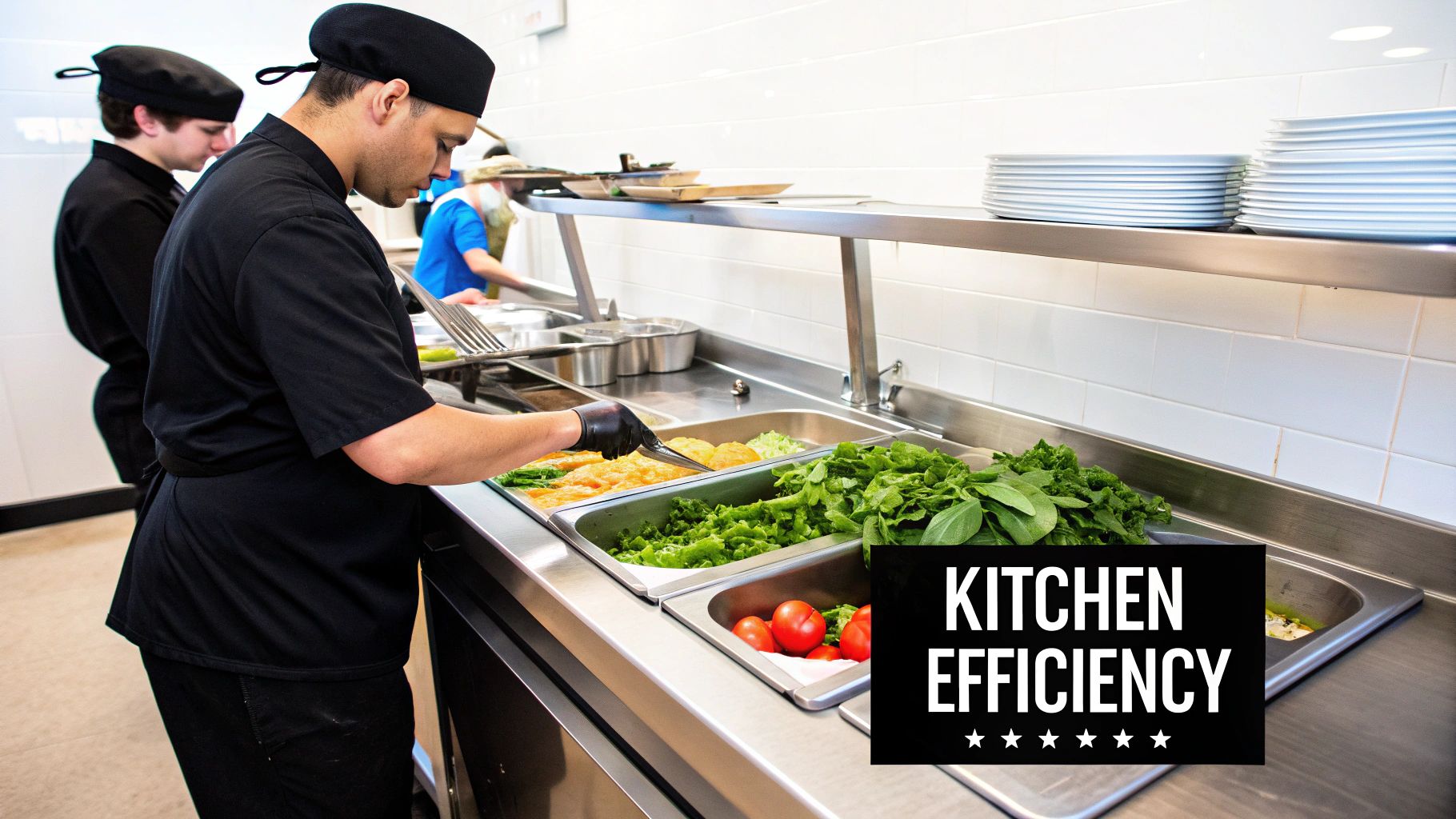
Picking out a prep sink might seem like a minor detail, but this single piece of equipment has a huge ripple effect on your kitchen's daily grind. It directly impacts how efficiently your team moves, how easily you stay on the right side of health codes, and even the final quality of the dishes you plate. It’s the unsung hero that, when chosen wisely, prevents frustrating bottlenecks and keeps the whole operation running smoothly.
Think of your kitchen layout like a highway system. A well-placed, properly sized prep sink is the perfectly designed on-ramp, letting ingredients merge seamlessly into the production line. Get it wrong—a sink that’s too small, stuck in a bad spot, or a pain to clean—and you've just created a permanent traffic jam, slowing down every single step that follows.
The Foundation of Kitchen Workflow
In a professional kitchen, every single minute saved goes straight to your bottom line, and an efficient prep area is where it all begins. A dedicated commercial prep sink gives your staff the space and tools they need to wash high volumes of produce, thaw proteins safely, and handle countless other tasks without getting in the way of the dish pit.
This separation isn't just a good idea; it's a fundamental principle of food safety that health inspectors take very seriously. We all know that proper hand hygiene drastically reduces the risk of foodborne illness, and having separate, dedicated sinks for food prep and handwashing is a non-negotiable part of that system.
The right sink isn't just about washing lettuce. It’s about building a system that protects your customers, empowers your staff, and strengthens your business against the costly risks of inefficiency and non-compliance.
More Than Just a Basin
Ultimately, investing in the right prep sink is about setting your kitchen up for long-term success. A durable, thoughtfully designed unit will take the beating of a busy restaurant day-in and day-out for years. It becomes a foundational asset, not just another piece of equipment.
Throughout this guide, we'll walk through exactly how to pick a sink that works for you, not against you, making sure it supports your unique workflow from the moment it's installed.
Getting to Know Your Sink: Configurations and Materials
Let's be clear: the sink you have at home can't handle the heat of a professional kitchen. It's just not built for it. Trying to use a residential unit is like sending a rowboat into a hurricane—it won't last long. A proper commercial prep sink, usually made of heavy-gauge stainless steel, is the reinforced concrete bunker that weathers the storm day in and day out.
Picking the right design and material is one of the most important decisions you'll make. Get it right, and you’ve got a workhorse. Get it wrong, and you've bought yourself a constant headache.
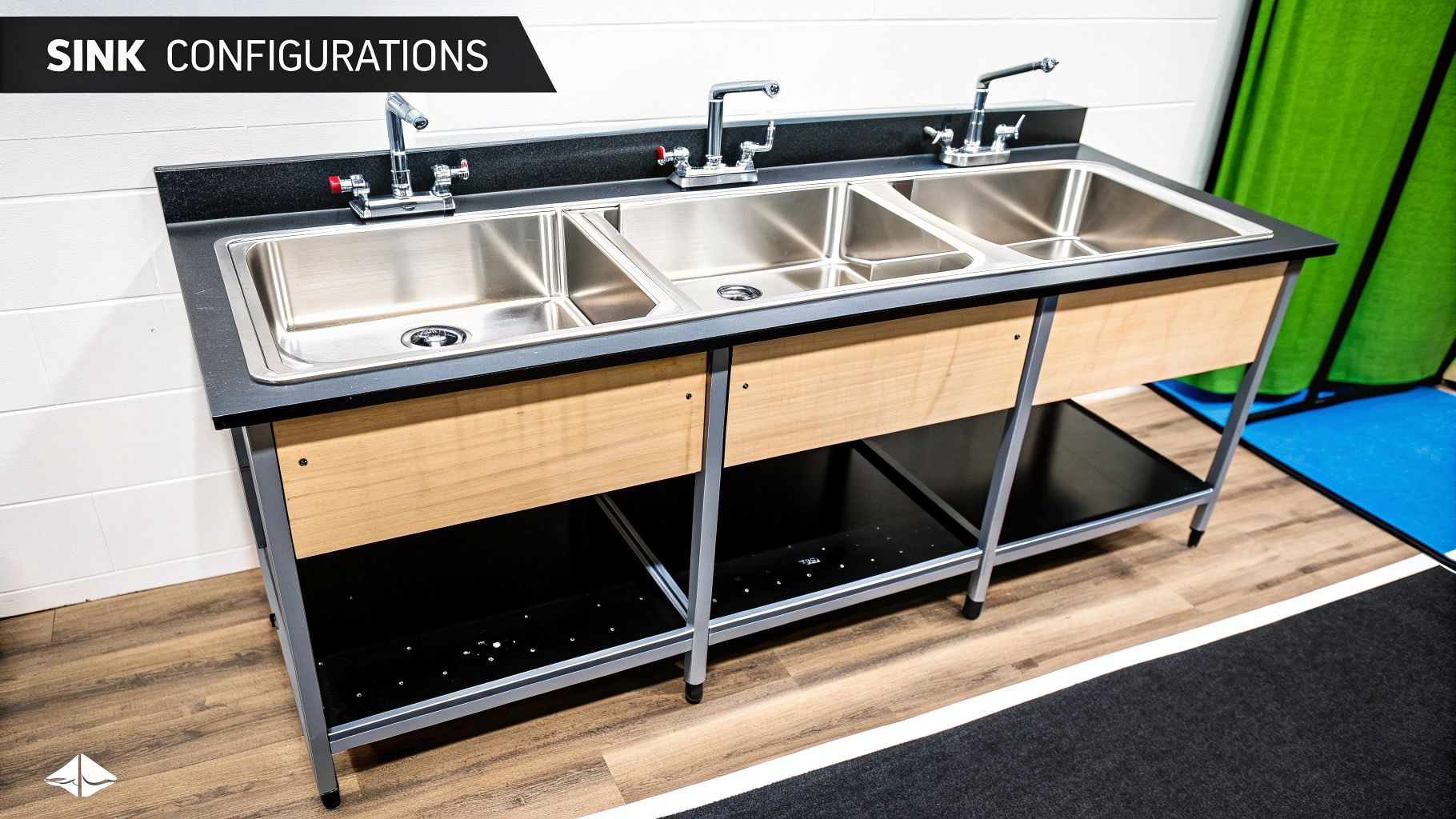
The configuration of your sink—how many compartments it has—directly impacts your kitchen's flow. The most common setups are single, double, and triple-compartment sinks, and each one is designed for a specific job to keep things moving and, most importantly, sanitary.
Matching Compartments to Your Kitchen's Workflow
How many basins do you really need? It all comes down to the kind of work you're doing.
A single-compartment sink is your utility player. It's the perfect dedicated station for one high-volume task, like washing a mountain of potatoes or thawing proteins safely under running water. Simple and effective.
Move up to a double-compartment sink, and you open up more complex workflow possibilities. You could use one basin for washing produce and the other for rinsing it clean. This creates a straightforward, linear process that's great for preventing cross-contamination. It’s a solid choice for kitchens that prep a fair amount of fresh ingredients but don't need a full-blown warewashing setup.
The triple-compartment sink is the gold standard for a structured, health-code-compliant process. While it’s often required for the classic wash-rinse-sanitize dishwashing method, it's an efficiency powerhouse for food prep, too. Picture an assembly line for your produce: one basin for soaking, a second for rinsing off dirt, and a third for a final sanitizing dip.
Think of each compartment as its own dedicated workstation. The more distinct jobs your prep area has, the more compartments you'll need to keep those processes separate, safe, and humming along.
Why Stainless Steel Is King
When it comes to materials, there's really no debate in the commercial kitchen world. Stainless steel reigns supreme. Its dominance is a huge reason the global kitchen sinks market was valued at around $3.76 billion. The commercial side of that market is booming because restaurants and hotels absolutely require sinks that can take a beating from intense, constant use.
Stainless steel’s incredible resistance to rust and the fact that it's a breeze to clean makes it less of a purchase and more of a critical infrastructure investment. You can see more market insights and data on the growing demand for durable kitchen sinks.
But here's something you need to know: not all stainless steel is the same. You'll typically run into two main types: 304-series and 430-series.
- 304-Series Stainless Steel: This is the good stuff, the premium choice for a commercial prep sink. It has more nickel in its composition, which gives it top-tier resistance to corrosion from salt, acidic foods, and harsh cleaning chemicals. If your sink will be in constant use, this is what you want.
- 430-Series Stainless Steel: This is a more budget-friendly option. It’s still durable, but it lacks nickel, making it more likely to rust over time, especially if it’s constantly exposed to things like citrus juice or strong sanitizers. It's better suited for drier applications, like an equipment stand, than for the wet and wild environment of a prep sink.
It's All in The Thickness: Understanding Gauge
Beyond the type of steel, you have to consider its thickness, which is measured in gauge. Now, this can be a bit counterintuitive: the lower the gauge number, the thicker and stronger the steel.
A 16-gauge sink is a true heavyweight champion. It’s thick enough to shrug off dents from dropped pots and can handle the rumble of a garbage disposal without vibrating your whole kitchen.
An 18-gauge sink is a little thinner and often found in lighter-duty situations or when the budget is tight. It’s still a solid piece of equipment, but it's just more likely to pick up dings and dents over the years. For any busy prep sink, paying a bit more for a lower gauge like 16 is one of the smartest long-term decisions you can make.
Making Sense of Health Codes and NSF Standards
Passing a health inspection is a make-or-break moment for any restaurant, and you can bet your commercial prep sink is one of the very first things the inspector will zero in on. This isn't just about wiping it down; it's about having equipment that's built from the ground up to guarantee food safety. Diving into health codes can feel like learning a new language, but it all boils down to one simple goal: keeping your customers safe.
Think of an inspector's visit as a pop quiz on your kitchen's safety protocols. They're trained to spot tiny hazards that could lead to big problems. A compliant sink is your first and most visible line of defense, showing them you take safety seriously before they even glance at your walk-in.
The Power of the NSF Stamp
When you see that little blue NSF logo on a piece of equipment, it’s not just a sticker. The NSF (National Sanitation Foundation) certification is your proof that the sink has been put through the wringer by an independent third party and meets strict standards for public health. It’s the gold standard.
An NSF-certified sink is specifically engineered for sanitation. This means it has key design features that make it incredibly tough for bacteria to find a place to hide and multiply. When an inspector sees that NSF stamp, they know the sink is:
- Made from non-porous materials like 304-series stainless steel, which won't soak up liquids or harbor nasty germs.
- Built for easy cleaning with smooth, seamless welds and surfaces that you can wipe down and sanitize completely, without any trouble spots.
- Designed to prevent bacterial growth by getting rid of crevices, sharp corners, and other areas where gunk can build up.
Rolling the dice on a sink without this certification is a huge gamble. If an inspector doesn't see that mark, it’s an immediate red flag. That could mean violations, fines, or even being forced to shut down until you replace it.
What Health Inspectors Are Really Looking For
Picture a health inspector walking into your kitchen, clipboard in hand. When they get to your prep area, they aren't just checking if the sink is shiny. They're performing a structural audit to ensure it meets every letter of the law.
One of their main focuses will be the corners of the sink bowl. Sinks with sharp, 90-degree angles are a cleaning nightmare and a health hazard. Those tight corners are notorious for trapping food debris and moisture, creating the perfect breeding ground for bacteria. That's precisely why health codes require coved corners—smooth, rounded edges that let you clean every single inch, leaving no place for grime to hide.
An inspector's checklist is your blueprint for success. Every requirement, from coved corners to proper drainage, is a proven measure to protect public health. Viewing your sink through their eyes turns compliance from a chore into a core business strategy.
Inspectors will also check for proper drainboards. These aren't just a convenient spot to set down a wet basket of lettuce. Integrated, sloped drainboards are a mandatory feature that funnels water from rinsed produce directly into the sink, not onto your floor where it creates a slippery, unsanitary mess. Good drainage is fundamental to a safe kitchen workflow. For a more detailed look at the rules, you can learn more about the requirements for a three-compartment sink setup, as many of the core principles apply here too.
Let's take a closer look at the key requirements you'll need to meet.
NSF Requirements for Commercial Prep Sinks
This table breaks down what health inspectors are looking for when they evaluate your prep sink, why it's so important, and what features to check for when you're buying.
| Requirement | Why It Matters | What to Look For |
|---|---|---|
| NSF Certification | This is the official seal of approval, guaranteeing the sink meets public health and safety standards. | Look for the official blue NSF logo physically stamped or affixed to the sink. |
| 304 or 316 Stainless Steel | This material is non-porous, corrosion-resistant, and won't harbor bacteria. | Confirm the steel gauge and type in the product specifications. 16-gauge is a durable standard. |
| Coved Corners | Smooth, rounded corners inside the sink bowl prevent food and grime from getting trapped. | Avoid sinks with sharp 90-degree angles. The corners should have a gentle radius. |
| Integrated Drainboards | Ensures water drains back into the sink, keeping floors dry and preventing cross-contamination. | Drainboards should be part of the sink unit (not separate) and sloped towards the basin. |
| Raised Marine Edge | A raised lip around the entire sink perimeter contains spills and keeps liquids off the floor. | Run your hand along the edge; it should be raised to catch any water that splashes over. |
| Smooth Welds & Seams | Prevents bacteria from growing in tiny cracks and crevices, making the sink easier to sanitize. | Welds should be ground smooth and polished. There should be no gaps or rough spots. |
Meeting these standards isn't just about avoiding a fine; it's about building a foundation of safety and efficiency in your kitchen.
The market for commercial foodservice equipment is growing fast, with forecasts showing a CAGR of 18.9% from 2025 to 2032. This boom is driven by a rising demand for specialized equipment that can keep up with today's tough hygiene rules. This industry trend makes it clear: investing in a fully compliant prep sink isn't just a smart move, it's essential for staying in business.
How to Size Your Sink for Maximum Efficiency
Picking the right size for your commercial prep sink isn't just about what fits in the corner—it's a crucial decision that can make or break your kitchen's flow. Go too small, and you'll create an instant bottleneck, with staff bumping elbows trying to prep ingredients. But go too big, and you’re just eating up precious floor space that could be used for another prep table or a vital piece of equipment.
The sweet spot is a sink that can handle the chaos of your busiest rush without becoming a roadblock. Think of it like a pot on the stove. You wouldn't try to make a gallon of soup in a tiny saucepan, and you wouldn't use a massive stockpot to boil a single egg. Your sink is the same; its size has to be perfectly matched to the scale of your operation.
Assessing Your Kitchen’s True Needs
Before you even glance at a catalog, you need to get real about what your kitchen actually does day in and day out. A bustling cafe that washes cases of fresh greens will need something completely different from a small bakery working mostly with dry goods. Your menu is your best guide.
Start by asking a few honest questions:
- What are we actually prepping? Are we washing giant heads of romaine, thawing turkeys, or just rinsing small bunches of herbs? The size and shape of your ingredients matter.
- What does our busiest hour look like? The sink needs to handle the volume for your peak service without grinding everything to a halt.
- What space do we really have? Measure the spot, but also consider foot traffic. Will this sink create a logjam or block access to other stations?
Answering these questions first means you're making a decision based on real-world needs, not just a guess or an exclusive deal.
From Measurements to Workflow
Once you have a clear picture of what you need, it's time to break out the tape measure. Map out the exact footprint available in your prep area. Don't just think about length and width; look up. You need to account for faucet clearance and any shelving you might want to add above it.
Here are the three measurements that really count:
- Overall Length: This isn't just the bowls—it includes any built-in drainboards. Trust me, you want those drainboards. They’re critical for air-drying produce and keeping water off your floors.
- Bowl Dimensions: Pay close attention to the length, width, and especially the depth of each basin. A depth of 12 to 14 inches is a great target; it's deep enough to prevent splashes and lets you fully submerge bigger items like stockpots or mixing bowls.
- Number of Compartments: As we've discussed, the number of bowls you need is all about your workflow. A single bowl might work for a very simple operation, but a two or three-compartment sink is a game-changer for organizing a proper wash-rinse-sanitize process.
This flowchart gives you a quick visual rundown for checking the must-have compliance features when you're looking at different sinks.
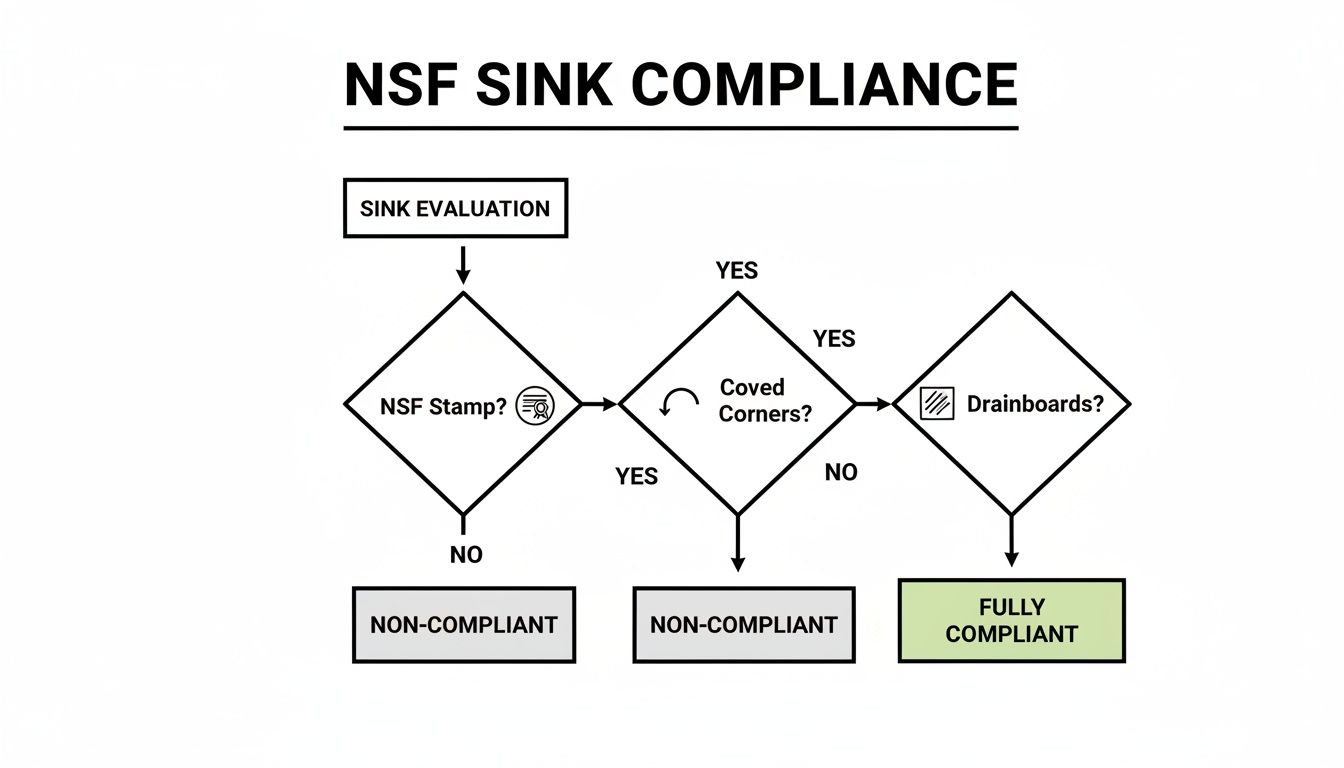
It’s a simple reminder that things like an NSF stamp, coved corners, and drainboards aren't just nice-to-haves. They're fundamental to keeping your sink sanitary, cleanable, and up to health code.
The perfect sink isn’t just one that fits the space; it’s one that fits the workflow. Sizing is about creating a seamless bridge between your raw ingredients and your production line, eliminating friction at every step.
When you take the time to match your kitchen's needs with the right physical dimensions, your prep sink becomes more than just a place to wash vegetables. It becomes a core part of your efficiency engine, leading to smoother service, a less stressed-out team, and a kitchen that’s safer and more compliant.
Installation and Maintenance Best Practices
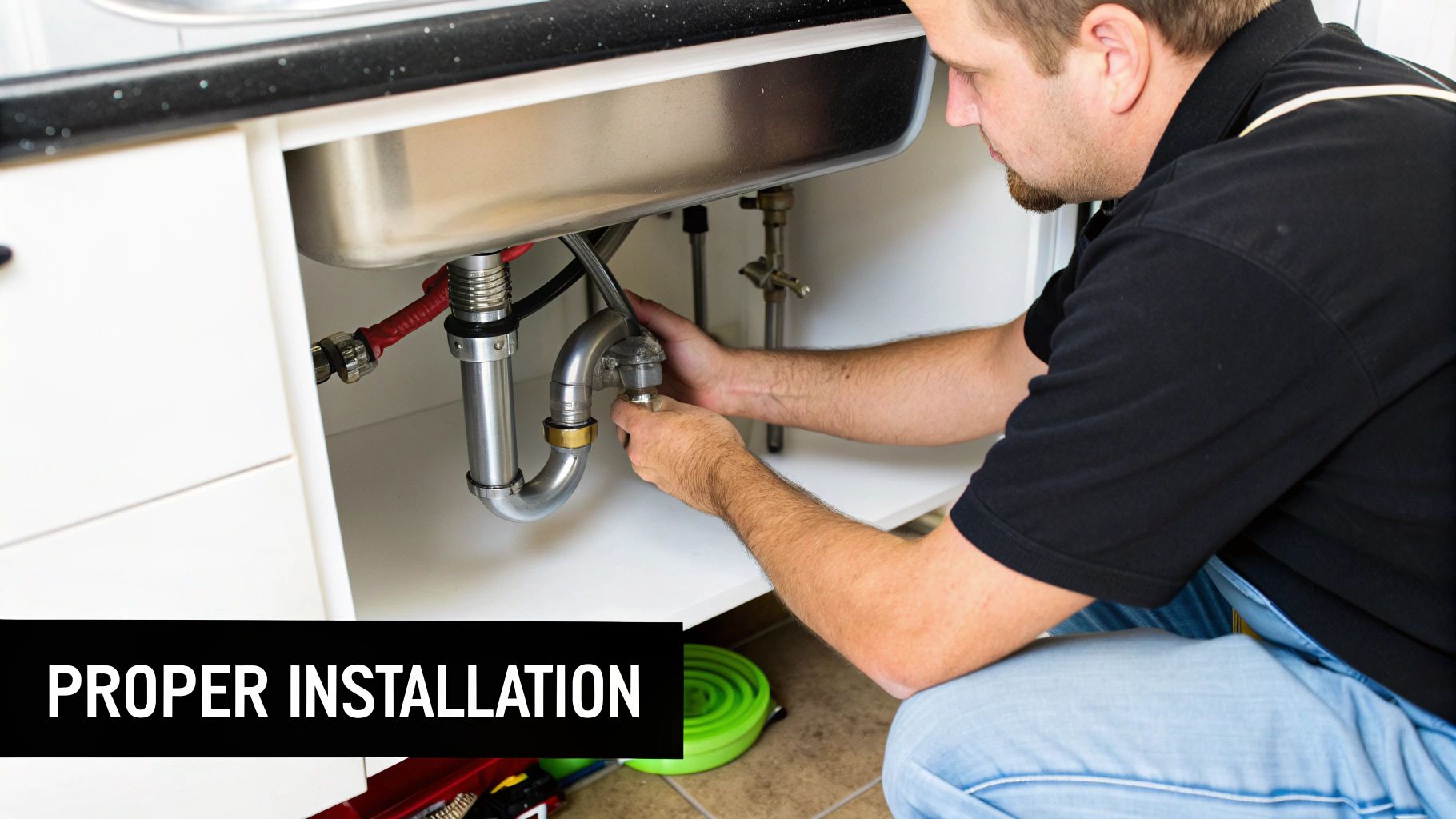
Even the best commercial prep sink on the market is only as good as its installation and upkeep. Getting the setup right from day one isn't just about hooking up pipes; it’s about building a rock-solid, leak-free workstation that can take a beating. Think of this as the long-term care plan for one of your kitchen's most valuable players.
Cutting corners during installation is just asking for trouble down the road. I've seen it a hundred times: improper seals around the edges or a botched drain connection lead to slow, persistent leaks that wreck floors and create a health code nightmare. A wobbly, unsecured sink isn't just a nuisance—it's a genuine safety hazard.
The absolute first step is making sure the sink is perfectly level. Grab a spirit level and adjust the bullet feet on each leg until that bubble is dead center. This small step ensures water flows properly to the drain instead of pooling in corners, which is a breeding ground for bacteria and can even lead to corrosion over time.
Creating a Watertight and Secure Setup
Once it's level, you need to make it watertight. This is where a lot of people mess up.
Run a solid, continuous bead of NSF-certified silicone sealant along the top edge of the backsplash where it butts up against the wall. This keeps water and gunk from sneaking behind the sink, a favorite hiding spot for mold. Double-check that every plumbing connection, from the faucet lines to the P-trap, is snug and has the right gaskets to stop any drips.
A proper installation is a one-time task that prevents a thousand future problems. Taking the time to level, seal, and secure your sink correctly protects your equipment, your floors, and your peace of mind during a health inspection.
Getting the drainage right is just as crucial. One of the most common complaints in a commercial kitchen is a slow or clogged drain, often caused by a bad plumbing slope. Your drain line needs a consistent downward pitch—at a minimum, 1/4 inch per foot—so gravity can do its job and pull wastewater away. For those inevitable clogs, knowing how to clear a blocked sink quickly can save you a world of hurt during a busy service.
A Simple and Effective Maintenance Schedule
Your job isn't done when the plumber packs up. A consistent cleaning routine is the only way to protect your investment, maintain the sink's finish, and stay on the health inspector's good side.
A daily cleaning schedule is your best defense. Here’s a simple routine that works:
- After Each Shift: Give the entire sink a good rinse with warm water to wash away food scraps and debris.
- Daily Cleaning: Scrub all surfaces—basins, drainboards, and backsplash—with a mild detergent and a soft cloth or nylon brush.
- Sanitizing: Follow up with a food-safe sanitizer, making sure to follow the instructions on the label and your local health department's rules.
- Rinse and Dry: This is the step everyone forgets. Always rinse with clean water and wipe the whole thing dry with a soft cloth. It prevents water spots and mineral deposits that can dull the stainless steel.
To take your drainage game to the next level, you might also look into a stainless steel floor sink to handle wastewater from multiple pieces of equipment. Stick to these practices, and your prep sink will be a reliable workhorse for years.
Finding the Right Commercial Prep Sink for Your Budget
So, you know what to look for in a great commercial prep sink—from the NSF seal of approval to the right gauge of steel. But now for the real trick: getting that perfect sink into your kitchen without blowing up your budget. Every restaurant owner I've ever met is a master at balancing quality and cost, and this decision is no different.
This is exactly why finding the right equipment partner is so crucial. You need someone who gets the financial tightrope walk of running a food business. A good supplier knows that a shiny, brand-new unit isn't always in the cards, especially when you're just starting out or expanding. They should have a whole spectrum of options, including exclusive deals, so you never have to choose between staying compliant and staying in the black.
Ultimately, it’s about finding a sink that fits your operational needs and your financial reality. That might be a brand-new workhorse, or it could be a top-notch used sink that works just as hard for a fraction of the price.
Smart Savings with New and Used Options
Honestly, one of the smartest ways to stretch your equipment budget is by looking at high-quality used gear. Think about it: a well-built, heavy-gauge stainless steel sink is incredibly durable. Its value is in its solid construction, which doesn't really degrade over time like a convection oven or a mixer with complex moving parts. It’s a tank.
A truly reputable supplier doesn't just put a "for sale" sign on a used sink. They stand behind it, giving you the confidence that you’re making a solid investment, not just inheriting someone else’s headache.
- Warranties on Used Equipment: This is a huge tell. A supplier offering a warranty on a pre-owned sink believes in its quality, and that lets you buy with peace of mind.
- Flexible Pickup and Freight: Don't let shipping costs kill your savings. Finding a local supplier with easy pickup options or affordable freight within Washington can save you hundreds, making that used deal genuinely worthwhile.
When you buy from a trusted source, you get all the financial upside of a used commercial prep sink without the usual risks. To dig deeper into this, check out our guide on the pros and cons of buying used restaurant equipment.
Financing and Support for Your Business
Sometimes, even a great deal on a used sink can be a tough upfront cost to swallow. That's where financing designed specifically for the restaurant industry comes in. Any good equipment partner understands that in this business, cash flow is everything.
Smart equipment acquisition isn't just about the lowest price tag. It's about finding the best overall value—that perfect mix of quality, reliability, cost-saving services, and financial flexibility that helps your business thrive.
Financing lets you get the exact sink you need right now and spread the cost out into predictable monthly payments. This keeps your cash free for the things that keep your doors open day-to-day, like payroll, inventory, and marketing. Whether you're running a small coffee shop or a massive catering operation, these tools make essential, high-quality equipment accessible to everyone.
Common Questions About Commercial Prep Sinks
Even after digging into the details, you probably have a few specific questions bouncing around. That's perfectly normal. Getting straight answers is the only way to feel good about your investment, so let's tackle some of the most common things we hear from chefs and owners.
What's the Real Difference Between a Prep Sink and a 3-Compartment Sink?
Think of them as having completely separate, non-negotiable jobs. A commercial prep sink is exclusively for food. This is where you'll be washing vegetables, thawing chicken, or rinsing off produce. Its entire life is about handling ingredients before they are cooked.
A 3-compartment sink, however, is strictly for washing dishes—the classic wash, rinse, and sanitize routine. Health codes are incredibly strict about this separation to prevent cross-contamination. An inspector will immediately look to see that you're not washing a head of lettuce where you just scrubbed a dirty pan.
Is an NSF-Certified Sink Really a Must-Have?
Yes, 100%. In a commercial kitchen, NSF certification isn't just a "nice-to-have"; it's a requirement to operate legally. Health departments demand that any equipment touching food, sinks included, meets these standards.
The NSF stamp is your proof that the sink is built from food-safe materials and designed to be cleaned properly, without hidden corners where bacteria can grow. Skipping it is one of the fastest ways to fail a health inspection.
Inspectors are trained to spot that little blue NSF logo. A sink without it is an instant red flag, and they can force you to replace it on the spot before you can even open your doors.
Can I Save Some Cash with a Used Prep Sink?
Absolutely. Going with a used sink is a fantastic way to stretch your budget, as long as you know what you're looking for or buy from a trusted source. A quality stainless steel sink is built to last for decades, and a well-cared-for used model can serve you just as well as a brand-new one.
If you're inspecting a used unit yourself, run your hands over every surface. You're looking for deep cracks, broken welds, or significant pitting where germs could hide. An even better approach is to buy from a reputable dealer who inspects and refurbishes their equipment. This way, you know it works correctly and you'll often get a warranty for added peace of mind.
What's the Best Way to Keep a Stainless Steel Sink Clean?
The secret to a gleaming stainless steel sink is simple, consistent care. For daily cleaning, all you need is warm water, a mild soap, and a soft cloth or nylon brush. There's no need for aggressive scrubbing, which can actually do more harm than good.
After washing, give it a good rinse with clean water. And here’s the most important part: wipe it completely dry. This simple step prevents those chalky water spots and mineral deposits that make the steel look dull. When it's time to sanitize, use a solution approved by your local health department and follow their guidelines. The one thing to never use is steel wool or abrasive powders—they will scratch the surface and open the door to rust.
At Encore Seattle Restaurant Equipment, we know that getting the right equipment is what makes a kitchen run smoothly. We carry a huge selection of new and used commercial prep sinks for any space and budget, all backed by real-world advice and flexible financing. Stay informed about the latest industry trends and discover exclusive deals on restaurant equipment and supplies with us.
Explore our full range of commercial sinks and find the perfect fit for your operation.