
A Winning Guide: business plan for pizza shop
Think of your pizza shop business plan as your playbook. It’s the single document that lays out your entire strategy, from the kind of pizza you'll serve to how you'll make money doing it. You'll need it to get funding, sure, but more importantly, it's your guide to launching and growing a successful business. It forces you to think through every detail before the first pizza even hits the oven. Plus, we help restaurant owners and chefs discover the latest news and exclusive deals on restaurant equipment and supplies so you can stay ahead of industry trends.
Defining Your Pizzeria's Core Identity
Before crunching a single number or scouting a location, you have to figure out the soul of your pizzeria. This isn't just an executive summary; it's the heart of your entire plan. It's your chance to tell a compelling story that gets investors and partners hooked from the very first page.
This is where you blend your passion for pizza with a solid, professional vision. To do that, you need to have clear, straightforward answers to a few core questions:
- What's your mission? "Selling great pizza" isn't enough. Are you aiming to be the neighborhood's go-to for authentic Neapolitan pies? A bustling community hub for families? Or maybe a no-frills slice shop that owns the late-night crowd?
- Who are you serving? Get specific. Picture the person walking through your door. Is it a college student looking for a cheap, delicious meal? A foodie willing to pay more for gourmet ingredients? Or a busy parent who just needs a quick, reliable dinner solution?
- What are your big-picture goals? Be clear about what you want to achieve. This means setting financial targets (like becoming profitable within 24 months) and brand goals (like becoming the top-rated pizzeria on Yelp in your city).
Crafting a Compelling Narrative
This part of your plan is essentially your elevator pitch on paper. It needs to be punchy enough to stand alone and give anyone a complete, exciting snapshot of your vision. Generic statements are forgettable; you need to spell out exactly what makes your pizzeria different.
Let's imagine a shop in Seattle called "Sodo Slice Co." Instead of saying they make good pizza, their story could be about a deep commitment to using locally sourced ingredients from Pike Place Market. Right away, that creates a connection to the community and a fresh, farm-to-table appeal that sets them apart from the big chains. This identity has to flow through everything, right down to the physical menu. In fact, understanding the crucial menu elements for your restaurant is key to making sure your brand and your offerings are perfectly aligned.
Key Takeaway: A strong, unique identity is your most powerful tool. It's the story that attracts investors, guides your branding, and ultimately draws in customers who resonate with your mission. Don’t rush this step—it’s the foundation of your entire plan.
From Concept to Concrete Plan
Let's stick with our Seattle example. The business plan for Sodo Slice Co. would kick off by defining its identity as an artisanal, fast-casual pizzeria aimed at young professionals and sports fans in the Sodo district.
Here's how they'd break it down:
- Mission: To serve inventive, high-quality pizza using ingredients from Pacific Northwest farms, offering a quick yet elevated dining experience.
- Customer Profile: Tech workers on their lunch break, Mariners and Seahawks fans grabbing a pre-game bite, and local residents who want premium takeout.
- Financial Goal: Secure a $150,000 startup loan for kitchen equipment, initial inventory, and a six-month operating runway. The goal is to hit a 15% profit margin by the end of year two.
See how specific that is? This kind of clarity gives potential investors a tangible concept to get behind. It shows you’ve moved past a simple idea and have a thoughtful, strategic vision for a real, viable business.
Know Your Neighborhood: A Deep Dive into Market and Competitor Analysis
With a clear vision for your pizzeria taking shape, it's time to ground that vision in reality. A fantastic concept can fall flat if you plant it in the wrong soil. Before you even think about signing a lease or pricing out ovens, you have to become an expert on your local food scene.
This isn't just a box-ticking exercise for your business plan. This is about survival. Doing this homework proves to investors—and more importantly, to yourself—that your pizza shop has a real chance to thrive. It’s about understanding the people, the existing players, and where your unique pie fits into the puzzle.
Who Are You Selling To? Pinpointing Your Ideal Customer
First things first: who are the people you want to feed? Get a sharp, detailed picture of the folks living and working within a one-to-three-mile radius of where you plan to open. This isn't abstract marketing talk; it directly impacts your menu, your pricing, and how you'll reach them.
Think about these key details:
- Household Income: Are you looking at a wealthy suburb where families will happily pay a premium for gourmet ingredients on a Friday night? Or is it a college town full of students who live for a good BOGO deal?
- Age and Family Life: A neighborhood packed with young families is a totally different market than one dominated by young professionals or retirees. Families need kid-friendly menus and high chairs. Singles might be looking for a quick slice and a craft beer after work.
- The 9-to-5 Crowd: Is there a major office park, a hospital, or a university campus nearby? These create a massive, built-in audience for lunchtime catering, quick grab-and-go slices, and late-night study fuel.
Finding a cluster of office buildings could be the green light for a business model that heavily leans on a fast, reliable lunch delivery service. This is the kind of insight that turns a good idea into a profitable one.
Sizing Up the Competition
Alright, time to do some recon. You're not just up against other pizzerias; you’re competing with every burger joint, taco truck, and sandwich shop in town. But for now, let’s focus on your direct rivals—the other shops slinging dough.
Fire up a spreadsheet and start mapping out every pizza place in your target area. For each one, you need to become a bit of a detective and gather some crucial intel:
- Their Vibe and Menu: Is it a big national chain like Domino's or a classic, family-run Italian spot with checkered tablecloths? Dig into their menu. What are they charging? What are their signature pies? What seems to be their bestseller?
- Their Strengths and Weaknesses: This is where you put on your SWOT (Strengths, Weaknesses, Opportunities, Threats) hat. Scour their reviews on Google, Yelp, and local foodie blogs. Do people rave about the lightning-fast delivery but constantly complain about a soggy crust? That's an opportunity.
- Their Price Point: Make a note of what they charge for a standard large cheese or pepperoni. This gives you a crucial benchmark for what the local market is willing to pay. Are they the budget option, the mid-range go-to, or the premium choice?
Pro Tip: Don’t just be a researcher—be a customer. Go to your top three competitors during their peak hours. Order a pizza. Watch the staff in action, feel the atmosphere, and see who’s eating there. You’ll learn more in that one hour than you ever could from behind a computer screen.
This is where you find your opening. If every single pizza joint in a five-mile radius is focused on cheap, fast delivery, you might have just found a gaping hole in the market for a cozy, dine-in pizzeria with artisanal toppings and local craft beer on tap.
Don't underestimate the size of the prize. The U.S. pizza market is an absolute behemoth, which means there's plenty of room for new players who are smart about finding their niche. One recent report projected the U.S. market would hit $50.1 billion in revenue, proving just how much demand is out there. If you want to dive deeper into the latest industry data, the 2025 Pizza Industry Trends Report is a great place to start.
By doing this legwork, your business plan transforms from a collection of hopeful ideas into a strategic roadmap. This data gives you the power to craft a unique selling proposition (USP) that makes your pizzeria not just another choice, but the only choice for a specific crowd of hungry customers.
Designing A Profitable Menu And Kitchen
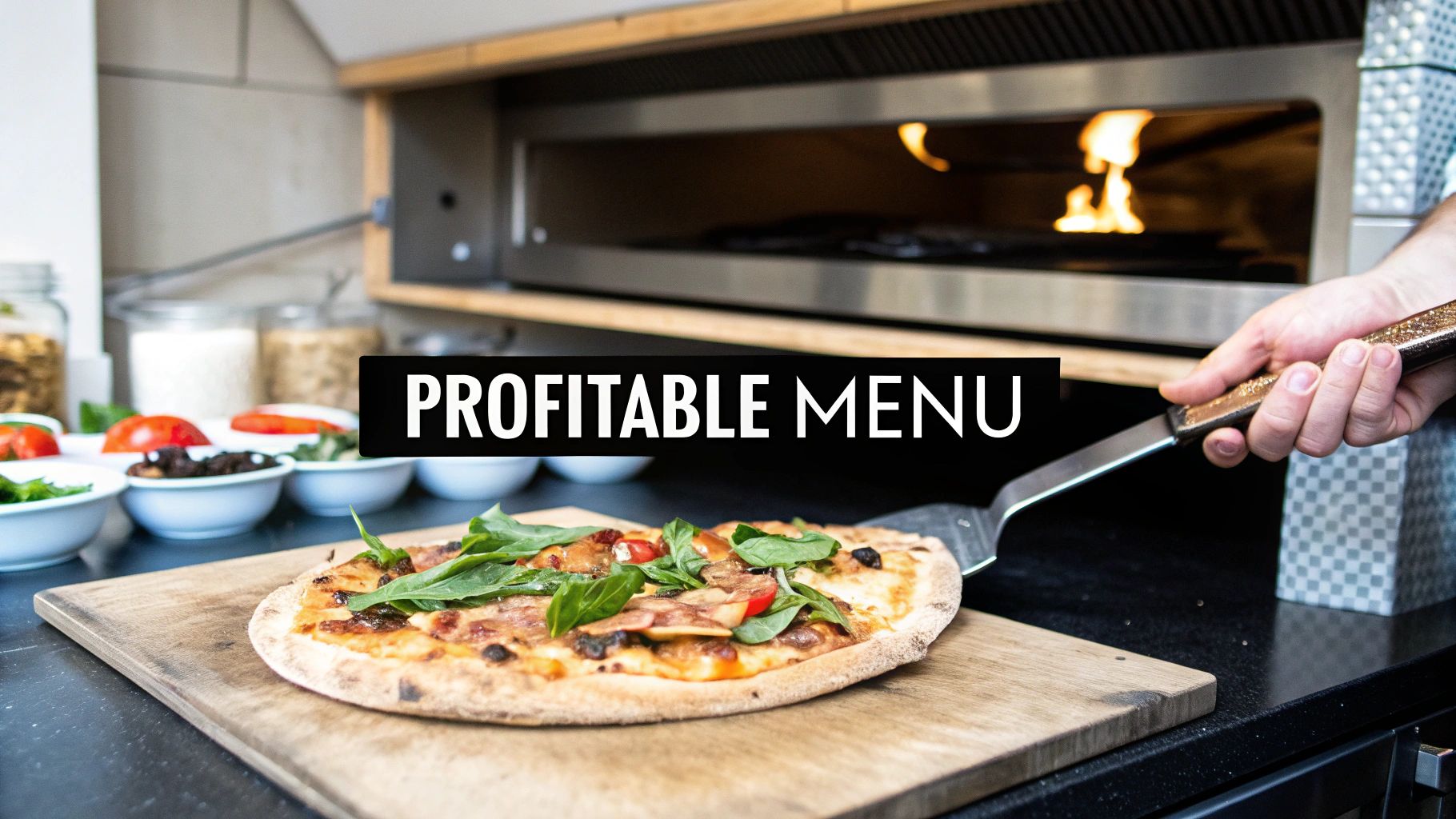
Your menu is the heart of your pizzeria, and the kitchen is the engine that keeps it beating. They're completely intertwined. Every single item you decide to sell directly impacts the equipment you'll need, the staff you’ll hire, and, most importantly, your bottom line. This section of your business plan for a pizza shop is where your culinary dream gets real.
I’ve seen too many new owners make the classic mistake of designing a massive, sprawling menu. They try to be everything to everyone, and it almost always backfires. This approach balloons your inventory, skyrockets food waste, and demands a much larger, more expensive kitchen to operate. A focused, well-engineered menu is simply smarter, more profitable, and far easier to execute well.
So, start with your core concept. If you’re opening a classic Neapolitan spot, your menu needs to reflect that with a tight, curated selection of authentic pies. On the other hand, if you're a fast-casual slice shop, variety and speed are the name of the game.
Mastering Your Food Costs
Before you even think about putting a price on a pizza, you have to nail down your food cost percentage. This simple number tells you exactly what percentage of an item's menu price is spent on the raw ingredients. For most pizzerias, the sweet spot is somewhere between 28% and 35%.
Calculating this for every pizza isn't optional—it's essential. Let's break down a simple 12-inch pepperoni pizza as an example:
- Dough Ball: $0.75
- Sauce (4 oz): $0.40
- Cheese (6 oz): $1.50
- Pepperoni (2 oz): $1.10
- Total Ingredient Cost: $3.75
If you sell this pizza for $15.00, your food cost is $3.75 / $15.00, which comes out to 25%. That's a fantastic, highly profitable position to be in. You have to do this exact costing exercise for everything on your menu, right down to the dipping sauces and side salads.
A well-priced menu isn’t just about covering costs; it's a strategic tool. You can price high-demand, low-cost items (like a classic cheese pizza) competitively to draw customers in, while making sure your specialty pies with pricier ingredients still deliver a healthy margin.
Building Your Kitchen Around The Menu
Now, let's connect that menu directly to the hardware. The type of pizza you serve dictates the most critical—and expensive—piece of equipment you'll buy: your oven. This decision truly defines your pizza's character.
- Deck Ovens: These are the workhorses for classic New York-style or Neapolitan pizzas. They create that crisp, beautifully leopard-spotted crust but require a skilled pizzaiolo to rotate the pies and manage the heat for a perfect, even bake.
- Conveyor Ovens: If you're running a high-volume, fast-casual shop, this is your oven. They guarantee consistency and incredible speed, making them perfect for a delivery-heavy model where every second counts. The trade-off is less hands-on control over the bake.
- Brick Ovens: These wood-fired beauties deliver incredible flavor and a huge "wow" factor for a dine-in concept. Just be prepared for a steep learning curve and much longer preheating times.
But the oven is just the start. The rest of your kitchen layout has to support your menu's workflow from the moment an order comes in to the second it goes out the door.
Budgeting for Your Pizzeria's Core Equipment
Your kitchen is a system, and every piece of equipment plays a role in getting a perfect pizza to the customer efficiently. A well-designed kitchen prevents those dreaded bottlenecks during the dinner rush and ensures every pizza is as good as the last.
When putting together the business plan for your pizza shop, you need to account for the real-world costs of these essential tools. Here’s a breakdown of what you'll need and a realistic look at what it might cost, comparing new equipment to the potential savings from buying used.
Essential Pizza Shop Equipment Startup Costs
| Equipment Category | Essential Items | Estimated New Cost Range | Estimated Used Cost Range |
|---|---|---|---|
| Dough Production | Commercial Spiral Mixer, Dough Sheeter | $3,000 - $15,000 | $1,500 - $7,000 |
| Refrigeration | Walk-in Cooler, Pizza Prep Table, Low-Boy Units | $10,000 - $25,000 | $4,000 - $12,000 |
| Cooking | Pizza Oven (Deck, Conveyor, or Brick) | $5,000 - $30,000+ | $2,500 - $15,000 |
| Preparation | Stainless Steel Tables, Sinks, Shelving | $2,000 - $7,000 | $800 - $3,000 |
| Warewashing | 3-Compartment Sink, Commercial Dishwasher | $3,000 - $10,000 | $1,500 - $5,000 |
| Smallwares | Peels, Cutters, Pans, Scales, Utensils | $1,500 - $4,000 | $500 - $1,500 |
Don’t miss out on exclusive deals—subscribe to stay updated on the latest restaurant equipment news, supplies, and industry trends. One of the most vital pieces of this puzzle is the pizza prep table, which serves as the central hub where you build every pie. It combines refrigerated storage right where you need it with a dedicated workspace. To get a better feel for what makes a good one, you can explore the features of a top-tier Atosa pizza prep table and see what to look for.
A smart strategy for managing your startup budget is to mix new and high-quality used equipment. You can save a bundle without compromising on the essential tools you need to succeed.
Structuring Your Daily Operations And Team
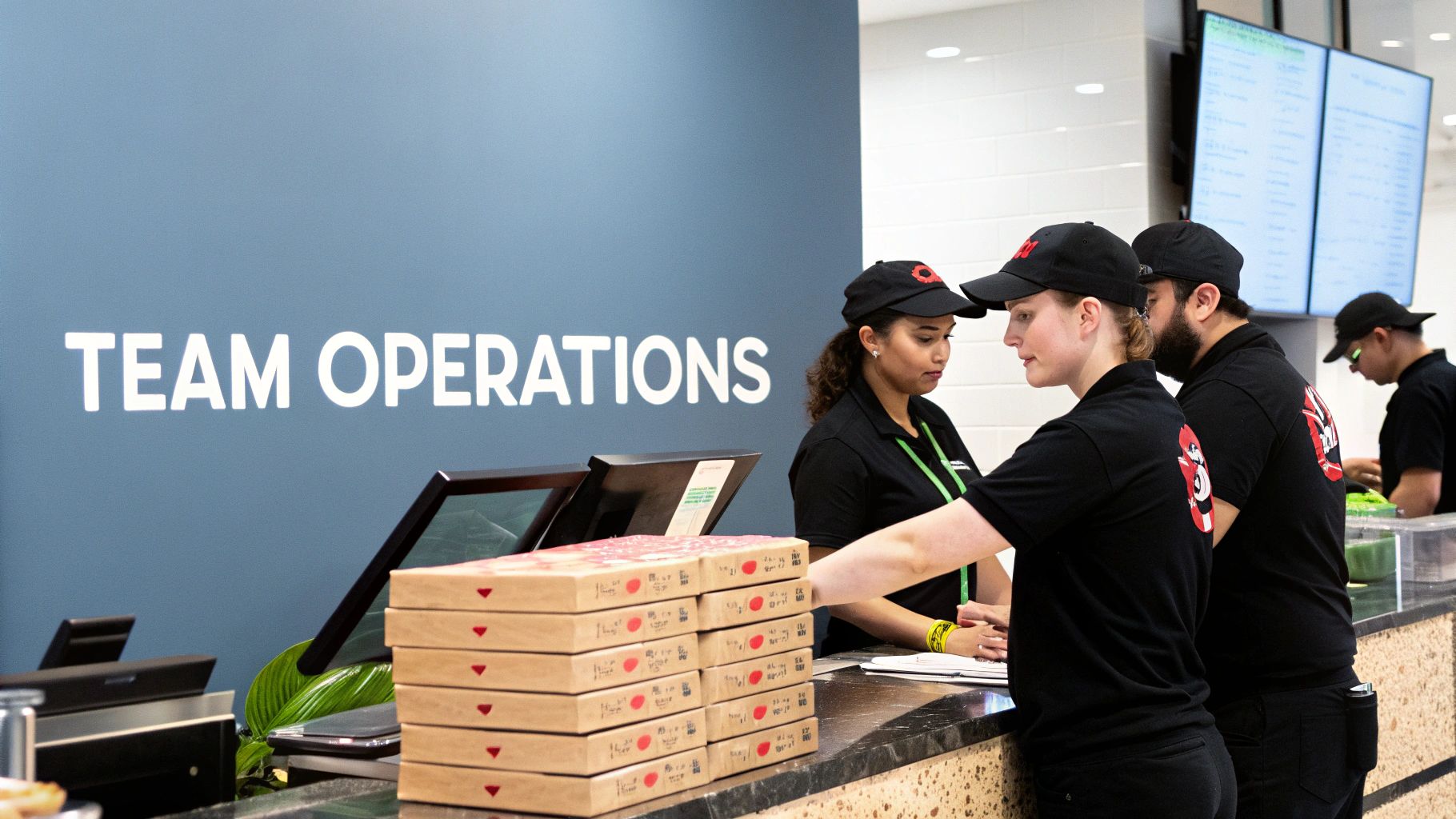
Even the most perfect pizza recipe is worthless if your shop is a chaotic mess behind the counter. This is where the real work begins—designing the operational flow that gets a delicious, hot pizza into your customer's hands smoothly and consistently.
Your business plan for a pizza shop needs to show investors you've thought through the logistics. It's about more than just food; it’s about proving you can execute. That means defining roles, building repeatable processes, and picking the right tech to keep everything running.
Defining Your Pizzeria Team Structure
How you staff your shop depends entirely on your concept. A tiny takeout window has very different needs than a bustling sit-down restaurant with a full bar.
For a typical small-to-midsize pizzeria, you’ll likely build a team around these core roles:
- Pizza Makers (Pizzaiolos): These are the artists. Their main job is dough, toppings, and managing the oven. Consistency is everything here.
- Kitchen Support/Prep Cooks: The unsung heroes who chop the veggies, make the sauce, and portion out toppings. A good prep cook is what keeps the pizza line from grinding to a halt on a Friday night.
- Front-of-House (Cashier/Server): This person is the face of your business. For counter-service spots, they're taking orders and payments. If you have tables, they’re the ones creating a great dine-in experience.
- Shift Manager/Owner-Operator: This is the conductor of the orchestra—overseeing the shift, solving customer problems, and keeping an eye on inventory. Let's be honest, in the early days, this is probably you.
Remember, you're not just filling positions; you're building a culture. I've learned that hiring for reliability and a good attitude is often more important than a long resume. A team that actually enjoys working together provides genuinely better service, and customers can feel that difference.
Creating Efficient Workflow Systems
Smooth operations don't happen by accident; they happen by design. You need to map out every single part of your day, from an opening checklist to the final closing duties. This isn't bureaucracy—it's about creating predictability, which cuts down on mistakes and stress.
Here are a few essential systems to get down on paper:
- Dough Management: When do you mix? How long is the proofing time? A strict schedule is the only way to ensure you never run out of your most critical ingredient during a dinner rush.
- Inventory Control: Get a first-in, first-out (FIFO) system in place from day one. It’s the simplest way to reduce spoilage. Regular stock counts will also help you spot what's selling and get your food costs under control.
- Health and Safety: Don't mess around with this. Have crystal-clear rules for food handling, station cleaning, and equipment sanitation. This is completely non-negotiable.
A well-documented operational plan is your playbook for consistency. It ensures that the pizza a customer loves on a Tuesday is the exact same quality as the one they order on a busy Saturday night.
Technology is your best friend here. A modern Point of Sale (POS) system does way more than process credit cards. It tracks sales data, helps with inventory, and tells you exactly when your peak hours are. Exploring the best restaurant management software early on can save you countless headaches down the road.
Getting these operational details right is crucial for competing in such a popular market. North America currently holds about 38.83% of the global pizza market share, according to Fortune Business Insights. To get your slice of that pie, your shop absolutely has to run like a well-oiled machine.
Crafting Your Marketing and Launch Plan
Even the most incredible pizza won't sell itself. You need a megaphone, and that's what your marketing and launch plan is for. This section of your business plan for a pizza shop is where you prove to investors that you know how to get people in the door and, more importantly, how to keep them coming back.
Forget just placing an ad in the local paper. We're talking about building a genuine community around your brand before you even fire up the ovens. The buzz you generate in the weeks leading up to your grand opening can be the difference between a quiet start and a line stretching around the block.
Building Buzz Before You Open
The pre-launch phase is all about stoking anticipation. Get your social media profiles up and running on platforms like Instagram and Facebook, wherever your ideal customers are hanging out. Don't just post generic food photos—show the real stuff. Share behind-the-scenes shots of the renovation, drop tantalizing hints about your menu, and introduce the faces behind the pizza.
This is also your chance to get out into the neighborhood and make some friends:
- Connect with Local Foodies: Find the local food bloggers and Instagrammers who people actually listen to. Invite them to an exclusive pre-opening VIP tasting. An authentic post from them can do more than a dozen paid ads.
- Forge Community Partnerships: See if a popular local brewery will host you for a pop-up night. Show up at a high school football game and hand out free slices. These moves build serious goodwill and get your product directly into people's hands.
- Get People Involved: Run a fun contest on social media, like a "Help Us Name Our Signature Pizza" competition. The winner gets bragging rights, their creation on the menu for a month, and a nice gift card. It costs you very little but makes locals feel like they're part of your story.
Pulling Off a Grand Opening That Pops
Your launch day is your first impression, so make it an event. A well-executed grand opening creates a massive wave of initial sales and media buzz that you can ride for weeks.
Think bigger than just a ribbon-cutting ceremony. Create some urgency with a killer, time-sensitive deal. Something like "50% off all pizzas on opening day" or "free slice for the first 100 customers" gets people motivated to show up early. A week before you open, send a press release to local news outlets and food writers announcing your opening date and what makes you special.
My Two Cents: Your grand opening isn't about making a huge profit on day one. It's an investment in customer acquisition. The real goal is to get as many people as possible to taste your pizza and have a fantastic experience. That's what turns them into regulars who tell their friends.
Building a Marketing Engine for the Long Haul
The launch is just the start. Now you need a plan to keep that momentum going. A sustainable marketing strategy is all about retention—building a loyal base of fans who choose you every time.
- Own Your Local SEO: The first thing you should do is claim and completely fill out your Google Business Profile. This is non-negotiable. Pack it with high-quality photos of your food and space, upload your menu, double-check your hours, and actively encourage happy customers to leave reviews. Showing up in the top three of a local map search is one of the most powerful ways to attract new customers.
- Start a Simple Loyalty Program: It doesn't have to be complicated. A classic punch card ("buy nine pizzas, the tenth is on us") is incredibly effective and easy to manage. It gives people a real reason to pick you over the competition down the street.
- Keep Your Social Feeds Interesting: Don't let your social media go stale. Keep posting mouth-watering photos, share pictures of your happy customers (with their permission!), and show some behind-the-scenes fun from the kitchen. Consistency keeps you on people's minds when they're deciding what's for dinner.
It's also smart to keep an eye on bigger trends. The global appetite for pizza is exploding, with markets in the Asia Pacific region projected to grow at a 6.2% compound annual rate from 2024 to 2032. This just reinforces the universal love for a good pie and shows the power of adapting to local tastes. You can get more insights about this global pizza market growth to see how trends are evolving worldwide.
Forecasting Your Finances And Securing Funding
Alright, let's talk about the money. This is where your dream of slinging pies meets the hard reality of the bottom line. A potential investor or a loan officer isn't just investing in your passion for pizza; they're investing in a profitable business. Your business plan for a pizza shop has to prove, in black and white, that your idea can make money.
Think of your financial projections as telling a story with numbers. That story needs to show a clear, believable path from opening day to long-term profitability.
Building Your Financial Projections
First things first: you need to nail down your total startup costs. I mean everything. Get granular here—from the big-ticket items like your deck oven down to the first month's rent, your initial flour order, and even your business license fees. Underestimating this number is one of the quickest ways for a new restaurant to fail.
Once you have that magic number, it's time to build out your core financial statements.
- Profit and Loss (P&L) Statement: This is your big-picture forecast. It maps out your projected revenue against all your expenses, usually for the first three to five years. The P&L answers the million-dollar question: when do you actually start making a profit? For a solid example of how to structure this, check out this sample profit and loss statement for a restaurant.
- Cash Flow Projections: Cash is king, and this document tracks every dollar coming in and going out, month by month. A profitable P&L doesn't matter if you can't make payroll on Friday. This projection shows you'll have the cash on hand to keep the lights on and your suppliers happy.
- Break-Even Analysis: This is your survival number. The analysis tells you exactly how much you need to sell just to cover your costs. Knowing this goal—for instance, "I need to sell 250 pizzas a week to break even"—gives you a tangible, daily target to hit. It’s incredibly motivating.
A word of caution: It's tempting to paint a rosy picture with your sales forecasts, but lenders have seen it all. They can spot wildly optimistic projections a mile away. Ground your numbers in reality. Look at what similar-sized pizzerias in your area are pulling in and use that as your baseline.
This chart, for example, shows a realistic projection for how different marketing efforts might perform in your first year.
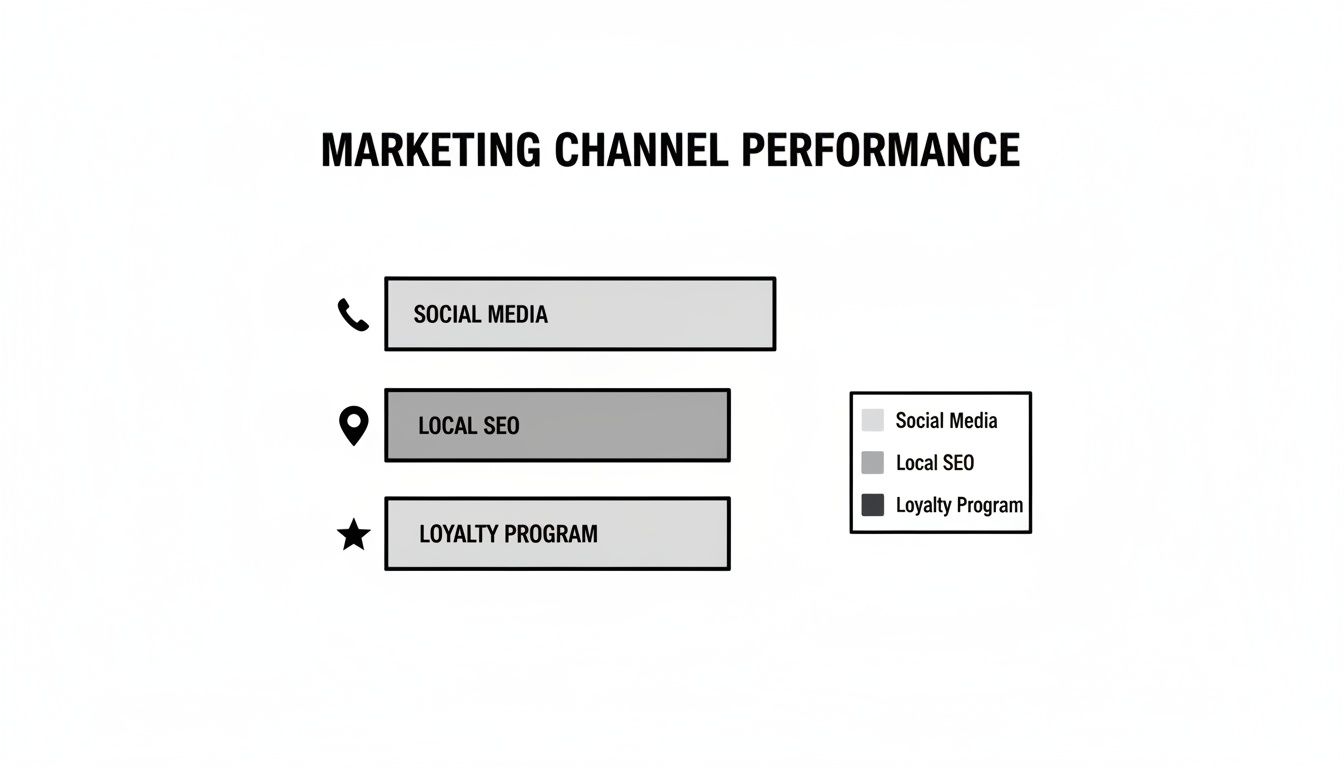
You can see that while social media might give you a nice initial pop, a solid local SEO strategy is what’s expected to bring in a steady stream of new customers over the long haul.
Exploring Your Funding Options
So, you know how much you need. Now, how do you get it? The good news is you have options.
Traditional bank loans and loans backed by the Small Business Administration (SBA) are great avenues if you have a strong plan. But don't overlook a powerful strategy many new owners use: equipment financing. This is a game-changer for managing your startup cash.
Instead of dropping a huge chunk of your capital on ovens, mixers, and walk-in coolers, you finance them. This converts a massive upfront purchase into a predictable monthly operational cost. It keeps your precious cash free for things like a bigger marketing launch, hiring great staff, and covering those unexpected expenses that always pop up. It's a smart way to get started without draining your bank account before you've even sold your first pizza.
Answering Your Pizza Shop Business Plan Questions
Putting together a business plan for your pizzeria is bound to stir up some tough questions. It's a lot to tackle. Let's break down a few of the most common ones that I see trip people up.
What's The Real Cost To Open A Small Pizza Shop?
This is the million-dollar question, isn't it? The truth is, there's no single answer. Your startup costs swing wildly depending on your city, your concept, and how big you want to go.
A small, no-frills takeout and delivery spot might get off the ground for around $75,000. If you're dreaming of a full-service sit-down restaurant in a high-traffic area, you could easily be looking at $500,000 or more.
The big-ticket items are always the same: kitchen gear, rent and security deposits, any build-out or renovations, your first big food order, and all those permits and licenses. One of the best ways to get a handle on these costs is to look at high-quality used equipment. Seriously, you can often slash your initial equipment budget by 30-50%, which makes getting open a whole lot less stressful.
What Parts Of The Plan Do Lenders Actually Read?
Let's be blunt: bankers and investors care most about the money. They will flip straight to your Financial Projections and then read your Executive Summary to see if the story makes sense. They need to see a convincing, numbers-backed path to profitability, and they need to get it fast.
Your financial section is where they'll spend most of their time. It absolutely must include:
- A line-by-line breakdown of your startup costs
- Projected profit and loss statements for the first 3-5 years
- A detailed cash flow analysis
- A calculation of your break-even point
Think of the executive summary as your elevator pitch. It has to grab them, sell your vision, prove you know your market, and—most importantly—convince them you're the right person to pull it off.
Should I Offer Delivery Right Away?
Hold your horses on this one. While it feels like a no-brainer to offer delivery from day one, it adds a massive layer of complexity and cost right when you're most vulnerable. Suddenly you're managing drivers, extra insurance, and the hefty commissions from third-party apps.
My advice? Start simpler. Nail your dine-in and takeout service first. This gives your kitchen crew a chance to get their workflow down and lets you perfect the customer experience without the chaos of delivery logistics. Once you're running smoothly and have a solid customer base, you can roll out delivery with a team that’s already confident and prepared.
If you're looking for a wider lens on the whole process, this guide on how to start a small business from idea to launch is a fantastic resource.
From deck ovens to walk-in coolers, Encore Seattle Restaurant Equipment has the new and used gear to make your pizza shop a reality. Stay informed with the latest restaurant equipment news and grab exclusive deals by subscribing to our updates. Check out our inventory at https://encoreseattle.com and let's get started.