
A Complete Guide to Back Bar Fridges for Your Business
In the fast-paced world of a bar or restaurant, your back bar fridges are the unsung heroes of your beverage service. They’re much more than just a box to keep things cold. The right unit is a powerhouse that drives efficiency, protects your pricey inventory, and ultimately, pads your bottom line. Think of it as a key investment in speed, quality, and even marketing. Stay informed about the latest trends in restaurant equipment to keep your establishment ahead of the curve.
Why Your Back Bar Fridge Is Your MVP
Imagine your back bar fridge isn't just an appliance, but the most valuable player on your team. It's working nonstop behind the scenes, making sure every beer is perfectly frosty and every bottle of wine is at the ideal temperature for serving. A great unit doesn't just chill—it becomes the command center for your entire drink program.
This is absolutely essential when you're slammed. When a bartender can find and grab a drink in seconds, it makes every order faster. Those seconds quickly add up to quicker service, more table turns, and happier customers. On the flip side, a poorly organized or struggling fridge creates frustrating bottlenecks for everyone. Discovering exclusive deals on top-tier equipment like this can give your business a significant competitive edge.
The Real Impact on Your Bottom Line and Service
Speed is one thing, but your back bar fridge is also the guardian of your inventory. Spoilage and waste are silent profit killers. A reliable cooler that holds a consistent temperature is crucial for preserving the complex flavors of craft beers, delicate wines, and top-shelf mixers. It ensures every dollar you invest in product turns into a sale, not a loss.
A well-chosen unit delivers on multiple fronts:
- Faster Workflow: Easy access to your best-sellers lets bartenders serve more people, more quickly.
- Better Merchandising: Glass door models put your products on display, sparking customer interest and encouraging them to try that premium IPA or special bottle of rosé.
- Unwavering Quality: With precise temperature control, you can guarantee every single drink is served exactly as it should be, which builds a reputation for excellence.
For a new bar, the back bar cooler is often one of the biggest line items on the equipment list, sometimes accounting for up to 41% of the total budget. Getting this decision right from the start is absolutely critical.
A Hot Market for a Cool Appliance
You don't have to take my word for it—the market tells the same story. Global demand for these coolers is booming. Valued at around USD 1.87 billion in 2024, the market is expected to climb to an incredible USD 3.12 billion by 2033, all thanks to the steady growth of new bars and restaurants. This industry trend highlights the importance of choosing the right equipment. You can find more details about back bar cooler market trends here, which really underscores why a smart investment is so important.
Consider this guide your roadmap to choosing the perfect unit. We’ll walk through the key features that define the best commercial refrigeration and help you make a choice that will pay you back for years to come.
Choosing the Right Features for Your Bar
Picking the right back bar fridge isn't just about finding one that fits the space. Think of it like tuning a high-performance engine for your bar—every part, from the cooling system to the door handles, has to work flawlessly when you're slammed. The specs on a product page need to translate into real-world advantages that save your staff time, keep your products perfect, and make you money.
To really get it right, you have to look past the shiny stainless steel and understand what makes these coolers tick. It's the mechanics that do the heavy lifting. The decisions you make about refrigeration, doors, and temperature zones will determine how your fridge holds up under pressure. As a restaurant owner or chef, staying informed about these details is key.
The Engine of Your Cooler: Refrigeration Systems
At the heart of any back bar fridge is its refrigeration system. You'll generally run into two types: forced-air and cold plate, and they're built for different jobs.
A forced-air system is the workhorse. It uses fans to blow cold air all around the inside, keeping the temperature dead-on consistent from top to bottom. This is exactly what you need for a busy bar. It chills down new, warm stock in a hurry and bounces back to the set temperature fast after the doors have been opened for the tenth time in a minute.
On the other hand, cold plate refrigeration (sometimes called static cooling) uses built-in plates with refrigerant lines to chill the interior. These systems are usually quieter and a bit more energy-efficient, but they take their sweet time getting cold again after the door is opened. They’re a solid pick for places that store things for longer, like fine wines, where you aren't constantly reaching in and out.
For almost any bar or restaurant getting a real workout, a forced-air system is the only way to go. It’s what keeps you from serving a lukewarm beer on a packed Saturday night and ensures every drink is perfect.
Door Styles: Hinged vs. Sliding
Next up, think about the doors. This choice is all about your workflow and the physical space you have.
Hinged doors are the classic choice. They create a fantastic seal, which is great for holding temperature and saving on your energy bill. The big catch is the space they need to swing open. In a tight aisle behind the bar, a hinged door can be a real pain, blocking traffic and creating a hazard for staff on the move.
That's where sliding doors come in. They’re the perfect solution for tight spots, since they don't need any extra room to open. This makes them a lifesaver in cozy bar setups where every inch is precious. The trade-off? Their seals can sometimes be a little less airtight than hinged doors, and you'll need to clean the tracks regularly to keep them gliding smoothly.
This little decision tree can help you figure out what's most important for your setup.
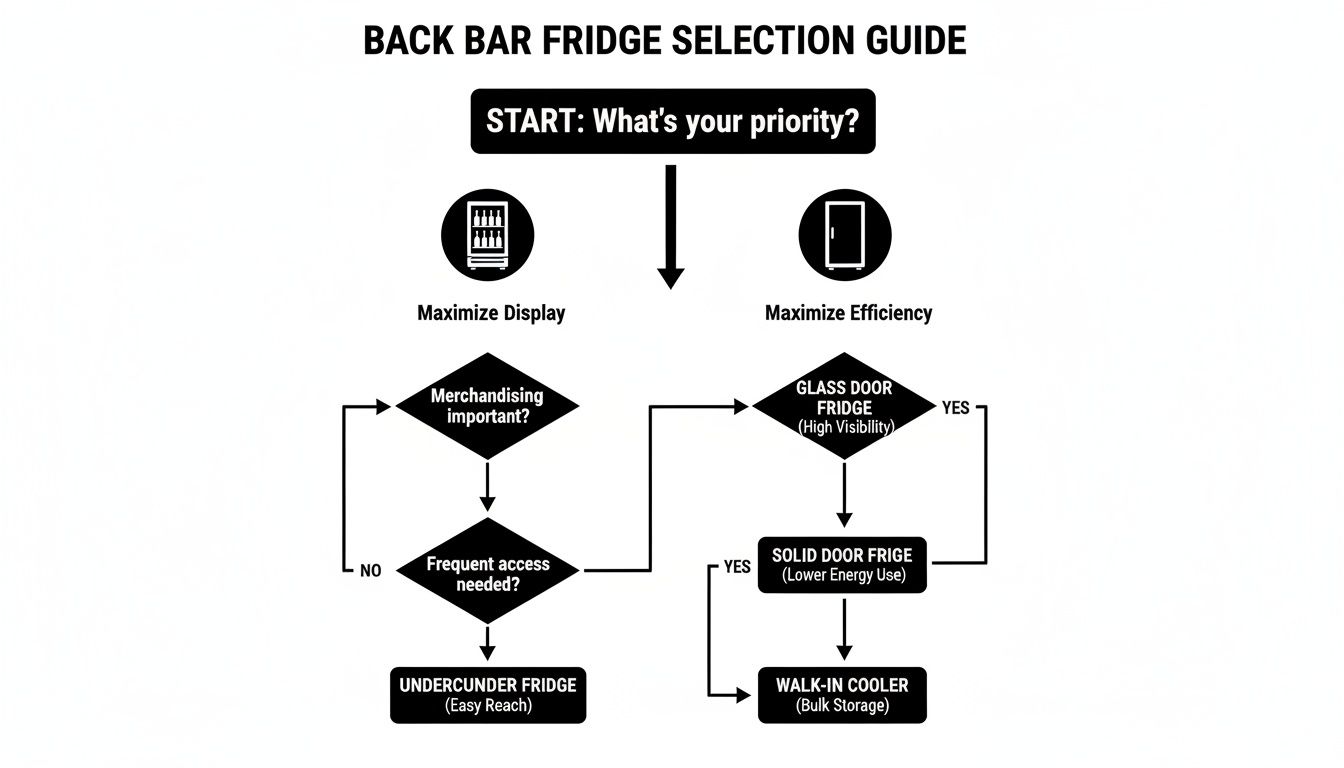
As you can see, whether you're prioritizing a great display or maximum efficiency will point you toward different door styles and completely change how the unit works for you day-to-day.
Temperature Zones and Control
Not all drinks should be served at the same temperature. A basic single-zone fridge keeps everything at one consistent temp, which is totally fine if you're just slinging beers and sodas. But if your menu is more ambitious, you'll need more control.
- Dual-Zone Fridges: These units give you two separate sections with their own temperature controls. It means you can keep your crisp pilsners at a frosty 38°F while storing your red wines at a cellar-perfect 55°F—all in the same cooler.
- Multi-Zone Fridges: For the ultimate control, these fridges have three or more zones. They’re a must-have for venues with a serious wine program, letting you store everything from sparkling whites to rich, full-bodied reds at their ideal temperatures.
Choosing a multi-zone unit shows you're serious about quality. It lets you serve every single beverage exactly how it was meant to be enjoyed, which is the kind of detail that lets you stand out and justify premium prices. This isn't just a niche want, either—it's where the industry is heading.
The global market for back bar refrigerators was a whopping USD 1.49 billion in 2024 and is projected to grow at a 6.3% CAGR through 2033. That growth is fueled by the over 700,000 bars and restaurants in North America alone who need reliable cooling for their top-shelf drinks. You can discover more insights about the back bar refrigerator market and its impressive growth.
By taking the time to think through the refrigeration system, door style, and temperature controls, you'll land on a back bar fridge that’s perfectly tuned to your menu, your space, and your style of service. It’s a strategic move that helps your team kill it every shift and gives every guest an amazing experience.
To help simplify these choices, here's a quick breakdown of how these key features stack up.
Back Bar Fridge Feature Comparison
This table compares key features of back bar fridges to help operators make an informed choice based on their specific business needs, from high-volume bars to intimate cafes.
| Feature | Hinged Doors | Sliding Doors | Forced-Air Refrigeration | Cold Plate Refrigeration |
|---|---|---|---|---|
| Best For | Energy efficiency and maintaining a perfect seal. | Tight spaces where swing-out doors would block traffic. | High-turnover bars needing rapid temperature recovery. | Storing products for longer periods with less door-opening. |
| Space Impact | Requires significant clearance for the door to swing open. | Zero clearance needed; ideal for narrow walkways. | No direct impact on external space. | No direct impact on external space. |
| Temperature Stability | Excellent, thanks to a tight, comprehensive seal. | Good, but seal may be slightly less effective than hinged. | Excellent; fans ensure even cooling and quick recovery. | Good, but slow to recover after door openings. |
| Maintenance | Standard cleaning of gaskets and surfaces. | Requires regular track cleaning for smooth operation. | Fans and coils need periodic cleaning to prevent dust buildup. | Generally lower maintenance; fewer moving parts. |
| Noise Level | Generally quiet. | Generally quiet. | Can be slightly louder due to internal fans running. | Very quiet operation, making it ideal for intimate settings. |
Each feature offers distinct advantages, so the "right" choice really comes down to matching the cooler's strengths to the daily demands of your specific bar or restaurant.
Designing Your Bar Layout for Peak Efficiency
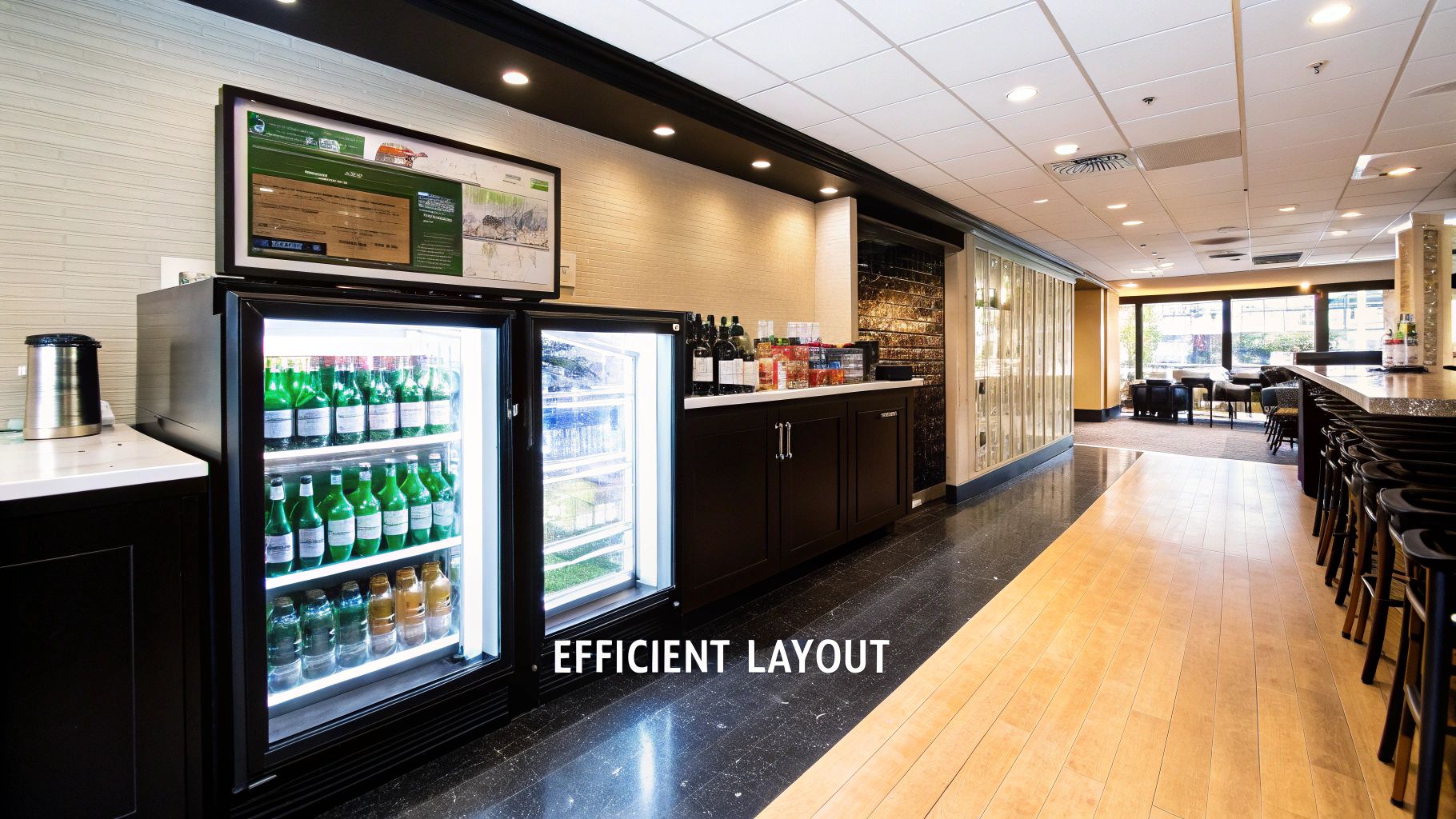
You can have the best back bar fridge on the market, but if you drop it into a poorly planned space, it’ll quickly become a bottleneck. The unit’s physical footprint is just the starting point; what really matters is how it fits into your bar's natural workflow. You have to think about how your team moves, serves, and restocks when you're three-deep at the bar.
Smart placement isn't just about saving a few inches of floor space—it's about shaving seconds off every single drink order. Those seconds add up fast over a busy shift, leading to quicker service, more sales, and a team that isn't constantly bumping into each other. A well-designed bar is one where your restaurant equipment and supplies work together in harmony.
Planning for Airflow and Access
One of the most common—and costly—mistakes I see is operators forgetting about proper ventilation. Your back bar fridge’s condenser coils are working nonstop to pull heat out of the cabinet. If you don't give them room to breathe, they simply can't do their job.
Shoving a fridge into a tight, custom-built nook without enough clearance is like asking a marathon runner to sprint while holding their breath. The unit will overheat, work way harder than it needs to, run up your energy bill, and ultimately burn out years before its time. Always, always follow the manufacturer's specs for clearance. It's usually just a few inches on the back and sides.
Just as critical is planning for door swing. A hinged door that opens right into a main traffic lane is a disaster waiting to happen on a slammed Friday night. It creates an obstacle that disrupts your bartenders' rhythm and becomes a genuine safety hazard. Sliding doors are a fantastic fix for tight spots, but even with hinged doors, a little foresight can ensure they open away from the action.
Built-In vs Freestanding Placement
Your choice between a built-in or freestanding model really comes down to the look you want and how much flexibility you need.
- Built-in Models: These are designed to sit perfectly flush with your cabinetry, giving you that clean, seamless, professional look. They’re the go-to if you want a polished aesthetic and have a permanent layout locked in. Just remember, they require precise measurements and must have front-venting systems to work properly.
- Freestanding Models: These units offer total flexibility. You can put them pretty much anywhere you have an outlet. This makes them perfect for businesses that might reconfigure their space, for mobile bars, or for just adding extra cold storage without a major renovation.
A critical rule of thumb: keep your back bar fridges away from anything that generates heat. Placing a cooler next to a grill, fryer, or a high-temp dishwasher forces its refrigeration system to work overtime, leading to more wear and tear and higher utility bills.
Ensuring ADA Compliance and Safety
A great bar is an accessible and safe bar—for both your team and your customers. The Americans with Disabilities Act (ADA) has specific standards for things like counter heights and reach distances that you have to account for.
For service areas, at least some portion of the bar top can be no higher than 36 inches off the floor to be considered accessible. This directly impacts the height and placement of your undercounter back bar fridges. Factoring these requirements in from day one will save you from expensive retrofits and create a space that’s welcoming to everyone. Designing a truly functional workspace is a big job, and you can dive deeper into creating an effective commercial kitchen design layout in our detailed guide.
By thinking through ventilation, door swing, heat sources, and accessibility, you can create a bar layout that not only looks fantastic but also runs like a well-oiled machine. This kind of strategic planning turns your back bar fridge from a simple appliance into a powerhouse for your bottom line.
Protecting Your Investment with Smart Maintenance
That price tag on a new back bar fridge? It’s just the down payment. The real cost of owning one shows up over time—on your monthly power bill and in the middle of a Friday night rush when a technician has to come out. To get the most out of your cooler, you have to think past the purchase price and focus on what it costs to run day in and day out.
A smart approach to energy efficiency and a little bit of routine care is what separates a reliable workhorse from a costly liability. This isn't just about keeping the drinks cold; it's about protecting thousands of dollars in inventory, keeping your overhead low, and making sure that piece of equipment works as hard as you do for years.
Unlocking Savings with Energy Efficiency
Think of an energy-efficient fridge as another member of your team—one who actively saves you money. The easiest way to spot one is to look for the ENERGY STAR® certification. These units are independently tested and proven to be much more efficient, often using 10-20% less energy than their standard counterparts.
That might not sound like a lot, but it adds up. Over the 7 to 10-year lifespan of a typical back bar cooler, those energy savings can mean hundreds, sometimes thousands, of dollars back in your pocket. ENERGY STAR models pull this off with better parts, like high-efficiency compressors, superior insulation, and door seals that actually create a tight closure. It just means the machine runs less and works smarter to hold that perfect, crisp temperature.
An ENERGY STAR certified back bar cooler can save a business roughly $140 a year on utility bills compared to a standard model. It might cost a little more upfront, but it often pays for itself in just a couple of years.
Your Actionable Maintenance Checklist
Preventative maintenance is the best, cheapest insurance you can have against an expensive, middle-of-the-shift breakdown. These simple checks take just a few minutes but can stop the kind of system failure that wipes out your inventory and shuts down service. A little consistency here makes a huge difference.
Of course, some things require a professional, and knowing when you need Commercial Refrigeration Repairs is key. But you can handle most of the day-to-day upkeep yourself with a simple routine.
Here’s a practical schedule to keep your coolers humming along.
Daily Tasks (2 minutes)
- Wipe Down Surfaces: Give the interior, exterior, and especially the door handles a quick wipe with a food-safe sanitizer. It keeps things looking sharp and prevents sticky buildup.
- Check Temperatures: Just a quick glance at the thermostat display is all it takes. If you spot the temperature creeping up, you can deal with it before you lose product.
Weekly Tasks (5 minutes)
- Clean Door Gaskets: Wipe down the rubber door seals with a damp cloth. If they're sticky or covered in gunk, they can't seal properly. That lets cold air escape, forcing the compressor to run constantly and wasting a ton of energy.
- Organize and Rotate Stock: Tidy things up inside so air can flow freely around your bottles and cans. Use the "first in, first out" (FIFO) method to keep your stock fresh.
Monthly Tasks (10 minutes)
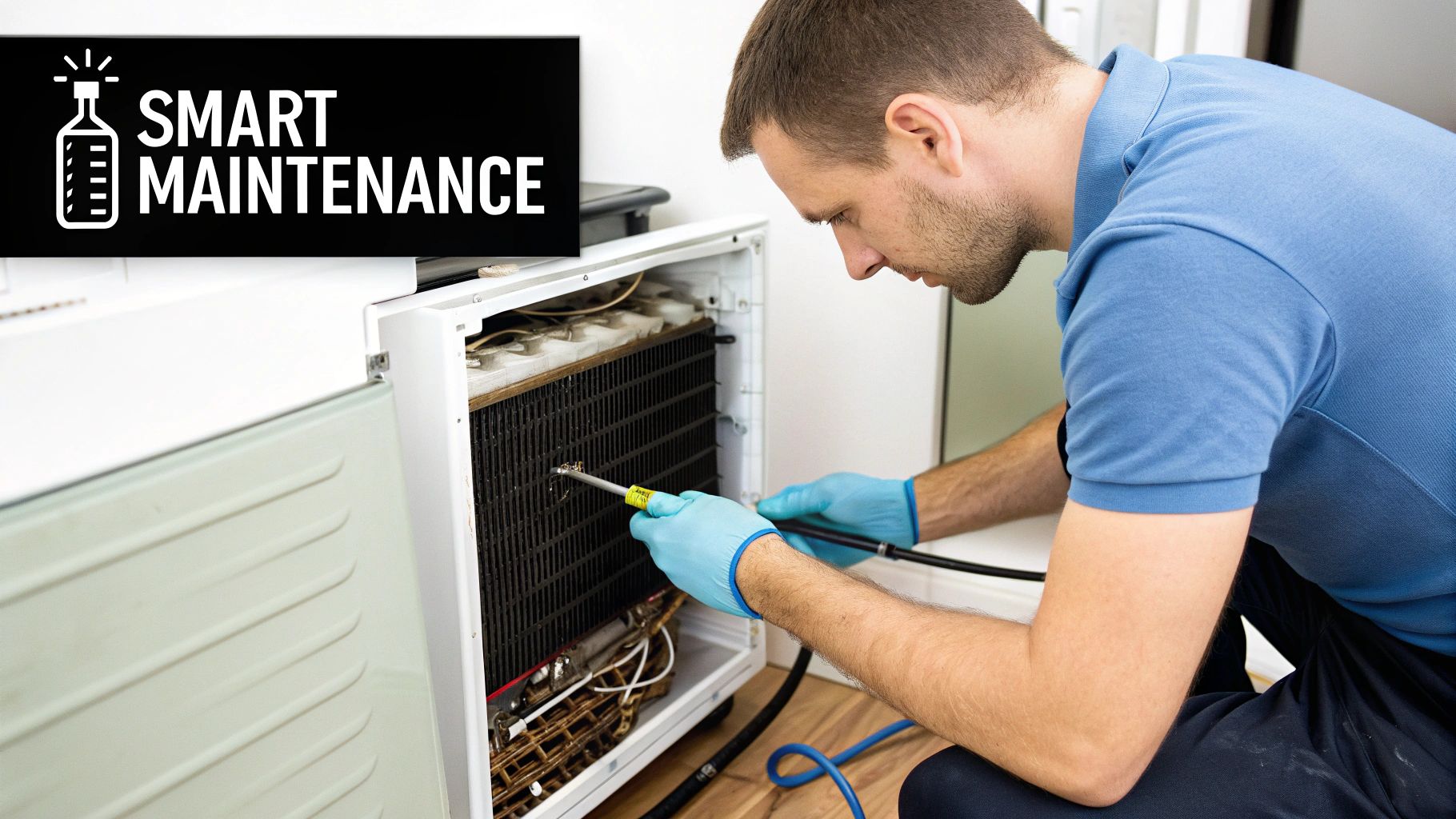
- Inspect Condenser Coils: The condenser coil is like the radiator in your car; it gets rid of heat. When it gets clogged with dust, grease, and grime, the fridge can't cool efficiently. Check the coils, and if they look fuzzy, unplug the unit and gently clean them with a stiff brush or a vacuum attachment. This is the single most important thing you can do to avoid a major repair bill.
- Check and Clear Drain Lines: Make sure the unit's drain lines aren't clogged. A blockage can cause water to pool inside, creating a slimy mess and a potential health code violation.
Following this simple routine isn't just about cleaning. It’s about protecting a critical asset, keeping your power bills in check, and ensuring your bar is ready for business, night after night.
Making the Smart Purchase: New vs. Used
Alright, let's talk about one of the biggest decisions you'll make when outfitting your bar: should you spring for a brand-new back bar fridge or go with a certified used model? There’s no magic answer here. The right choice really boils down to your budget, how much risk you're comfortable with, and your long-term game plan. It's a classic trade-off between upfront cost and long-term peace of mind.
A shiny new unit has obvious perks. It shows up flawless, packed with the latest energy-saving tech, and covered by a full manufacturer's warranty. You get certainty. You know exactly what you’re getting, and if something goes wrong in those crucial first few years, you’re covered.
For a lot of operators, that initial investment is worth it just to avoid the headaches. No wondering about its past life or maintenance habits. You get top-tier performance and lower energy bills right out of the box, giving you confidence that it won't fail you during a chaotic Friday night service.
The Case for Certified Used Equipment
On the flip side, a certified used back bar fridge from a trusted source like Encore Seattle can be a brilliant financial play. We're not talking about grabbing a dusty cooler off a random online listing. We're talking about professionally refurbished restaurant equipment that works like a charm for a fraction of the price. The money you save upfront is significant—capital you can pour back into other parts of your business, like marketing, a better POS system, or hiring another bartender.
This is especially true for new bars or restaurants where every single dollar counts. Why lock up thousands in a new cooler when a solid, tested used one gets the job done? We help restaurant owners and chefs discover exclusive deals on these essential supplies every day.
At Encore Seattle, our certification process isn't just a quick wipe-down. Every used back bar fridge goes through a strict multi-point inspection. Our techs deep-clean it, test it, and fix anything that needs attention. We make sure the compressor, thermostat, and door seals are all up to our standards for performance and reliability.
This is what turns a "used" cooler into a "certified" asset. You get huge savings without giving up the confidence that your fridge will keep up with demand. To dive deeper into this, check out our guide on buying used restaurant equipment.
Deciding between new and certified used involves weighing upfront costs against long-term value and warranty coverage. To make it clearer, here’s a side-by-side look at what you can expect.
New vs. Used Back Bar Fridges: A Cost-Benefit Analysis
| Consideration | New Back Bar Fridge | Certified Used Back Bar Fridge (from Encore Seattle) |
|---|---|---|
| Upfront Cost | Highest initial investment. | Significant savings (often 30-60% less than new). |
| Warranty | Full manufacturer's warranty (typically 1-3 years). | Comes with a limited warranty from Encore Seattle. |
| Technology | Latest energy-efficient models and features. | May be a few years old, but still highly efficient and reliable. |
| Condition | Pristine, out-of-the-box condition. | Professionally refurbished, cleaned, and fully functional. |
| Peace of Mind | Maximum assurance against immediate issues. | High confidence due to our rigorous certification process. |
| Best For | Businesses with a larger budget prioritizing long-term warranties. | Startups, budget-conscious operators, or as a reliable second unit. |
Ultimately, both paths lead to a reliable cooler. Your decision hinges on what your business needs right now versus what you're planning for the future.
Financing Your Purchase for Business Growth
Whether you land on a new or a certified used fridge, you don't have to drain your bank account to get it. Smart financing options exist to help businesses get the gear they need without killing their cash flow. Think of it as a tool that gets you a revenue-generating asset today, paid for with the money it helps you make tomorrow.
Through our partnership with The Restaurant Warehouse, we offer simple, straightforward financing that makes getting your next back bar fridge easy and affordable. This helps you keep your working capital free for all the other daily expenses that keep the lights on and the doors open.
So, the new versus used debate is really about strategy. A new fridge is a worry-free, long-term play. A certified used unit is a value-packed, immediate win. Figure out where your budget and priorities lie, and you'll make a purchase that sets your bar up for success.
Your Final Checklist for Installation and Selection
Alright, you’ve done the homework, weighed the options, and you’re ready to pull the trigger on a new back bar fridge. This is the home stretch, where a little bit of planning makes all the difference. Getting this last part right ensures your new workhorse performs perfectly from day one.
Think of it like a pre-flight check before a slammed Friday night. A few simple steps on delivery day can save you from major headaches down the road, protecting your investment and making sure your cooler runs like a dream. Skipping these details is a rookie mistake that can lead to poor cooling and even a fried compressor.
The Ultimate Selection Checklist
Before you sign on the dotted line, run through this final checklist one last time. It’s a quick summary of everything we’ve talked about, designed to confirm you’ve picked the absolute best unit for your bar.
- Dimensions and Footprint: Did you measure everything? Don't forget to add a few inches for ventilation on the back and sides. A fridge needs to breathe.
- Capacity and Shelving: Is it big enough for your inventory, and can the shelves be adjusted to fit your mix of tallboys, stubbies, and wine bottles?
- Door Style: Hinged or sliding? This really comes down to your bar's layout. In a tight space, sliding doors are a lifesaver.
- Refrigeration System: Are you going with a forced-air unit for quick recovery during a rush, or a cold plate system for consistent, long-term chilling?
- Temperature Zones: Do you just need one cold zone for beers and sodas, or do you need a dual-zone model to keep your reds and whites at their ideal, separate temperatures?
- Energy Efficiency: Is it an ENERGY STAR® certified model? Looking for that little blue sticker is one of the easiest ways to keep your monthly utility bills in check.
- Budget Alignment: Does the price work for you? Remember to think about the long-term value of a new unit versus the immediate savings of one of our certified used models.
Installation Day Best Practices
When your back bar fridge finally arrives, don’t just shove it into place and plug it in. A smooth installation is the key to a long, happy life for your cooler.
Stop! Before you do anything else, let the unit stand upright and unplugged for at least 4-6 hours. The manufacturer's guide is your best friend here. This gives the refrigerant and compressor oil time to settle after their bumpy ride, preventing catastrophic damage when you fire it up.
1. Prepare the Site Get the area completely cleared out. Make sure the floor is clean, level, and can handle the weight of a fully stocked fridge. This is also your final opportunity to double-check that you’ve left enough space for ventilation.
2. Check Your Power These aren't your home kitchen fridges; they're powerful commercial units that need a dedicated circuit. To ensure your cooler is installed safely and up to code, it's always best to bring in a qualified commercial electrical contractor. They'll make sure the outlet has the right voltage and amperage, saving you from electrical nightmares that could kill the unit and void the warranty.
3. Level the Unit Grab a level and make sure the fridge is perfectly flat. Nearly all units have adjustable feet you can twist to eliminate any wobble. An unlevel cooler can cause doors to seal improperly, making the compressor work overtime.
4. Power On and Calibrate Once the fridge has had time to settle, plug it in and switch it on. Let it run completely empty until it hits the target temperature. This first cool-down can take a few hours, so be patient. Tossing in a bunch of warm product right away will seriously strain the system.
Follow these steps, and your new back bar fridge will be set up for success, ready to become a reliable part of your operation for years to come.
Your Questions, Answered
Even after doing all the research, there are always a few lingering questions that pop up. We get it. Here are the straight answers to some of the most common things we hear from bar and restaurant owners who are in the middle of their search.
What’s the Standard Depth for a Back Bar Fridge?
In the commercial world, the true standard depth for a back bar fridge is 24 inches. This isn't an arbitrary number—it’s designed so your cooler sits perfectly flush with the rest of your underbar equipment, like sinks and cabinets. You'll get that clean, seamless look every professional bar has.
Be a little wary if you see units deeper than this marketed as "standard." They might stick out and disrupt the flow of your bar line, causing headaches you don't need.
Can I Fit a Half-Barrel Keg in a Six-Foot Cooler?
It's a common thought, but the answer is almost always no. Most 72-inch (six-foot) back bar fridges from the big U.S. brands have door openings that are just a bit too narrow for a standard half-barrel keg.
They're designed that way to make room for beefier compressors inside, which is great for keeping hundreds of bottles and cans ice-cold, but not for sliding in a keg. For that, you’ll really want a purpose-built kegerator or a direct-draw system.
Choosing the right back bar fridges can be one of the most significant line items in your equipment budget, sometimes accounting for up to 41% of the total cost. Making an informed decision is vital for your financial health.
How Long Should a Back Bar Fridge Last?
You can realistically expect a solid seven to ten years of service from a well-maintained commercial back bar fridge, even in a high-traffic spot. The secret to hitting that ten-year mark isn't complicated—it's all about consistent, simple maintenance.
Just by regularly cleaning the condenser coils and checking the door gaskets, you can head off the biggest reasons these units fail early. A little bit of care goes a long way in protecting your investment and making sure you don't get hit with a surprise repair bill on a busy Friday night.
Ready to find the perfect cooling solution for your bar or restaurant? The team at Encore Seattle Restaurant Equipment is here to help you choose from a huge selection of new and certified used back bar fridges. Explore our inventory online or visit our Seattle showroom today to discover the latest news and exclusive deals.