
What Is a Steam Table: Your Guide to Boosting Kitchen Efficiency and Discovering the Best Deals
If you’ve ever worked a busy service line, you know the chaos. A steam table is your secret weapon in that battle, the unsung hero of any commercial kitchen that needs to keep a lot of food hot, safe, and ready to go. Think of it as the perfect holding pattern for your menu items—a place where your perfectly cooked dishes can wait without losing their quality. For buffets, catering gigs, or any high-volume service, it’s not just nice to have; it’s essential. As a restaurant owner or chef, staying informed about the latest equipment trends and exclusive deals is key to running a successful operation.
The Role of a Steam Table in Your Kitchen
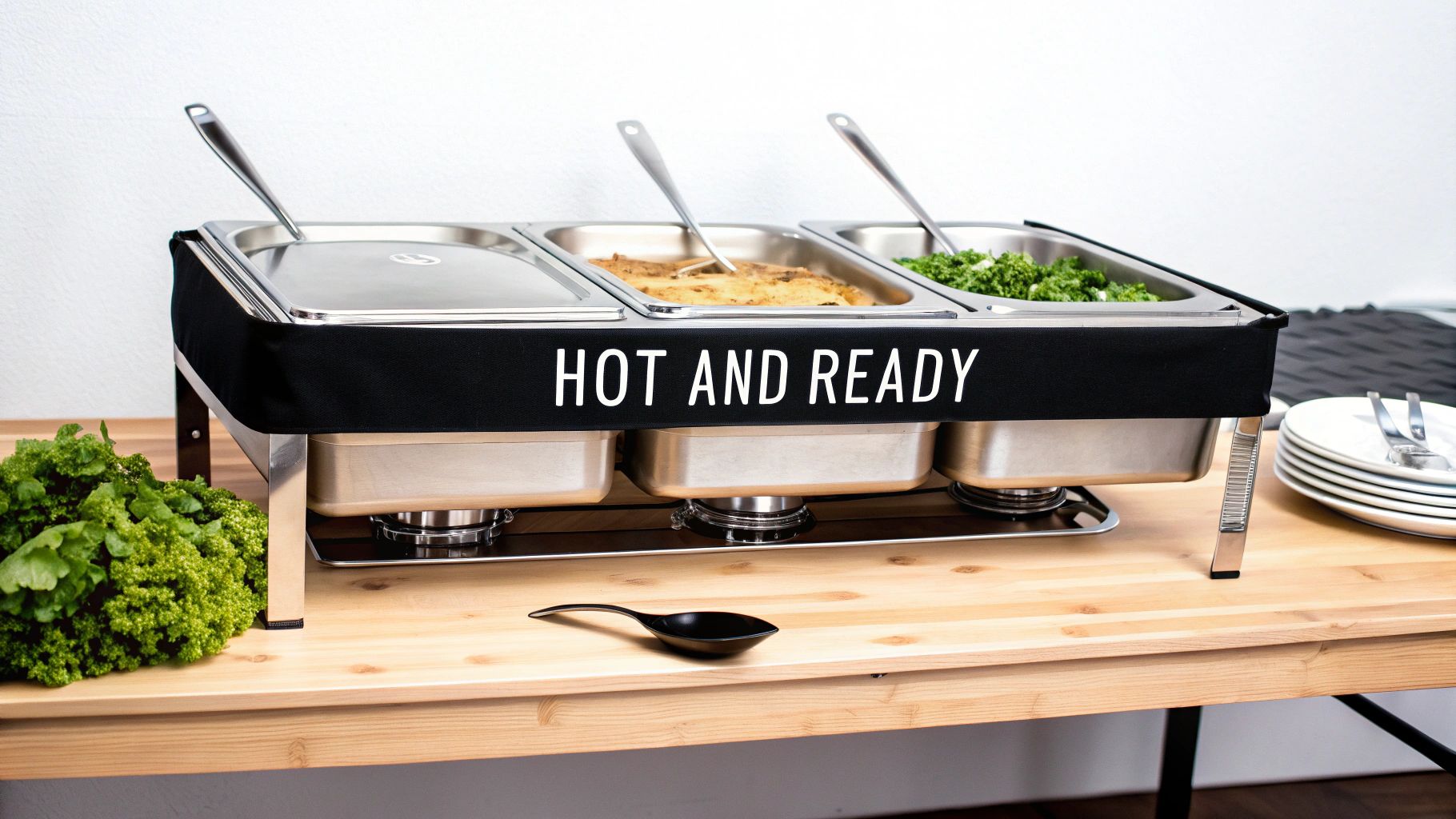
Let's get one thing straight right away: a steam table is a holding station, not a cooking appliance. Its only job is to keep already-cooked food at a safe, consistent temperature, stopping bacteria from turning your beautiful meal into a health hazard. This is absolutely critical for any operation serving people over several hours.
For chefs and restaurant owners, a steam table is a lifeline. It's what makes the difference between a smooth-running service and a complete disaster. It guarantees that the guest who orders mashed potatoes at the end of the night gets the same hot, delicious product as the very first customer. That kind of consistency is what builds a reputation and keeps people coming back, making it a critical piece of equipment to invest in.
Key Benefits for Food Service Operators
The value of a steam table goes way beyond just keeping food warm. When you get the right unit for your operation, you unlock some serious advantages that make your entire service run better. Staying informed about these benefits helps you make smarter purchasing decisions.
- Ensures Food Safety: Its main purpose is holding food above the temperature "danger zone" (41°F to 135°F), where nasty bacteria love to grow.
- Improves Service Speed: When everything is hot and ready, your team can plate and serve in seconds. During a dinner rush, that speed is everything.
- Maintains Food Quality: The gentle, moist heat from a standard steam table is perfect for preserving the texture of most dishes, keeping them from drying out into a sad, crusty mess.
- Increases Menu Versatility: You can hold a whole array of hot dishes at once. This is a game-changer for cafeterias, buffets, and events where variety is key.
At the end of the day, a steam table is a piece of commercial kitchen equipment designed to hold food at safe temperatures, usually somewhere between 140°F and 165°F. For operators in the Pacific Northwest, investing in durable, stainless steel stationary models is often the best bet. They offer larger capacity, fit right into a busy kitchen line, and help you meet strict local health codes. You can discover more insights about commercial steam tables and see how they are trending in the market.
How Steam Tables Keep Food Hot and Ready
At its core, a steam table is a brilliantly simple piece of equipment that's been a workhorse in food service for decades. Think of it as a giant, professional-grade double boiler. It uses the gentle, consistent heat of steam to hold food at the perfect serving temperature, all without the harsh, direct heat that can ruin a great dish. Understanding this core function is the first step for any chef looking to master their hot-holding game.
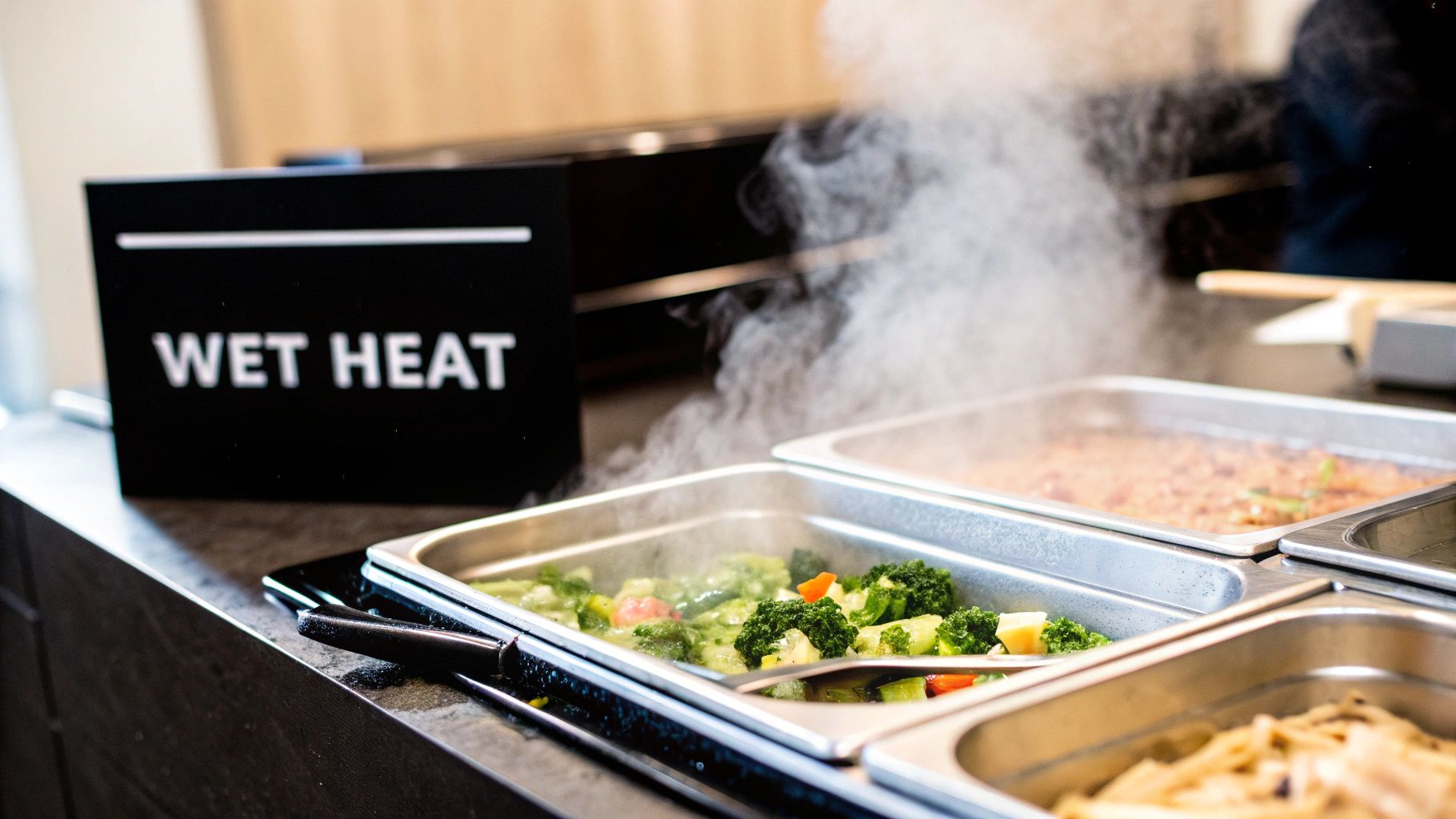
The magic happens down in the unit's main compartment, what we call the well. You fill this well with a shallow layer of water, which is then heated by an element underneath—either gas or electric. As that water heats up, it creates a cloud of steam. This warm, moist air rises and completely surrounds the metal food pans sitting just above it.
This indirect approach, known as wet heat, is incredibly effective. Instead of blasting the bottom of the pan with intense heat—a surefire way to scorch delicate sauces or dry out meats—the steam wraps the pan in a uniform blanket of warmth. This ensures everything heats evenly, holding onto both its temperature and its moisture.
Wet Heat vs. Dry Heat: The Critical Difference
Getting a handle on the difference between wet and dry heat is one of those things that separates the pros from the amateurs. While both methods are designed to keep food warm, they're meant for completely different menu items. Making the right call here is how you avoid soggy fried chicken or rubbery pasta. For chefs, this is a key industry trend to master.
A steam table is an operator's tool for quality control. Using the right heating method for the right food item is the difference between a dish that delights a customer and one that disappoints. It’s a simple decision that has a major impact on the final product.
You'll generally run into two main types of heating wells:
- Open Wells: These are the most flexible option. The heating element is exposed, so you place a separate pan of water (a spillage pan) into the well to generate steam for wet heat. But the real advantage is you can also run them without water for dry heat, making them perfect for anything that needs to stay crispy, like french fries or fried fish.
- Sealed Wells: With these units, the heating element is sealed underneath a built-in water reservoir. They're designed exclusively for wet heat applications and usually come with a drain to make cleanup a breeze. Since they are always moist, they are the go-to for holding things like mashed potatoes, gravies, and steamed vegetables.
Choosing the Right Method for Your Menu
So, when do you use which? It all comes down to texture.
A wet-heat steam table is going to be your best friend for the vast majority of buffet items. It keeps foods that are prone to drying out looking and tasting succulent for hours. We're talking about dishes like macaroni and cheese, pulled pork, or green bean casserole.
On the other hand, a dry-heat setup is basically a low-power holding oven. It circulates hot air, which is absolutely essential for preserving the crisp exterior of fried or breaded foods. If you hit those items with steam, they'll turn soft and unappealing in no time.
If you're looking to explore different equipment options, you can learn more about food warming tables and find the perfect fit for your kitchen's specific needs.
Choosing the Right Steam Table for Your Business
Buying a steam table is a serious investment, not just a line item on an equipment list. Get it right, and you'll streamline your entire service. Get it wrong, and you're in for a world of operational headaches and wasted cash. Think of it like buying a work truck—you wouldn't buy a small pickup to haul tons of gravel, and you wouldn't buy a semi-truck for a quick hardware store run. Restaurant owners should always look for the best deals on equipment that matches the job.
First up, you have to decide on a power source. This usually boils down to what your kitchen is already set up for and what your local utility rates look like. Gas units tend to heat up faster and their mechanics are pretty straightforward, which can mean fewer things to break down. On the flip side, electric models are typically more energy-efficient and don't pump a ton of extra heat into your kitchen—a massive bonus during a hectic summer service.
Key Features and Configurations
Once you've settled on power, it's time to think about the design that's going to work for your unique setup. The layout of your steam table needs to directly support your menu and the volume of customers you serve. A high-traffic buffet line has completely different requirements than a nimble food truck or a weekend catering gig.
Let's look at the most common types:
- Stationary Units: These are the Clydesdales of the food service world. Built for permanent buffet lines and cafeterias, they're designed for stability, high capacity, and to be an integral part of your kitchen's flow.
- Portable Models: Perfect for caterers and food trucks, these units come on casters so you can roll them wherever they're needed. They give you the freedom to set up a hot food station anywhere, from a wedding reception to a local street fair.
The material your steam table is made from is another huge deal, directly impacting how long it will last. Stainless steel is the industry standard for a reason—it's tough. In busy restaurants, it can take a daily beating from heat, steam, and harsh cleaning chemicals without falling apart. That kind of durability can extend the equipment's life by 30-50% compared to cheaper aluminum options. It’s no surprise that stainless steel units are on track to make up 48.5% of market revenue in 2025. If you're curious, you can discover more insights about commercial steam tables and stay informed on what's driving industry trends.
Controls and Usability
Finally, consider how your staff is going to actually use the thing day in and day out. The controls on a steam table are typically either infinite (manual) or thermostatic (digital).
Infinite controls are your basic low-to-high dials. They're simple and give you general control over the heat. Thermostatic controls, which you'll find on most electric units, let you dial in a precise temperature for each well, giving you pinpoint accuracy for holding delicate sauces or proteins.
Manual controls are cheaper upfront, but thermostatic controls offer incredible consistency and take all the guesswork out of maintaining food-safe temperatures. Take a hard look at your menu and your team's experience level to figure out which control type will give you the best bang for your buck.
Making the right choice can feel overwhelming, but breaking it down into these key areas makes it much more manageable. Use this checklist as a guide when you're comparing different models and looking for exclusive deals.
Steam Table Buying Checklist
| Consideration | What to Look For | Best For |
|---|---|---|
| Power Source | Check kitchen hookups (gas/electric) and local utility costs. | Gas: Quick heating, simple mechanics. Electric: Energy-efficient, precise temp control. |
| Size & Footprint | Measure your available space. Count the number of wells you need for your menu. | Small (2-3 wells): Food trucks, small cafes. Large (5+ wells): Buffets, cafeterias. |
| Configuration | Decide between a fixed or mobile unit based on your service style. | Stationary: Permanent installations. Portable: Catering, mobile events. |
| Material | Evaluate durability vs. cost. Stainless steel is the standard for longevity. | Stainless Steel: High-volume, demanding kitchens. Aluminum: Lighter-duty, budget-conscious. |
| Controls | Choose between simple manual dials or precise digital temperature settings. | Infinite (Manual): Simple menus, experienced staff. Thermostatic: Delicate foods, ensuring food safety. |
| Warranty | Look for at least a 1-year parts and labor warranty. Check coverage for key components. | New units with comprehensive manufacturer warranties. |
| Budget | Consider upfront cost vs. long-term value. Explore financing or leasing options. | Used: Lower initial cost. New: Better reliability, warranty, and efficiency. |
By thinking through each of these points, you can move past the sales pitches and focus on what your operation truly needs to succeed. It ensures you end up with a piece of equipment that works for you, not against you.
Mastering Steam Table Pans and Configurations
The real magic of a steam table isn't just the heat it produces; it's the incredible flexibility it offers. To truly tap into its potential, you need to understand the standardized system for steam table pans, often referred to as Gastronorm (GN) sizes. Think of these pans as a set of LEGOs for your hot food line—each piece is designed to fit perfectly together, letting you build a custom layout for any meal service. Smart chefs stay on top of these industry standards to maximize their equipment's utility.
The system itself is beautifully simple. It all starts with the "full-size" pan, and every other pan is just a fraction of that basic footprint. This modular approach means you can change your entire setup in seconds. That single well holding a big pan of macaroni and cheese? It can instantly become a home for two half-size pans of green beans and roasted potatoes. This allows you to adapt on the fly, offering more variety without ever needing to swap out the main equipment.
Building Your Perfect Serving Line
This ability to mix and match pans empowers you to create a serving line that’s perfectly tailored to what you're serving that day. You're never locked into a single, rigid layout. Instead, you can get strategic, arranging your dishes for the best possible presentation and the fastest service.
For instance, you could try a few popular setups:
- Use one half-size pan for a main dish like pulled pork, then flank it with two quarter-size pans for toppings like coleslaw and pickles.
- Line up three third-size pans side-by-side to serve a trio of soups or different pasta sauces.
- Create a colorful taco or salad bar using six sixth-size pans for smaller items like salsa, cheese, jalapeños, and sour cream.
This visual guide breaks down how the core decisions you make about your steam table—its power source, heating type, and other features—all tie back to how you'll ultimately configure your pans.
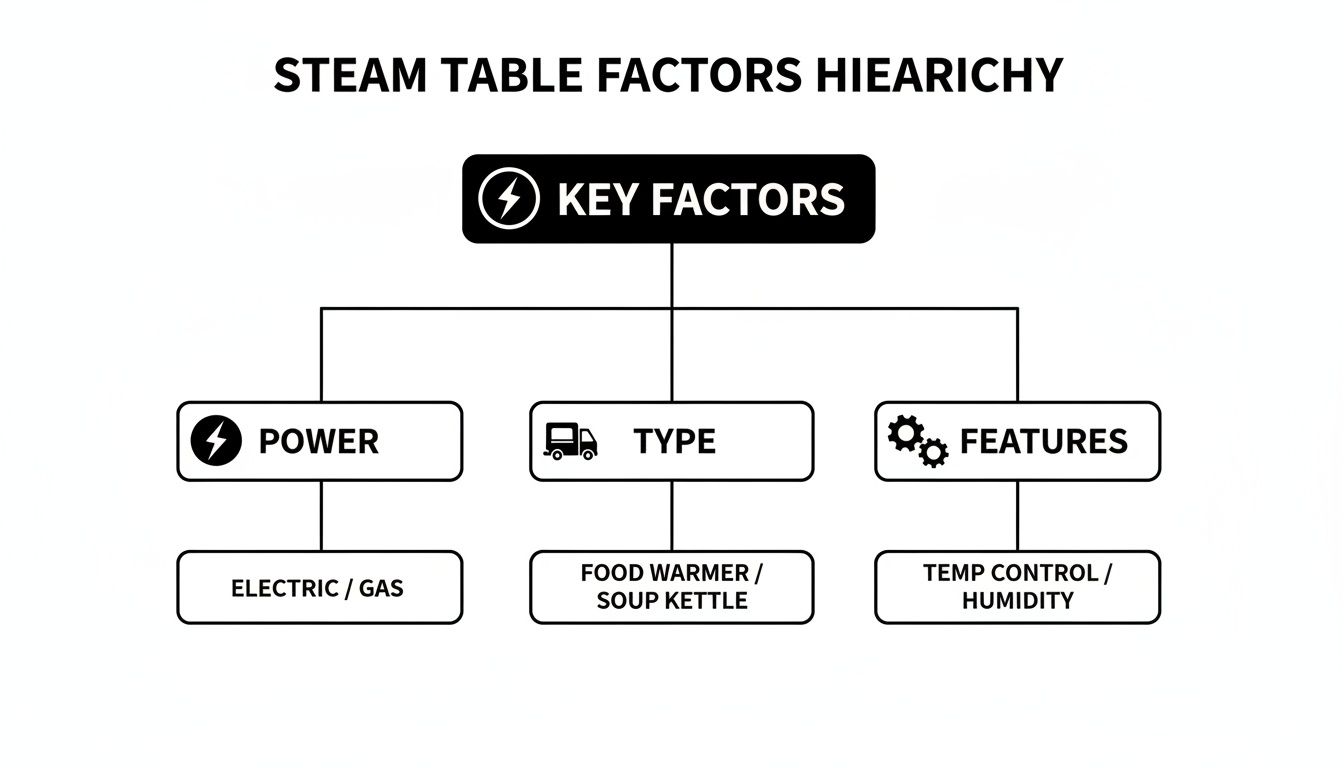
As you can see, those foundational equipment choices directly shape your day-to-day operational capabilities, including the creative ways you can arrange your pans.
A Quick Guide to Common Pan Sizes
To help you visualize how these pans fit together, here's a quick rundown of the standard sizes you'll encounter. Getting familiar with these dimensions and what they can hold is the first step toward planning an efficient and well-stocked hot line.
Common Steam Table Pan Sizes and Capacities
| Pan Size | Typical Dimensions (Inches) | Approx. Capacity (Quarts) |
|---|---|---|
| Full-Size | 20.75" x 12.75" | 8.5 to 9 |
| Two-Thirds Size | 13.8" x 12.75" | 5.5 to 6 |
| Half-Size | 10.4" x 12.75" | 4 to 4.25 |
| Third-Size | 6.9" x 12.75" | 2.5 to 2.75 |
| Quarter-Size | 10.4" x 6.4" | 1.75 to 2 |
| Sixth-Size | 6.9" x 6.4" | 1 to 1.25 |
| Ninth-Size | 6.9" x 4.25" | 0.6 to 0.75 |
Knowing these capacities helps prevent over-prepping and waste, ensuring you have just the right amount of food ready for your customers.
Choosing the Right Pan Depth and Material
Besides its footprint, the pan's depth is another crucial factor. A shallow 2.5-inch deep pan is great for things like breakfast sausages or pancakes, where you want to avoid stacking. On the other hand, a deep 6-inch pan is essential for holding large volumes of chili, soup, or marinara sauce. Picking the right depth keeps food from drying out and makes sure you don't run out during a busy service.
You'll find that the vast majority of commercial-grade pans are made from stainless steel, and for good reason—it’s tough, non-reactive, and a breeze to clean. To get an even better handle on the options, you can explore more about full-size steam table pans and their specific uses in our detailed guide. Mastering this knowledge is what allows you to build a serving station that's not just functional, but one that looks great and helps your team work faster.
Food Safety Best Practices for Steam Table Use
A steam table isn't just a piece of holding equipment; it's one of your most important tools for preventing foodborne illness. Getting this right is non-negotiable. It’s what protects your customers, your staff, and your reputation. Staying informed on food safety is a critical industry trend for every restaurant owner.
The whole point of a steam table is to keep hot food safely out of the temperature "danger zone"—that dreaded range where bacteria thrive and multiply like crazy.
According to the FDA, all hot food must be held at 135°F or higher. If food drops below this critical temperature, even for a little while, you're rolling the dice on safety and quality. Consistent temperature monitoring isn't just a good idea; it's a fundamental part of running a responsible kitchen.
Proper Steam Table Operation
To make sure your steam table is doing its job, you need a solid, repeatable process for every service. Cutting corners here leads to uneven heating, sad-looking food, and, worst of all, major safety hazards.
Follow these steps every single time:
- Preheat the Unit: Never, ever put food into a cold steam table. Get the unit turned on and let the water get up to temperature before you even think about adding your food pans. This usually takes about 20-30 minutes.
- Start with Hot Food: Remember, a steam table is for holding, not cooking. Food has to be cooked to its correct internal temperature first, and then it can go into the holding unit.
- Watch Your Water Levels: For a standard wet-heat unit, you need about 1-2 inches of water in the well to get that gentle, even heat. Keep an eye on it during service—water evaporates, and if it gets too low, the unit won't be able to keep the food hot.
- Check Temperatures Constantly: Don't just "set it and forget it." Use a calibrated food thermometer to probe the food in each pan at least every couple of hours. You have to be certain it's staying above that 135°F mark.
Pro Tips for Quality and Compliance
Once you have the basics down, a few professional habits can elevate both the safety and the quality of what you're serving. These small tweaks ensure that the last serving of the day is just as good as the first.
The key to food safety is consistency. Every staff member must understand and follow the same procedures every single shift. There's no room for shortcuts when public health is on the line.
To make sure critical food safety tasks are done the same way every time, it's a great idea to build out a standard operating procedure template. This gives your team a clear, repeatable process they can rely on.
Keep these extra tips in your back pocket, too:
- Stir Food Frequently: Give things like soups, sauces, and chilis a good stir every so often. This helps distribute the heat evenly and gets rid of any potential hot or cold spots.
- Keep Lids On: Use lids on your food pans as much as possible. It’s a simple trick that traps heat and moisture, which keeps the food’s texture right and its temperature stable.
- Don't Overload Pans: Resist the urge to fill pans all the way to the top. Overfilling makes it much harder for heat to get to the center of the food, creating those dangerous cold spots where bacteria can start to grow.
Whether you're running a food truck or a high-volume commercial kitchen, mastering your steam table is a win-win. You stay compliant and, just as importantly, you improve the customer experience. After all, studies suggest that simply maintaining high food quality can boost customer return rates by 15-20%. These practices are a cornerstone of any food safety plan. You can dive deeper into this topic in our guide on what HACCP food safety is.
Essential Steam Table Maintenance and Troubleshooting
Think of your steam table like any other essential piece of kitchen equipment—it needs a little TLC to keep running smoothly. A solid maintenance routine isn't just about ticking boxes; it's the best way to avoid a frantic service call right in the middle of a dinner rush. Smart restaurant owners know that preventative care is the best deal in the long run.
The daily clean-up is your first line of defense. Once service is over and the unit has cooled down, drain it completely. A quick scrub of the wells and pans with warm, soapy water is all it takes. Just be sure to skip the harsh chemicals and steel wool, as they can scratch up the stainless steel. Wiping up spills as they happen also saves you a ton of elbow grease later.
Preventing Common Problems
Beyond the daily wipe-down, a few weekly checks can catch small issues before they snowball into big, expensive headaches. If you're serious about getting the most out of your gear, check out these top preventive maintenance best practices.
The biggest enemy of any wet-heat steam table is scaling, or limescale. You'll see it as a chalky white residue left behind by hard water. It might not look like much, but that mineral buildup acts like insulation, forcing your heating elements to work overtime just to keep the water hot. Sooner or later, this will burn them out.
Regular descaling isn't just about cleanliness; it's about performance. A clean heating element transfers heat efficiently, maintains accurate temperatures, and uses less energy.
Basic Troubleshooting Steps
Even with the best care, things can go wrong. But before you pick up the phone to call a technician, run through these quick checks. You'd be surprised how often it's a simple fix.
-
Unit Not Heating: I know it sounds obvious, but is it plugged in all the way? And did you check the circuit breaker? It happens to the best of us.
-
Water Not Getting Hot: For wet-heat models, make sure you have enough water in the well. You need at least 1-2 inches for the heating elements to work correctly.
-
Uneven Heating: Check that the pans are seated properly in the wells. A quick stir of the food every now and then also works wonders for getting rid of cold spots.
Running through this simple diagnostic can often get you back up and running in minutes, saving you a lot of time and money.
Steam Table FAQs
Even the most experienced pros have questions when it's time to buy or troubleshoot equipment. Let's tackle some of the most common things we hear about steam tables and how to get the most out of them.
Can I Actually Cook Food in a Steam Table?
That’s a hard no. Think of a steam table as a food holder, not a food cooker. It's specifically built to keep food that’s already been cooked hot and safe for service.
Trying to cook raw chicken or vegetables in one is a recipe for disaster. The heat just isn't intense enough, meaning your food will linger in the temperature "danger zone" (41°F to 135°F) for way too long. That's prime time for bacteria to throw a party you definitely don't want your customers invited to.
Should I Go for a New or Used Unit?
This really comes down to your budget and how much risk you're comfortable with. Buying new gets you the latest features and, most importantly, a manufacturer's warranty. That peace of mind can be priceless when you're in the middle of a busy service.
On the other hand, a well-cared-for used steam table from a trusted dealer can be a fantastic way to save a serious chunk of cash, especially if you're just starting out. Always be on the lookout for exclusive deals on both new and used equipment. Just make sure it’s been given a thorough once-over by a technician to ensure it’s safe, reliable, and ready for the rigors of a commercial kitchen.
A well-maintained used steam table can deliver 80% of the performance of a new one at a fraction of the cost, but a comprehensive warranty on a new unit can prevent unexpected repair bills down the line.
How Often Does the Water Need to Be Changed?
Simple: every single day. For wet steam tables, you need to drain, clean, and refill the water wells at the end of each service, without fail.
It might seem like a hassle, but skipping this step allows minerals and stray food bits to build up. That gunk can lead to funky smells, create a breeding ground for bacteria, and eventually corrode your heating elements. Starting fresh with clean water every day is the best way to protect both your food and your equipment.
Ready to find the perfect steam table for your operation? Encore Seattle Restaurant Equipment offers an extensive selection of new and used models to fit any budget or kitchen size. Explore our inventory today at https://encoreseattle.com and discover how we can help you stay informed about industry trends and find exclusive deals on the restaurant equipment and supplies you need to succeed.