

A Chef's Guide to steam table pans full size
It’s the middle of a chaotic dinner rush. You've got a packed buffet line and a massive catering order that needs to go out the door, stat. What’s the one piece of equipment holding it all together, making sure every dish is hot, fresh, and ready to serve? The full-size steam table pan.
This guide is for the chefs, managers, and restaurant owners who get it—this pan isn't just a hunk of metal. It's the absolute backbone of an efficient kitchen. Discover the latest industry trends, exclusive deals, and news on restaurant equipment to keep your kitchen ahead of the curve.
The Unsung Hero of Every Commercial Kitchen
When you're outfitting a kitchen, it’s easy to get excited about the flashy, high-tech ovens and massive walk-in coolers. They tend to steal the spotlight. But the humble full-size steam table pan might just be the most critical tool you have for your day-to-day operations.
Think of it as the universal adapter for your entire workflow. This simple pan is the standardized workhorse that connects your prep station, your oven, and your service line into one seamless, efficient system.
Its standard 12" x 20" footprint is the magic behind the curtain. That specific size is designed to fit perfectly everywhere, from the racks in your walk-in to the wells in your hot-holding station. This lets you take a single pan from prep to cooking to service without ever having to transfer the food. That simple fact saves an incredible amount of time, cuts down on food waste, and seriously reduces your dishwashing load.
Why This Pan Matters to Your Bottom Line
Getting the most out of your full-size steam table pans isn't just about smooth operations—it's a smart financial move. Their versatility has a direct impact on your profitability. When you're kitting out a new spot, for instance, knowing which tools form the foundation is crucial. You can learn more about the essential kitchen equipment when opening a small restaurant to get a broader picture.
This pan is your silent partner in consistency. It guarantees uniform heating and holding, which protects the quality and safety of your food. And that quality is what builds customer satisfaction and keeps people coming back.
The numbers back this up. The global market for steam table pans was valued at around $1.14 billion in 2024 and is expected to keep growing. That demand is being pushed by high-volume kitchens—caterers, buffets, and institutions—that depend on the capacity and flexibility of these pans to keep up with the pace and maintain food quality.
Matching Pan Depth to Your Menu
Think of the standard 12" x 20" full-size steam table pan as the universal Lego block of the commercial kitchen. Its footprint is designed to fit perfectly into just about everything you own—prep tables, ovens, transport racks, and especially your serving lines. But while the length and width are set in stone, the real magic happens when you start playing with depth.
Choosing the right pan depth is what separates a perfectly held, creamy risotto from a dried-out, crusty mess. It's not just about holding food; it's a strategic decision that directly impacts quality, heating efficiency, and your final yield. It's about looking at your menu and knowing instinctively which pan will keep that dish looking and tasting its best.
Shallow Pans for Delicate Dishes
Shallow pans, typically 2.5 inches deep, are your secret weapon for items that need a gentle touch or are served in smaller quantities. They create more surface area, which is perfect for foods that cook quickly or could get crushed under the weight of a massive batch.
These pans are a must-have for things like:
- Roasted Vegetables: They keep asparagus spears or broccoli florets bright and crisp instead of steaming them into submission.
- Delicate Proteins: Ideal for holding baked fish fillets or thin chicken breasts without them falling apart.
- Shallow-Fried Items: This is how you keep onion rings or breaded cutlets from getting soggy by trapping steam.
Deep Pans for Hearty Volume
On the other side of the spectrum, you have the deeper pans—usually 4 or 6 inches deep. These are the workhorses of any high-volume operation. Their depth lets you hold a ton of food at a consistent temperature, making them essential for buffets, catering gigs, and any busy line where you can't be refilling pans every ten minutes.
Choosing the correct pan depth is a fundamental kitchen skill that maximizes both flavor and profit. A deep pan keeps stews and sauces from drying out, while a shallow pan ensures delicate items are presented perfectly, directly impacting customer satisfaction and reducing waste.
Smart pan selection is also a subtle but effective tool for portion control and for reducing food waste in restaurants. A classic 6-inch pan is what you'll grab for bulk items like mac and cheese, chili, or mashed potatoes. Go even deeper with an 8-inch pan, and you're set for holding large batches of soup or even for sous vide cooking.
To help you visualize this, here's a quick guide to what each pan depth can do for your menu.
Full Size Steam Table Pan Depth and Capacity Guide
| Pan Depth (Inches) | Approximate Capacity (Quarts) | Common Food Applications |
|---|---|---|
| 2.5" | 8.3 | Roasted vegetables, baked fish, chicken wings, shallow-fried items. |
| 4" | 13.7 | Casseroles, pasta dishes, meatballs in sauce, baked beans. |
| 6" | 20.7 | Mashed potatoes, chili, mac and cheese, hearty stews, bulk taco meat. |
| 8" | 27.2 | Large-batch soups, stocks, bone broth, sous vide water baths. |
This simple chart is a great starting point. For an even more detailed breakdown of every size available, our comprehensive hotel pan sizes chart is an excellent resource to keep handy.
The non-stop demand for these pans just goes to show how critical they are to the industry. The market for them isn't just stable; it's growing.

The data points to a solid 5.8% compound annual growth rate, which tells you one thing loud and clear: commercial kitchens everywhere continue to rely on these essential tools every single day.
Choosing Pans Built for the Busiest Kitchens
In a high-volume kitchen, your steam table pans are workhorses. They get banged around, blasted with heat, and put through the wringer daily. If you're constantly replacing dented, warped, or damaged pans, it’s not just an annoyance—it's a recurring expense that hits your bottom line. Investing in the right construction from the start is the key to breaking that cycle.
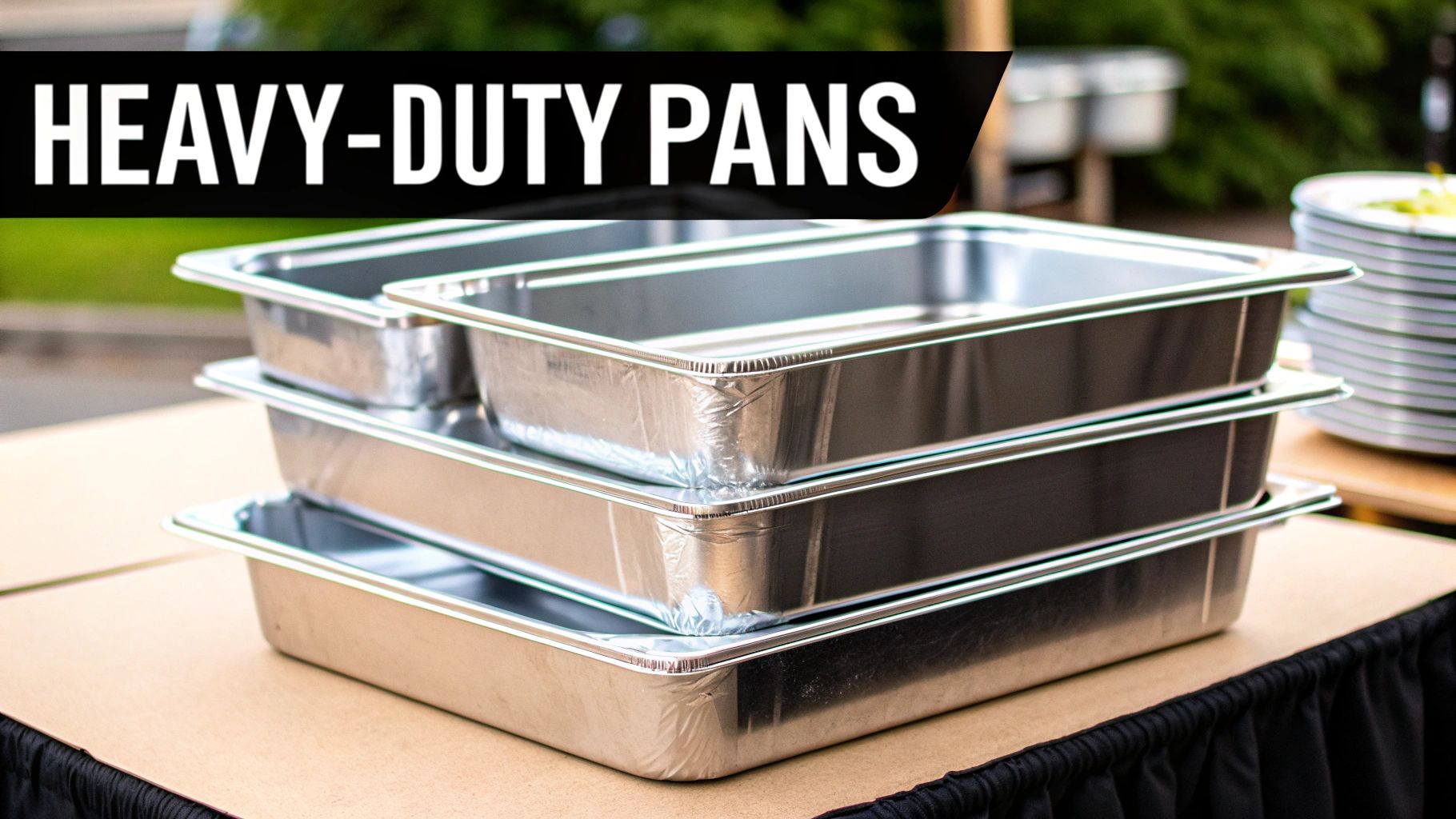
When we talk about durability, the conversation almost always starts and ends with stainless steel. But here’s the thing: not all stainless steel is the same. The real secret is understanding the gauge, which is simply a measure of the metal's thickness. It works a bit backward from what you might expect—a lower gauge number means thicker, tougher steel.
A standard, economy-grade pan is often a lighter 24-gauge. It's cheaper upfront, sure. But for a kitchen that’s really humming, stepping up to a heavier 22-gauge pan is one of the smartest long-term decisions you can make. This thicker steel can take a beating, resisting the dings and dents that are just part of the job. It’s also far less likely to warp under high heat, which means it will always sit flat and flush in your steam table for perfectly even heating.
Smart Design Saves Time and Frustration
Beyond the raw thickness of the steel, a few clever design features can make a world of difference to your kitchen's workflow. The one I always point out is the anti-jam stacking lug. It’s a small, subtle ridge built into the corners of the pan that you might not even notice at first.
But its job is brilliant. It prevents that frustrating vacuum seal from forming when you stack wet pans, stopping them from getting hopelessly stuck together. If you've ever wasted precious minutes wrestling with two suctioned pans during a chaotic dinner rush, you know exactly how valuable this tiny feature is. Paying a little extra for pans with reinforced, anti-jam corners is a direct investment in your kitchen’s speed and sanity.
Think of a lower-gauge pan as an investment in consistency. It's built to withstand the rigors of a commercial kitchen, ensuring your equipment performs reliably day after day, which is crucial for maintaining food safety and service quality.
Materials Beyond Stainless Steel
While stainless steel is the undisputed king for holding hot food, it’s not the only player in the game. A well-equipped kitchen uses a few other materials for specific jobs.
- Polycarbonate: These are your go-to for cold applications. The durable, clear plastic is perfect for salad bars, prep coolers, or storing ingredients in the walk-in. They won't react with acidic foods like tomatoes or vinaigrettes and let you see what's inside at a glance.
- Aluminum: Aluminum is lightweight and a fantastic conductor of heat, which is why you see it used for baking and transport. It’s not as tough as stainless steel, but when you're moving pans of food for a catering gig, the lighter weight is a huge advantage.
In the end, choosing the right material and construction ensures your pans perform exactly as they should within your entire setup. To learn more about getting the most out of your equipment, check out our guide on best practices for using food warming tables for maximum efficiency.
More Than a Pan: A True Kitchen Workhorse
If you think of your full-size steam table pans as just simple holding containers, you're missing out on their biggest strength. These pans are the ultimate multitaskers, designed to connect your entire kitchen operation—from the walk-in, to the cook line, to service, and back again.
Their real value shines when you stop seeing them as just containers and start seeing them as a core part of your workflow.
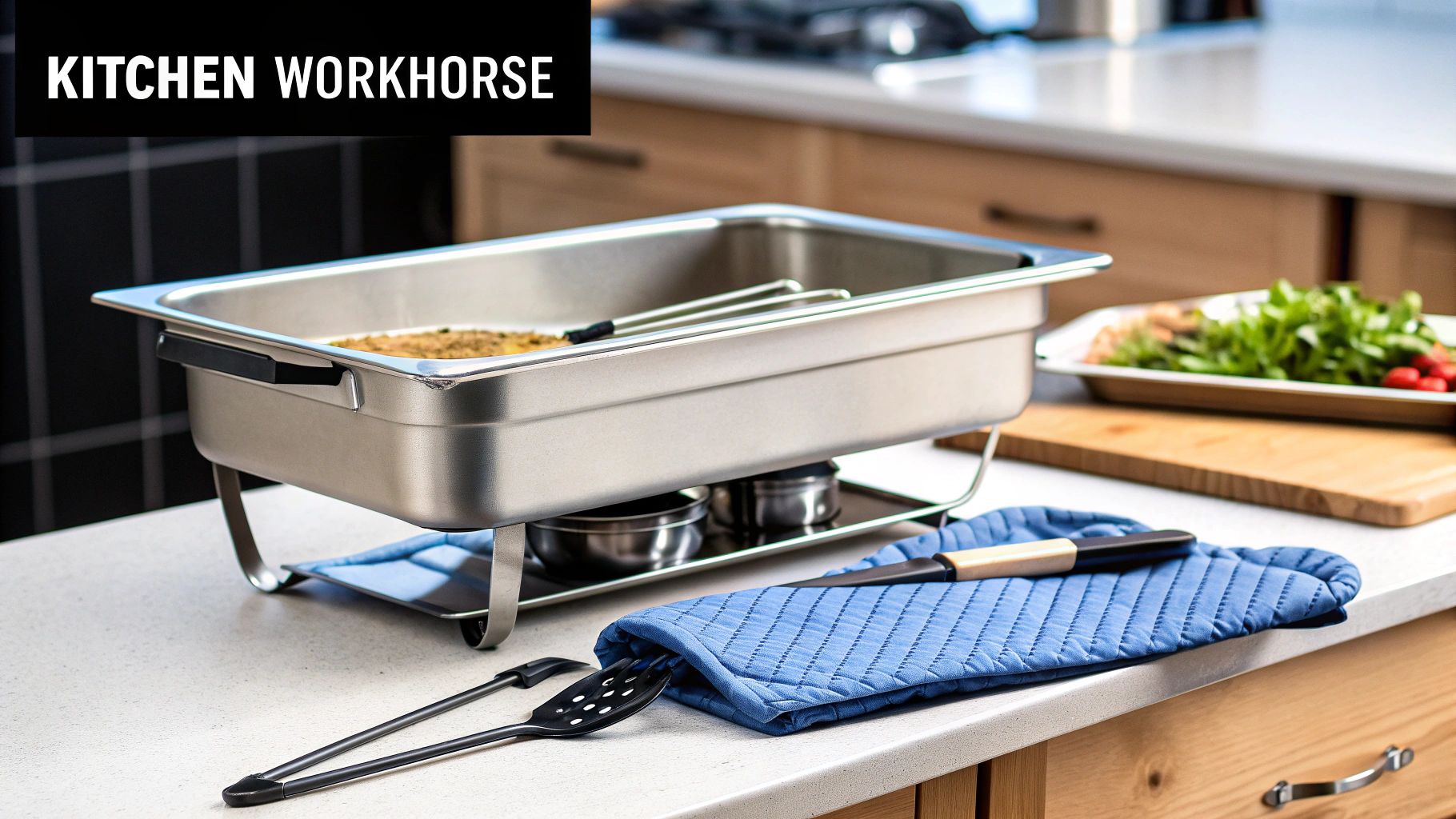
When you use the same pan for multiple steps, you slash your dishwashing load, save precious labor hours, and create a much more organized kitchen. This isn't about buying another piece of shiny new equipment; it's about getting smarter with the tools you already have.
A Day in the Life of a Single Pan
Think about the journey one pan can take. It can start in prep, move to cooking, then hit the service line, and finish up in storage. This "single-pan" approach is the secret to a smoother, faster kitchen.
Here’s a quick look at how it plays out:
- Morning Prep: The day starts with the pan in the walk-in, holding chicken as it marinates or keeping chopped vegetables fresh.
- Afternoon Cooking: That exact same pan slides right into the combi oven to roast the veggies or bake off a big batch of lasagna.
- Evening Service: Pulled from the oven, it drops perfectly into a steam table well, keeping chili or mac and cheese hot and ready for the dinner rush.
- End of Night: Any leftovers? Just pop a lid on that same pan and place it back in the cooler. Done.
The standardized size of a full-size steam table pan is its superpower. This universal design ensures it fits perfectly in your ovens, rolling racks, prep coolers, and serving stations, making it the most versatile tool in your culinary arsenal.
By adopting this mindset, you stop wasting time and creating more dishes by transferring food between different containers. It's a simple change that transforms a basic pan from a passive holder into an active player in your kitchen's efficiency. You save on cleaning time, reduce cross-contamination risks, and keep your whole operation flowing. This is exactly how smart kitchens get the most out of their equipment, turning a humble pan into an absolute workhorse.
Secrets to Keeping Your Pans in Service Longer
Think of your full-size steam table pans as an investment. With the right care, they'll serve your kitchen faithfully for years. Proper maintenance isn't just about keeping things clean; it’s about protecting your gear, guaranteeing food safety, and making sure your service line always looks professional.
Here's the golden rule for pan care: never use steel wool or other harsh abrasives. It might feel like a quick fix for that stubborn, caked-on mess, but those tools leave behind tiny scratches all over the stainless steel. Before you know it, those little grooves become a breeding ground for bacteria and make every future cleaning job even harder.
A little patience is your best friend here. Soaking the pans in warm, soapy water is always the best first move to loosen up tough food residue. For those really stubborn spots, a simple plastic scraper or a nylon scrub pad will get the job done without wrecking the pan's finish.
A Step-by-Step Cleaning Process
Whether you’re working with a classic three-compartment sink or running pans through a commercial dishwasher, the basic steps don't change. A solid, consistent routine is your number one defense against grime and damage.
- Pre-Scrape and Rinse: First things first, grab a spatula or scraper and get all the big food particles off. A quick blast of hot water will wash away any loose bits.
- Soak if Necessary: Got pans with burnt-on cheese or sugary sauces? A 15-30 minute soak in a dedicated sink with a good degreaser will make a world of difference.
- Wash Thoroughly: In a three-compartment setup, wash the pan in the first basin with hot water and detergent. If you're using a dishwasher, make sure it’s loaded properly so the water spray can hit every surface.
- Rinse and Sanitize: Move to the second sink for a rinse with clean, hot water. Then, it's into the third sink for a dip in a properly mixed sanitizer solution—let it sit for the required contact time to kill any germs.
Preventing Discoloration and Buildup
Ever notice a dull, chalky film on your pans even after they're clean? That's usually mineral buildup from hard water, not a sign of a bad wash job.
A simple trick to fight mineral buildup is to periodically clean with a mild acid. A diluted white vinegar solution, for example, can dissolve those deposits and bring back the steel's original shine, keeping your pans looking brand new.
Following these simple routines will dramatically extend the life of your steam table pans full size. For a deeper dive into equipment maintenance, check out our guide on whether you can use vinegar on stainless steel for more great tips.
Making the Smartest Purchase for Your Budget
Every purchasing decision counts, whether you're building a kitchen from the ground up or just swapping out some tired, old pans. When it comes to full-size steam table pans, the "best deal" isn't always the cheapest price tag. It’s about investing in the right tools that will uphold your standards for food safety, kitchen efficiency, and how your food looks on the line.
When you're ready to buy, it pays to look at both new and used options with a critical eye. Both routes have their perks and their pitfalls, and knowing what to watch for will help you make a smart call that serves your kitchen well for years to come. Staying informed about industry trends helps restaurant owners and chefs discover exclusive deals on restaurant equipment and supplies.
Checklist for Buying New Pans
There's nothing quite like the feeling of unboxing brand-new equipment. You get a clean slate and the peace of mind that comes with it. But let's be honest, not all new pans are built the same. To make sure you're getting a durable product that can handle the daily grind, keep an eye out for these key details.
- NSF Certification: This is your non-negotiable stamp of approval. An NSF logo means the pan meets strict public health and safety standards, period.
- Gauge Thickness: For any high-volume spot, a heavier 22-gauge pan is the way to go. It'll stand up to dents and warping far better than its flimsier 24-gauge cousins.
- Reinforced Corners: Look for pans with beefed-up corners and little anti-jam stacking lugs. This small detail is a lifesaver, preventing pans from getting vacuum-sealed together and saving your crew a ton of frustration during a rush.
What to Inspect on Used Pans
Going the used route can definitely save you some serious cash, but it requires a bit of detective work to avoid buying someone else’s headache. A great price isn't a great deal if the pan is a food safety risk or a pain to work with.
A simple hands-on test tells you a lot. Run your hand along the inside and around the rim of a used pan. You're feeling for hidden dents that will keep it from sitting flush in the steam table—a recipe for uneven heating. You're also checking for deep scratches, which are notorious for trapping bacteria and making sanitation a nightmare.
Before you pull the trigger, give any used pan a thorough once-over for these absolute deal-breakers:
- Warping: Set the pan on a perfectly flat counter. If it wobbles or rocks at all, walk away. It will never heat evenly.
- Pitting or Deep Scratches: These little flaws are magnets for food particles and can be almost impossible to properly clean and sanitize.
- Bent Rims: A damaged rim won't create a good seal with a lid, meaning you'll be losing precious heat and moisture.
The constant improvements in materials like stainless steel are a big deal for anyone in foodservice focused on durability and hygiene. These advancements are what help us meet the ever-growing demand for fresh, hot food served fast—and a quality steam table pan is a fundamental part of making that happen. To dive deeper, you can read about the latest trends in the foodservice market.
Answering Your Top Questions from the Trenches
Even the most seasoned chefs have questions about the basics, especially when the dinner rush is on or it's time to re-stock. Getting straight answers about something as fundamental as full-size steam table pans can make a huge difference in your workflow.
Let's dive into some of the most common questions we hear from folks in the kitchen.
What’s the Actual Size of a Full-Size Steam Table Pan?
The industry-standard footprint for a full-size steam table pan is roughly 12 inches by 20 inches. You'll often see it listed more precisely as 12 ¾" x 20 ¾".
This specific size isn't random—it’s designed to fit perfectly into any standard steam table, food warmer, or prep station, regardless of the brand. While the length and width are set in stone, the real flexibility is in the depth. You can find them as shallow as 2.5 inches for things like sautéed veggies or as deep as 8 inches for holding big batches of chili or soup.
Can I Throw a Stainless Steel Pan Straight into the Oven?
Absolutely. This is one of the best things about working with quality stainless steel pans—they are completely oven-safe.
This single feature is a massive time-saver. Think about it: you can bake a huge lasagna, roast vegetables, or cook a shepherd's pie and then transfer that same pan directly to the steam table for serving. This one-pan-wonder approach streamlines everything and means way fewer dishes to scrub at the end of the night.
The gauge of a pan is a direct indicator of its durability and longevity in a demanding commercial kitchen. It’s a bit counterintuitive—a lower gauge number means a thicker, stronger pan that will better resist the wear and tear of daily use.
Why Should I Care About the Gauge of the Pan?
The gauge tells you how thick the stainless steel is, and that number is everything when it comes to durability. A 22-gauge pan, for example, is noticeably thicker and tougher than a flimsy 24-gauge one.
In a commercial kitchen where pans get banged around, stacked high, and blasted with heat, a lower-gauge (thicker) pan is a smart investment. It’s going to hold up so much better against the dents, dings, and warping that plague lesser pans, ensuring it serves you well for years and always sits flat for even heating.
Ready to stock your kitchen with pans that can take the heat? At Encore Seattle Restaurant Equipment, we have a huge selection of durable, full-size steam table pans ready to go. You can check out our inventory online or stop by our Seattle showroom to find exactly what you need.