

Undercounter Fridge Dimensions A Complete Guide for Kitchens
When you're outfitting a commercial kitchen, every inch counts. Standard undercounter refrigerators are designed to slide right under most commercial countertops, which are typically 36 inches high. This means you'll find most units have a height ranging from 32 to 34.5 inches, giving you just enough clearance.
As for width, you’ve got options. The most common sizes are 15, 18, and 24 inches, letting you squeeze a unit into a tight bar space or place a wider one at a main prep station. Stay informed about the latest trends in restaurant equipment to make the best choice for your establishment.
A Quick Guide To Standard Dimensions
For any chef or restaurant owner running a busy kitchen, you need the numbers, fast. The good news is that manufacturers build these units to fit into standard cabinet cutouts. This makes planning a new kitchen layout—or just replacing an old fridge—a whole lot simpler. It’s all about maintaining that smooth, built-in look while keeping your workflow efficient.
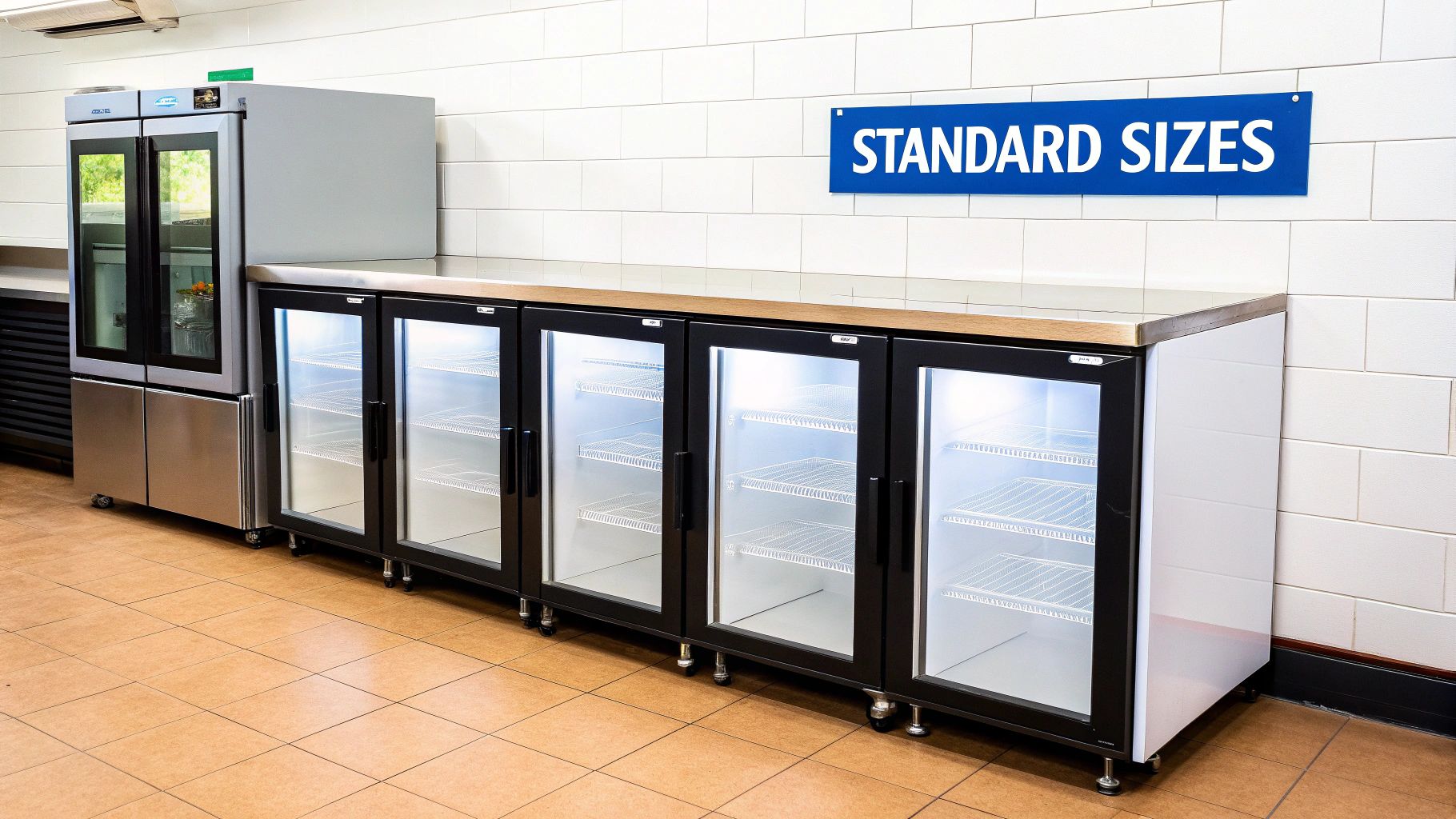
These common sizes are all about finding that sweet spot between a small footprint and enough cold storage to get the job done. If you're looking for information on larger units, our guide to commercial refrigerator sizes covers the whole spectrum.
Common Measurement Ranges
Let's break it down a bit further. The 32 to 34.5-inch height is pretty much the industry benchmark for fitting under those countertops. When it comes to width, the 24-inch models are by far the most popular; they just hit that perfect balance of storage capacity without eating up too much precious floor space.
Finally, the depth is almost always around 24 inches. This is deliberate, as it allows the unit to sit perfectly flush with your surrounding cabinetry, giving your kitchen a clean, professional line.
To make things even easier, here’s a quick-reference table with the key numbers.
Standard Undercounter Fridge Dimension Ranges
| Dimension | Common Range (Inches) | Primary Benefit |
|---|---|---|
| Width | 15" – 24" | Offers flexibility for narrow bar spaces or larger prep stations. |
| Height | 32" – 34.5" | Fits perfectly under standard 36-inch high commercial countertops. |
| Depth | ~24" | Sits flush with standard cabinetry for a seamless, integrated look. |
Having these standard ranges in mind from the start will save you a ton of headaches during installation and ensure you get a unit that's a perfect fit for your space.
Why The Right Dimensions Define Kitchen Efficiency
When you’re picking an undercounter fridge, you're doing more than just plugging a hole in your counter space. You're making a strategic decision that ripples through your entire kitchen's daily operation. Getting the dimensions right creates a fluid, safe environment and elevates a simple appliance into a key piece of your productivity puzzle.
A perfectly sized unit that fits flush with your cabinetry does wonders for safety. It gets rid of those protruding corners that become instant trip hazards in the heat of service. This seamless fit also makes cleaning a breeze, since there are no awkward gaps for grease and food debris to get trapped in, which is a big win for your food safety standards.
Enhancing Workflow and Staff Ergonomics
Beyond just safety, the right dimensions are absolutely critical for a smooth workflow. When every station is laid out with intention, your team moves faster and with more purpose. An undercounter unit placed just right means ingredients are always an arm's length away, cutting out wasted steps and shaving precious seconds off every single order.
This kind of smart placement has a direct impact on staff ergonomics. In the world of undercounter refrigeration, the standard dimensions pretty much rule the day; units that are 32-34.5 inches high and 24 inches deep are designed to slide right under standard counters. This small detail makes a huge ergonomic difference. When your team doesn't have to constantly bend and over-reach, we've seen productivity jump by as much as 10-25%.
An improperly sized refrigerator can create bottlenecks, slow down prep times, and lead to staff frustration. In contrast, a well-integrated unit acts as a silent partner, supporting your team's rhythm and maximizing output during the busiest service hours.
To really get the most out of your kitchen's footprint, it's worth digging into broader optimal space planning strategies, which show just how much thoughtful design can impact functionality and flow.
At the end of the day, a well-planned refrigeration layout is a direct investment in your business's profitability. It cuts down on waste by keeping everything stored correctly, boosts team morale with a more comfortable workspace, and helps you get plates out faster. Getting the dimensions right also plays a huge role in your energy bills; you can learn more about picking the best model in our guide to energy-efficient commercial refrigerators. It’s how a simple equipment choice becomes a serious business advantage.
Choosing The Right Width, Height, and Depth
Getting the dimensions of your undercounter fridge right is absolutely critical for a clean, professional kitchen layout. These three measurements—width, height, and depth—have to work in concert. It's not just about making sure the unit fits; it’s about making sure it works within your space. Nail these from the get-go, and you'll save yourself a world of installation headaches and workflow problems later on.
Think of it this way: width determines how the unit slots into your cabinet line, height is what lets it slide perfectly under the counter, and depth ensures it sits flush with everything else. If any one of these is off, it can throw off the entire look and feel of your kitchen, not to mention the operational flow.
Standard Widths for Every Application
The width is often where you have the most flexibility, and manufacturers offer a few standard sizes to accommodate just about any setup you can imagine. Whether you’re trying to squeeze a unit into a tight bar or equip a busy prep line, there’s a width designed for that specific job.
Here are the most common widths you'll encounter:
- 15-Inch Models: These are your slim-fit problem solvers. Perfect for really tight spots, you'll often see them in bars holding garnishes, mixers, or a small selection of drinks. They maximize utility without eating up valuable real estate.
- 18-Inch Models: A solid middle-ground option that gives you a bit more breathing room for storage. These are great as dedicated units for specific ingredients at a prep station or for adding some extra cold storage in a smaller kitchen.
- 24-Inch Models: This is the undisputed industry standard. It's the most common and versatile size you'll find in commercial kitchens because it offers a great balance of storage capacity and footprint. It's the workhorse for main prep stations where chefs need a wide range of ingredients close at hand.
Aligning Height and Depth for a Seamless Fit
While you have some choices with width, height and depth are much more standardized. And for good reason—the whole point is to achieve that seamless, built-in look where the fridge integrates perfectly with your cabinetry, which is crucial for both safety and sanitation.
When it comes to undercounter fridge dimensions, the standard height usually falls between 32 to 34.5 inches. This range is specifically designed to fit neatly under a standard 36-inch commercial countertop, leaving just enough clearance for proper ventilation and easy installation without a big, ugly gap.
Depth is just as important. Most units are designed with a depth of about 24 inches, and that number is no accident. It’s made to match the standard depth of commercial base cabinets. A 24-inch depth means the front of your fridge will be perfectly flush with your cabinet faces, so it won’t stick out and create a trip hazard in a busy walkway. This flush alignment is key to a clean, professional kitchen and an efficient, safe workspace.
How to Measure Your Space for a Perfect Fit
Nothing's worse than ordering a new undercounter fridge only to find it won't slide into place. It’s a costly, time-consuming mistake that can throw your whole kitchen workflow into chaos. Getting the measurements right from the start is absolutely critical.
You can't just take one quick measurement and call it a day. In the real world, floors are rarely perfectly level and cabinets aren't always perfectly square. A professional always measures in multiple spots to catch any inconsistencies that could stop an installation in its tracks.
Measure Width and Height at Three Points
To get a truly accurate picture of your available space, you’ll need a tape measure and a few minutes of careful work.
-
Measure Height: Check the height of the opening on the left side, right in the middle, and again on the right side. Write down all three, but use the smallest number as your official height. That's your true clearance.
-
Measure Width: Do the same for the width. Measure across the top, the middle, and the bottom of the opening. Just like with the height, the narrowest measurement is the one that matters.
-
Measure Depth: Run your tape measure from the back wall to the front edge of the counter or cabinetry. Make sure to note any plumbing, electrical outlets, or conduits on the back wall that will eat into your usable depth.
Following these three steps gives you the real-world dimensions you have to work with, ensuring your new unit will actually fit.
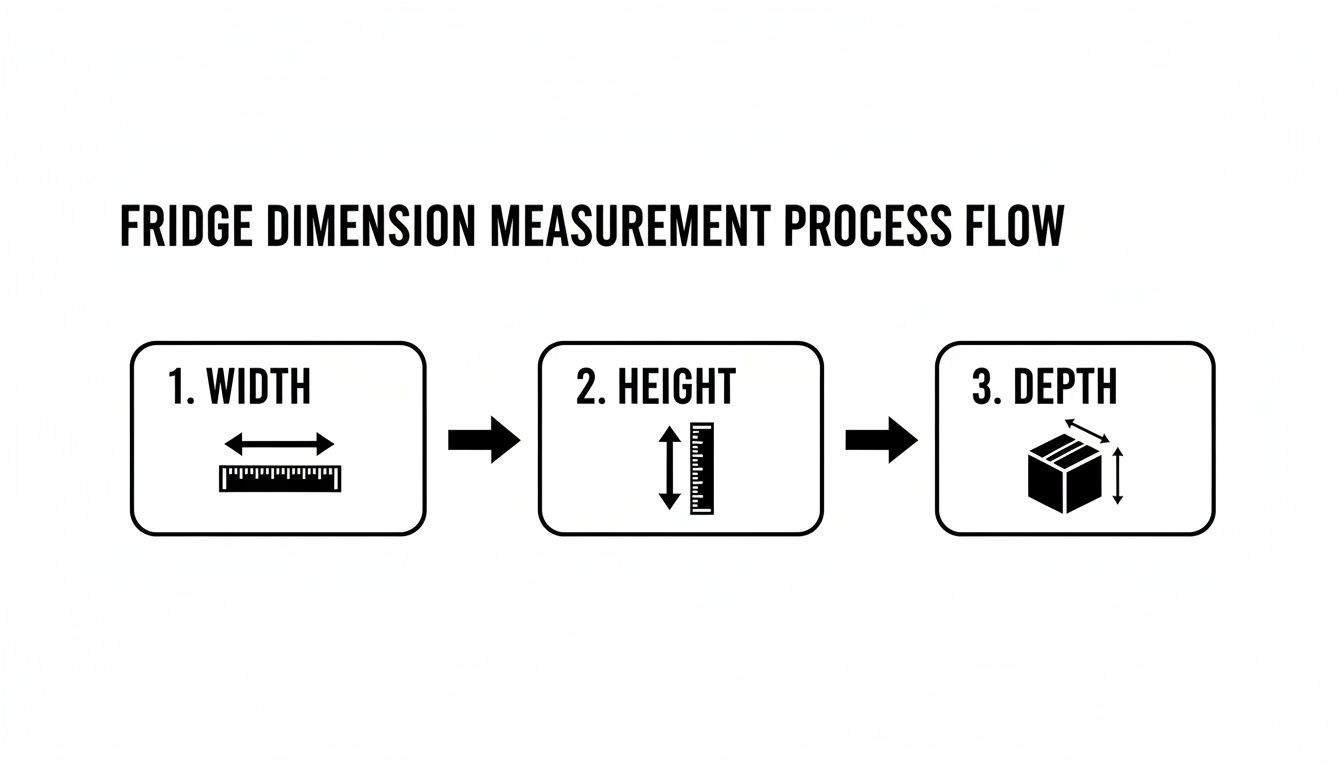
This method isn't just about making sure the unit slides in; it's about guaranteeing a professional, clean installation.
Don't Forget Essential Clearances
The physical size of the fridge is only part of the equation. You also have to account for clearance—the breathing room the unit needs to operate correctly. Most front-venting models require at least 1-2 inches of open space around the sides and back.
This gap is non-negotiable. It allows the compressor and condenser to dissipate heat effectively, which is vital for maintaining energy efficiency and extending the life of your equipment.
Pro Tip: Always, always check the manufacturer's spec sheet for the exact clearance requirements. Skipping this can cause the unit to overheat, perform poorly, and fail prematurely. It's a simple step that protects your investment.
Finally, think about how the unit will function in the space. Will the door be able to swing open completely without banging into another piece of equipment, a wall, or even the baseboards? To get this right before you buy, using a space planner software can help you visualize the entire layout and prevent any day-one surprises.
Matching Unit Type to Your Kitchen's Needs
Picking the right undercounter fridge isn't just about the dimensions. The real key is matching the type of unit to how your kitchen actually works. A standard solid-door refrigerator is a reliable workhorse, no doubt, but specialized models are built to solve specific problems, from making a prep line faster to boosting drink sales.
Think about it this way: a hectic prep station needs instant access to ingredients, while a front-of-house bar needs to show off its offerings. Getting this choice right means you're investing in a piece of equipment that genuinely improves your workflow, not just one that fills a gap under the counter.
Comparing Common Undercounter Models
To help you decide, let's break down the main categories of undercounter units. Each one is designed with a specific job in mind, and its features—from the type of door to the internal layout—are tailored for that role.
Here’s a quick rundown of what you'll typically find:
-
Standard Solid-Door Refrigerators: These are the jacks-of-all-trades in a commercial kitchen. Their tough stainless steel doors offer great insulation, making them perfect for stashing bulk ingredients, sauces, and prepped items safely away from the heat of the line. They're built to withstand the chaos of back-of-house operations.
-
Undercounter Freezers: Absolutely essential for keeping frozen goods like proteins, desserts, or fries right where you need them. Placing a dedicated undercounter freezer at a station eliminates those long, time-wasting treks to the walk-in, which is a huge deal during a busy service.
-
Glass-Door Merchandisers: You’ll see these in customer-facing spots—bars, cafes, and grab-and-go counters. The glass doors put bottled drinks, desserts, and pre-packaged snacks on full display, which is a simple but effective way to encourage impulse buys. Just remember, the glass makes them a little less insulating than their solid-door counterparts.
-
Drawer Models: These are a total game-changer for high-volume prep lines. Instead of a swinging door, you get drawers that chefs can load with pans of ingredients. It’s a much faster, more ergonomic way to work, especially for salad, sandwich, or pizza stations where every second counts.
Choosing the right type of undercounter unit is a strategic decision that goes beyond simple refrigeration. To help illustrate the differences and their ideal use cases, here is a comparison of the most common models.
Comparison of Undercounter Unit Types
| Unit Type | Typical Widths (Inches) | Key Feature | Best For |
|---|---|---|---|
| Solid-Door Refrigerator | 24", 27", 36", 48", 60", 72" | Durability & Insulation | Back-of-house ingredient storage, general prep stations. |
| Undercounter Freezer | 24", 27", 48" | Point-of-Use Freezing | Storing frozen proteins, appetizers, or desserts directly on the line. |
| Glass-Door Merchandiser | 24", 36", 48", 60" | Product Visibility | Front-of-house bars, cafes, and grab-and-go areas for impulse sales. |
| Drawer Unit | 27", 36", 48", 60", 72" | Ergonomic Pan Access | High-volume sandwich, salad, or pizza prep lines for maximum speed. |
This table shows how each design serves a distinct operational purpose, making it easier to align your equipment purchase with your kitchen's specific needs.
Making the right call here has a real impact on your bottom line. A drawer model can easily shave precious seconds off every single order at a busy sandwich station. Meanwhile, a well-placed glass-door merchandiser can lift beverage sales by 15-20% just by making the products look appealing.
If you want to get into the nitty-gritty of specific brands, you can find more information on models like the Atosa undercounter refrigerator, which comes in several of these configurations. At the end of the day, a close look at your menu and workflow will always point you toward the perfect undercounter solution.
Connecting Dimensions to Real-World Storage Capacity
The exterior dimensions tell you if an undercounter fridge will physically fit into your kitchen layout, but that's only half the story. The real measure of its value is the internal capacity, calculated in cubic feet, which dictates how much you can actually store inside. It’s this volume that translates the unit's physical size into practical, day-to-day usefulness.
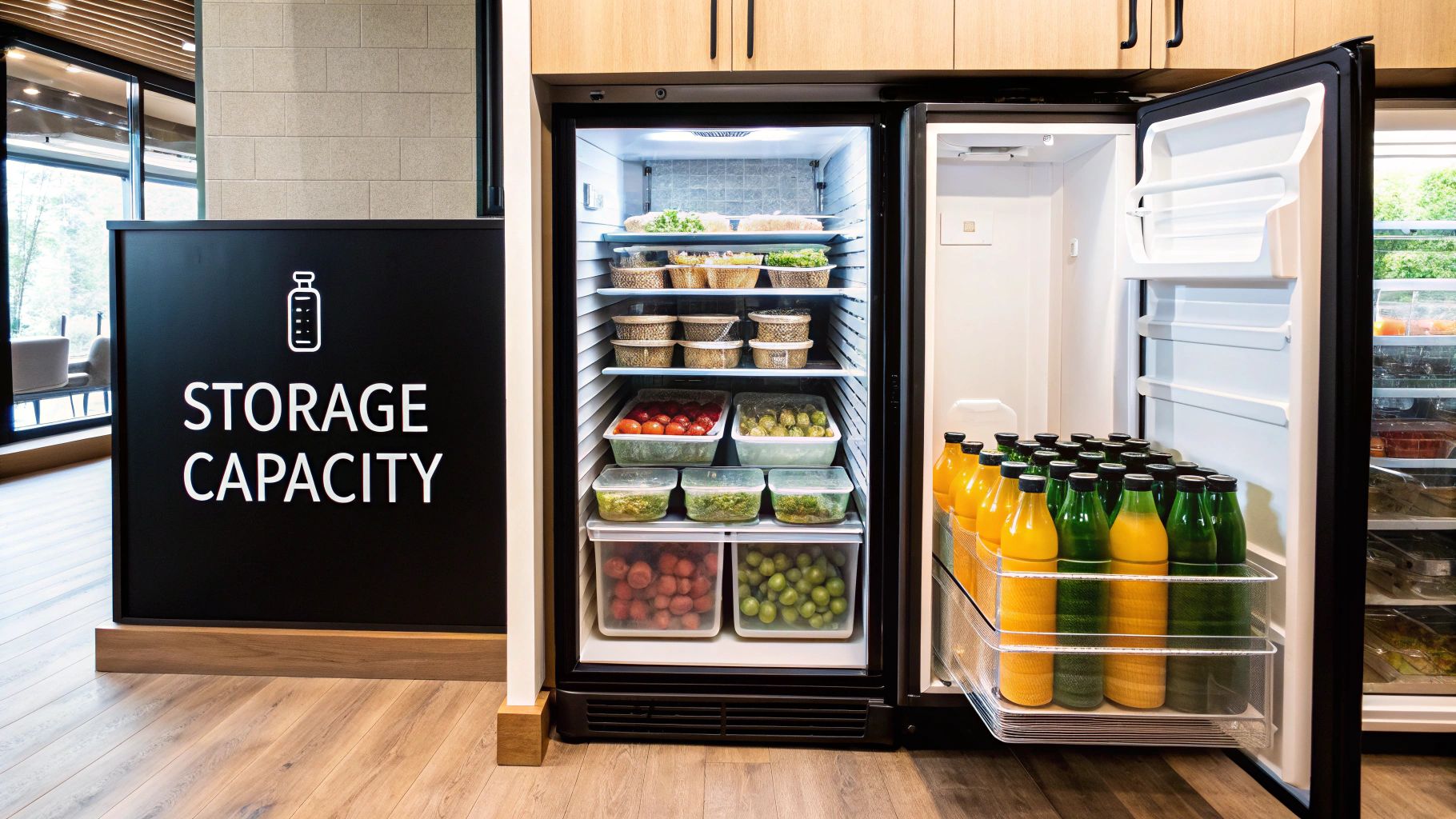
While the outside measurements are about getting a seamless fit, the interior cubic footage is what determines if the fridge can keep up with your inventory demands without forcing you to constantly restock during a busy service.
The Sweet Spot for Commercial Kitchens
For most commercial kitchens, the 5-10 cubic foot range has become the go-to standard, and for good reason. This capacity hits a perfect balance between offering significant storage space and not eating up too much of your valuable kitchen footprint. In the fast-paced, high-pressure world of a professional kitchen, that balance is everything.
In fact, undercounter units in this 5-10 cubic foot range are so popular they account for a massive 50% of global revenue in this category. That market dominance speaks volumes about how well they merge storage utility with a space-saving design. You can dig deeper into undercounter refrigerator market trends to stay informed on why operators gravitate toward this size. It gives you just enough room for essential ingredients without making your prep line feel cramped.
From Cubic Feet to Practical Storage
It helps to visualize what "cubic feet" actually means in terms of what you can store. Let's take a common 6.0 cubic foot model, which is typically about 24 inches wide. This unit can usually hold:
- Four to six full-size (12" x 20") hotel pans, stacked.
- Roughly seven to eight cases of standard 12 oz. canned drinks.
- A combination of multiple third-size or sixth-size food pans for a busy prep station.
The best way to choose the right size is to think about your daily needs. How many prep pans do you cycle through? How many drinks do you sell per shift? By matching those real-world numbers to a unit's stated cubic feet, you can be confident your new fridge will support your workflow, not hinder it.
Frequently Asked Questions
When you're outfitting a commercial kitchen, a few questions about undercounter refrigeration pop up time and time again. Let's tackle the most common ones so you can feel confident you're choosing the right equipment for your space.
Getting these details right from the start means your new unit will run smoothly, meet health codes, and slot perfectly into your kitchen's flow.
Can I Use a Residential Undercounter Fridge in My Commercial Kitchen?
You really shouldn't. It might seem like a way to save a few bucks, but a residential unit simply isn't built for the rigors of a professional kitchen. Commercial-grade refrigerators are workhorses, built with heavy-duty components like stainless steel and powerful compressors that can handle constant door openings and high kitchen heat.
More importantly, commercial models are NSF-certified. This isn't just a fancy sticker; it's a non-negotiable requirement for passing health inspections and ensuring food safety. A residential fridge in a pro kitchen will likely break down quickly, void its own warranty, and put you at risk of failing a health inspection.
What Is the Most Important Clearance Space Around the Fridge?
Ventilation. Hands down, the most critical clearance is the space you leave for air to circulate around the unit. The condenser coils, usually at the back or sides, are responsible for getting rid of heat. If they can't breathe, the compressor has to work overtime.
Most manufacturers will tell you to leave a minimum of 1-2 inches of breathing room. Skimping on this space is a surefire way to get higher energy bills, watch your cooling performance suffer, and seriously shorten the life of your equipment. Always check the spec sheet for the exact recommendation for your model.
How Much Space Does the Door Swing Need?
This is the one people forget all the time. When you swing a fridge door open to 90 degrees, the edge of that door is going to stick out several inches past the unit's frame. It’s a classic "gotcha" in kitchen design.
You absolutely have to account for this extra space. Otherwise, the door will bang into the equipment next to it, a wall, or a countertop overhang. Look for the "door open at 90°" measurement on the spec sheet and factor that into your layout. It’s the only way to guarantee your team can get in and out of the fridge without a fight, which is crucial when things get busy.
Are There ADA-Compliant Undercounter Models Available?
Yes, absolutely. Many of the top manufacturers produce undercounter refrigerators that are fully compliant with the Americans with Disabilities Act (ADA), making your kitchen accessible to every member of your staff.
An ADA-compliant unit will have a countertop height no greater than 34 inches from the floor, allowing easy access for employees who use wheelchairs. When you're shopping, just look for models specifically marked as "ADA Compliant" to ensure you're meeting these vital accessibility standards.
At Encore Seattle Restaurant Equipment, we specialize in commercial-grade undercounter refrigerators built for the demands of a professional kitchen. We help restaurant owners and chefs discover the latest news and exclusive deals on restaurant equipment and supplies. See our full lineup at https://encoreseattle.com and find the perfect unit for your operation.