
stainless steel table prep: Your guide to stations, sizes & sanitation
A top-tier stainless steel prep table is so much more than just a piece of metal—it's the heart of your kitchen, the very stage where culinary magic happens. It’s the durable, hygienic, and versatile foundation that directly impacts your kitchen's rhythm, efficiency, and food safety. Discover the latest industry news, trends, and exclusive deals on essential equipment like this to give your restaurant a competitive edge.
The Foundation of Every Great Commercial Kitchen
Walk into any successful professional kitchen, and you'll find a central command station. It’s the unsung hero that supports every single dish that goes out to a customer. That’s the stainless steel prep table. Think of it as your kitchen’s primary workbench, built to withstand the relentless abuse of chopping, mixing, searing heat, and constant scrubbing, day in and day out.
But its importance goes far beyond just being a place to work. The right table is a non-negotiable asset because it anchors your entire workflow. It’s where raw ingredients are broken down, where plates are meticulously assembled, and where the pace for the entire service is set. Staying informed on the latest equipment trends ensures this foundational decision will ripple through every aspect of your daily operations for years to come.
The Core Benefits for Your Kitchen
The payoff for investing in a quality stainless steel table prep station is immediate and tangible, affecting everything from your bottom line to your reputation. These aren't just abstract features; they're essential pillars for running a safe, efficient, and compliant kitchen.
- Unmatched Hygiene: Stainless steel is non-porous. In simple terms, that means it won’t harbor bacteria, absorb odors, or soak up stains. This makes it incredibly easy to clean and sanitize—a critical factor for preventing cross-contamination and acing health inspections.
- Rock-Solid Durability: Built for the chaos of a commercial environment, these tables stand up to corrosion, high heat, and heavy impacts. A good table can handle a full-on butchering session or support heavy equipment without buckling or breaking down over time.
- Incredible Versatility: A prep table can be as simple as a flat surface for chopping vegetables or as complex as a custom station with built-in sinks, shelves, and refrigerated drawers. It can be configured to fit the exact needs of your menu and kitchen flow.
A prep table isn't just furniture; it's an investment in operational excellence. Its quality dictates the speed of your service, the safety of your food, and the overall productivity of your culinary team.
At the end of the day, this single piece of equipment is the cornerstone of your kitchen's success. Once you grasp its fundamental role, it becomes clear why picking the perfect table is one of the most critical decisions a chef or owner will make. Let's walk through everything you need to know.
Decoding Steel Grades and Gauges for Durability
When you're outfitting a commercial kitchen, the terms "grade" and "gauge" get thrown around a lot, especially when it comes to stainless steel prep tables. It might sound like technical jargon, but getting these two details right is the secret to buying a table that lasts.
Think of it as the difference between a table that looks great on day one and one that still holds up after years of relentless chopping, spilling, and cleaning. The right choice protects your investment, ensuring you don't overpay for a heavy-duty table you don't need or, worse, buy a light-duty one that dents and warps in a month.
It all comes down to building on a solid foundation.
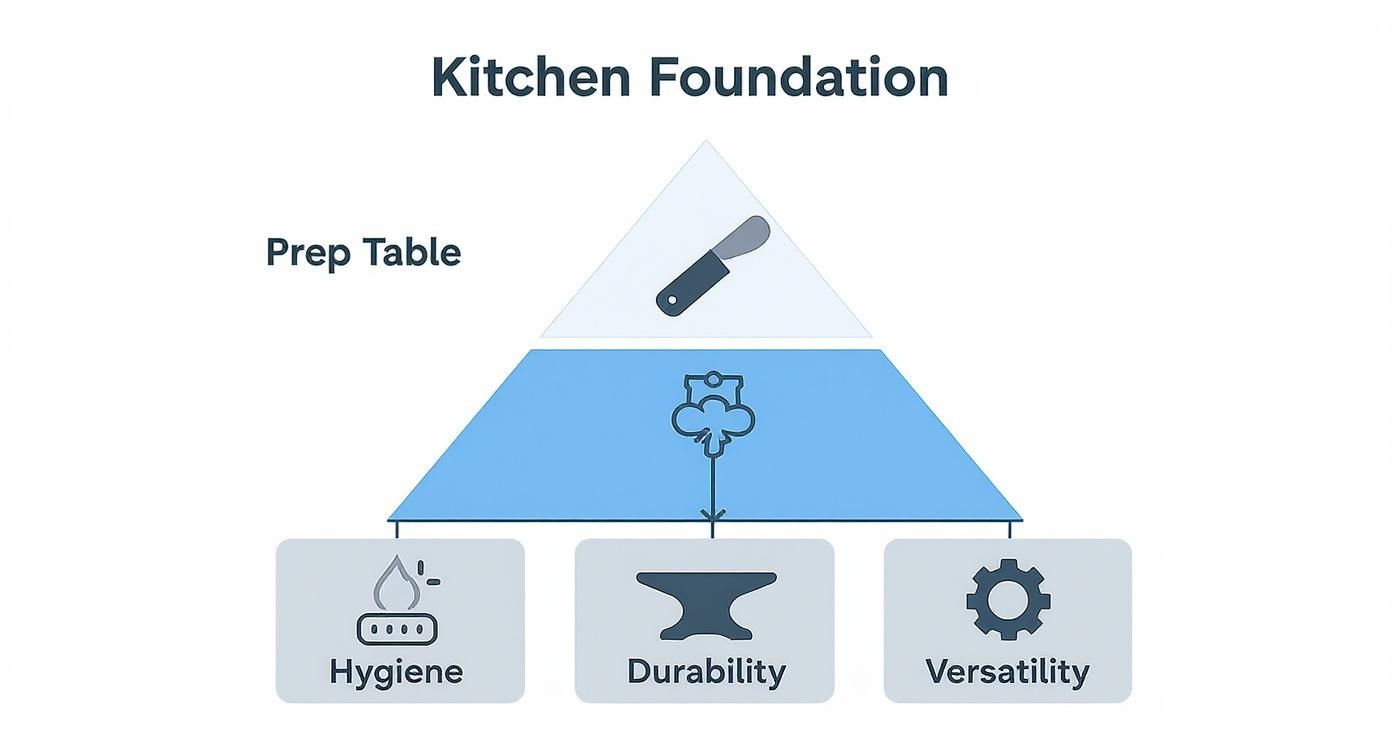
As you can see, a great prep table isn't just a surface; it's the bedrock of your kitchen, built on hygiene, durability, and versatility. Now, let’s get into what makes it so tough.
Understanding Stainless Steel Grades
The "grade" of stainless steel is like a recipe for the metal itself. Different ingredients create different properties. In the world of foodservice, you’ll almost always run into two main players: 304 grade and 430 grade.
-
304 Grade Stainless Steel: This is the undisputed champion of the commercial kitchen. It's packed with more chromium and nickel, which gives it incredible resistance to rust and corrosion. If the surface is going to touch food—especially acidic things like citrus juice, vinegar, or tomato sauce—you want 304 grade. It’s built for the long haul.
-
430 Grade Stainless Steel: This is a more wallet-friendly option, and it definitely has its place. It's perfectly fine for surfaces that stay dry or see lighter use. Think equipment stands, legs on a prep table, or dry storage shelving. While it's still strong, it's just more susceptible to rust if it’s constantly wet. If you want to dive deeper into storage options, take a look at our guide on commercial stainless steel shelves.
For any surface where you'll be doing your main stainless steel table prep, splurging on 304 grade is non-negotiable. It's a matter of food safety, longevity, and protecting your reputation.
The entire industry recognizes the value here. The global stainless steel market was valued at about USD 163.7 billion in 2024 and is expected to climb to USD 261.5 billion by 2033. This growth is fueled by industries like ours that can't compromise on hygiene and durability, with 304 grade leading the charge. You can read more in this detailed industry report if you're curious.
Demystifying Steel Gauge
Once you've picked your grade, the next piece of the puzzle is the "gauge." This one is simple: gauge just means thickness.
Here's the one tricky part you need to remember: the lower the gauge number, the thicker and stronger the steel. A 14-gauge top is a beast, while an 18-gauge top is more of a lightweight. A thicker top means more resistance to dings and dents, and it can handle heavy equipment without bowing or flexing.
Choosing the Right Gauge for Your Kitchen Tasks
You don't need a tank if you're just making sandwiches. Matching the gauge to the job is how you balance performance with your budget.
Here’s how it usually breaks down in a real kitchen:
- 14 Gauge: The heavyweight champion. This is the thickest, toughest steel you can get for a prep table. It’s made for butcher shops, fish prep stations, and any place where you’re tenderizing meat or dealing with constant, heavy-duty impact. It won’t flinch.
- 16 Gauge: The all-rounder. This is the sweet spot for most kitchens, offering a fantastic blend of durability and cost. It’s perfect for general prep work, vigorous chopping, and can easily support common equipment like stand mixers or food processors.
- 18 Gauge: The lightweight specialist. As the thinnest and most economical option, 18 gauge is ideal for light-duty tasks. Think plating stations, sandwich and salad assembly lines, or a spot to hold small appliances. It’s plenty durable for daily use but will dent if you drop something heavy on it.
To make it even simpler, here's a quick cheat sheet.
Stainless Steel Grade and Gauge Quick Reference
This table breaks down the most common options to help you pinpoint exactly what your kitchen needs without any guesswork.
| Specification | Common Grade/Gauge | Best Use Case | Key Feature |
|---|---|---|---|
| Heavy-Duty Top | 14 Gauge, 304 Grade | Butchering, fish prep, heavy pounding | Maximum dent and corrosion resistance |
| All-Purpose Top | 16 Gauge, 304 Grade | General chopping, mixing, medium equipment | Excellent balance of durability and value |
| Light-Duty Top | 18 Gauge, 304 Grade | Plating, sandwich assembly, light tasks | Most affordable food-safe option |
| Undershelf/Legs | 18 Gauge, 430 Grade | Structural support, dry storage | Cost-effective and durable for non-contact areas |
By getting a handle on these basics, you can walk into any showroom or browse any website and know exactly what you’re looking at. You’ll be able to confidently choose a stainless steel table prep station that’s truly built for the way your kitchen works.
Finding the Perfect Prep Table Configuration
A stainless steel prep table is never just a table. Think of it as the central hub of your kitchen's workflow, a workstation that needs to be perfectly suited to your space, your menu, and the way your team moves. The right configuration can turn a simple surface into a productivity machine, cutting down on wasted steps and keeping the chaos of a busy service under control.
A basic, flat-top table is a blank slate. It’s useful, sure, but the real magic happens when you add features like a backsplash, undershelves, or drawers. Each element you add turns that blank slate into a specialized tool designed to make your kitchen run smoother, stay cleaner, and feel more organized.
This modular approach is a huge reason why these tables are everywhere. The global market for them is booming, and it's no surprise—the foodservice industry is always chasing better hygiene and efficiency. You're seeing constant innovation in ergonomics and sanitation, especially in markets like North America and Europe. You can discover insights on the stainless steel table market to see how these trends are shaping equipment design.
Backsplash or No Backsplash
One of the first calls you'll have to make is whether or not to get a backsplash. It might seem like a minor detail, but that small raised edge at the back of the table has a huge impact on day-to-day operations.
-
Tables with a Backsplash: These are your go-to if the table is going against a wall. The backsplash acts as a guard, stopping food scraps, liquids, and sauces from splattering all over the wall. This makes cleanup a breeze and, more importantly, protects your walls from moisture damage and stains, which is a big win for sanitation.
-
Tables without a Backsplash (Open Edge): Sometimes called "island" tables, these are all about flexibility. You can stick one in the middle of the floor and have staff work from all sides. They’re perfect for collaborative prep tasks or as a pass-through station between the line and the dish pit.
Maximizing Storage with Undershelves and Drawers
In any commercial kitchen, space is gold. A prep table isn’t just a work surface; it’s a prime piece of real estate that can double as a crucial storage unit, keeping tools and ingredients right where you need them.
An undershelf is the most common and practical storage addition. That lower shelf gives you a solid, easy-to-reach spot for stacking mixing bowls, hotel pans, small appliances, or even bags of onions and potatoes. It puts that vertical space to work, keeping your main prep surface free of clutter.
For the smaller stuff, built-in drawers are a game-changer. They provide a clean, secure home for your knives, peelers, thermometers, and other hand tools. Everything stays protected from spills and cross-contamination but is still just an arm's length away when you need it.
A well-planned prep table with integrated storage means your cooks aren't constantly running to the stockroom. That simple change can seriously boost speed and efficiency during a hectic dinner rush.
Specialized Configurations for Specific Menus
Beyond the basics, you can find tables built for very specific jobs. These specialized workstations are designed to streamline particular culinary tasks, making them essential for certain restaurants.
The classic example is a refrigerated prep table. You’ll see these in every pizzeria, deli, and sandwich shop. They combine a stainless steel worktop with refrigerated compartments underneath and, often, a refrigerated rail on top holding pans of chopped veggies, meats, and cheeses. A cook can build a hundred sandwiches without ever leaving their station, all while keeping ingredients fresh and food-safe. When you match the table's configuration to your menu, you're literally building efficiency into your kitchen's DNA.
How to Size and Plan Your Kitchen Layout
The best stainless steel prep table in the world is useless if it clogs up your kitchen's workflow. Just picture your team bumping into each other or weaving through an obstacle course just to grab ingredients. It’s a guaranteed recipe for slow tickets and frustrated staff. Good planning isn’t just about making a table fit—it's about making it work.
This all starts with the most basic tool in the box: a tape measure. But getting the right measurements is about more than just length and width. You have to think about the kitchen as a living, breathing space.
Accounting for Crucial Clearance
When you're measuring, you need to see the space in 3D and imagine every moving part. A classic rookie mistake is forgetting to account for the "swing radius" of everything around your new table.
- Appliance Doors: How far do your refrigerator, oven, and lowboy cooler doors swing open? A door that can't open all the way because it hits the new table is a major bottleneck waiting to happen.
- Foot Traffic: Most health codes require at least 36 to 48 inches for main walkways. This gives your staff enough room to move safely, especially when they’re carrying hot pans or full stock pots.
- Workflow Paths: Trace the most common routes in your kitchen—from the walk-in to the cookline, for example. A badly placed table can turn a straight shot into a detour, adding precious time to every single task.
Think of your kitchen layout as a roadmap. Your new stainless steel table prep station should be a convenient hub, not a roadblock that creates traffic jams.
Applying the Work Triangle Concept
You’ve probably heard of the "work triangle," a classic design principle that connects the three main kitchen zones: storage (refrigerators), preparation (your new table), and cooking (the range). The idea is to place your prep table so your chefs can flow seamlessly between these three points. They should be able to pivot from grabbing ingredients to prepping them on the table, and then turn right to the cooktop without taking a dozen extra steps.
For a much deeper dive on this, check out our complete guide on commercial kitchen design and layout. It's packed with strategies that can seriously improve your kitchen's efficiency.
A Checklist for Perfect Placement
Before you pull the trigger on a purchase, run through this quick mental checklist. It’ll help you confirm that the table you choose will truly sync up with your kitchen's rhythm.
- How many people will work here? A station for one prep cook needs a lot less elbow room than a table where three people are hustling during the dinner rush.
- What specific tasks will be performed? A heavy-duty butchering station needs space and should probably be near a sink. A delicate pastry station, on the other hand, needs to be far away from the heat of the line.
- What needs to be within arm's reach? Think about the tools, ingredients, and small appliances needed for that station. This will tell you if you need an undershelf, drawers, or if it should be placed near existing wall shelves.
While our focus is on commercial kitchens, sometimes a fresh perspective from residential design can spark an idea, especially when considering major installations. Getting expert kitchen remodeling advice often highlights universal principles of flow and function. Taking that extra time to plan thoughtfully will turn your new table from just another piece of metal into a powerful asset that makes every service smoother.
Keeping Your Stainless Steel Tables in Top Shape
A good stainless steel prep table is an investment. It’s the workhorse of your kitchen, and just like any quality piece of equipment, it needs a little care to keep it performing at its best for years to come. Proper sanitation isn't just about looking good for the health inspector; it's about food safety and making sure your investment doesn't rust or break down prematurely.
Think of the surface of your table as having an invisible suit of armor—a passive layer that protects the steel underneath. While it's tough, the wrong cleaners or scrubbing methods can strip it away, leaving the table vulnerable to rust and pitting. The secret is a simple, consistent cleaning routine.
Daily Cleaning That Makes a Difference
Your daily wipe-down is the most important defense you have against bacteria and long-term damage. The idea is to get rid of food scraps and germs from the day's service without creating tiny scratches where gunk can hide.
- Scrape It Down: First, clear off any loose food and gunk with a soft plastic or rubber scraper. Stay away from metal scrapers—they'll leave scratches.
- Wash It Up: Grab a soft cloth, some warm water, and a mild soap. Give the entire surface a good wash, not forgetting the legs and any shelves underneath.
- Rinse It Off: Wipe everything down with a clean, damp cloth to get all the soap off. If you leave soap residue behind, it can create a dull film on the surface.
- Sanitize and Dry: Finally, spray on a food-safe sanitizer, following the directions on the bottle. Let it air dry. Don't wipe it off—letting it sit is what kills the germs.
Smart Maintenance Habits
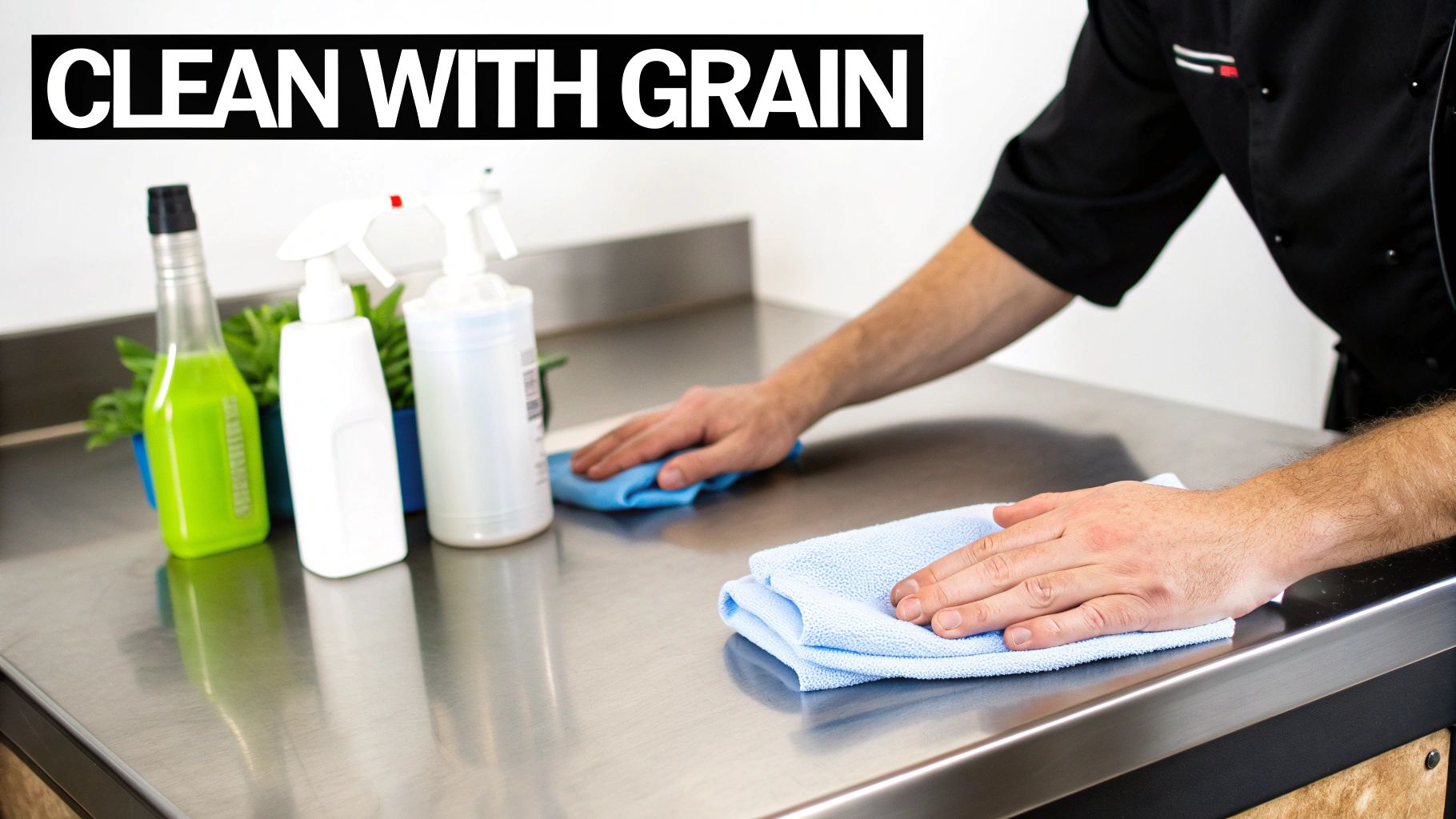
Beyond the daily routine, a few simple habits will keep your table looking new. The golden rule is to always clean with the grain. If you look closely at the steel, you’ll see very faint lines. Wiping in the same direction as those lines helps you avoid tiny scratches and keeps the finish looking smooth and professional.
Knowing what not to use is just as important.
Never, ever use chlorine bleach, oven cleaners, or anything with chlorides on your stainless steel. These chemicals are extremely corrosive and will eat right through the steel's protective layer, causing permanent rust spots and pitting.
To keep your entire kitchen spotless, it helps to follow an ultimate guide to a sparkling kitchen deep clean. These deeper routines ensure that every piece of equipment, including your vital prep tables, meets the highest standards. A clean table is also a critical part of your overall food safety plan. If you're building out those procedures, our guide on HACCP food safety can help you put a formal system in place.
Here’s a simple schedule to help your team stay on track and protect your equipment.
Stainless Steel Cleaning and Maintenance Schedule
| Frequency | Task | Recommended Products | Pro Tip |
|---|---|---|---|
| Daily | Clear debris, wash, rinse, and sanitize. | Mild soap, warm water, food-safe sanitizer, soft cloths. | Always let the sanitizer air dry to ensure it's effective. |
| Weekly | Deep clean with a specialized stainless steel cleaner. Check for scratches or stains. | Commercial stainless steel cleaner, degreaser for stubborn spots. | For tough spots, make a paste of baking soda and water. Let it sit before scrubbing gently with the grain. |
| Monthly | Polish the surface. Inspect legs, shelves, and joints for tightness and stability. | Stainless steel polish, microfiber cloth. | A good polish not only shines the surface but also adds a thin protective layer against fingerprints and moisture. |
By making these easy but effective habits part of your kitchen's DNA, you’ll ensure your stainless steel prep table remains a clean, reliable, and professional-looking asset for a very long time.
Smart Buying: Certifications, Costs, and Your Bottom Line
Picking the right prep table isn't just about the steel itself. It's about making a smart business decision that protects your investment, your team, and your customers. This is the final, crucial step where you think like a savvy operator, ensuring every dollar you spend builds a safer, more efficient kitchen for the long haul.
We've covered the what and the how—now let's talk about making a purchase you won't regret.
The NSF Seal: Your Kitchen's Golden Ticket
When you're looking at any piece of commercial kitchen equipment, you’ll see one acronym that matters more than any other: NSF. That little blue seal from the National Sanitation Foundation isn't just a suggestion; it's a non-negotiable requirement for professional kitchens.
Think of it as a stamp of approval from the health department before they even walk in the door. An NSF-certified table is guaranteed to have features designed for a sanitary environment, such as:
- Completely Smooth Surfaces: No microscopic cracks or crevices where bacteria can hide and multiply.
- Coved (Rounded) Corners: These seamless, curved joints make it impossible for food debris to get trapped, making cleaning a breeze.
- 100% Food-Safe Materials: The steel is certified not to leach any harmful chemicals into your food.
Bottom line: Buying a table without the NSF seal for a commercial kitchen is a gamble you are guaranteed to lose. It puts food safety at risk and will almost certainly lead to a failed health inspection, which can mean hefty fines or even a temporary shutdown.
New vs. Used: Weighing the Trade-Offs
The next big question comes down to budget: do you spring for a brand-new table or hunt for a deal on a used one? There's no single right answer, but you need to know what you're getting into with each.
A new stainless steel prep table is all about peace of mind. It shows up in pristine condition, is guaranteed to be NSF compliant, and is backed by a manufacturer's warranty. You know exactly what you're getting—a reliable workhorse from day one with no hidden problems.
A used table, on the other hand, can be a fantastic way to stretch your budget. The upfront savings can be significant, but this path demands a bit more homework. You have to play detective and inspect it carefully for deep scratches, dents, or any signs of rust that could harbor bacteria. Most importantly, you must confirm it still has its NSF certification and isn't warped or wobbly. A cheap table isn't a good deal if you end up with surprise repair costs down the line.
Making a Smart, Strategic Purchase
Ultimately, buying equipment means being aware of the bigger picture. Global market forces can and do affect the price and availability of something as fundamental as a prep table. For example, stainless steel production is overwhelmingly centered in Asia. When output shifts, like the 3% increase seen in the first nine months of 2025, it sends ripples through the entire supply chain.
With China producing over 64% of the world's stainless steel, its market trends can directly influence the price tag on the tables you're browsing. You can learn more by checking out the latest global stainless steel production trends.
Whether you decide on new or used, the smartest move is to work with a supplier you trust. Here at Encore Seattle Restaurant Equipment, we do this every day. Our experts can help you find the perfect table for your space and budget, walk you through financing, and get it delivered to your door. We're here to make sure your investment is sound, compliant, and ready to support your restaurant's success.
Your Top Prep Table Questions, Answered
Alright, we've covered the nuts and bolts of stainless steel prep tables. But even with all that information, a few specific questions always seem to come up right when you're about to pull the trigger. Let's tackle those head-on so you can make your final choice with total confidence.
Think of this as the final checklist before you buy.
What’s the Best Grade of Stainless Steel for a Food Prep Table?
For almost any task involving direct food contact, 304 stainless steel is the gold standard, period. It's the one you want. The higher nickel and chromium content gives it fantastic protection against rust and corrosion, which is a lifesaver when you're dealing with acidic ingredients like citrus and tomatoes or using potent sanitizers.
You might see 430 grade tables out there, and they're definitely easier on the wallet. They're fine for dry storage or very light-duty work where the surface won't get much abuse. But for the heart of your kitchen—where the real prep happens—investing in 304 grade is a no-brainer for long-term durability and food safety.
Can I Put a Hot Pan Directly on the Table?
Yes, you can. One of the best things about stainless steel is its high heat tolerance. You can take a hot pot right off the stove and set it down without worrying about scorching or melting the surface. In a busy kitchen, that’s a huge plus.
That said, a little common sense goes a long way. Repeatedly shocking the metal with extreme temperature changes—think a ripping hot pan from a 500-degree oven—could potentially cause warping over time, especially on thinner gauge tables. It's not a common problem, but if you want to keep your table perfectly flat for a decade, using a trivet for the most extreme heat is just good practice.
How Can I Get Rid of Rust Spots?
First off, don't panic. If you see a rust spot on your stainless steel table, it's almost certainly from an outside source, not the table itself failing. The usual suspects are leaving wet carbon steel items (like cast iron pans, steel wool, or some cheap utensils) on the surface, or using harsh cleaners that contain chlorides.
The fix is surprisingly simple. Just make a paste with baking soda and water. Rub it onto the spot, let it sit for 20-30 minutes, and then gently scrub with a soft cloth or a non-abrasive pad, always going with the grain of the steel.
Once the spot is gone, rinse the area well with water and dry it completely. If you have a really stubborn spot, a commercial stainless steel cleaner with oxalic acid will do the trick, but make sure you read and follow the directions on the bottle.
Is It Better to Get a Table With or Without an Undershelf?
This one comes down entirely to how your kitchen runs and what you need to store. There's no single "right" answer.
-
With an Undershelf: This is the most popular choice for a reason. An undershelf is pure gold for storage, giving you a convenient spot for mixing bowls, ingredient bins, small appliances, and more. It helps keep your main worktop clear and your kitchen organized.
-
Without an Undershelf (Open Base): An open base design is perfect if you need clearance for larger, rolling equipment like ingredient bins or a waste receptacle. It also gives your staff more legroom, which is great for tasks that are done while seated.
Take a good look at your workflow. Do you need more storage right at hand, or do you need to park bulky items underneath? That will tell you which one to choose.
At Encore Seattle Restaurant Equipment, we know that finding the right gear is what makes a kitchen click. Our team has been doing this for years, and we're here to help you sort through the options to find the perfect stainless steel prep table for your space, your menu, and your budget. Come see our huge selection of new and used equipment at https://encoreseattle.com.