
A Chef's Guide to Restaurant Shelves Stainless Steel
When it comes to professional kitchens, stainless steel restaurant shelves are the undisputed champion of storage. They aren't just a place to put things; they're a smart investment in durability, food safety, and the smooth flow of your entire operation. In a high-volume kitchen, alternatives like plastic or chrome-plated wire just can't keep up. For restaurant owners and chefs looking to stay informed on the latest equipment trends and find exclusive deals, understanding the value of quality shelving is the first step.
Why Stainless Steel Is The Backbone of Modern Kitchens
Walk into any well-run commercial kitchen, and the first thing you'll likely notice is the gleam of stainless steel. It’s the quiet workhorse supporting everything you do, from the moment a delivery of fresh ingredients arrives to the final plating of a dish. This isn't a design choice—it's a practical solution to a chef's most common problems.
Think about it: plastic can crack under the weight of heavy stock pots and stain easily, while chrome-plated wire shelves will inevitably rust in the constant humidity of a busy kitchen. Stainless steel, on the other hand, is built for the chaos. It shrugs off moisture, handles wild temperature swings, and stands up to the daily abuse of heavy equipment without breaking a sweat.
The Foundation of an Efficient Operation
The right shelving system can be the difference between a kitchen that runs like a well-oiled machine and one that’s a constant source of stress. The benefits go straight to your bottom line and make every shift easier.
- Unmatched Hygiene: Stainless steel has a non-porous surface, which means there's nowhere for bacteria to hide. This makes it incredibly easy to clean and sanitize—a must-have for acing health inspections and protecting your customers.
- Superior Durability: Built to bear serious weight, stainless steel shelving naturally resists corrosion, heat, and dings. Its structural integrity gives you the confidence to store everything from 50-lb bags of flour to heavy stand mixers. You can see how this material stacks up against others in our comprehensive guide to stainless steel kitchen prep tables.
- Workflow Optimization: A well-organized storage system makes your whole team more productive. When staff can find ingredients and tools in seconds, prep times drop and the frantic pace of a dinner rush becomes far more manageable.
This blend of hygiene, strength, and efficiency is what makes stainless steel shelving an essential asset. It's not just another piece of equipment; it's a foundational investment in the long-term success of your kitchen.
The global market for stainless steel shelves was valued at around USD 5.2 billion in 2023 and is expected to hit USD 8.1 billion by 2032. What does this mean for a restaurant owner? It shows a clear industry shift towards quality. Investing in premium shelving not only keeps you compliant but can slash your replacement costs by 30-40% over a decade compared to less durable options.
Choosing Your Steel Grade: 304 vs. 430 Explained
When you're outfitting your kitchen with restaurant shelves stainless steel, one of the first and most critical decisions you'll face is the grade of the steel. It's not just a minor detail. The two most common options, 304 and 430, look similar but perform very differently, and choosing the right one can save you a ton of headaches and money down the line.
Think of it like choosing tires for your car. You wouldn't put summer tires on for a snowy winter—you'd get the right tool for the conditions. In the kitchen, Grade 430 is your reliable, all-season tire for dry, predictable roads, while Grade 304 is the heavy-duty, corrosion-resistant winter tire built to handle salt, slush, and whatever else the road throws at it.
The secret is in the ingredients. Grade 304 stainless steel contains nickel, which is its superpower against rust and corrosion. Grade 430 doesn't, making it more vulnerable but also more affordable.
The Right Steel for the Right Job
Putting the wrong grade of steel in the wrong spot is a classic rookie mistake. You'll either overspend on premium steel for a dry storeroom or, worse, watch your new shelves start to rust in the dish pit after just a few months.
For most dry storage areas—think pantries for flour and sugar, linen closets, or shelves holding packaged goods—18-gauge 430 stainless steel is the smart, economical choice. It’s tough, gives you that clean professional look, and is perfectly hygienic for the job. A quick way to identify it? A magnet will stick to it.
But for anywhere that sees moisture, humidity, or harsh cleaning chemicals, investing in Grade 304 stainless steel isn't just a good idea; it's essential.
A quick cheat sheet for placement:
- Grade 430 Applications: Perfect for dry storage pantries, organizing canned goods, holding equipment in non-humid rooms, and general-purpose shelving far from sinks and steam.
- Grade 304 Applications: The only choice for walk-in coolers and freezers, dishwashing stations, pot-washing areas, and any spot that gets hit with steam, water splashes, or strong sanitizers.
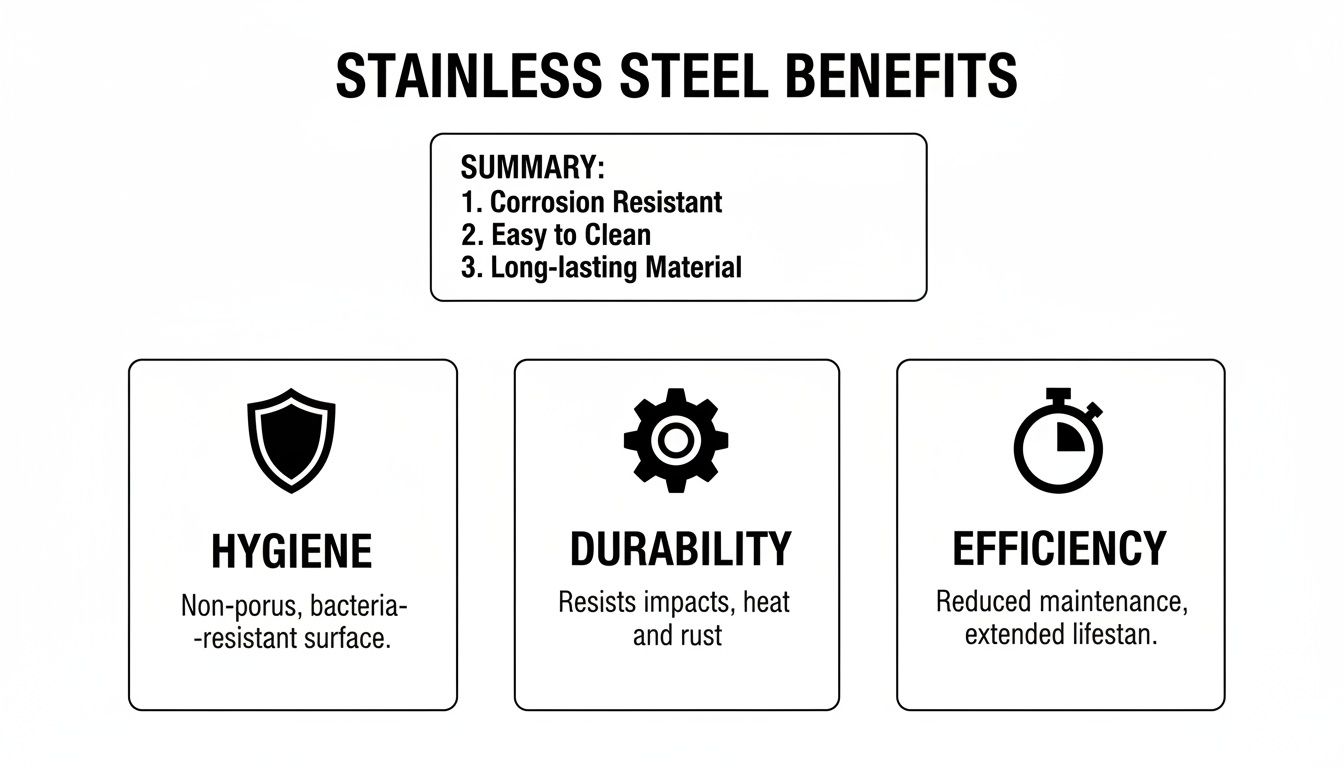
As you can see, the material itself is fundamental to running a safe, efficient kitchen. The right choice reinforces hygiene, ensures longevity, and keeps your operation running smoothly.
A Head-to-Head Comparison
To make this crystal clear, let's put these two grades side-by-side. This table will help you map out your kitchen and make strategic buys, ensuring every shelf is perfectly suited for its environment.
Feature Comparison of 304 vs 430 Stainless Steel
| Feature | 304 Stainless Steel | 430 Stainless Steel | Best Kitchen Application |
|---|---|---|---|
| Corrosion Resistance | Excellent; contains nickel for superior rust prevention. | Good; but will rust in damp or humid conditions. | 304: Walk-in coolers, dish pits. 430: Dry goods pantry. |
| Cost | Higher upfront investment. | More budget-friendly and cost-effective. | 304: High-value for wet zones. 430: Smart savings for dry. |
| Durability | Extremely durable and long-lasting in any condition. | Very durable, but its lifespan is cut short in wet areas. | 304: A lifetime investment. 430: Long-lasting with proper use. |
| Magnetism | Non-magnetic. | Magnetic. | A quick and easy way to tell the grades apart. |
This isn't just about picking the "best" steel—it's about picking the smartest steel for each specific need, getting the performance you require without overpaying.
Pro Tip: When a health inspector walks into your kitchen, their eyes are trained to spot problems. Rust on a shelf in a walk-in cooler is a massive red flag. Choosing Grade 304 for these areas isn't just about your equipment lasting longer; it’s about food safety, compliance, and passing inspections without a hitch.
By matching the steel grade to the environment, you build a smarter, more efficient storage system. It's a thoughtful approach that ensures your restaurant shelves stainless steel deliver maximum value and support a safe, clean operation for years to come.
Matching Shelf Types to Your Kitchen Workflow
Picking the right grade of stainless steel is just the starting point. To really get your kitchen humming, you need to think strategically about the design of your shelving and where it goes. The right type of restaurant shelves stainless steel in the right spot can shave precious minutes off prep times, ease the pressure on your staff, and bring a sense of calm to the controlled chaos of a dinner rush.
This isn't just about finding a place to put things; it’s about building an intuitive system where your team has exactly what they need, precisely when they need it. Think of your kitchen as a living, breathing space. Each station—from the prep line to the dish pit—has its own rhythm and requirements. A one-size-fits-all shelving solution just doesn't work. The real magic happens when you mix and match different shelf types to fit each zone, unlocking a new level of efficiency.
Maximizing Vertical Space with Wall-Mounted Shelves
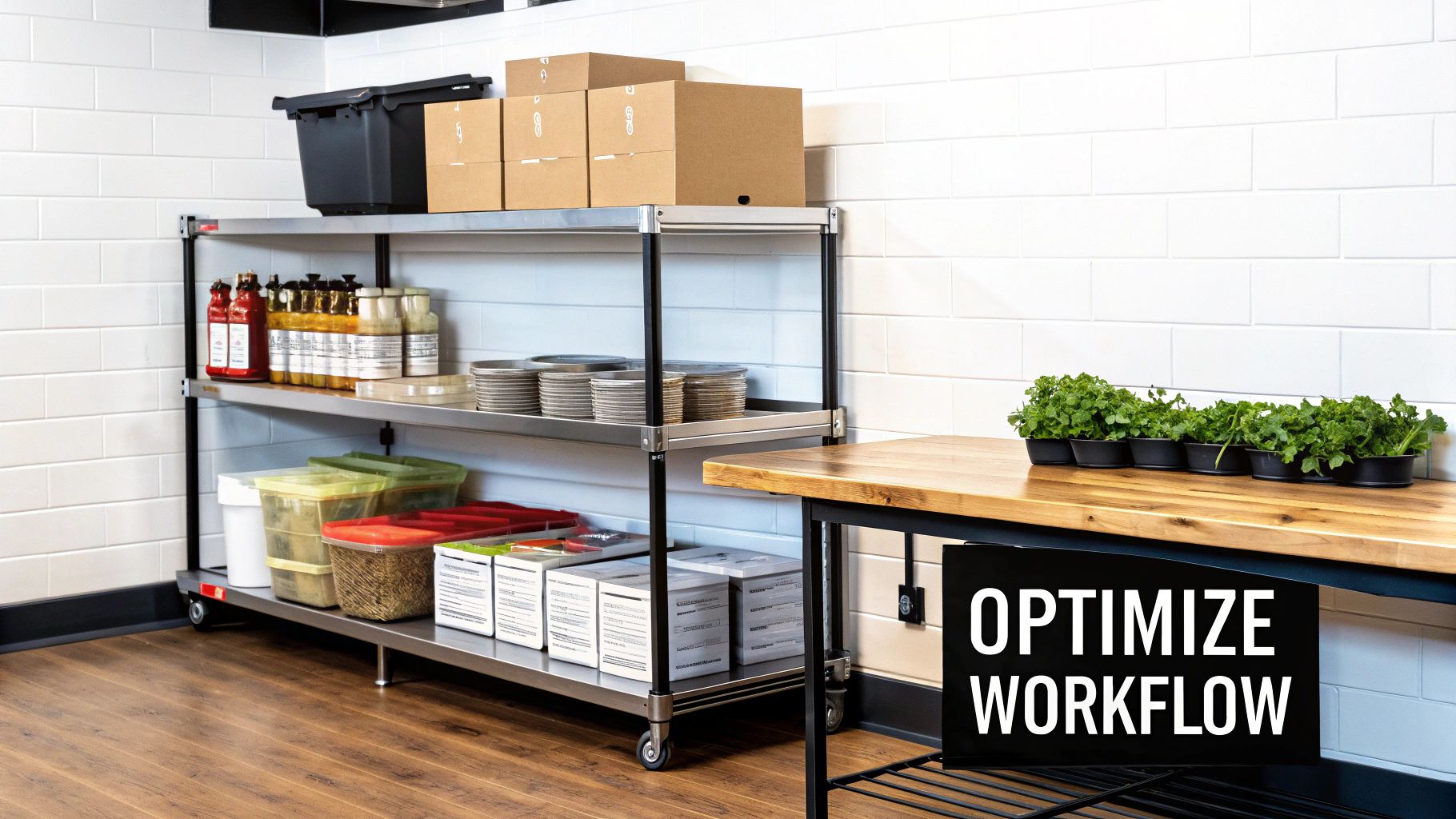
In nearly every commercial kitchen, floor space is gold. That’s why wall-mounted shelves are an operator's secret weapon. By taking the storage vertical, you keep essential items within easy reach without sacrificing an inch of your valuable work surfaces.
Picture the wall above your main prep table. A simple single or double-tier shelf there is the perfect home for spices, oils, mixing bowls, and go-to utensils. This small change means your cooks aren't constantly spinning around or walking across the kitchen, saving crucial seconds on every single order. In a busy bar, narrow wall shelves are a game-changer for organizing glassware, keeping everything visible and ready for lightning-fast service. If you're running a bakery, you might also find our guide on how to select the right bread rack shelving especially helpful.
The market backs this up. Wall-mounted shelves currently hold the largest market share because they are masters of space-saving, especially in tight kitchens, food trucks, and pop-ups. Industry reports also point to double over-shelves as the fastest-growing option, since they add vital overhead storage without eating up any floor space. These units are surprisingly tough, often holding up to 800 lbs per shelf, while still being a breeze to clean. You can dive deeper into these stainless steel shelf market trends on archivemarketresearch.com.
Creating Efficient Workstations with Over-Shelves
Over-shelves are designed to mount directly onto your stainless steel work tables, instantly turning a flat surface into a complete, multi-level workstation. This is where you can seriously dial in the efficiency of your prep line.
An over-shelf gives everything from squeeze bottles and food pans to small appliances like blenders a dedicated home. This keeps the main work surface clear for the real action—chopping, mixing, and plating—which leads to a cleaner, more organized kitchen.
- Single Over-Shelves: These are great for smaller tables or stations where you need quick access to a few key items without blocking your view.
- Double Over-Shelves: A must-have for high-volume prep areas. Two tiers give you plenty of room to organize a wide variety of ingredients and tools.
By adding over-shelves, you create a self-contained "cockpit" for each chef. Less walking, less searching, and a much smoother process from start to finish.
Handling Bulk with Dunnage Racks
Not all storage happens at eye level. When it comes to heavy, bulk items, dunnage racks are the unsung heroes of the back-of-house. These low-profile, heavy-duty racks are specifically designed to keep huge bags of flour, cases of canned goods, and buckets of sauce safely off the floor.
Keeping inventory at least six inches off the floor is a standard requirement for most health codes. Dunnage racks make compliance effortless, preventing pest contamination and protecting your products from floor-level moisture and dirt.
Their beefy construction is built to handle serious weight, making them the only smart choice for your heaviest inventory. Place them near your delivery entrance to make unloading easier, and set them up in your dry storage area to create an organized, health-code-compliant system for all your bulk goods.
Mastering Installation and Load Capacity Safely
You've picked out the perfect restaurant shelves stainless steel—great. But that's only half the battle. A shelf, no matter how well-made, is only as strong as its installation. Getting the mounting right isn't just a good idea; it's a critical step for keeping your kitchen safe and running smoothly. A secure installation protects your team, your inventory, and the investment you just made.
Think of it like the foundation of a house. If it's weak, everything built on top of it is at risk. For your wall shelves, that foundation is the wall itself. Just sinking a few screws into drywall is asking for trouble. Drywall simply can't hold the weight of commercial kitchen supplies.
The Essentials of a Secure Installation
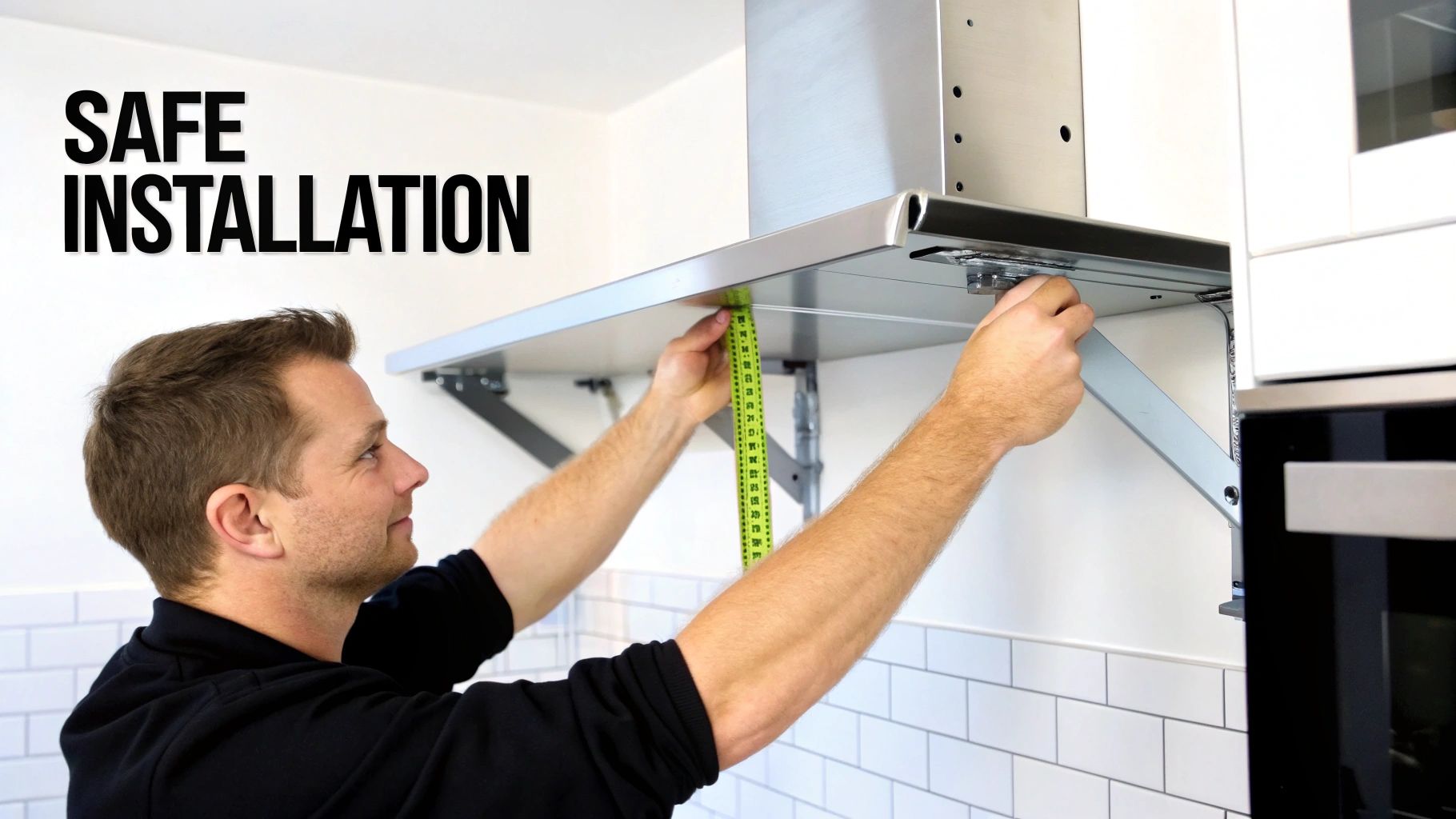
To get a rock-solid setup, you have to anchor your shelf brackets directly into the wall studs. These are the vertical wood or metal beams that make up the wall's frame. Don't guess—use a stud finder to locate them before you drill a single hole. If you're working with concrete or brick, you'll need the right kind of masonry anchors to get a grip that won't let go.
Here's a quick cheat sheet for a pro-level installation:
- Find Those Studs: A stud finder is your best friend here. Don't eyeball it.
- Use the Right Hardware: Match your anchors to your wall. If you absolutely can't hit a stud, use heavy-duty toggle bolts, but know they won't be as strong. For brick or concrete, grab masonry sleeves.
- Keep It Level: An uneven shelf is an unstable shelf. Use a level to make sure everything is perfectly horizontal so items don't slide around.
- Read the Manual: The manufacturer’s instructions have specific details on screw sizes and bracket spacing for a reason. Follow them to hit that maximum weight capacity.
This guide to steel shelving installation and organization has some great general principles that apply well beyond just one type of environment, offering solid advice for any commercial setup.
Understanding Load Capacity in the Real World
You’ll see the term "evenly distributed weight" on every spec sheet. But what does that really mean during a busy dinner service? It means the weight rating only counts when the load is spread across the entire shelf, not piled up in one spot.
A common—and dangerous—mistake is forgetting how weight gets focused. A shelf rated for 500 lbs can handle ten 50-lb sacks of flour spread from end to end. But if you plop a single 300-lb stand mixer right in the middle, you're risking a bowed shelf or a full-on collapse.
This is why smart storage planning is so important. Heavy stuff—stock pots, cases of canned goods, that giant mixer—always goes on the bottom shelves. This gives the whole shelving unit a lower center of gravity, making it much more stable and less likely to tip over. Save the top shelves for lighter things you grab often. Respecting the load limits isn't just about following rules; it's about creating a fundamentally safer kitchen.
The Chef's Guide to Cleaning and Maintenance
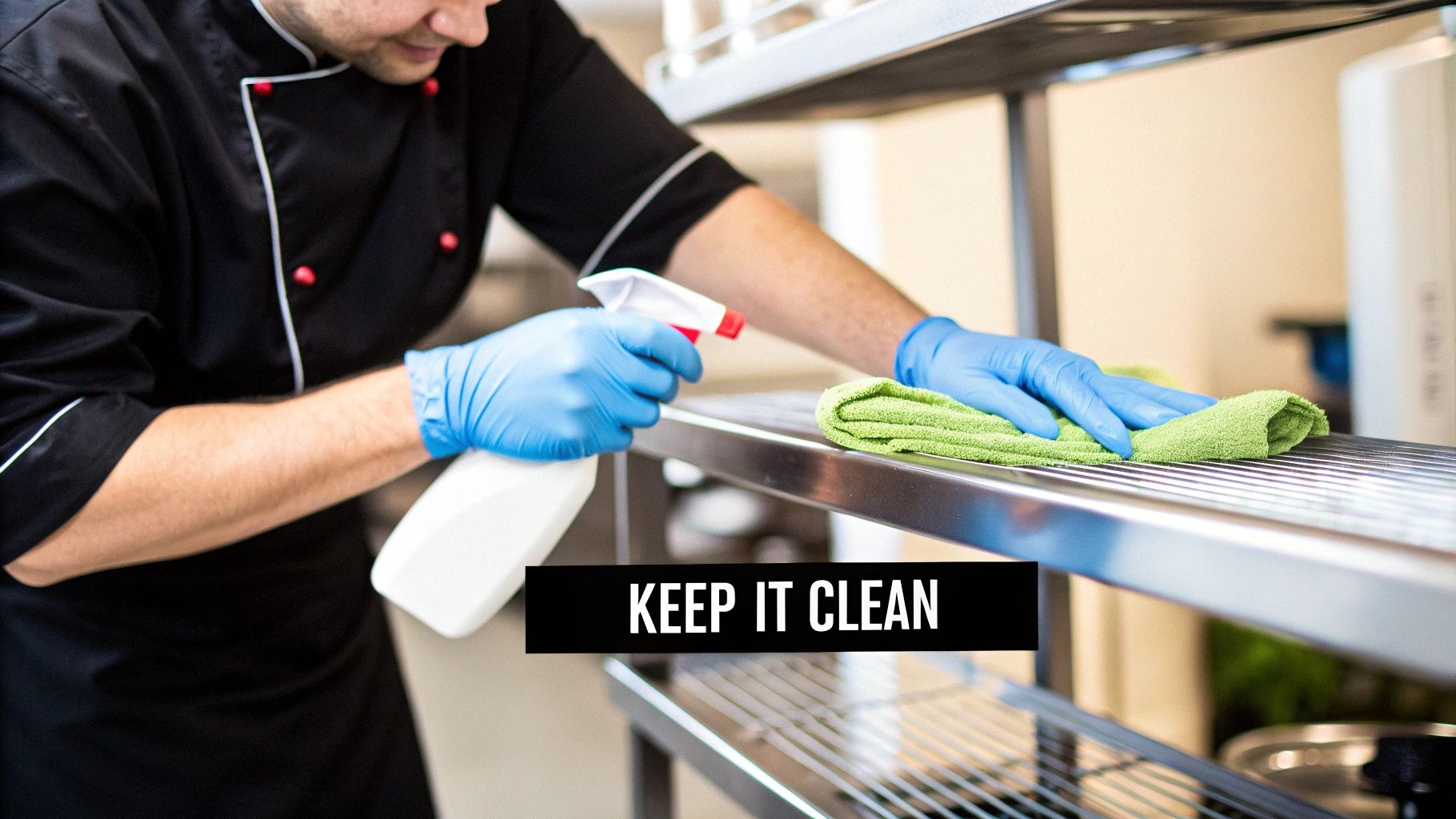
Spotless restaurant shelves stainless steel aren't just for show—they're a non-negotiable part of running a safe and professional kitchen. Proper cleaning and maintenance are what keep you on the right side of health inspections, protect your valuable inventory, and ensure you get decades of use out of your equipment. It all comes down to a simple, consistent routine.
The real magic of stainless steel is its passive chromium oxide layer. Think of it as an invisible, self-healing shield that forms on the surface and stops rust and corrosion in their tracks. Your entire cleaning protocol should be built around protecting this layer, not stripping it away.
Daily and Weekly Cleaning Protocols
When it comes to keeping your shelves in prime condition, consistency is everything. A quick daily wipe-down is your best defense against grime buildup, while a more thorough weekly clean will take care of anything that's a bit more stubborn.
For daily cleaning, it's incredibly simple. Just use a soft cloth with a bit of warm, soapy water. Always wipe in the direction of the steel's grain to avoid streaks and keep that finish looking sharp. Once you're done, give it a quick rinse with clean water and dry it completely with a different soft cloth. That last step is key to preventing water spots.
Once a week, set aside a few extra minutes for a deeper clean. This is when you’ll tackle any built-up grease or dried-on food spills. For some great tips on safe and effective cleaning solutions, you can check out our guide on what to know before using vinegar on stainless steel.
Expert Insight: "Regular, gentle cleaning is far more effective than infrequent, aggressive scrubbing. Harsh chemicals and abrasive pads can create microscopic scratches in the steel's protective layer, inviting rust to form over time."
What to Avoid Damaging Your Shelves
Sometimes, what you don't do is just as important as what you do. The fastest way to ruin a perfectly good stainless steel shelf is by using the wrong cleaning tools or chemicals. Keep these out of your cleaning caddy to protect your investment.
- Abrasive Cleaners and Pads: Ditch the steel wool, scouring powders, and stiff-bristled brushes. They will absolutely scratch the surface and compromise that all-important protective layer.
- Chlorine-Based Cleaners: Bleach and any cleaners with chlorides are the mortal enemy of stainless steel. They are extremely corrosive and will cause damage.
- Hard Water: If you're in an area with hard water, the mineral deposits can leave ugly spots. This is why always drying your shelves thoroughly after cleaning is so crucial.
The industry's focus on kitchen hygiene has really put a spotlight on the value of durable, non-porous surfaces like stainless steel. In fact, in the wake of the pandemic, 70% of U.S. kitchens upgraded their storage, with stainless steel being the top choice for its ability to prevent bacterial growth. This trend underscores just how critical proper maintenance is for staying compliant and running an efficient operation.
While your team's daily efforts are the foundation, some kitchens find value in periodic deep cleans from professional restaurant cleaning services to ensure every corner meets the highest standard of hygiene.
Your Smart Shelving Purchasing Checklist
Alright, you've done the reading, and now you're ready to pull the trigger on some new restaurant shelves stainless steel. Let's run through a final checklist to make sure you get exactly what you need. Think of this as your pre-flight check before you buy.
Nailing these questions before you start clicking "add to cart" is the difference between buying a rack and making a smart investment. You'll end up with a setup that actually makes your kitchen run smoother, keeps the health inspector happy, and doesn't break the bank.
Phase 1: Figure Out Your Needs
First things first, look around your own kitchen. A few minutes of honest assessment here will save you a ton of headaches later and instantly narrow down your choices.
-
What's going on the shelves, and what's its weight? Get specific. Are we talking about hefty 50-lb bags of flour and #10 cans of tomatoes, or just lightweight prep containers and spice bins? Whatever your heaviest item is, make sure the shelf's load capacity can handle it with room to spare.
-
Where are these shelves going to live? Is this for a dry storage pantry, a steamy dish pit area, or a high-humidity walk-in cooler? This is the single biggest factor in deciding between the budget-friendly Grade 430 steel and the rust-proof Grade 304.
-
How much space do you really have? Don't just measure the floor. Look up! Wall-mounted shelves, dunnage racks, and over-shelves can literally double your storage without eating up a single extra square foot of precious floor space.
Phase 2: Vet the Actual Shelves
Once you know what you need, it's time to scrutinize the products themselves. Look past the price and zero in on the details that scream quality.
- Does it have the NSF seal? For any commercial kitchen, seeing that NSF (National Sanitation Foundation) logo is a must. It's your guarantee that the shelf is built for safe food handling and is a non-negotiable for passing health inspections.
- Can the shelves be adjusted? What you store today might not be what you store next year. Adjustable shelves give you the freedom to move things around as your menu or inventory changes. It’s a simple feature that makes your investment future-proof.
- What kind of warranty are they offering? A solid warranty, especially one covering rust and corrosion, tells you the company believes in its product. It’s your safety net if something goes wrong.
Going through these questions changes your mindset. You're no longer just buying a piece of metal; you're investing in a solution that will improve your kitchen's workflow, guarantee compliance, and stand up to years of abuse. A well-chosen shelving system becomes the quiet, reliable backbone of your entire operation.
Frequently Asked Questions
When you're outfitting a kitchen, you're bound to have questions, especially when it comes to something as fundamental as shelving. Getting the right answers from the start saves you headaches and money down the road. Let's tackle some of the most common things chefs and owners ask us.
We've kept these answers short and to the point, focusing on what you actually need to know to run a better, safer kitchen.
Is Stainless Steel Shelving Really Worth The Higher Cost?
Without a doubt. Think of it as a one-time investment in your kitchen's foundation. Cheaper materials like coated wire or plastic might look tempting on paper, but they just can't stand up to the daily abuse of a commercial kitchen. They'll warp, stain, rust, or crack, and you'll be buying replacements sooner than you think.
A good set of stainless steel shelves, on the other hand, is built to last for decades. When you add up the cost of replacing lesser shelving over the years, stainless steel isn't just the most reliable choice—it’s the most economical one for any serious food business.
Which Grade of Stainless Steel Is Best For My Kitchen?
The easiest way to figure this out comes down to one simple question: will it get wet? Matching the steel grade to the environment is key to preventing rust and keeping your kitchen compliant.
Here’s the simple rule of thumb:
- For Dry Storage: If you're setting up a pantry, a storeroom for dry goods, or a linen closet, 18-gauge #430 stainless steel is your workhorse. It's plenty tough and more than enough for the job, saving you some money.
- For Wet or Humid Areas: For dish pits, walk-in coolers, food prep stations, or any area with moisture and humidity, you absolutely need #304 grade. The added nickel gives it serious protection against rust and corrosion, which is a must-have in these zones.
What Is The Biggest Installation Mistake To Avoid?
With wall-mounted shelves, the single most dangerous mistake is mounting them straight into drywall. Drywall has zero structural strength and will not hold the weight of your supplies. You must find the wall studs and anchor your brackets directly into that solid wood framing.
For freestanding units, the most common blunder is putting all the heavy stuff up top. This creates a wobbly, top-heavy hazard just waiting to tip over.
Crucial Safety Tip: Always load your heaviest items on the bottom shelf—think 50-pound bags of flour, cases of canned goods, or small appliances. This lowers the unit's center of gravity, making it incredibly stable and safe.
How Should I Clean My Shelves Without Damaging Them?
Keep it simple. For routine cleaning, a soft cloth with warm, soapy water is all you need. To avoid streaks and keep it looking sharp, always wipe in the same direction as the grain of the steel.
The number one thing to avoid is anything abrasive. That means no steel wool, scouring pads, or harsh chemical cleaners, especially anything with chlorine or bleach. These will scratch the surface, destroy the steel's protective layer, and open the door for rust to start. Gentle and consistent is the name of the game.
At Encore Seattle Restaurant Equipment, we know that great shelving is the backbone of an efficient kitchen. We're here to help you discover exclusive deals on restaurant equipment and stay informed about industry trends. Check out our huge collection of new and used stainless steel shelving to find a durable, affordable solution that works for you. Find Your Perfect Shelving Solution at Encore Seattle