
How to Start a Cafe Business From Dream to Grand Opening
Turning a passion for coffee into a real, thriving business is a huge undertaking. It's about so much more than just a great cup of coffee; it requires a mix of creative vision and serious business sense to make your mark in a crowded market. You'll need to define a unique concept, write a rock-solid business plan, secure funding, and tackle all the legal stuff head-on. As a future cafe owner, staying informed about industry trends, especially regarding restaurant equipment and supplies, will give you a significant advantage from day one.
Crafting Your Cafe Concept and Business Plan
Before you even think about pulling your first espresso shot, your cafe has to start as a solid idea. This early stage is everything. It's where you lay the groundwork—the strategic blueprint that will guide every single decision you make, from the beans you source to the way you market your grand opening. A killer concept and a detailed business plan aren't just paperwork; they are the absolute foundation of a successful cafe.
Defining Your Unique Cafe Concept
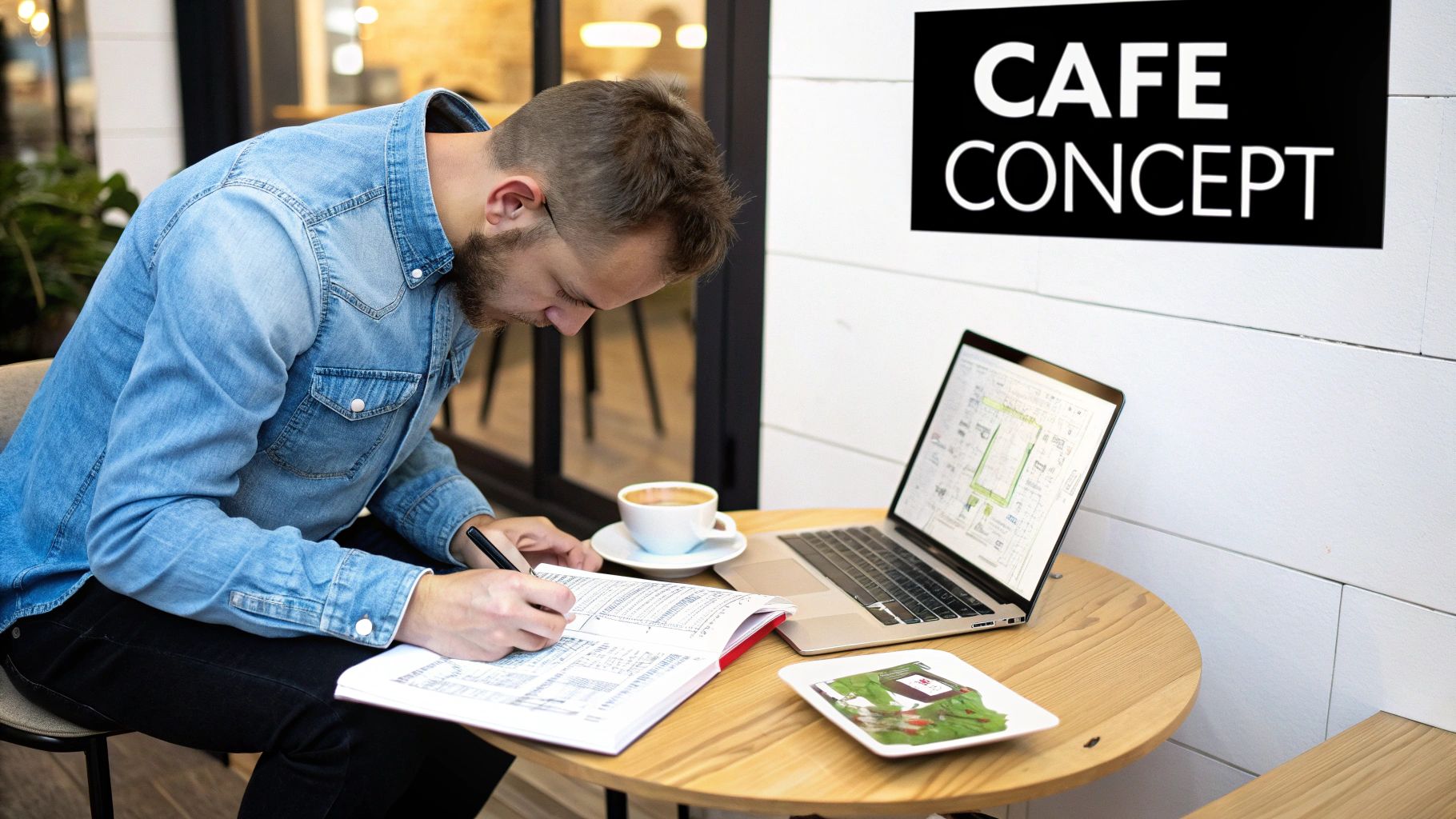
Your cafe's concept is its soul. It's the personality and the promise you make to every customer who walks through the door, and it's what will set you apart from the big chain on the corner and that other indie shop across town. Don't just plan on selling coffee; aim to sell an experience.
Start by asking yourself what kind of vibe you want to create.
- A Cozy Neighborhood Haven? Think comfy armchairs, warm lighting, and a community bulletin board. A place where locals feel like it's their second living room.
- A High-Tech Specialty Coffee Bar? This is for the true coffee nerds. A clean, minimalist space that puts the focus squarely on the art and science of brewing, with single-origin beans and fancy pour-over stations.
- A Fast-Paced Commuter Hub? Located near a train station or office park, this concept is all about speed and efficiency. The goal is to get busy professionals in and out with a great coffee and a quick bite.
Your concept has to connect with a specific crowd. Are you aiming for students who need reliable Wi-Fi and cheap refills, or are you building a "third place" for remote workers willing to pay a premium for a productive atmosphere? Nailing this down early makes every other decision—menu, pricing, decor—so much easier.
Conducting Meaningful Market Research
Once you've got a concept bubbling, it's time to see if it holds water in the real world. Good market research is more than just a few Google searches. It means hitting the pavement and becoming an observer in your potential community.
Spend a few days in the neighborhood you're eyeing. Who lives there? Who works there? What other businesses seem to be doing well?
Next, scope out your direct and indirect competition. Visit their shops at different times—the chaotic morning rush, the lazy afternoon lull, and on the weekend. Take notes on what they do great and, more importantly, where their weaknesses are. Is their service painfully slow at 8 AM? Are the chairs impossible to sit in for more than 20 minutes? Every gap you find is a golden opportunity for your cafe to shine.
A strong business plan isn't just a document for investors; it’s your operational compass. It forces you to think through every aspect of your business, from your brand's mission to your financial weak spots, before you've spent a single dollar on equipment.
Building a Comprehensive Business Plan
This is where you translate your vision into a concrete, actionable document. Think of your business plan as your roadmap—it's essential for getting a loan and keeping your launch from going off the rails. It needs to be detailed, realistic, and compelling.
A solid plan will always have these key sections:
- Executive Summary: A quick, punchy overview of your entire plan.
- Company Description: Your mission, vision, and the legal nuts and bolts of your business.
- Market Analysis: All that great research you did on your target audience, industry trends, and competitors goes here.
- Products and Services: A detailed menu with your pricing strategy.
- Marketing and Sales Strategy: Exactly how you plan to get customers in the door and keep them coming back.
- Management Team: Who's on your team and what experience they bring to the table.
- Financial Projections: This is the heart of your plan. You need startup cost estimates, projected profit and loss statements, and a cash flow analysis. To get a feel for this, checking out a sample profit and loss statement for a restaurant is a great way to guide your own forecasts.
Don't underestimate the opportunity here. The global cafe market was valued at an estimated $298.72 billion in 2023 and is expected to climb to $430.02 billion by 2030. That growth is fueled by more people living in cities and a constant demand for quality, convenient food and drinks. For a fantastic deep dive, this complete guide to starting a coffee shop is an excellent resource for anyone serious about opening their own place.
Getting Funded and Making It Legal
You’ve got a killer business plan. Now comes the part that can feel pretty daunting: finding the cash and wading through the paperwork. This is where your coffee shop dream starts becoming a real, tangible business. Getting your funding and legal ducks in a row from the very beginning saves you from massive headaches down the road and builds a solid foundation.
Exploring Your Funding Options
So, how much do you actually need? There’s no single answer. A tiny, bootstrapped operation with mostly used equipment might get off the ground for $25,000. On the other hand, a large, custom-designed cafe in a high-rent district could easily run you $350,000 or more. Your business plan’s financial forecast is your north star here—don't even think about asking for money without it.
Here are the most common ways to finance your cafe:
- Traditional Bank Loans: This is usually the first place people look. Banks will want to see everything: a bulletproof business plan, a strong personal credit score, and probably some collateral. It’s a tough process, but if you get approved, you'll have a straightforward repayment plan.
- SBA Loans: The U.S. Small Business Administration (SBA) is a fantastic resource. They don't give you the money directly, but they guarantee a chunk of the loan for their lending partners. This makes banks more willing to take a chance on a new business, which is great if your plan is solid but you don't have a long track record.
- Private Investors or Partners: Going this route means giving up a piece of your company, but it’s not just about the money. The right partner can bring invaluable experience and connections to the table. Just know that your pitch has to be perfect, showing them exactly how they'll get a return on their investment.
- Crowdfunding: Platforms like Kickstarter can be a brilliant way to raise your first funds. It’s also a marketing tool, letting you build a loyal following before you even open your doors. This works especially well if your cafe has a unique concept or a strong community angle.
Demystifying the Legal Hurdles
Once you have a line on funding, it’s time to make your business official. The maze of permits and licenses isn't glamorous, but it's absolutely non-negotiable. Trying to skip a step here can lead to hefty fines or, even worse, getting shut down.
First things first, you need to register your business. Most new cafes are set up as either a Limited Liability Company (LLC) or a sole proprietorship. I almost always recommend an LLC because it creates a legal wall between your personal assets (like your house and car) and your business debts. It's a crucial layer of protection. After that, you'll need an Employer Identification Number (EIN) from the IRS—think of it as a Social Security number for your business.
Don't look at legal requirements as roadblocks. See them as a checklist for building a legitimate, sustainable business. Getting this stuff handled upfront shows investors, future employees, and your first customers that you’re serious.
The Must-Have Permits and Licenses
The exact paperwork you'll need will change based on your city and state, but here's a list of the usual suspects. Your first call should be to your local health department and city clerk's office to get their definitive list.
- Business License: The basic permission slip to operate any business in your town.
- Food Service License: Your local health department will issue this after an inspection confirms your space is up to code for safety and sanitation.
- Food Handler’s Permit: You and every single employee touching food or drinks will need one. It usually just requires a short online course and a test.
- Certificate of Occupancy: This is a document that proves your building is safe for people to be in and meets all local building codes.
If you ever need a little motivation during this paper-chasing phase, just remember the size of the prize. The global out-of-home coffee market—that’s sales from places like yours—is projected to be a staggering $376.70 billion in 2025. The opportunity is immense for a well-run, legally sound cafe. You can dig into more coffee industry statistics to get a better feel for the market you're about to enter.
Finding the Perfect Location and Designing Your Space
Your cafe’s location is so much more than just a physical address. It’s the stage where your brand comes to life. I’ve seen great concepts fail in bad locations and mediocre ones thrive in the right spot—it’s that important. The right spot can make your business, while the wrong one can break it before you even brew your first pot of coffee.
Finding that perfect site means figuring out where your ideal customers already spend their time. Sure, high foot traffic is great, but the type of foot traffic is what really matters. A busy sidewalk in the financial district is a totally different beast than a street buzzing with college students or a quiet corner in a sleepy residential neighborhood. The location has to feel like a natural fit for the cafe concept you’ve already poured so much thought into.
The Art and Science of Site Selection
Think of yourself as a location scout. Does the space have that “it” factor? Visibility is everything. A corner spot with huge windows is basically a free billboard, drawing people in from two different streets. Ask yourself the practical questions: Is it easy to get to? Is there parking nearby, or is it close to a bus stop? Never, ever underestimate the power of convenience.
To get beyond a gut feeling, you have to do your homework and dig into the data.
- Get to Know the Neighborhood: Look at the local demographics. What are the income levels, age groups, and common professions? If you’re planning a high-end specialty coffee bar, a low-income area is going to be a tough climb.
- Scope Out the Competition: Are there other cafes nearby? Don't let that scare you off immediately. Sometimes a cluster of cafes can create a “coffee destination,” drawing more people to the area. But you absolutely must have a clear reason why customers should choose you.
- Become a Traffic Analyst: This is my favorite part. Actually go and spend time at potential locations. Sit there during the frantic morning rush, the quiet midday lull, and in the evening. See how the energy of the area ebbs and flows. You’ll learn more in a few hours of observation than you will from any report.
Negotiating a Lease That Works for You
Once you’ve found a place that feels right, the lease is your next big hurdle. This is not the time for DIY. These documents are packed with jargon and clauses that can trip you up for years, so please, get a lawyer who specializes in commercial real estate to look it over.
And don't be afraid to negotiate! Landlords expect it. Go back and forth on the base rent, the length of the lease, and make sure you have options for renewal. Get crystal clear on who pays for what—utilities, building maintenance, and especially the costs to build out the space.
A well-negotiated lease is one of your most powerful tools for long-term financial health. Securing favorable terms, like a few months of free rent during your build-out phase, can provide critical breathing room for your new business.
Designing a Functional and Inviting Cafe Layout
Alright, you have the keys. Now it’s time to design the interior. Your cafe's layout has to do two things perfectly at the same time: give customers a wonderful experience and let your staff work like a well-oiled machine. A beautiful space that causes operational bottlenecks is a design failure, period.
Flow is everything. Walk through the customer's journey in your mind, from the second they open the door to the moment they leave. Where do they order? Where do they wait for their drink without feeling awkward or in the way? Where do they sit?
At the same time, you have to map out your team's workflow behind the counter. The placement of the espresso machine, grinders, fridges, and sinks should create a logical, step-by-step path for your baristas. An optimized layout means less stress for your staff, faster service for your customers, and a better cup of coffee.
Applying thoughtful commercial kitchen design and layout principles is what creates this harmony between the front-of-house vibe and back-of-house efficiency.
Creating an Atmosphere That Sells
Finally, let's talk about the vibe. This is where your brand’s personality really comes out to play. The lighting, music, furniture, and decor all have to work together to create a feeling. Warm, soft lighting can make a space feel cozy and intimate, while bright, natural light gives off an energetic, modern feel.
Think about your seating. You need a mix. Offer small two-person tables for dates, large communal tables for study groups, and some comfy armchairs for people who want to settle in with a book. Every little detail, from the art on the walls to the weight of the ceramic mugs you use, adds up to the total experience. Your goal isn't just to build a place people visit; you want to create a space they want to return to, again and again.
Equipping Your Cafe And Sourcing Key Supplies
Alright, you've got your location locked down and a brilliant layout in mind. Now it's time for the fun part: filling that empty space with the workhorses of your cafe—the equipment—and finding the perfect ingredients that will make your menu sing.
Think of your equipment as the engine room of your operation. The right choices here will directly impact how smoothly your cafe runs, the quality of every drink you serve, and your bottom line for years to come. At the same time, the suppliers you choose are more than just vendors; they're your partners in quality. They are the source of the raw materials that define your customer's experience, from the first sip of espresso to the last bite of a croissant.
This phase is all about making smart, strategic investments. You're balancing upfront costs with long-term value, building a resilient supply chain, and setting up a kitchen that can handle the morning rush with grace.
Must-Have Equipment For Your Cafe
Every cafe, no matter the concept, relies on a core set of gear to get the job done. While your specific menu will dictate the full list, some pieces are simply non-negotiable. The espresso machine, for instance, is the heart and soul of most cafes and often the single biggest line item on your equipment budget.
Making the right call on this machine is huge. Are you anticipating a line out the door every morning? A machine with multiple group heads might be essential. Or is your vibe more relaxed, where a smaller, high-quality unit will do the trick? Staying informed about the latest trends in restaurant equipment will help you make a future-proof investment, and knowing where to find exclusive deals can save you thousands.
Beyond the star of the show, here's what else you'll almost certainly need:
- High-Quality Grinders: Don't skimp here. You'll want at least one for espresso and another for your drip or pour-over coffees.
- Drip Coffee Brewer: This is your workhorse for serving classic black coffee quickly and efficiently.
- Refrigeration Units: Plan for an under-counter fridge for milk, a display case for pastries and grab-and-go items, and a larger unit in the back for your main inventory.
- Ice Machine: You can’t make iced lattes, cold brew, or frappes without it. This is a must.
- Dishwasher and Sinks: A commercial-grade dishwasher and a three-compartment sink aren't just good ideas; they're required by the health department.
- Point of Sale (POS) System: This is the command center of your cafe. It takes orders, processes payments, and gives you invaluable data on what's selling.
New vs Used Cafe Equipment: A Comparison
One of the biggest questions you'll face is whether to buy your equipment new or used. New equipment comes with warranties and the latest tech, but the price tag can be steep. Used gear can save you a fortune upfront, but it might come with hidden problems or a shorter lifespan. There's no single right answer; it often makes sense to mix and match.
| Equipment Type | Advantages of Buying New | Advantages of Buying Used |
|---|---|---|
| Espresso Machine | Warranty, reliability, latest technology, training/support. | Significant cost savings (30-50% less), proven models. |
| Grinders | Precision, consistency, manufacturer warranty. | Very low cost, simple mechanics make repairs easier. |
| Refrigeration | Energy efficiency, warranty, no prior history of issues. | Substantial upfront savings, readily available. |
| Ovens/Ranges | Perfect condition, better temperature control, warranty. | Huge cost difference, great for less critical functions. |
Ultimately, a hybrid approach often works best. You might splurge on a new, high-end espresso machine that you’ll rely on for thousands of shots a day, but save money by purchasing a used back-of-house refrigerator or prep tables.
Sourcing High-Quality Coffee And Supplies
Your suppliers are your partners. A cheap, unreliable vendor can destroy your reputation faster than you can say "out of stock." This is especially true when it comes to your coffee. Before you even talk to a roaster, it’s worth understanding Arabica vs. Robusta beans to get a handle on the foundational flavor profiles you want to build your menu around.
Start by reaching out to local and national coffee roasters. Get samples. Ask them about their sourcing ethics, roasting philosophy, and delivery schedules. A great roaster is just as obsessed with quality as you are and will often provide training and ongoing support for your team.
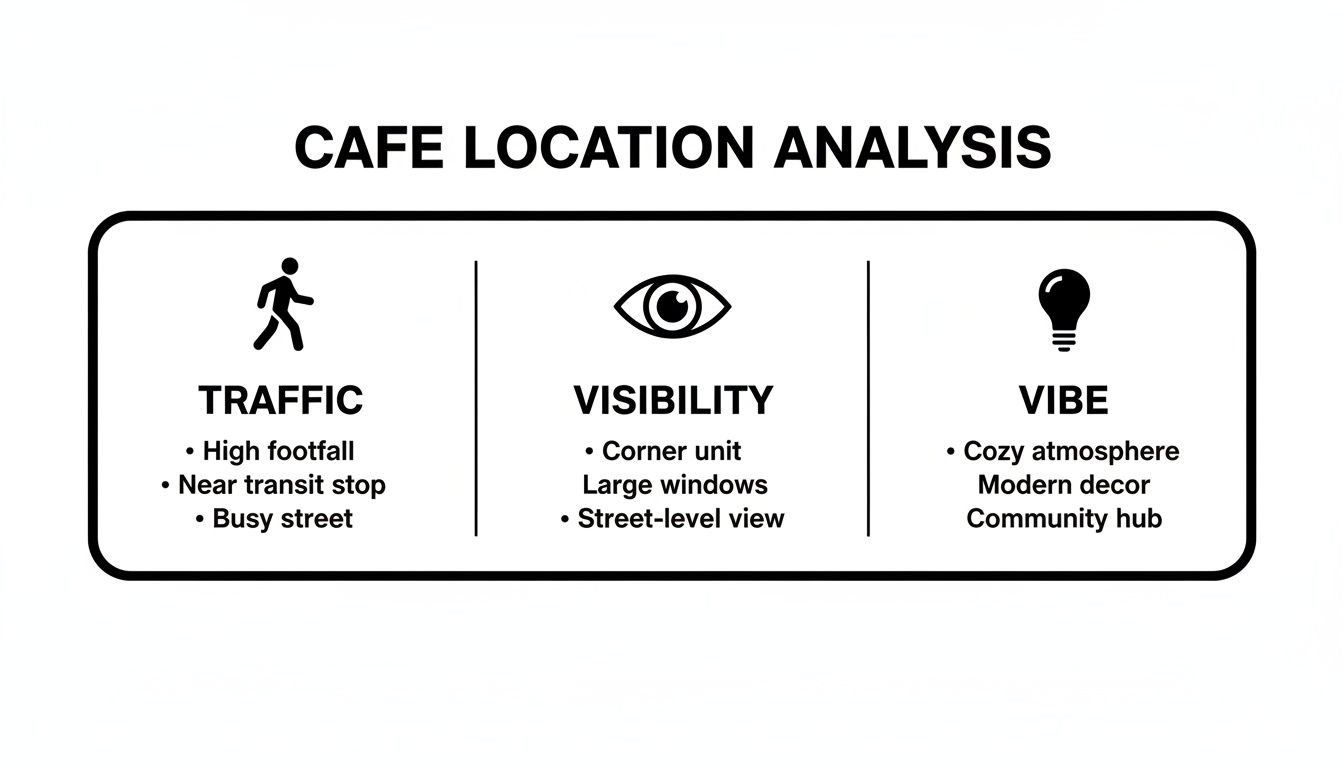
Just as this infographic shows how traffic and visibility impact your physical space, your choice of suppliers will directly impact your menu's quality and your operational flow.
From there, you'll need to lock down reliable sources for everything else:
- Dairy and Dairy Alternatives: Freshness is everything. Find a local dairy or supplier with consistent delivery.
- Baked Goods: Decide early on: will you bake everything from scratch or partner with a fantastic local bakery?
- Syrups and Sauces: Quality matters. Taste test different brands to find the best balance of flavor and cost.
- Paper Goods: Cups, lids, sleeves, and napkins are a major recurring expense. Shop around, but don't sacrifice quality for a few pennies.
Here's a piece of hard-won advice: Building strong, loyal relationships with a handful of key suppliers is far more valuable than constantly chasing the absolute lowest price. When a supply chain issue hits—and it will—a partner who knows and values your business will be the one who comes through for you.
Building Your Team and Launching Your Brand
You can have the best equipment and the perfect location, but they'll only get you so far. The real heart and soul of your cafe are the people who greet customers every day and the brand story that connects with your community. A fantastic team and a memorable brand are what turn first-time visitors into loyal regulars.
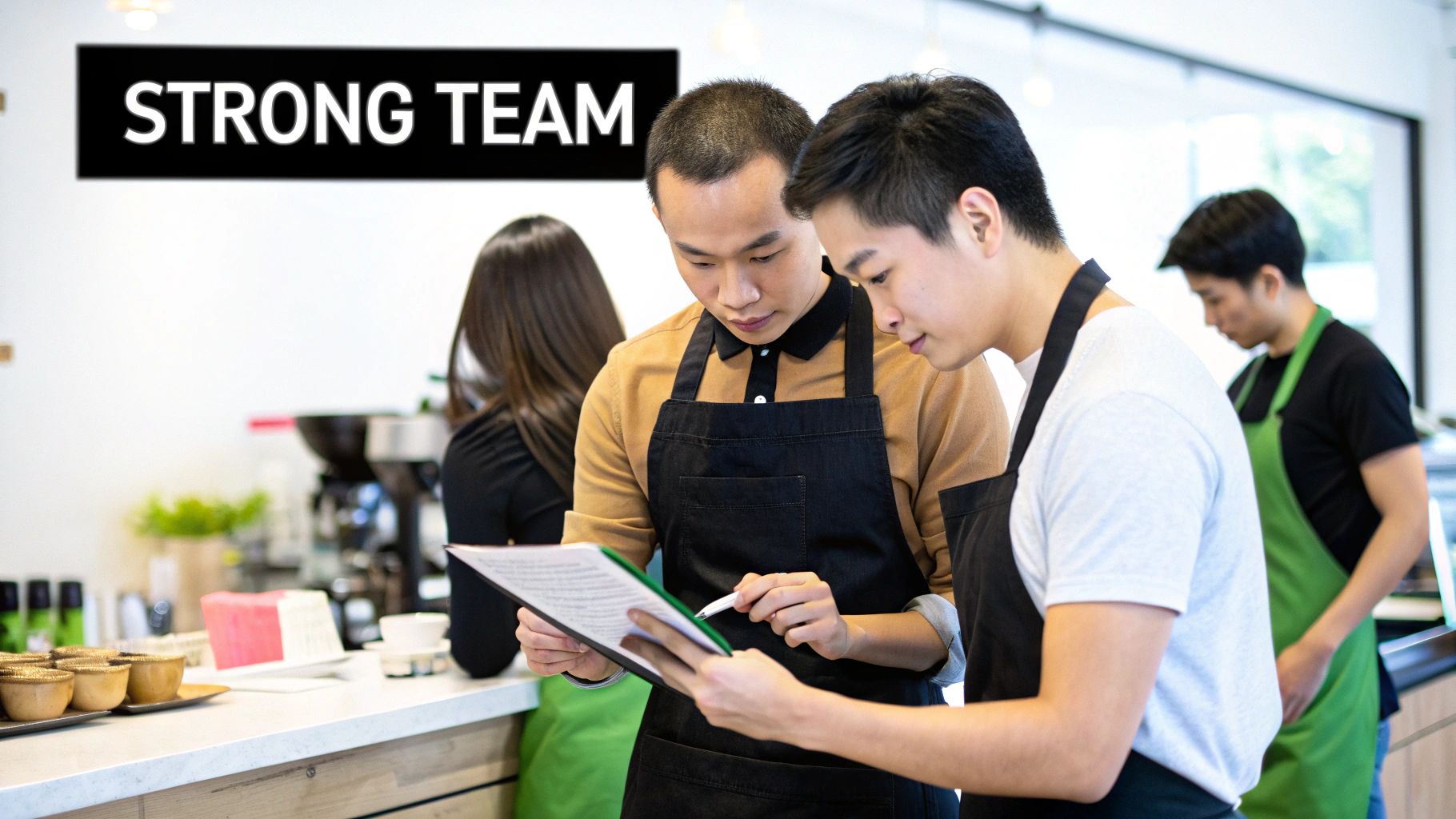
This is where you build the human element of your business. It’s about finding employees who are not just skilled but genuinely passionate about what you're trying to create. At the same time, you’ll be shaping a brand identity that tells people exactly who you are, making a lasting impression long before your doors even open.
Assembling Your A-Team
Your first hires are everything. They set the tone for your cafe's culture and customer service from day one. You’re not just looking for someone who can pull a decent espresso shot; you need reliable, customer-focused people who actually enjoy making someone’s day a little better.
When you write your job descriptions, go beyond the technical skills. Use language that reflects your brand’s personality. Instead of a dry "must have customer service skills," try something with more flavor: "You’re passionate about creating a welcoming atmosphere and turning a morning coffee run into a highlight of someone’s day." This small shift helps attract candidates who click with your values, not just people looking for any old job.
In the interviews, ditch the standard questions. Ask about real-world scenarios to see how they think on their feet. For example: "A customer says their latte isn't hot enough, but you know you steamed the milk to the right temperature. How do you handle it?" Their answer reveals far more about their customer service instincts than a simple "yes" to having experience.
The Power of Training and Clear Procedures
Hiring great people is only half the battle. If you want consistent quality and an exceptional customer experience every single time, you need solid training and clear Standard Operating Procedures (SOPs). Your customers should get the same perfectly crafted cappuccino whether it's made by your head barista or a new trainee.
SOPs aren't complicated; they're just documented, step-by-step instructions for all the routine tasks in your cafe. They eliminate guesswork and empower your team to work confidently and efficiently.
Create SOPs for these key areas:
- Opening and Closing Duties: A detailed checklist ensures nothing is missed, from firing up the espresso machine to cashing out the register.
- Drink Recipes: Document the exact measurements, temperatures, and steps for every drink on your menu. "Two pumps of vanilla" needs to mean the same thing to everyone.
- Customer Service Protocols: Outline how to greet customers, manage a rush, and—most importantly—handle complaints gracefully.
- Cleaning and Sanitation: A clear schedule for daily, weekly, and monthly cleaning tasks is non-negotiable for maintaining health standards.
Investing in comprehensive training isn't an expense; it's an investment in your brand's reputation. A well-trained, confident team delivers consistent quality, which is the bedrock of customer loyalty and positive word-of-mouth.
Crafting a Brand People Remember
Your brand is so much more than a cool logo. It’s the entire experience you offer—the vibe customers get when they walk in, the tone of your social media posts, and the story you tell. It’s what makes your cafe your cafe.
Start by nailing down your brand story. Why did you start this business? What are you passionate about? Maybe you’re dedicated to sourcing beans directly from a single farm in Colombia or you want to create a community hub for local artists. This narrative gives your business soul and helps people connect with you on a personal level.
This story should then influence every single visual element of your brand to create a cohesive identity. This includes your:
- Logo and Color Palette
- Menu Design
- Website and Social Media Profiles
- Interior Decor and Staff Uniforms
Building Buzz Before You Open
The goal is to have a line out the door on opening day, and that doesn't happen by accident. Pre-launch marketing is all about building anticipation and creating an audience before you even sell a single cup of coffee. You should start generating buzz at least 30–60 days before you plan to open.
First things first, claim your social media handles on platforms like Instagram and Facebook, even if your space is still a construction zone. Start posting behind-the-scenes photos and videos of the build-out. Introduce your new hires, share your excitement about the coffee you’ll be serving, and run a countdown to your grand opening.
Get out and engage with your local community. Introduce yourself to the owners of neighboring businesses. A great move is to host a "soft opening" exclusively for friends, family, and local influencers a few days before the official launch. It’s the perfect way to work out any operational kinks and generate some early, positive reviews. This initial momentum can be the perfect launching pad for a successful opening.
Got Questions About Starting a Cafe? We've Got Answers.
Jumping into the coffee world naturally brings up a ton of questions. I hear them all the time. People wonder about everything from how much money they’ll actually make to the mistakes that can sink a new shop before it even gets going. Let’s tackle some of the biggest questions aspiring cafe owners have.
What’s the Most Profitable Thing I Can Sell?
If you’re looking at pure, straight-up profit margins, nothing beats basic brewed coffee and espresso drinks. Seriously. A simple black coffee, a latte, or a cappuccino can easily clear an 80% margin. Think about it: the core ingredients—water, coffee beans, and maybe a little milk—cost very little compared to what people happily pay for a great cup.
But here's the thing: high margins aren't the whole story. You also need to think about volume and how much each person spends. This is where food comes in. Sure, the margins on a croissant or a sandwich are lower, but they are absolutely essential. They get customers to spend more, turning a quick caffeine fix into a proper meal and seriously bumping up your daily revenue.
How Much Money Do I Really Need to Open a Small Cafe?
This is the big one, isn't it? The honest answer is... it depends. The cost to open a cafe can swing wildly based on your city, the size of your space, and whether you're buying shiny new gear or hunting for pre-loved bargains.
To give you a clearer picture, here’s a realistic look at the numbers:
- Bare-Bones Startup (Think a small kiosk or a tiny spot with a few stools): You're likely in the $25,000 to $75,000 range. This means you’re keeping the space small, the menu simple, and getting creative with used equipment.
- Mid-Sized Cafe (A comfortable spot with seating and a full menu): This is a bigger leap, typically from $80,000 to $350,000. This budget accounts for a proper build-out, brand-new core equipment (like that beautiful espresso machine), and enough cash to cover payroll and inventory for the first few months.
That budget needs to cover it all: rent deposits, renovations, permits, and enough operating cash to get you through those critical first months before you're consistently in the black.
If there's one financial mistake I see over and over, it's underestimating day-to-day operating costs. Your startup fund absolutely must include a safety net of at least three to six months' worth of expenses. It's the key to surviving the early days with your sanity intact.
What Are the Biggest Mistakes New Cafe Owners Make?
Learning from others' mistakes is way cheaper than making them all yourself. New owners tend to trip up in a few predictable ways.
For starters, underestimating costs is a classic. This isn't just about the initial build-out; it's the ongoing, day-to-day expenses that really bite. A meticulously detailed budget with a solid contingency fund is your best friend here.
Next up is picking the wrong spot. A bad location can kill a cafe before it even has a chance. A place with zero visibility or that’s a pain to get to will never get the foot traffic it needs, no matter how cheap the rent is.
Finally, and this one is huge, a lot of new owners simply forget to market their business. You could have the most amazing coffee in the city, but if nobody knows you're there, it doesn't matter. You have to start building buzz before you open and keep that momentum going by connecting with your community. It’s not optional; it’s essential.
Getting your cafe equipped is one of the biggest hurdles you'll face. At Encore Seattle Restaurant Equipment, we help restaurant owners and chefs discover the latest news and exclusive deals on restaurant equipment and supplies so you can stay informed. We specialize in providing high-quality new and used equipment to bring your dream to life without emptying your pockets. Check out our huge selection and flexible financing options to get your cafe off to a strong start.