
Protect Your Food: how to prevent freezer burn with smart storage
The key to stopping freezer burn dead in its tracks is a simple, two-part strategy: get as much air out of your packaging as possible and lock in a steady, ice-cold freezer temperature. Nailing these two things prevents the moisture loss that ruins food, protecting its flavor, texture, and ultimately, your profits.
Why Freezer Burn Is Costing Your Kitchen Money
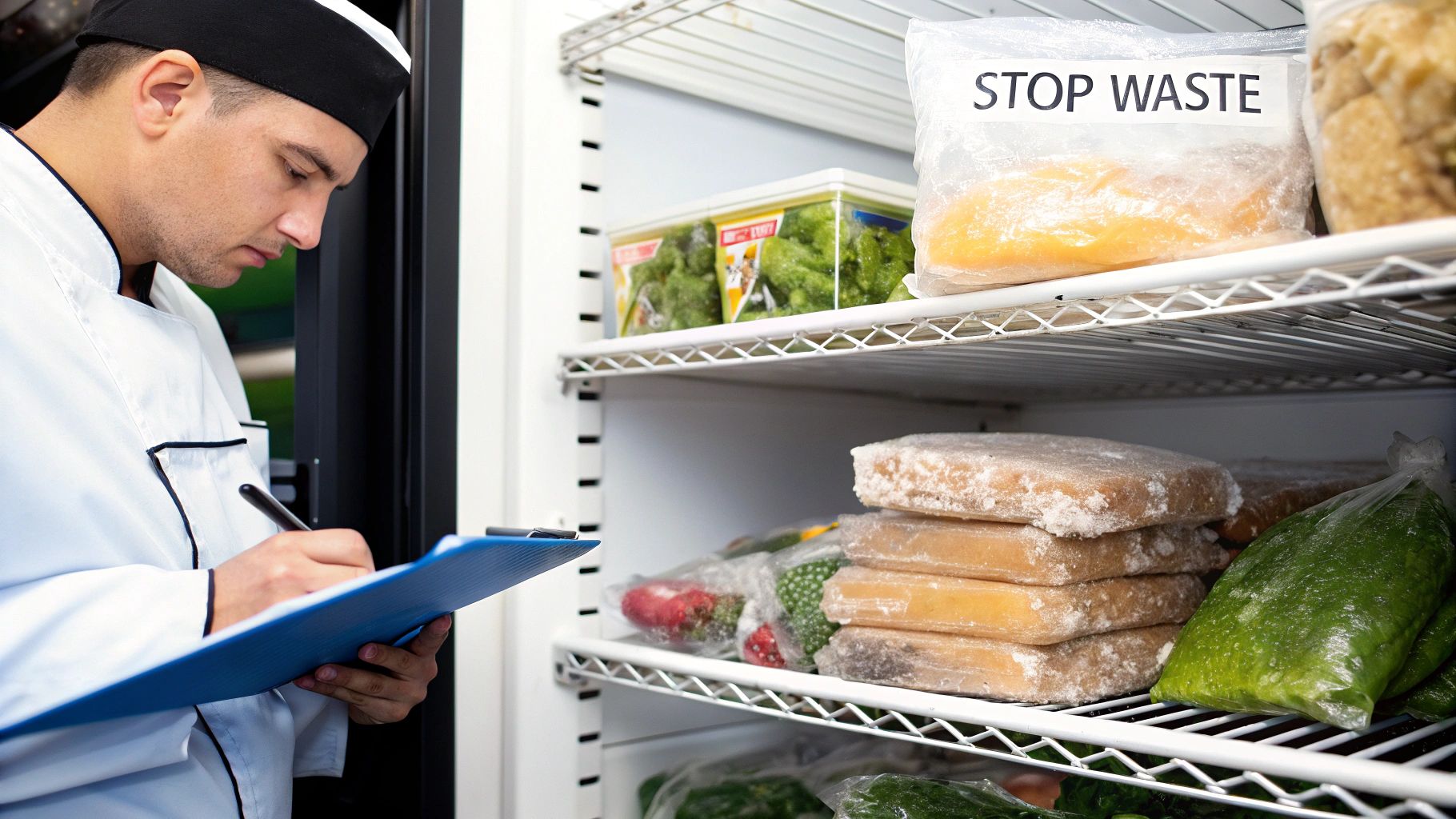
In the chaos of a busy service, freezer burn can seem like a small problem. A chef might see a few ice crystals on a steak or a dry, discolored spot on a chicken breast and just trim it off. But the real issue isn't what it looks like; it's a direct hit to your restaurant's bottom line. Every item that gets tossed because of poor quality is money straight into the bin.
This silent profit killer comes down to a basic scientific process called sublimation. It's what happens when ice on the surface of your food turns straight into a gas, skipping the melting stage entirely. As that moisture escapes, the food dries out, leaving you with a tough, leathery, and off-tasting product.
The Financial Impact of Wasted Inventory
The scale of this problem is much bigger than most restaurant owners realize. Between shoddy packaging and fluctuating freezer temps, we're talking about billions in food waste every year. A 2021 study found that freezer burn is responsible for up to $5.89 billion worth of discarded frozen food annually in the U.S. alone. Frozen goods might be a small part of the total food waste picture, but those losses add up fast in any professional kitchen.
This waste eats directly into your food costs. Imagine you're stocking premium fish fillets at $20 a pound. If you lose just 10% of that inventory to freezer burn each month, you're not just losing the product itself. You're also losing the potential revenue and the labor you paid to prep it.
Freezer burn is more than a quality control issue; it is an invisible tax on your inventory. It slowly erodes the value of your stored assets, turning premium ingredients into unsalvageable waste without a single sale.
How Freezer Burn Affects Your Reputation
Beyond the dollars and cents, freezer burn can tarnish something far more precious: your restaurant's reputation. Nobody wants to be served a tough, flavorless piece of meat or a dessert with a grainy, icy texture. One bad dish can lead to a negative review that lives online forever.
Consistently great food is non-negotiable, and that starts with managing every ingredient properly the moment it comes through your back door. Understanding how to protect your product is a fundamental part of good cold chain management. Staying informed about industry trends and best practices is crucial for any chef looking to maintain the highest standards.
At the end of the day, preventing freezer burn is just smart business. It’s about protecting your profits, guaranteeing menu consistency, and serving the kind of food that keeps customers coming back.
Keeping Your Freezer Environment Rock-Solid
Great packaging is only half the battle. If your freezer's temperature is all over the place, you're still going to lose the fight against freezer burn. The magic number you're aiming for is a constant, unwavering -18°C (0°F). This isn't just a suggestion—it's the industry standard for keeping your food's texture, flavor, and color exactly as they should be.
Even small temperature swings are the enemy. Every time the door opens during a busy service, a defrost cycle kicks in, or someone puts a still-warm container inside, the temperature creeps up. That slight warming is all it takes for moisture to leave your food, only to re-freeze on the surface as those tell-tale ice crystals.
Are Your Freezers Pulling Their Weight?
You can't just set it and forget it. The thermostat on the unit might be telling you one thing, but what's actually happening inside? A simple way to find out is to stick a separate, calibrated freezer thermometer in each unit. Keep an eye on it for a week, paying close attention to what happens during your busiest times and overnight.
If you're seeing the temperature bounce around by more than a few degrees, you've got a problem. In my experience, it's usually one of a few culprits:
- Over-stuffing: When you pack a freezer too tight, cold air can't circulate. This creates warm pockets where freezer burn can take hold.
- Bad Seals: Worn-out door gaskets are a huge energy drain. They let cold air out and, worse, let warm, humid air in, which is fuel for ice crystal formation.
- Tired Compressors: An old or struggling compressor just can't keep up with the demands of a busy kitchen, leading to inconsistent cooling.
It's not always the big temperature swings that get you. A freezer's normal compressor cycle creates tiny, almost unnoticeable temperature changes. Over time, these "micro-freezer-burn" cycles encourage the growth of large, destructive ice crystals that slowly ruin your food's quality from the inside out.
Why Stable Temperatures Are a Game-Changer
Holding that steady -18°C (0°F) does more than just protect your inventory—it protects your bottom line. An emerging industry trend involves technology like Thermal Energy Storage (TES) systems, which help restaurant owners maintain that stability. If you want to get into the nitty-gritty, our guide on the ideal temperature of a walk in freezer is a great resource.
These systems use a special Phase Change Material (PCM) that freezes overnight (during off-peak energy hours) and then slowly releases its "cold" energy during the day. This can absorb up to 85% of the heat that gets in when doors are opened, meaning your compressor doesn't have to work nearly as hard. For some kitchens, that translates to an energy bill reduction of up to 35% while virtually eliminating those damaging micro-freezing cycles.
The table below shows just how much damage those temperature swings can do to common items on your inventory list.
How Temperature Swings Affect Common Frozen Foods
| Food Item | Ideal Storage Temp | Impact of Minor Fluctuation (2-3°C) | Impact of Major Fluctuation (>5°C) |
|---|---|---|---|
| Beef Steaks | -18°C (0°F) | Minor discoloration on edges, slight ice crystal formation. | Noticeable gray/brown patches, tough texture after cooking. |
| Chicken Breasts | -18°C (0°F) | Surface becomes slightly dry, small ice patches visible. | Spongy texture when thawed, significant moisture loss. |
| Fish Fillets | -18°C (0°F) | Edges may appear frayed, slight "fishy" odor develops. | Severe discoloration, mushy texture, and strong off-odors. |
| French Fries | -18°C (0°F) | Clumping together, ice crystals form inside the bag. | Become limp and soggy when cooked, absorb excess oil. |
| Ice Cream | -18°C (0°F) | Gummy or icy texture develops on the surface. | Large, crunchy ice crystals throughout, shrunken appearance. |
As you can see, even a small deviation can start the degradation process. A stable environment is truly non-negotiable for quality.
Smart Habits for a Stable Freezer
Even if a major equipment upgrade isn't in the budget right now, you can still make a huge difference with some smart workflow habits. Train your team to be quick and decisive. Open the freezer, grab what you need, and close it immediately.
And never, ever put hot food directly into the freezer. It's a recipe for disaster. Let items cool down properly first, either in a blast chiller if you have one or using an old-fashioned ice bath. A little kitchen discipline goes a very long way in protecting your investments.
A Chef's Guide to Airtight Packaging
When it comes to fighting freezer burn, your packaging is your first and last line of defense. It’s the single most important barrier standing between your valuable product and the cold, dry freezer air. If your seal isn't airtight, even a rock-solid freezer temperature won't save your food. The mission is simple: get all the air out, and make sure it stays out.
Think of air as the enemy. It's what carries moisture away from your food. When you leave air pockets in a bag or container, the moisture in the food turns into a vapor, escapes into that pocket, and then refreezes as ice crystals right on the surface. That’s the classic sign of freezer burn, and it’s what leaves you with a tough, tasteless product.
Choosing Your Method
In a busy kitchen, chefs need reliable and efficient ways to get a perfect seal. What you choose really comes down to what you're trying to store.
- Vacuum Sealing: This is the undisputed champion, especially for proteins. Steaks, chicken breasts, fish fillets—a vacuum sealer pulls out nearly every bit of air, creating a second skin that locks moisture in. It might feel like a big investment up front, but you’ll see the return quickly in how much product waste it eliminates.
- Heavy-Duty Freezer Bags: Don't just grab any old plastic bag. You need the thick, durable kind made specifically for the freezer. A great trick for sealing these is the water displacement method. Put your food in the bag and slowly lower it into a container of water, keeping the zip-top just above the surface. The water's pressure pushes the air out, letting you get a surprisingly tight seal before you zip it shut.
- Plastic Wrap and Foil: For individual portions like burger patties, cookie dough, or slices of cake, a double-wrap is the way to go. First, wrap the item tightly in plastic wrap, pressing it right against the surface to push out any air. Then, give it a second, tight layer of heavy-duty aluminum foil. This one-two punch creates a fantastic barrier against both moisture and oxygen.
Of course, picking the right method is just one part of the equation. A crucial aspect is selecting the right containers for food packaging from the start, which can make all the difference in extending product life.
The rule in my kitchen has always been simple: when you think it's wrapped well enough, wrap it one more time. That extra layer is the cheapest insurance policy you can buy against losing product to freezer burn.
This process flow shows just how quickly things can go wrong.
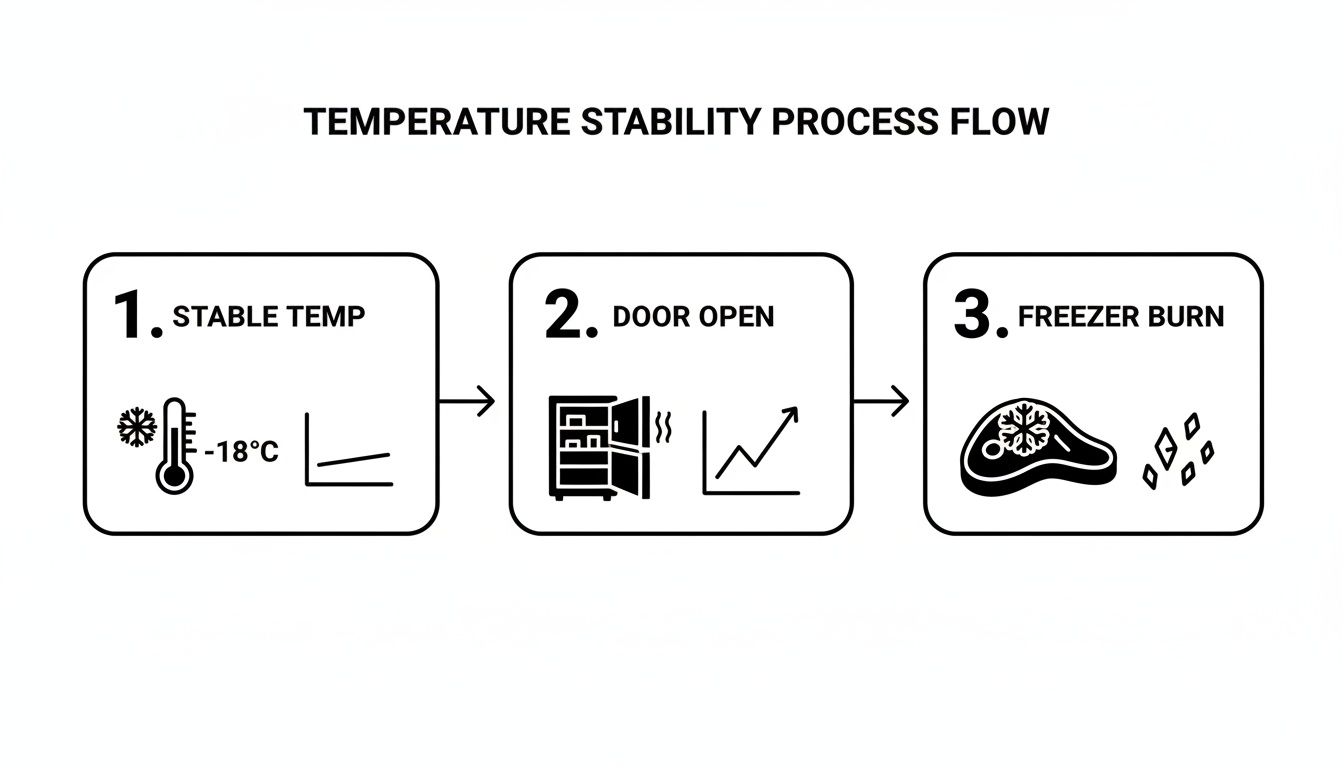
As you can see, even a brief event like leaving the door open can spike the temperature and kick off that moisture-loss cycle that ruins your food.
Packaging for Different Food Types
You can't use a one-size-fits-all approach. Your packaging strategy needs to be smart and adapt to the food you're working with. A hearty stew and delicate pastries need very different handling.
For liquids like soups, stocks, and sauces, always leave about an inch of headspace at the top of your container. Liquids expand as they freeze, and if you don't give them that room, you're asking for a cracked container and a broken seal. For an even better long-term solution, freeze the liquid solid in a container, then pop the frozen block out and vacuum seal it.
Delicate items, like fish fillets or handmade pasta, need a bit more finesse. I always "flash freeze" them first. Lay them out in a single layer on a parchment-lined sheet pan and freeze them until they're solid. Then you can package them together in a freezer bag or vacuum seal them. This keeps them from sticking together in a giant clump and lets you pull out single portions without having to thaw the whole batch. It's a fundamental technique for protecting your most sensitive inventory.
Turning Chaos Into Order: Smart Freezer Organization
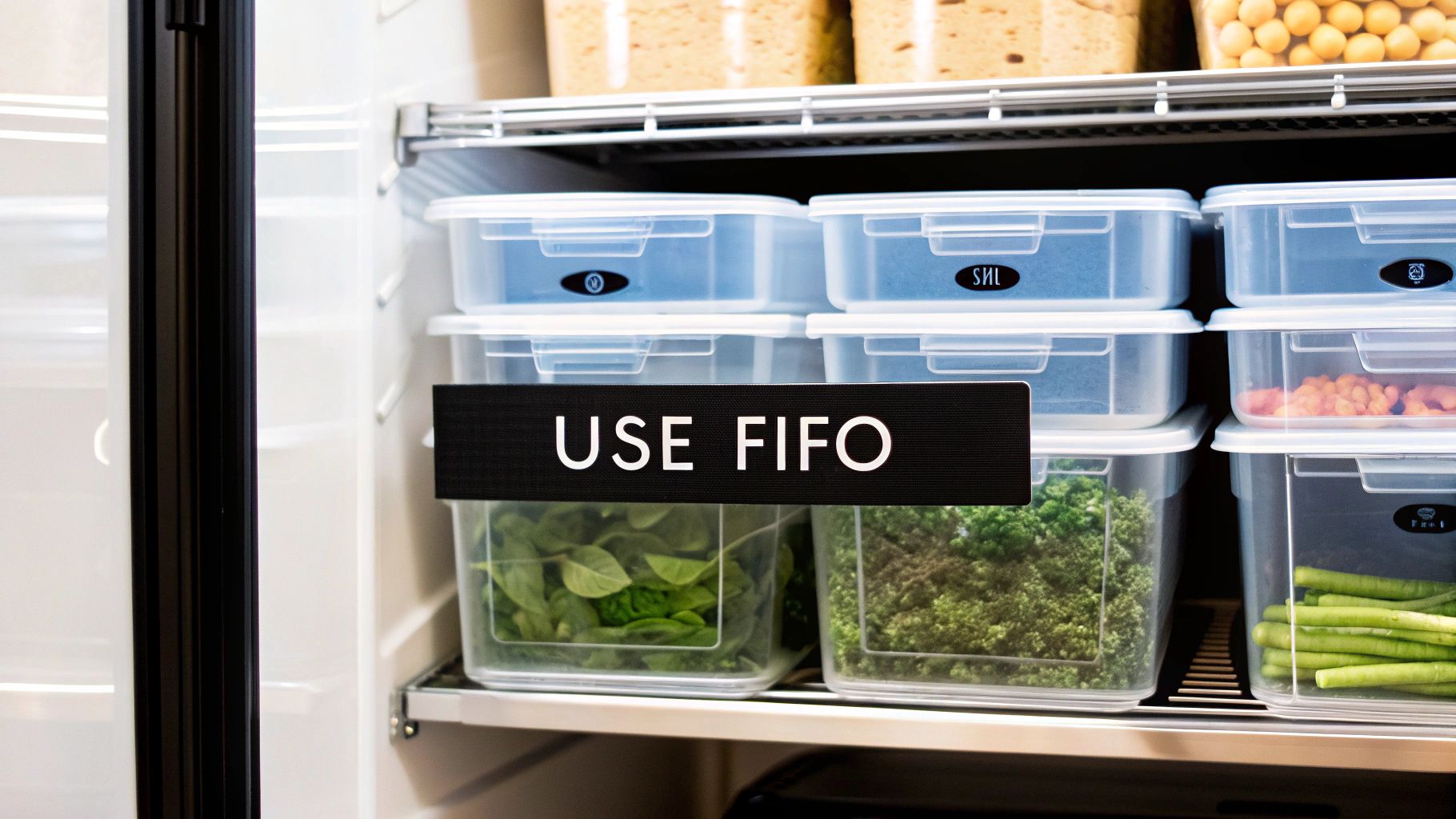
Even the best airtight packaging can't save food buried in a chaotic freezer. If you can’t find it, you can’t use it. Smart organization is what makes all your other efforts pay off, ensuring that older items don't get shoved to the back and forgotten until they're covered in ice crystals.
A well-run freezer is all about visibility and creating a simple workflow. The goal is a system your whole team can understand and follow, cutting down on waste and making sure ingredients are used when they're at their best.
Mastering the FIFO System
The First-In, First-Out (FIFO) method is the absolute gold standard in any professional kitchen. The concept is dead simple: use the oldest stuff first. The challenge, of course, is making it happen when you're dealing with a packed walk-in or a deep chest freezer during a busy service.
The trick is to make the system physical, not just theoretical. Create designated zones within your freezer. New products have one place to go—the back. When your chefs need an ingredient, they pull from the "use first" zone at the front. As you use items, you physically rotate the older stock forward.
A well-implemented FIFO system isn't just about dates on a label; it's a physical workflow that forces your team to use older stock first. When new inventory arrives, it should always go behind the existing product, never in front of it.
For this to work, labeling is everything. Every single container needs a clear, easy-to-read label. No exceptions.
- Product Name: Be specific. "8oz Sirloin Steaks" is a lot more helpful than just "Steak."
- Prep Date: The day it was packaged and put into the freezer.
- Use-By Date: When it needs to be used by for the best quality.
Grab a grease pencil or a permanent marker that can handle the cold and condensation. This one simple habit gets rid of the guesswork and helps your staff do the right thing every time. If you need more ideas, our guide on how to organize a chest freezer has some great practical tips.
The Importance of Airflow and Grouping
A freezer crammed to the ceiling is a recipe for disaster. Cold air needs room to move around to keep the temperature steady from top to bottom. When you block the vents or pack items too tightly, you create warm pockets where freezer burn loves to take hold. Always try to leave a few inches of breathing room between your inventory and the freezer walls.
Grouping similar items together is another pro move that saves time and prevents cross-contamination.
- Raw Meats: Store beef, poultry, and pork on the bottom shelves so they can't drip onto anything else.
- Seafood: Give it its own space to contain strong odors.
- Prepped Vegetables & Fruits: Keep these together so they're easy to grab for service.
- Sauces & Stocks: Store liquids together, making sure they're clearly labeled.
This kind of logical grouping not only makes prep faster but also lets you see what you have with a quick glance. Taking the time to apply smart organization principles to your freezer space pays off in less waste and a more efficient kitchen.
Choosing Equipment to Win the Fight Against Freezer Burn
While good habits like proper packaging and rotation are your daily defense, the restaurant equipment and supplies you choose are the bedrock of your entire freezer burn prevention strategy. Think of buying a commercial freezer not just as an operational cost, but as a long-term investment in the quality of your food, the efficiency of your kitchen, and ultimately, your bottom line.
The right gear actively creates an environment where freezer burn can't get a foothold, protecting your valuable inventory from day one.
Blast Freezers Versus Storage Freezers
Not all freezers are built the same, and knowing the difference can make or break your product quality. A blast freezer, sometimes called a shock freezer, is an absolute game-changer for locking in texture and flavor. Its whole purpose is to freeze food at an incredible speed, pushing it through the temperature "danger zone" way faster than any standard freezer could.
Why does that speed matter? This rapid-fire freezing process creates tiny, uniform ice crystals inside the food. Smaller crystals mean less damage to the cell walls. When it's time to thaw, that product holds onto its moisture, its texture, and its taste.
Your standard storage freezers, on the other hand, are only designed to keep frozen food frozen. If you try to freeze fresh product in a regular walk-in, it's a slow-motion process. This allows large, jagged ice crystals to form, which tear up cell walls and leave you with a mushy, watery mess after thawing.
Think of it this way: a blast freezer is what you use for preservation, capturing peak quality. Your walk-in or reach-in is the vault where that quality is stored until it’s ready for the line.
Key Features of a Quality Commercial Freezer
When you're shopping for equipment, whether it's new or used, you have to look past the price tag. Focus on the features that will actively fight freezer burn for you. A reliable unit will pay for itself over and over again by cutting down on waste and keeping your product consistent.
Here's what you should be looking for:
- Powerful Compressors: A tough, responsive compressor is the heart and soul of a good freezer. It has to be able to recover quickly every time the door opens, pulling the temperature right back down to a steady -18°C (0°F). This minimizes the temperature swings that pull moisture out of your food.
- Thick, High-Density Insulation: Quality insulation in the doors and walls is non-negotiable. It's the thermal barrier that keeps the ambient heat of your busy kitchen out, preventing the compressor from running constantly and struggling to keep up.
- Precise Digital Controls: Forget about those old-school dial thermostats. Modern digital controls give you an exact temperature reading and let you make precise adjustments. This ensures your freezer is holding that ideal environment without any guesswork.
Investing in a freezer with these features is one of the most proactive steps you can take to solve a very expensive kitchen problem.
Answering Your Top Freezer Burn Questions
Even with the best systems in place, questions about freezer burn inevitably pop up in a busy kitchen. Getting quick, clear answers helps your team make the right calls on the fly—decisions that protect both your food quality and your bottom line.
Let's tackle some of the most common questions we hear from chefs and restaurant owners out in the field.
Is It Safe to Eat Food with Freezer Burn?
Yes, technically it's safe to eat. Food safety experts, including the FDA, consider freezer burn a quality issue, not a safety hazard. The food isn't spoiled or contaminated; it's simply dehydrated where ice crystals on the surface have evaporated.
But safe doesn't mean good. You'd never dream of serving a paying customer a steak that's become dry and leathery. If you catch a small spot on a large roast, you might be able to trim it away and salvage the rest. But really, your best move is always prevention.
Can You Reverse Freezer Burn Once It Happens?
Unfortunately, no. Once freezer burn sets in, the damage is permanent. You can't rehydrate those dried-out cells or bring back the original flavor and texture.
This is exactly why your prevention strategy is so critical. All the effort you put into proper wrapping, steady freezer temps, and solid inventory rotation is the only real "cure." Think of your freezer management plan as the only way to beat this problem before it starts.
You can't fix freezer burn, you can only prevent it. Once the moisture is gone, so is the quality you and your customers expect. Investing time in proper storage techniques is always more cost-effective than throwing out a ruined product.
Which Foods Are Most Prone to Freezer Burn?
Anything with a high water content is a prime target. The more moisture an item holds, the more it stands to lose in a cold, dry freezer environment.
In a commercial kitchen, be extra vigilant with these items:
- Poultry: Skinless chicken and turkey breasts are especially vulnerable because they're so lean.
- Lean Meats and Fish: A tenderloin or a delicate fish fillet doesn't have much fat to act as a protective barrier against moisture loss.
- Bread and Baked Goods: These can go from fresh to stale-tasting in a hurry when exposed to freezer air.
- Ice Cream: Even small temperature swings can cause ice crystals to form, leaving it with that dreaded grainy texture.
Fattier cuts like bacon or a well-marbled ribeye have a bit more natural armor, but they're not invincible. Every single item in your freezer needs an airtight seal and a consistently cold home to stay in peak condition.
At Encore Seattle Restaurant Equipment, we help restaurant owners and chefs discover exclusive deals and stay informed about the latest news on restaurant equipment and supplies. From high-performance blast chillers to reliable walk-in freezers, we provide the tools you need to protect your inventory and serve exceptional food every time. Explore our selection of commercial refrigeration solutions to make a smart investment in your kitchen's quality and efficiency.