
How to Open a Sandwich Shop: A Complete Guide (how to open a sandwich shop)
It takes more than a love of a good sandwich to open a shop that lasts. Before you even slice your first tomato, you need to lay a solid foundation with deep market research, a one-of-a-kind concept, and a rock-solid business plan. This is the crucial stage where your daydream becomes a viable business. For restaurant owners and chefs, staying informed about the latest industry trends and exclusive deals on restaurant equipment and supplies is key to success.
Crafting Your Foundation: Research, Concept, and Business Plan
Every great sandwich shop I've ever seen started on paper, long before the first order was taken. Jumping straight into picking out equipment or designing a menu is a classic rookie mistake. You need a roadmap, and this is how you build it. Think of it as creating the DNA for your future success.
Your first job is to become an expert on your own neighborhood. Get out there and walk the streets. Who actually lives and works here? A downtown business district full of office workers needs speed and value for lunch. A sleepy residential area, on the other hand, might be hungry for a cozy spot with gourmet weekend specials for families.
Get to Know Your Local Market
Start by scoping out the competition—both the obvious and the not-so-obvious. Go visit every deli, café, and fast-casual joint within a mile. Order their best-selling sandwich. How much are they charging? What does the lunch rush really look like?
As you're sipping your coffee, ask yourself the tough questions:
- What are they nailing? Maybe their staff is incredibly friendly, or they bake their own bread and it's amazing.
- Where are the weak spots? Is everyone serving the same old turkey club? Maybe nobody has good vegetarian or gluten-free options.
- Who is their core customer? Are they pulling in students, construction workers, or young professionals?
This kind of on-the-ground intelligence is gold. It helps you find a gap in the market. For instance, if your town is drowning in classic Italian sub shops, maybe a concept built around killer tortas or fresh banh mi is the smart play. You're looking for an idea that feels both new and absolutely necessary.
Define Your Unique Sandwich Shop Concept
Once you have a feel for the local landscape, you can start building your brand. Your concept is the heart and soul of your shop. It’s what informs your menu, your decor, your music, even the font you use. Are you a throwback deli with checkered floors and pickles in a barrel? Or are you a bright, modern cafe focused on healthy, organic ingredients?
Your concept is the filter for every single decision you'll make. A strong, clear concept creates a consistent experience that people remember, turning a first-time customer into a regular who brings their friends.
This is the fundamental flow you need to follow—from digging into the research to crystallizing your plan.
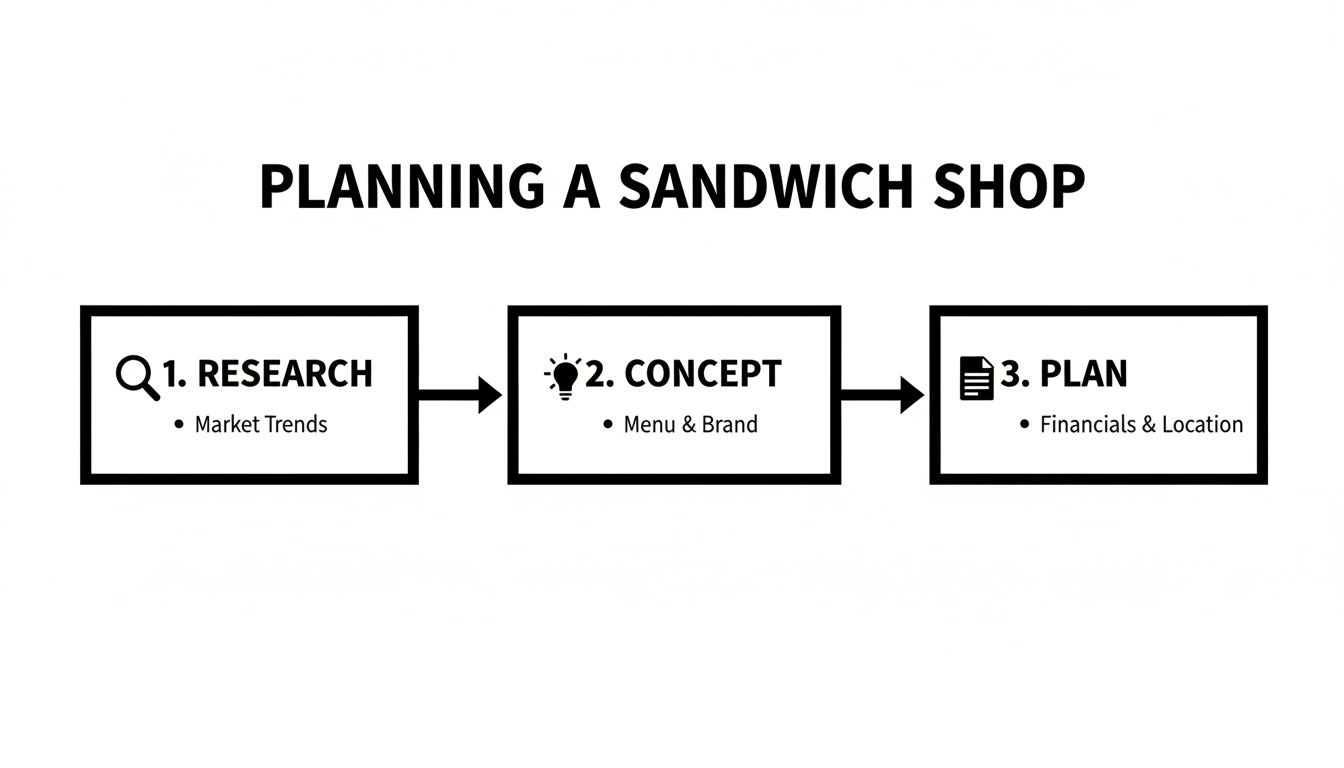
As you can see, each step builds on the one before it. This ensures your final business plan is based on real data, not just a gut feeling.
Putting It All Together in Your Business Plan
Now it's time to get everything down in a formal business plan. Don't skip this. This document is your ticket to getting a bank loan or convincing an investor to take a chance on you. It needs to be professional, detailed, and filled with financial projections that show you've done your homework. Staying on top of industry news about restaurant equipment and supplies can help you create more accurate financial projections.
A complete business plan needs to cover all the bases:
- Executive Summary: A quick, powerful snapshot of your entire vision.
- Company Description: Your mission, values, and legal setup.
- Market Analysis: All that great research you did on customers and competitors.
- Menu and Sourcing: A sample menu with prices and where you'll get your ingredients.
- Marketing and Sales Plan: How you'll get the word out and keep people coming back.
- Management Team: Who's running the show? Showcase their experience.
- Financial Projections: The nitty-gritty of startup costs, profit and loss statements, and cash flow projections for the first three to five years.
For a truly exhaustive look at everything you'll need, check out this Ultimate Checklist for Opening a Restaurant. I can't stress this enough: the time you invest here, before spending a single dollar on rent or equipment, is the most important ingredient in your recipe for success.
Choosing Your Spot and Making It Official

With a solid business plan in hand, it's time to translate your vision into a real, physical space. This part of the journey is a two-front battle. On one side, you're wrestling with paperwork and regulations. On the other, you're out on the streets, hunting for that perfect storefront.
Both are make-or-break. A misstep with compliance can shut you down just as fast as a terrible location.
The legal side of things can feel like a mountain of bureaucracy, but it’s much more manageable if you break it down into smaller, concrete tasks. Think of it as building a legal shield around your business. Before you serve a single sandwich, you have to be fully compliant with local, state, and federal rules.
The Essential Paperwork: Getting Your Ducks in a Row
Navigating the maze of permits is a rite of passage for any new food entrepreneur. Rushing this can lead to frustrating delays or expensive fines, so it’s best to be methodical. Your first stop should be your local city hall or its website to get a specific list for your area.
While requirements vary, you can count on needing most of these:
- Business License: This is the basic permit you need to operate any business in your city or county. It’s non-negotiable.
- Food Service License: Issued by the local health department, this is the big one. Without it, you can't legally serve food.
- Food Handler's Permits: Every single person who touches food—including you—will need one. This usually involves a quick course and a test on food safety basics.
- Employer Identification Number (EIN): If you're hiring a team (and you will be), you need this federal tax ID number from the IRS.
Passing that first health inspection is a huge milestone. To get ready, use a comprehensive restaurant health inspection checklist to make sure your layout, equipment, and processes are up to snuff from the get-go. This saves a ton of headaches and costly fixes down the line.
How to Find and Vet the Perfect Location
While the paperwork is processing, your search for a location should be in full swing. Your storefront is more than just four walls; it’s your number one marketing tool. A great spot with high visibility and the right kind of foot traffic can practically do your marketing for you.
On the flip side, a cheap lease in a hidden-away corner is often a recipe for disaster. Research shows that 65% of sandwich shops succeed in their first year when they nail the location, which says it all.
Here’s what to zero in on:
- Visibility and Foot Traffic: Is it on a busy street? Can people see your sign easily? Are people actually walking by during lunch hours?
- Parking and Accessibility: If you’re in a suburban strip mall, is parking a nightmare? In a downtown area, are you close to public transit or big office buildings?
- Local Demographics: Does the neighborhood fit the customer you defined in your business plan? A gourmet panini shop might crush it near a corporate park but flop in a college town where cheap eats are king.
- The Competition: Being near other restaurants can be great—it creates a "dining destination." But opening right next to a beloved, established sandwich chain is probably an uphill battle you don't want to fight.
Pro Tip: Don't just trust the data. Go spend real time in the neighborhoods you're considering. Hang out on a weekday at lunchtime, then go back on a weekend afternoon. The vibe, the crowd, and the flow of people can be completely different, giving you insights you'll never find on a spreadsheet.
Negotiating a Lease That Works For You
Once you've found a spot that feels right, the lease negotiation begins. This document will dictate one of your biggest fixed costs, so it’s critical to get the terms in your favor. Never just accept the first offer—a landlord with a vacant property is usually motivated to make a deal.
Pay close attention to clauses about rent increases, renewal options, and the Tenant Improvement (TI) allowance. This is cash the landlord gives you to help build out the space, and a good TI allowance can save you tens of thousands in startup costs.
It’s always a good idea to have a lawyer who specializes in commercial real estate look over the lease before you sign anything. This small investment can protect you from major financial pitfalls down the road.
Designing a Profitable Menu and Sourcing Ingredients
Your menu is the heart of your sandwich shop. It's the tangible result of your brand's promise and the primary driver of your revenue. But creating a menu that sells is a careful balancing act between mouth-watering creativity and cold, hard numbers.
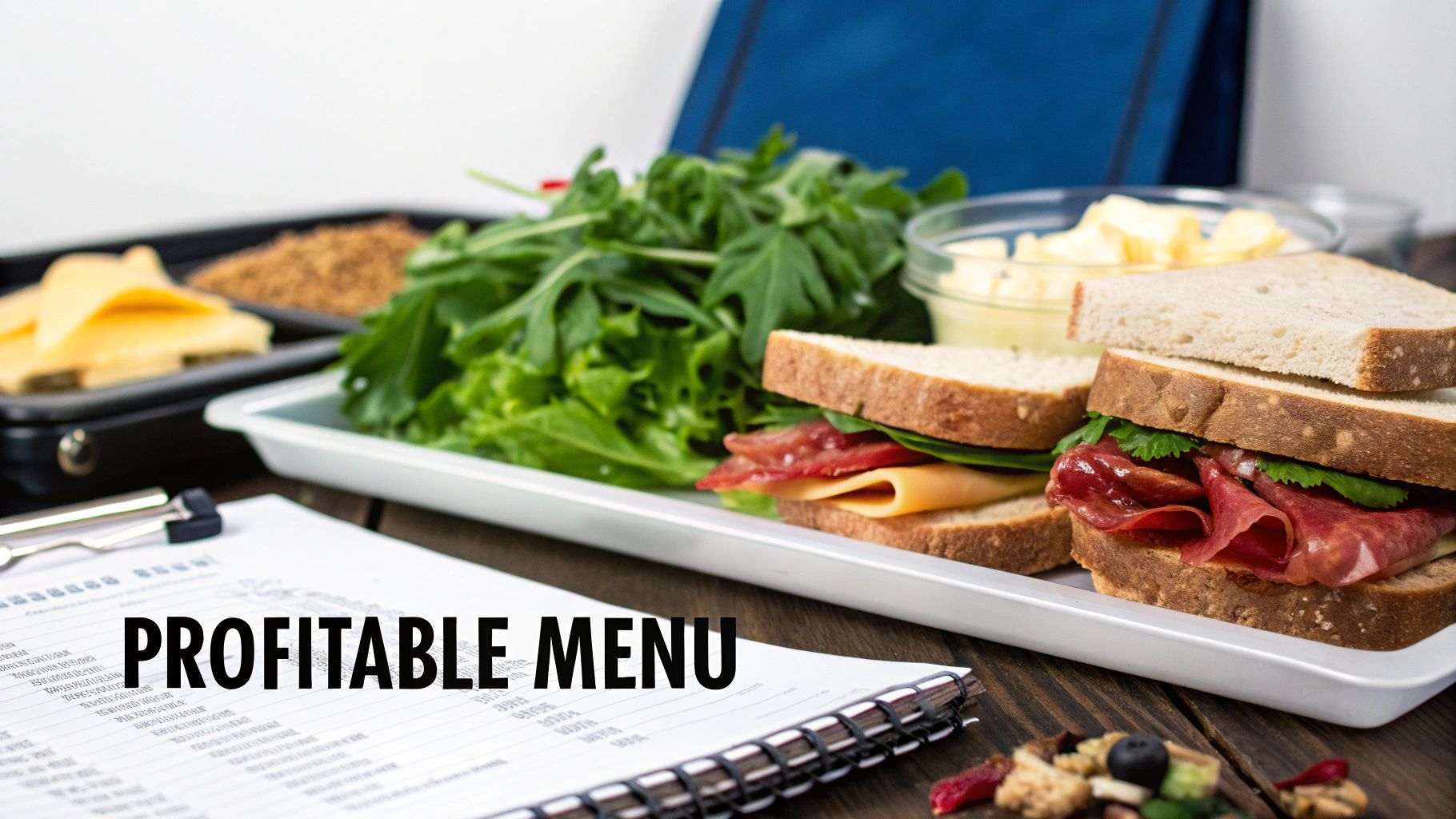
Every single item has to earn its keep. This means going way beyond just listing sandwiches you personally love. You need to get granular and understand the cost of every slice of cheese, every leaf of lettuce, and every ounce of turkey. This is where menu engineering comes in—it's the secret sauce to profitability.
You’re essentially sorting your menu into four categories to see what’s really working:
- Stars: These are your rockstars—high-profit and super popular. You want to feature these front and center.
- Puzzles: High-profit, but for some reason, they aren't selling well. Maybe they need a more exciting name or a better description. Try offering samples to get people hooked.
- Plowhorses: Everyone loves these, but they don't make you much money. These are your reliable crowd-pleasers. Think about raising the price just a bit or bundling them with a high-margin side, like a special soup or a drink.
- Dogs: Low profit and low popularity. These are just taking up space and inventory. It’s probably time to let them go.
By figuring out which items fall where, you can make smarter decisions about pricing, menu layout, and promotions. The goal is to gently guide customers toward your most profitable choices, all while they think they're just picking their favorite sandwich.
Building Your Signature Menu
When you're just starting out, less is definitely more. Aim for a core menu of 8 to 12 signature sandwiches. This number is the sweet spot—it’s manageable for a new kitchen crew, helps keep your inventory costs down, and gives you the space to absolutely perfect every single recipe. A focused menu communicates confidence and quality to your customers.
Once you’ve nailed your core offerings, you can start having some fun with seasonal specials. This is a brilliant way to create buzz and test out new flavor combinations without committing long-term. Think a "Summer Tomato BLT" with heirloom tomatoes from a local farm or a "Winter Harvest" sandwich with roasted root vegetables. These limited-time offers give regulars a reason to keep coming back.
To keep things modern and flexible, think about using QR codes. They allow you to update digital menus on the fly, change prices instantly, or highlight daily specials without reprinting anything. You can explore features for digital menus and promotions to see how this simple tech can make your life easier and improve the customer experience.
Vetting Suppliers and Building a Resilient Supply Chain
A fantastic menu is built on a foundation of fantastic ingredients. Your suppliers aren't just vendors; they are your partners in quality. Your shop's reputation will be built on the freshness of your produce, the quality of your deli meats, and the unique character of your bread. For restaurateurs, discovering the latest deals on restaurant supplies is crucial for maintaining both quality and profitability.
Start by looking for local suppliers whenever you can. Finding a great local artisan bakery, for example, can be a game-changer. In fact, research shows that highlighting the use of locally sourced artisanal bread can boost premium sandwich sales by as much as 28%. Customers love a good story, and "bread fresh from the bakery down the street" is a story they’ll remember and share.
When you're checking out potential suppliers, don't just look at the price list. You need to ask for samples, confirm their delivery schedules, and even talk to some of their other clients. A reliable supplier who delivers quality ingredients on time, every time, is worth paying a little more for. Consistency is the bedrock of a successful food business.
The demand for high-quality sandwiches is booming, with the market projected to reach $428.15 billion in 2024. This growth is all about consumers wanting fresh, customizable, and premium options, which makes your supply chain more important than ever. You can learn more about the sandwich market's future growth on Fortune Business Insights to get a feel for the opportunity.
Ultimately, it all comes down to building strong relationships. Treat your suppliers with respect, pay your bills on time, and they’ll be more likely to have your back when you need it—whether it's a last-minute order or a heads-up on a great deal. These partnerships are what will allow you to consistently deliver the quality that defines your brand.
5. Equipping Your Kitchen for Speed and Efficiency
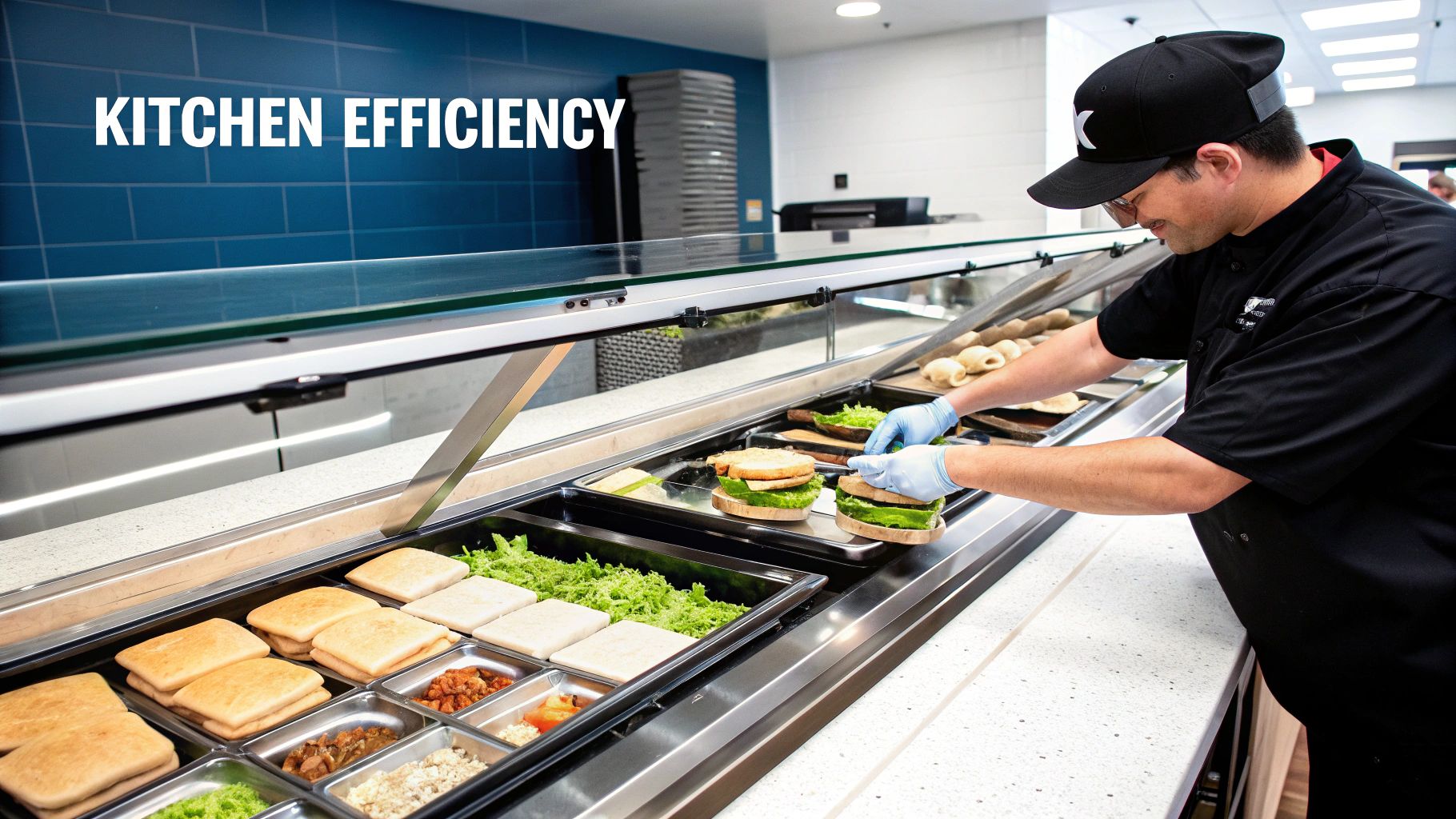
The kitchen is the engine of your sandwich shop. Plain and simple. A smart, well-designed space is the difference between smooth service and total chaos. It directly impacts your ticket times, keeps your staff sane, and ultimately, makes your customers happy. This isn’t about just buying shiny new gear; it’s about creating an intuitive workflow that makes the most of every single square foot.
Think of your kitchen as a finely tuned assembly line built for one thing: making incredible sandwiches, fast. Every single motion, from grabbing the bread to wrapping the finished product, should follow a logical, straightforward path. This cuts down on wasted steps and prevents your team from constantly bumping into each other, which is crucial during that hectic lunch rush.
A poorly planned kitchen, on the other hand, is a recipe for disaster. If your staff has to cross the entire kitchen to get from the slicer to the prep line, you're losing precious seconds on every single order. Those seconds add up.
Designing a Smart Kitchen Workflow
The gold standard for any fast-casual spot, especially a sandwich shop, is a layout that flows naturally from prep to service. You want to mirror the exact sequence of how a sandwich gets made.
Everything starts with your ingredients. Cold storage—your walk-in or reach-in coolers—should be located right next to the prep area where you'll be washing veggies and portioning meats. From there, the action moves to the main assembly line.
Here’s what that looks like in the real world:
- Zone 1: Storage and Prep. This is where your refrigerators, freezers, and dry storage shelves live. They should be right by the sinks and prep counters for easy access.
- Zone 2: The Assembly Line. The heart of the operation. This is home to your sandwich prep table, slicers, and all your condiments. Everything at arm's reach.
- Zone 3: Cooking Station. If you're doing hot sandwiches, this is where your panini presses, convection ovens, or griddles will be.
- Zone 4: Finishing and Service. The final stop. This is where sandwiches get wrapped, bagged, and handed over the counter.
This linear approach is a cornerstone of opening a shop that can handle high volume without breaking a sweat. It keeps everything organized and predictable for your team.
Your Essential Equipment Checklist
While your menu will dictate some specifics, there's a core set of equipment that every sandwich shop absolutely needs. The undisputed star of the show is the sandwich prep table. This one piece of equipment is a game-changer, combining refrigerated storage for toppings with a built-in cutting board. It puts everything your crew needs in one place. Before you buy anything else, understanding the different types of refrigerated sandwich prep tables is a crucial first step.
Beyond that, here’s what your shopping list will look like:
- Commercial Refrigeration: A walk-in cooler is the dream, but at a minimum, you'll need high-quality reach-in refrigerators and freezers to keep everything fresh and safe.
- Meat and Cheese Slicer: This is non-negotiable. A commercial-grade slicer ensures speed and, just as importantly, consistency.
- Ovens or Presses: Depending on your menu, you'll need a panini press for those perfectly grilled sandwiches, a convection oven for toasting bread, or maybe a combination oven for more versatility.
- Three-Compartment Sink: This isn't a suggestion; it's a health code requirement for properly washing, rinsing, and sanitizing all your dishes.
- POS System: A modern Point-of-Sale system is your command center for taking orders, processing payments, and tracking sales data.
The Great Debate: New vs. Used Equipment
One of the biggest financial decisions you'll face is whether to buy your equipment new or used. Honestly, there are strong arguments for both, and you need to weigh them against your budget and how much risk you're willing to take.
Buying new gets you a full warranty and the latest in energy-efficient tech, which can save you real money on utility bills down the road. But that peace of mind comes with a hefty price tag that can put a major dent in your startup capital.
Used equipment, on the other hand, can save you a bundle—we're talking 40-60% off the sticker price. That frees up a lot of cash for things like marketing or just having a healthier cash reserve. The tradeoff is the risk. Used gear rarely comes with a warranty, and you have no idea what its life was like before it got to you. A cheap fridge that dies in your first week is a catastrophe that will cost you far more in lost business and emergency repairs than you ever saved.
I've found a hybrid approach often works best. Splurge on new, warrantied "workhorse" items like your main refrigerator and slicer. For less critical pieces like stainless steel prep tables or shelving, you can often find fantastic deals on the used market. Discovering exclusive deals on restaurant equipment is key to making this strategy work.
Building Buzz and Launching Your Grand Opening
You can spend months perfecting the world’s greatest sandwich, but it won't mean a thing if nobody knows you exist. Getting customers through the door is a job that starts long before you ever fire up the grill. A successful launch isn't just a single event; it's the culmination of a marketing strategy designed to build genuine anticipation.
Your first marketing push should be intensely local and digitally smart. Start building an online presence months before you plan to open. That means claiming your social media handles on platforms like Instagram and Facebook, where your future regulars are already scrolling.
Use these channels to tell your story. Post behind-the-scenes photos of the construction, share sneak peeks as you test out menu items, and introduce the people behind the counter. This creates a real connection and makes your community feel like they're part of the journey from day one.
Mastering Your Digital Storefront
Beyond social media, your local SEO presence is absolutely critical. The moment you have a signed lease, set up your Google Business Profile. This is non-negotiable. Fill out every single section—upload high-quality photos, post your menu, confirm your hours, and write a description that makes people’s mouths water.
Honestly, this one action is probably the most powerful thing you can do to make sure people find you when they search "sandwiches near me."
Here are a few more pre-opening moves that really work:
- Team Up Locally: Find a great, non-competing business nearby—a coffee shop, a local brewery—and run a cross-promotional giveaway. You get introduced to their loyal customers, and they get to offer something new to their crowd. It's a win-win.
- Reach Out to Media: Write a short, punchy press release about your shop opening and send it to local food bloggers, community news pages, and journalists. Frame it as a great local story about a new entrepreneur bringing something exciting to the neighborhood.
- Build an Email List: Get a simple "Coming Soon" page up on your website with a can't-miss email signup form. Offer an exclusive discount for your grand opening to everyone who signs up.
The Soft Opening: Your Secret Weapon
Before the big public reveal, you need a full-on dress rehearsal. A soft opening is a smaller, invitation-only event you host a few days before your official launch. Think of it as a live-action stress test for your kitchen, your staff, and your point-of-sale system in a low-pressure environment.
Invite friends, family, and maybe the staff from neighboring businesses. The goal isn't to make a ton of money; it's to get candid feedback and smooth out the operational wrinkles before you have a line out the door.
A soft launch is your chance to fail privately so you can succeed publicly. It lets you fix everything from slow ticket times to a confusing menu layout when the stakes are low. Trust me, it’s much better to get a tough critique from a friend than a scathing one-star review from a paying customer on day one.
Planning a Grand Opening People Remember
Your grand opening is your big debut. It's all about creating a ton of buzz, driving that initial wave of traffic, and making an unforgettable first impression. Plan an event that genuinely reflects your shop's personality.
Maybe that's a classic ribbon-cutting ceremony with a local official, a family-friendly afternoon with face painting, or a high-energy "first 100 customers get a free sandwich" promotion. Whatever you do, make it count.
You're launching at a fantastic time. The global sandwich market is exploding and projected to hit an incredible USD 646.25 billion by 2032. This demand, fueled by our need for convenient, quality food, is creating massive opportunities. In fact, the market is expected to grow by another $46.5 billion by 2029 alone. You can dive deeper into the sandwich market's incredible growth trajectory to see just how big the opportunity is.
How to Keep the Momentum Going
The excitement from your grand opening will eventually settle down. That's why you need a solid plan for ongoing marketing to build a loyal customer base. The work doesn't stop after launch day; it just shifts.
Here are a few proven strategies to turn first-time visitors into regulars:
- Start a Loyalty Program: A simple digital punch card or a points-based system is a powerful tool for customer retention. It gives people a compelling reason to choose you over the competition down the street.
- Get on Delivery Apps: Partnering with services like Uber Eats, DoorDash, and Grubhub immediately expands your reach. With online food sales channels growing by 25% annually, being on these apps from day one can give you a major sales boost.
- Keep Your Social Media Fresh: Don't let your accounts go quiet. Post mouth-watering photos of your sandwiches, run fun contests, and actively respond to comments and messages. This keeps your brand top-of-mind.
By blending a smart pre-launch campaign with a memorable opening and consistent marketing afterward, you build a powerful engine for success. This is how you ensure your sandwich shop doesn't just survive but truly thrives.
Common Questions About Opening a Sandwich Shop
Diving into the food world always brings up a ton of questions. As you get closer to your grand opening, the "what ifs" and "how tos" really start to pile up. Let's tackle some of the most common questions I hear from people just starting their sandwich shop journey.
How Much Does It Really Cost to Get Started?
This is the big one, isn't it? The honest answer is that the total investment can swing wildly, but you're likely looking at a range between $75,000 and $250,000. That's a huge gap, I know. But everything from your city's rent prices to the specific concept you're dreaming up will nudge that number up or down.
So, where does all that money go?
- Lease and Build-Out: Your security deposit and any renovations needed to transform the space will be a major chunk of your initial cash outlay.
- Kitchen Equipment: This is where you have some control. Brand-new, top-of-the-line gear is expensive, but you can dramatically cut costs by sourcing quality used equipment. Staying informed on the latest equipment news can lead to finding exclusive deals.
- Initial Inventory: Don't forget you need to buy everything before you can sell anything. That means bread, meat, cheese, produce, paper goods, and cleaning supplies.
- Permits and Fees: Licensing, health department inspections, and any legal advice all come with a price tag.
If you're picturing a small, takeout-only spot in an up-and-coming neighborhood and plan to hunt for used equipment, you'll be on the lower end of that range. But if your vision is a large, custom-designed deli in a prime downtown location, get ready to aim for that higher number.
What Is the Most Essential Equipment?
Your menu is the ultimate guide here, but some pieces of equipment are simply non-negotiable. These are the workhorses of your kitchen—the gear you'll depend on from open to close, every single day.
Here are the absolute must-haves:
- A commercial-grade meat and cheese slicer. Consistency is king.
- A sandwich prep table with built-in refrigerated wells.
- Reliable refrigeration, including both a walk-in or reach-in fridge and a freezer.
- An oven or press that fits your menu. This could be a panini press, a convection oven, or a high-speed oven.
- A three-compartment sink. The health department will insist on it.
- A modern Point of Sale (POS) system to keep orders and payments flowing smoothly.
A quick word of advice: don't skimp on the small stuff. I've seen kitchens grind to a halt over cheap knives and flimsy cutting boards. Investing in good smallwares—durable food storage containers, sharp knives, scoops—pays for itself in speed and safety.
What Are the Biggest Mistakes to Avoid?
It's true what they say: an ounce of prevention is worth a pound of cure. Many new owners fall into the same traps, but knowing what they are is half the battle.
The three most common (and devastating) mistakes are undercapitalization, picking a bad location, and an overly complicated menu. Running out of cash before you've had a chance to build a customer base is the number one killer of new restaurants. Just as deadly is a location with no visibility or foot traffic; even the world's best sandwich can't fix a ghost town.
Finally, resist the urge to offer everything. A sprawling menu is a recipe for food waste, slow service, and inventory headaches. It’s far better to nail a smaller, focused menu that you can execute perfectly every single time.
Do I Need to Be a Chef to Succeed?
Not at all. While a passion for amazing food is a must, you don't need a culinary school degree to run a fantastic sandwich shop. In fact, strong business acumen is often more important.
Your success will ultimately depend on your skills in management, marketing, basic accounting, and creating a great customer experience. You can always hire a great kitchen manager to handle the culinary side of things while you focus on steering the ship. A solid business plan and a relentless focus on quality are the real ingredients for success.
Ready to equip your dream kitchen? At Encore Seattle Restaurant Equipment, we help restaurant owners and chefs discover the latest news and exclusive deals on top-tier new and used equipment to help your sandwich shop thrive. From refrigeration to prep tables, find everything you need at unbeatable prices while staying informed about industry trends. Visit us at https://encoreseattle.com to browse our inventory and get expert advice today.