
A Restaurant Owner's Guide to the Food Cost Percentage Calculator
A food cost percentage calculator is your go-to tool for seeing how much you spend on ingredients compared to what you earn from them. It’s a straightforward number that gives you a vital sign on your kitchen's profitability. Getting a handle on this metric—calculated as (Cost of Goods Sold / Food Sales) x 100—is probably the most powerful move you can make for a healthier bottom line. For any operator, this number is everything.
The True Cost of a Dish: Why This Metric Matters
Whether you're running a high-end Seattle spot or a scrappy Alaskan food truck, mastering your food cost percentage is non-negotiable. It’s the core metric that dictates your profit margins and offers a real-time financial snapshot of your kitchen's health.
Think of it as your restaurant's pulse. A consistently healthy reading signals operational strength, while a sudden spike can alert you to hidden problems—like waste, theft, or supplier price hikes—before they threaten your entire business.
To really grasp this, you have to break down the formula into its core parts. Each piece tells a part of your financial story:
- Beginning Inventory: The total dollar value of all food and beverage stock you have on hand at the start of an accounting period.
- Purchases: The cost of all new inventory you bought during that same period.
- Ending Inventory: The total dollar value of the stock remaining at the end of the period.
- Total Food Sales: The revenue generated from selling your food during that period.
Understanding the Financial Impact
Calculating this percentage isn't just a bookkeeping chore; it's a strategic necessity. In the restaurant world, keeping your food cost percentage under control is a constant balancing act. If it creeps too high, your profits vanish. If you cut it too low, you risk your customers noticing a drop in quality.
Top-performing restaurants typically maintain food costs between 28% and 32% of total revenue. For a restaurant in Seattle's competitive dining scene doing $100,000 in monthly sales, that means keeping food expenses between $28,000 and $32,000 is mission-critical. Go over that, and you're eating directly into already slim margins that average just 3-5% across the industry. You can discover more industry benchmarks from Sculpture Hospitality to see how you stack up.
This single percentage connects your inventory management, supplier relationships, and menu pricing directly to your profitability. Stay informed about industry trends to discover the latest news and exclusive deals on restaurant equipment and supplies that can help you optimize these areas.
We've put together a quick reference table to help you keep these key components straight.
Food Cost Percentage at a Glance
| Metric | What It Means | Industry Benchmark |
|---|---|---|
| Cost of Goods Sold (COGS) | The direct cost of ingredients used to create your menu items. | Varies by concept, but a key input for the overall percentage. |
| Food Sales | Total revenue generated from selling food items. | The denominator in your food cost calculation. |
| Food Cost % | The ratio of your COGS to your food sales, expressed as a percentage. | 28% - 32% for most full-service restaurants. |
Keeping an eye on these numbers helps you stay on track and spot issues before they become major problems.
While food cost is a huge piece of the puzzle, it's not the only one. For a complete picture of your financial health, you also need to understand your restaurant prime cost, which combines your total cost of goods sold with your total labor costs.
This combined metric gives you a much clearer view of your overall operational efficiency. By tracking both, you can make smarter, data-driven decisions that truly protect your bottom line.
From Inventory to Insight: Calculating Your Actual Food Cost
Let's move from theory to the real-world process of getting a handle on your restaurant's finances. Calculating your food cost percentage isn't just a one-off math problem. It’s about building a consistent, repeatable process that feeds you reliable data, week in and week out. Think of it as your financial compass, guiding everything from menu pricing to your next supplier order.
The entire calculation rests on a single, crucial figure: your Cost of Goods Sold (COGS). You need to know how to calculate your Cost of Goods Sold (COGS) accurately because it represents the direct cost of every ingredient you actually used in a given period. Get this wrong, and every decision you make based on that number will be flawed.
This simple formula is the key to unlocking your operational efficiency.
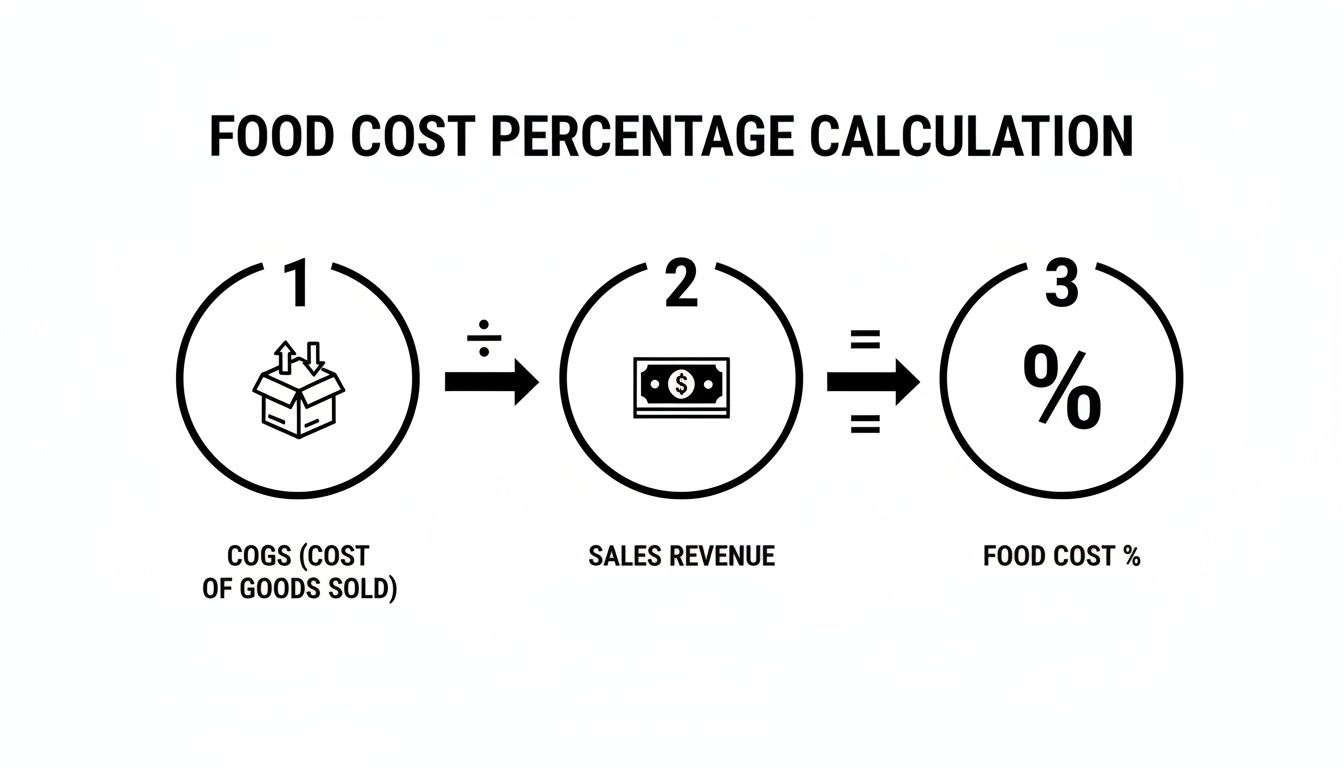
As you can see, it all comes down to measuring what you spent against what you earned.
Assembling Your Key Figures
To find your COGS, you first need to pull together three specific numbers over a set period—let's say for one week or a full month.
- Beginning Inventory: This is the total dollar value of all the food stock you have on the shelves at the very start of the period.
- Purchases: The total cost of all the new inventory you bought during that same timeframe.
- Ending Inventory: The total dollar value of all the stock you have left at the very end of the period.
Getting these numbers right demands discipline. There's no room for error here; accurate inventory counts are non-negotiable. Whether you're using a clipboard and pen or a slick digital system, consistency is what matters most. If you're struggling to build a reliable process, our guide on choosing an inventory format for your restaurant can get you on the right track.
Once you have those figures, the COGS formula is straightforward:
(Beginning Inventory + Purchases) – Ending Inventory = Cost of Goods Sold (COGS)
Let's put this into practice. Imagine you run a busy sandwich shop in Seattle's SoDo district. At the start of the month, your inventory count showed $15,000 worth of stock. Over the next four weeks, you purchased an additional $6,000 in ingredients. When you counted everything again at the end of the month, you had $15,500 left.
Here’s the math: ($15,000 + $6,000) - $15,500 = $5,500. That's your COGS.
Calculating Your Final Percentage
Now that you have your COGS, you just need one more piece of the puzzle: your Total Food Sales for that same month. Let's say your sandwich shop pulled in $20,000 in food sales.
You can now plug both numbers into the main formula:
($5,500 COGS / $20,000 Sales) x 100 = 27.5%
That 27.5% is fantastic. You’re sitting well within the ideal 28-32% range that most successful operators strive for.
This isn't just an exercise for brick-and-mortar shops. Picture yourself as a food truck entrepreneur in Alaska trying to source halibut amid soaring costs. This very calculation becomes your secret weapon for survival. Recent industry stats show U.S. diners spent an average of $191 per person each month eating out. With 36% of those consumers spending between $11-20 per meal, you have to keep your prices competitive while fiercely protecting your margins.
Avoiding the Hidden Costs That Inflate Your Numbers
Your food cost percentage calculator is a fantastic tool, but it's only as good as the numbers you put into it. Garbage in, garbage out, as they say. It’s easy to focus on the big-ticket items like inventory counts and purchase orders, but I’ve seen countless operators get tripped up by the subtle, hidden costs that quietly drive their numbers through the roof.
These aren't just simple miscounts on a spreadsheet. They’re the real-world things happening in your kitchen every single day. Think about it: untracked employee meals, comped dishes for unhappy guests, or a line cook getting a little heavy-handed with the cheese during a dinner rush. Every time food leaves your kitchen without bringing in revenue, it throws your calculations off.
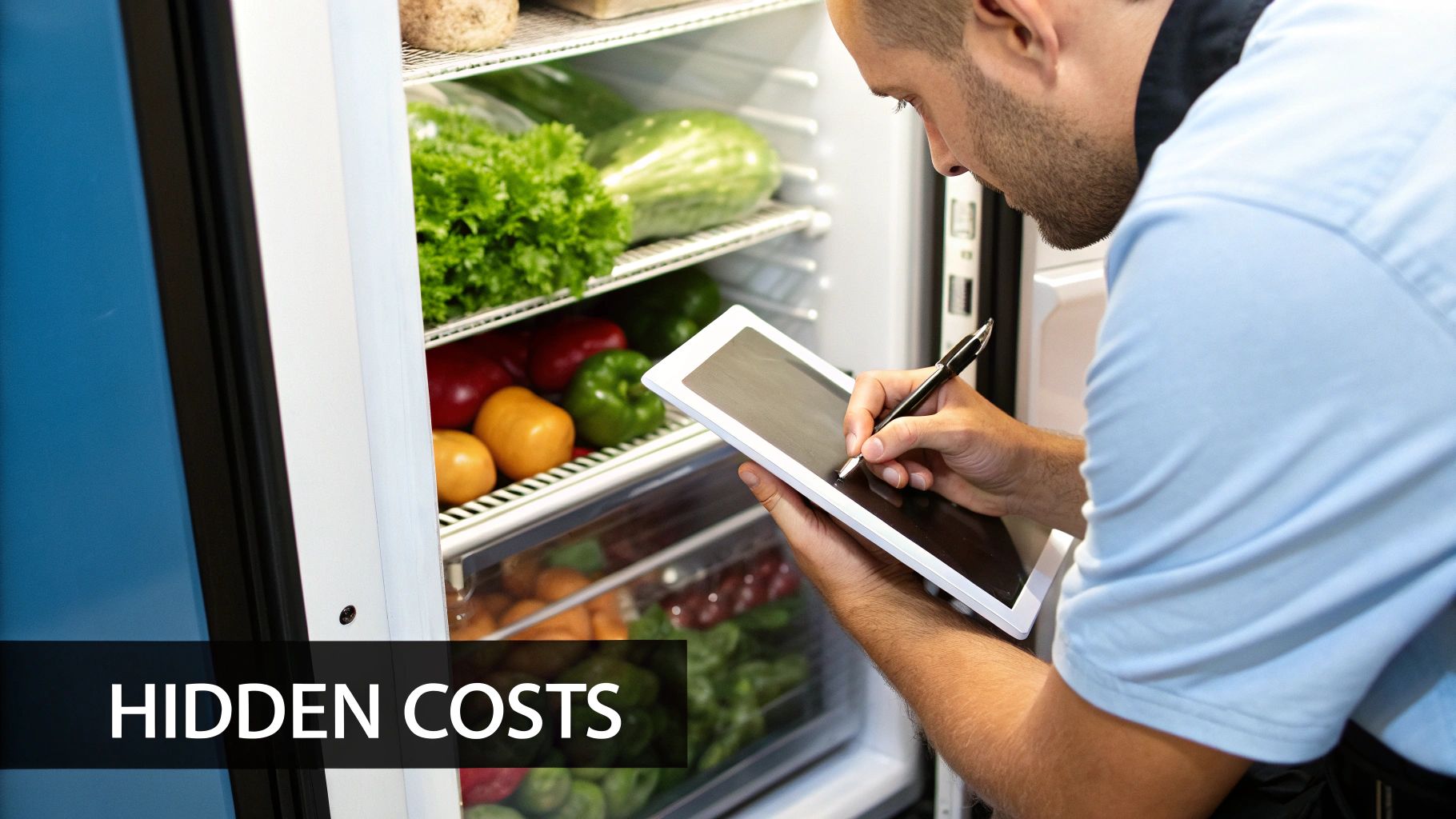
For example, if your team isn't ringing up staff meals correctly, that cost just gets absorbed into your overall inventory usage. Suddenly, it looks like your signature burger is way less profitable than it really is. These little discrepancies seem minor, but they add up fast and can seriously mask the true financial health of your menu.
Standardize Your Recipes and Portions
If you want to get a real grip on these hidden costs, the single most powerful thing you can do is standardize everything. Creating and, more importantly, enforcing standardized recipes with exact portion sizes is non-negotiable for serious cost control. This is how you guarantee a dish served on a quiet Tuesday costs you the exact same as one flying out of the kitchen on a slammed Saturday.
Getting that consistency takes more than just a recipe book collecting dust on a shelf. It requires the right tools and solid processes your team can follow.
- Use Portion Control Tools: This is basic but essential. Get digital scales, measured scoops, and specific ladles for every sauce. It takes the guesswork out of the equation.
- Implement Clear Plating Guides: A picture is worth a thousand words. Use photos or diagrams showing exactly how each dish should look and be assembled. This is a game-changer for training new staff and keeping veterans on track.
- Train and Re-train: Don't just set it and forget it. Regularly review portioning standards with your kitchen crew to reinforce why it matters and catch any bad habits before they become ingrained.
A poorly sealed walk-in cooler door can quietly add percentage points to your food cost over a month. Small operational oversights often have the biggest financial impact, turning minor equipment neglect into a major, recurring expense. Discover exclusive deals on restaurant equipment to ensure your kitchen is running at peak efficiency.
Track Everything That Leaves the Kitchen
Rigorous tracking is the other half of this puzzle. You need to account for every single ingredient that leaves your storage—whether it was sold, spoiled, comped, or used for a staff meal. This creates a clear paper trail and shines a light on losses you might not even know you have.
Let's talk about something uncomfortable: employee theft. It happens, and poor inventory controls make it easy. It's shocking, but some studies show that as much as 75% of all inventory shrinkage can come from employee theft alone. Implementing strict tracking is one of the best deterrents. You can discover more insights about restaurant security from Sculpture Hospitality to see just how much of a difference better controls can make.
Ultimately, getting these details right is foundational to a healthy bottom line. From spoilage to over-portioning, every bit of loss adds up. For more practical strategies on this front, check out our guide on reducing food waste in restaurants to tighten up your operations even further.
Smart Strategies to Lower Your Food Costs Today
Okay, so you've nailed down your food cost percentage. That's a huge first step. But knowing the number is one thing; making it work for you is where the real money is made—or saved.
Actively managing this number is how you protect your margins and build a business that can weather any storm. Lowering costs doesn't mean you have to start buying cheaper ingredients and sacrificing the quality your regulars love. It’s all about working smarter.
These aren't just abstract ideas. They're practical, road-tested tactics that successful operators are using right now to plug the leaks in their profitability, from the receiving dock all the way to the table. With ingredient prices constantly on the rise, this isn't optional anymore.
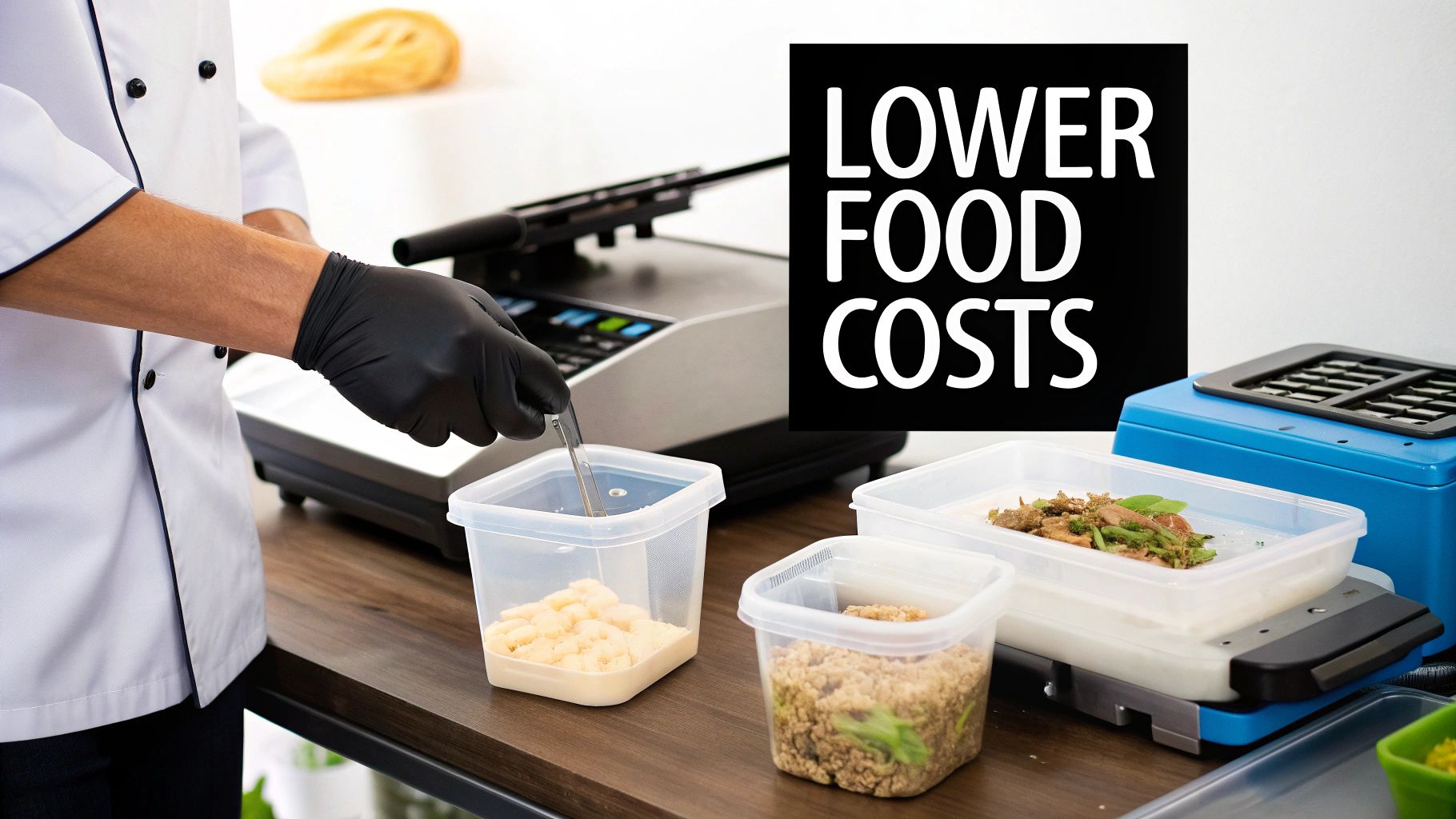
The pressure is real. A recent operator survey showed that half saw their food costs jump 1-5% over the last year. Another 37% got hit with even bigger hikes of 6-14%, forcing them to raise menu prices. Getting ahead of these trends is the name of the game. You can read the full research about restaurant industry challenges to see just how widespread this issue is.
Engineer Your Menu for Maximum Profit
Think of your menu as your most valuable employee. It should be doing more than just listing dishes; it should be actively selling your most profitable items. This is where menu engineering comes in, a classic but incredibly effective way to analyze every dish by its popularity and profitability.
Here's the breakdown:
- Stars: High popularity, high profitability. These are your champions. Give them top billing on the menu with a call-out box or a great photo.
- Plowhorses: High popularity, low profitability. Everybody loves them, but they aren't making you much money. Don't axe them, but look for ways to tweak the recipe to lower costs or justify a small price bump.
- Puzzles: Low popularity, high profitability. These are your hidden gems. Your team should be upselling these. Try a more enticing menu description or run one as a special to get people hooked.
- Dogs: Low popularity, low profitability. These are just taking up space and tying up inventory. It's probably time to let them go.
The Right Equipment Is a Cost-Cutting Tool
The gear in your kitchen has a direct impact on your bottom line by controlling waste, consistency, and speed. Investing in the right tools isn't an expense; it's an investment that pays you back every single day.
A modern, high-efficiency commercial refrigerator, for example, does more than just keep things cold. It holds precise, stable temperatures that dramatically cut down on spoilage. How much produce or protein have you lost because an old, tired walk-in couldn't keep up?
A precision slicer or food processor isn't a luxury; it's a portion control machine. By guaranteeing uniform cuts every single time, it ensures you get the maximum yield from every pound of meat, cheese, or vegetables, directly lowering the cost per plate. Discover the latest deals on restaurant equipment and supplies to make these upgrades more affordable.
Strengthen Supplier Relationships and Reduce Waste
Finally, let's look at the two ends of your supply chain: what comes in the back door and what goes out in the trash.
Don't be afraid to have real conversations with your suppliers. Building a solid relationship can open the door to better pricing, bulk discounts, or a heads-up on seasonal deals. They want your business, so make it a partnership.
At the same time, get obsessive about waste in your kitchen. A strict "first-in, first-out" (FIFO) system is non-negotiable for using products before they expire. And get creative with your trim! Those vegetable ends can become a fantastic stock, and day-old bread makes perfect croutons. Every single thing you keep out of the trash bin is pure profit.
What to Do With Your Food Cost Percentage
So, you've calculated your food cost percentage. What now? That number is more than just a data point; it's the headline story of your kitchen's financial health. It's time to dig in and understand what that story is telling you.
This single metric can be a powerful early-warning system. A high percentage can flag all sorts of hidden problems—from supplier price hikes and sloppy portioning to excessive waste or even employee theft. On the flip side, a percentage that seems too low might look good on paper, but it could mean you're cutting corners on ingredient quality, and trust me, your guests will notice.
Your food cost percentage isn't just an accounting figure. It's a direct line connecting your purchasing habits, kitchen operations, and menu engineering to your actual profit. Help restaurant owners and chefs discover the latest news on these topics to stay ahead.
To see how this fits into the bigger picture of your finances, it's helpful to plug it into a proper restaurant income statement example. This will show you exactly how your ingredient costs are impacting your overall profitability.
Look for Trends, Not Just a Single Number
Calculating your food cost once gives you a snapshot. Calculating it consistently—every week or at least every month—gives you the whole movie. This is where the real insights come from.
Did you recently switch produce suppliers? Roll out a new high-end special? By tracking your food cost percentage over time, you can see the direct financial impact of every decision you make. This transforms a simple calculation into a powerful diagnostic tool, helping you spot and react to issues before they get out of hand.
How Do You Stack Up? Compare Against Industry Benchmarks
Knowing your own numbers is essential, but context is everything. How does your operation compare to others in the industry? Benchmarking your food cost against industry averages gives you a realistic target to shoot for.
Here’s a general idea of where different concepts usually land:
- Full-Service Restaurants: Typically operate with a food cost between 28% and 32%.
- Pizzerias: Can run much leaner, often in the 20% to 25% range, thanks to the low cost of core ingredients like flour and cheese.
- Steakhouses: Naturally run higher due to the price of premium proteins, sometimes pushing 40%.
Measuring yourself against these benchmarks helps you set practical goals. If you see you're way off the mark, you now have a clear target to work toward and can start making strategic changes to get there.
Got Questions? We've Got Answers
Digging into restaurant finances always uncovers a few questions. Whether you've been running kitchens for decades or you're just starting out, getting straight answers is crucial for making the right calls. Let's break down some of the most common things people ask about food cost percentage and what it all means for your bottom line.
Think of this as a quick chat with an industry vet—just straightforward advice to help you manage your kitchen's profitability with confidence.
What Is a Good Food Cost Percentage for a Restaurant?
Everyone wants to know the magic number, but the truth is, it depends on your concept. For most full-service restaurants, a healthy food cost percentage lands somewhere between 28% and 32%. This is generally the sweet spot that lets you maintain quality without killing your profit margins.
But that's just a benchmark. The target shifts depending on what you're serving:
- Pizzerias: These spots often run lean, with targets around 20-25%. It makes sense when your main ingredients are flour, tomatoes, and cheese.
- Steakhouses: On the other end of the spectrum, a high-end steakhouse might see food costs pushing 40%. You can’t serve prime cuts of beef without paying for them.
The real goal is to figure out what’s sustainable for your business model. The only way to know for sure is to calculate your food cost percentage regularly and see how you’re stacking up against your own goals.
How Often Should I Calculate My Food Cost Percentage?
At an absolute minimum, you need to be running these numbers once a month. This gives you a decent big-picture view of how your kitchen is performing financially.
But if you want to run a truly tight ship, do it weekly. The best operators I know live and die by their weekly calculations. Why? Because it lets you catch problems almost immediately. If a supplier jacks up the price of produce or your line cooks are getting sloppy with portioning, you’ll see the spike right away instead of letting a small issue bleed cash for a whole month.
How Does My Kitchen Equipment Impact My Food Cost?
Your equipment has a bigger impact on your food cost than you might think. It's not just about the upfront investment; it's about day-to-day operational efficiency. A reliable, energy-efficient fridge from a quality supplier isn't a luxury—it's a tool that prevents spoilage and waste. That's cash that stays in your pocket instead of going into the bin.
Think about it: precise cooking equipment, like a modern convection oven or a programmable fryer, gives you consistent results every time. That means fewer mistakes and re-fires. A well-designed prep station makes accurate portioning second nature, ensuring every plate that goes out has exactly the right amount of ingredients. It all adds up.
Can I Lower Food Cost Without Changing My Menu Prices?
Yes, and you absolutely should try to. Raising prices is a lever you can pull, but it should be your last resort. Before you even think about charging your customers more, turn your focus inward.
There are plenty of ways to trim your food costs without touching the menu:
- Get serious about reducing waste with smarter inventory management.
- Enforce strict portion control using standardized recipes and proper tools.
- Go back to your suppliers and negotiate better pricing.
- Engineer your menu to subtly push your most profitable dishes.
Running regular inventory audits can also shine a light on problems you didn't know you had, like spoilage hotspots or even theft. Fixing these operational leaks almost always leads to big savings, all without your customers noticing a thing.
At Encore Seattle Restaurant Equipment, we know that having the right gear is fundamental to controlling costs and driving profit. From high-efficiency refrigeration that minimizes spoilage to precision prep tools that guarantee perfect portions, we provide the equipment that successful Pacific Northwest kitchens rely on. Check out our huge inventory of new and used equipment to find the right solutions for your budget and your kitchen at https://encoreseattle.com.