
Finding the Best Commercial Fridge for Your Business
Picking the best commercial fridge for your kitchen isn't just about finding a cold box. It’s about choosing a workhorse that fits your unique workflow, holds everything you need, and doesn't send your energy bills through the roof. Industry leaders like True, Turbo Air, and Avantco have earned their reputations for a reason—they deliver on reliability and performance.
Think of this as more than a simple purchase. It's a foundational investment in your restaurant's daily operations. The right unit is central to food safety, ingredient quality, and ultimately, your bottom line. We're here to help you stay informed on the latest equipment trends so you can make the best choice.
A Chef’s Guide To Selecting The Right Commercial Fridge
Choosing the right commercial refrigerator is one of the most critical decisions you'll make for your foodservice business. This machine is the heart of your kitchen, the guardian of your inventory, and a key player in your operational efficiency.
A bad choice can quickly turn into a nightmare of spoiled food, skyrocketing utility costs, and a workflow that just doesn't... well, flow. But the right one? It becomes an invisible, indispensable part of your team, humming along reliably day in and day out.
This guide is here to walk you through the essentials, from picking the right type of fridge for your daily grind to understanding the latest industry trends. It’s like a seasoned chef picking out a new knife—it’s not about the sticker price, but about its feel, its durability, and how it’ll hold up when you're slammed during a Saturday night rush.
Why This Decision Matters
Now, more than ever, getting this choice right is crucial. The market for commercial refrigeration is booming, which tells you one thing: demand for high-quality, energy-efficient equipment is at an all-time high. Staying informed on these trends helps you make a smarter investment.
The global commercial refrigeration market is projected to grow from USD 85.6 billion to USD 161 billion by 2034. This massive growth isn't just a number; it signals a major industry shift. Restaurant owners are realizing that investing in a top-tier fridge is a strategic move to manage costs and stay ahead of the curve. You can learn more about these commercial refrigeration market trends to see where the industry is heading.
This trend makes it clear: choosing the best commercial fridge is how you future-proof your business against climbing energy costs and stricter food safety regulations. When you start your search, it’s smart to look into companies that offer dedicated commercial business solutions to handle these specialized needs.
Key Factors At A Glance
Feeling overwhelmed? Don't be. You can simplify the entire process by focusing on a few core areas. This helps you look past the initial price and see the long-term value a unit brings to your kitchen.
To give you a head start, here’s a quick-glance table summarizing the most important factors.
Key Factors for Selecting a Commercial Fridge
| Key Consideration | Why It Matters for Your Business | Quick Tip |
|---|---|---|
| Workflow Integration | Where you place it and how you access it affects kitchen speed and efficiency. A poorly placed door can create a major bottleneck during service. | Sketch your kitchen layout. Trace the path your cooks take. Does the fridge door open the right way? Is it near the prep station? |
| Capacity & Sizing | Too big, and you're paying to cool empty space. Too small, and you risk overstuffing, poor airflow, and food spoilage. | Don't just guess. Do an inventory audit of your typical cold storage needs for a busy week, then add about 20% extra room for busy seasons. |
| Energy Efficiency | This is the "hidden cost." An energy-hogging unit can cost you thousands more in electricity over its lifetime than a more efficient model. | Look for the ENERGY STAR® certification. It’s a clear sign the unit is designed to save you money on your utility bills. |
| Reliability & Durability | A professional kitchen is a tough environment. You need a unit built with stainless steel and a powerful compressor that won't quit on you. | Check the warranty details, especially for the compressor. A longer warranty (5-7 years) is a good indicator of the manufacturer's confidence. |
Considering these core elements will set you on the right path.
- Workflow Integration: How will this fridge actually work in your kitchen's daily dance of prep and service?
- Capacity and Sizing: Does it have the space you need without wasting an inch or a watt?
- Energy Efficiency: What will this unit really cost you over the next 5-10 years in electricity?
- Reliability and Durability: Is it built to survive the heat, spills, and constant use of a pro kitchen?
Answering these questions honestly will help you find a refrigerator that not only keeps your ingredients perfectly chilled but also supports your kitchen's success for years to come.
Understanding Different Commercial Fridge Types
Walk into any professional kitchen, and you’ll see that not all commercial fridges are built the same. A chef wouldn't use a cleaver for delicate slicing, and a kitchen shouldn't use a single type of fridge for every task. The key to choosing the best commercial refrigerator is matching its design and function to your daily workflow. Get this right, and you'll boost efficiency and keep your ingredients in prime condition.
Think of your refrigeration as a complete system. Your massive walk-in cooler is the central hub, the pantry where you keep bulk inventory safe from the kitchen's heat. Up on the line, a nimble undercounter fridge acts like a chef's personal toolkit, holding the exact ingredients needed for service right where the action is. Each piece has a job to do.
This flowchart lays out the big-picture factors—workflow, efficiency, and quality—that should guide every purchase you make.
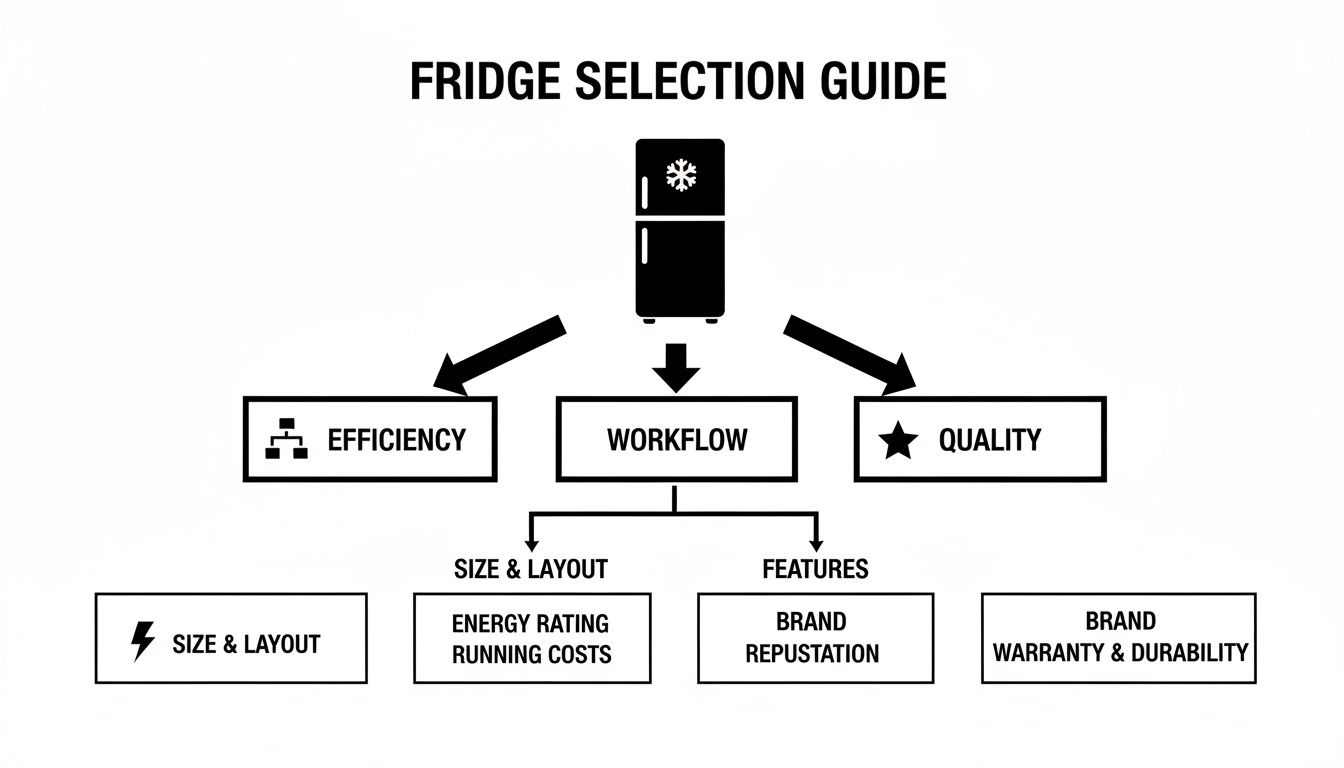
As you can see, the smartest choice isn't just about features. It’s about how that piece of equipment fits into the rhythm of your kitchen and your budget.
The Workhorses: Reach-In Refrigerators and Freezers
When you picture a classic restaurant kitchen, you’re probably thinking of a reach-in refrigerator. These are the upright, do-it-all workhorses you’ll find on nearly every prep line. They come with one, two, or three doors and are designed for one thing: giving your team quick access to ingredients during the daily grind.
A solid-door reach-in is perfect for back-of-house storage because its insulated doors are more energy-efficient. On the other hand, a glass-door model lets your crew see what’s inside at a glance, which means less time standing there with the door wide open during a hectic dinner rush.
For Bulk Storage: Walk-In Coolers and Freezers
If you're buying ingredients in bulk—and what large restaurant or catering company isn't?—a walk-in cooler is non-negotiable. These are basically refrigerated rooms, built to hold entire cases of produce, big boxes of protein, and full-size rolling racks of prepped food.
Their massive size makes organization a breeze and stops you from cramming ingredients into smaller units, which is a recipe for blocked airflow and dangerous temperature swings. A walk-in isn't just a purchase; it's a long-term investment in food safety and smart inventory control.
The Space Savers: Undercounter and Worktop Fridges
In a tight kitchen or behind a busy bar, every square inch counts. This is where undercounter and worktop refrigerators really shine. They're designed to slide right under standard countertops, putting cold storage exactly where it's needed most.
Think about it: a bartender can grab garnishes from an undercounter unit without missing a beat, while a line cook has prepped sauces and veggies within arm's reach on a worktop fridge. These units are all about efficiency, cutting down on the steps your staff takes and keeping the service flowing fast.
What's the difference? Worktop models have a backsplash to keep ingredients from falling behind the unit, making them ideal for food prep. Undercounter units have a flat top, so they slide perfectly under an existing bar or service counter.
The Customer-Facing Stars: Display and Merchandising Fridges
For businesses like cafés, delis, and grab-and-go markets, the refrigerator is more than just storage—it’s a salesperson. Glass door merchandisers and refrigerated display cases are designed to show off your products, catch the customer's eye, and encourage those profitable impulse buys.
There’s a reason this market is huge. Refrigerated display cabinets are a powerhouse, generating USD 37.2 billion and are on track to blow past USD 66 billion by 2034. With the food retail sector making up 43.8% of this market, the message is clear: the right display fridge directly drives sales. You can find out more about how the retail market is growing and what it means for 2025.
To help you connect the dots, here’s a quick guide to matching the right fridge to your business type.
Matching the Right Fridge to Your Business
| Fridge Type | Best For (Business Type) | Key Advantage |
|---|---|---|
| Reach-In | Restaurants, Cafeterias, Ghost Kitchens | All-purpose, quick access to daily ingredients on the line. |
| Walk-In | Large Restaurants, Hotels, Catering, Institutions | Maximum bulk storage for efficient inventory management. |
| Undercounter | Bars, Coffee Shops, Small Kitchens | Point-of-use storage that saves valuable floor space. |
| Prep Table | Pizzerias, Sandwich Shops, Salad Bars | Integrated cold storage right in the food prep surface. |
| Merchandiser | Convenience Stores, Delis, Supermarkets | Visually showcases products to drive customer sales. |
Ultimately, choosing the best commercial fridge is a strategic move. A pizzeria will live and die by its refrigerated prep table, while a fine-dining spot needs a mix of walk-ins and reach-ins to protect expensive proteins. When you understand the specific job of each fridge type, you can build a refrigeration system that truly works for your kitchen.
2. Calculating Your Sizing and Capacity Needs
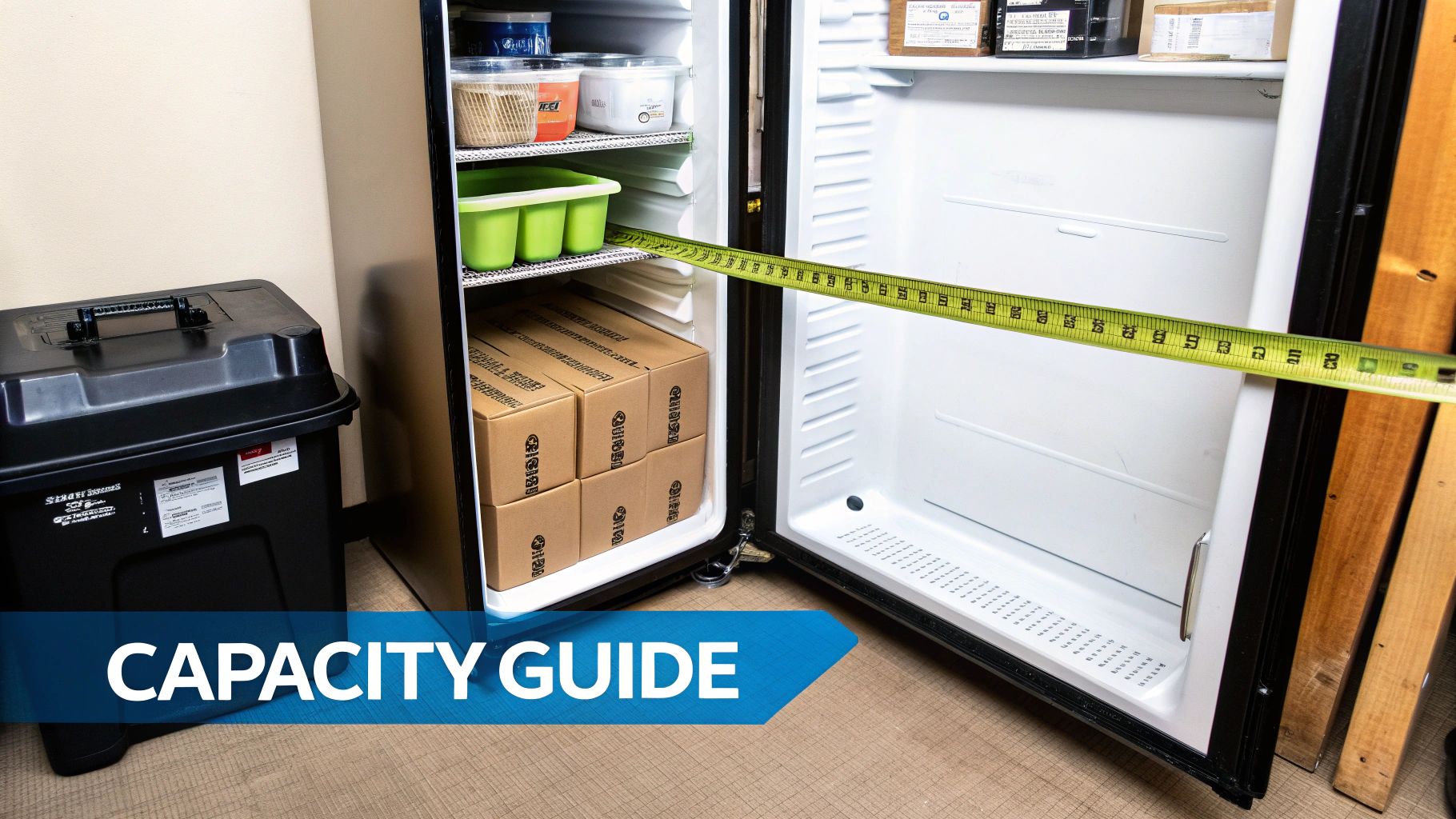
Choosing the right size for a commercial refrigerator is a critical balancing act. It’s not just about whether the unit will physically fit in your kitchen—it's about matching its internal capacity to the real-world demands of your menu, inventory, and service volume.
Get it wrong, and you’re either paying to cool empty air or, worse, creating a food safety nightmare by overstuffing the unit and blocking airflow. Think of it like a pantry: a tiny closet won’t work for a restaurant serving hundreds a night. Your refrigeration has to support your operational rhythm, not create bottlenecks.
Beyond Cubic Feet: How to Calculate Real Capacity
The manufacturer's spec sheet will always give you a capacity in cubic feet. But any seasoned chef will tell you that number is only half the story. Usable space is what really counts. The true test comes from your menu complexity, how often you get deliveries, and the chaos of your peak service hours.
A great rule of thumb to start with is the "three-day rule." Try to estimate the total amount of refrigerated inventory you need to get through three of your busiest days. This gives you a much more realistic baseline for the capacity you need, building in a buffer for a late delivery or an unexpectedly slammed weekend.
A small urban cafe with daily produce drops might get by perfectly with a single-door reach-in. On the other hand, a large catering company with a massive, diverse menu and weekly bulk orders will need a multi-door unit or even a walk-in cooler just to keep the wheels turning.
If you want to get really granular with this, our guide on choosing the right commercial refrigerator size breaks down the calculations in more detail.
Considering the Physical Footprint and Workflow
Once you have a handle on your internal capacity needs, it's time to look at the unit's external dimensions and how it will actually fit into your kitchen’s flow. The physical footprint isn’t just about length and width; you have to account for proper airflow around the unit, which is non-negotiable for keeping the compressor healthy.
The compressor's location—either top-mount or bottom-mount—plays a huge role in where you can place the fridge and how it affects your kitchen’s workflow.
-
Top-Mount Compressors: These are great because they vent hot air up and away from your line cooks. They're the go-to choice for bakeries or prep kitchens with lots of flour and dust on the floor, which can clog a lower unit. Just be sure you have enough ceiling clearance for ventilation.
-
Bottom-Mount Compressors: By pulling in cooler air from the floor, these can be a bit more energy-efficient in a hot kitchen. A major ergonomic plus is that they raise the bottom shelf, so your staff isn't constantly bending down to the floor. The downside? They are magnets for dust and debris, so they need diligent cleaning.
Taking the time to plan this out prevents the expensive mistake of buying a fridge that’s too big for the space or too small for your inventory. When you analyze both your storage needs and your physical layout, you can find the best commercial fridge that not only fits perfectly but actually makes your kitchen run smoother.
How to Judge Performance and Energy Efficiency
Your commercial refrigerator is one of the few things in your kitchen that never, ever stops running. It’s on 24/7, pulling electricity around the clock. That continuous power draw can make a huge dent in your utility bills, so choosing an efficient model isn't just about being green—it's about protecting your bottom line.
Think of it like buying a delivery van. You wouldn't just look at the sticker price, right? You'd ask about its miles-per-gallon. A more fuel-efficient engine might cost more upfront, but it pays you back over and over again at the pump. Your fridge’s compressor and cooling system work exactly the same way.
ENERGY STAR: Your Shortcut to Savings
The single easiest way to spot an efficient unit is to look for the little blue ENERGY STAR® sticker. This isn't just marketing fluff; it’s a certification from the U.S. Environmental Protection Agency (EPA) that proves the refrigerator meets some pretty tough performance standards.
On average, an ENERGY STAR certified commercial fridge uses 20-40% less energy than a standard, non-certified model. That’s a massive difference. While you might pay a bit more for the certified unit initially, the savings on your monthly power bill start adding up immediately. Keep an eye out for special deals and rebates on these models to maximize your savings.
Honestly, choosing an ENERGY STAR model is a no-brainer for most restaurant owners. Over the 10-year lifespan of a refrigerator, the energy savings from a single efficient unit can easily run into the thousands of dollars—often more than covering the initial price difference.
The Heart of the Machine: Compressor and Refrigerant
The compressor is the engine of your refrigerator. Its quality determines how well the unit cools and how much energy it uses to do so. A good compressor gets the cabinet down to temperature quickly and then shuts off, resting until it’s needed again. Cheaper ones often have to run almost constantly just to keep up, which burns through electricity and wears the component out fast.
The other half of this power duo is the refrigerant—the fluid that actually does the cooling. The new industry standard is R290 (a type of propane), and for good reason.
- It’s More Efficient: R290 is fantastic at absorbing heat, which means the compressor doesn't have to work as hard or run as long. Less work equals lower energy bills.
- It's Better for the Planet: Unlike older refrigerants, R290 has an extremely low Global Warming Potential (GWP), making it a far more responsible choice.
A top-tier compressor paired with R290 refrigerant is the winning combination for a machine that performs day in and day out without costing a fortune to run. If you want to get into the nitty-gritty, check out our complete guide to energy-efficient commercial refrigerators to see how it all works.
Features That Keep the Cold (and Your Money) In
Beyond the main components, a few key design features really separate the great refrigerators from the merely good ones. These are the details that matter in a real, working kitchen.
High-Density Insulation The walls of a fridge are packed with polyurethane foam insulation. The simple rule is this: thicker, denser foam is better. It's what keeps the cold air from seeping out and the hot kitchen air from getting in, giving your compressor a much-needed break.
Self-Closing Doors In the chaos of a dinner rush, fridge doors get left open. It happens. Self-closing doors with tight magnetic gaskets are your best defense, ensuring the door always swings shut and seals properly. It’s a small feature that saves a surprising amount of energy.
Smart Airflow The best units are designed with fans and shelving that circulate cold air evenly from top to bottom. This gets rid of warm spots, keeps all your food at a consistent, safe temperature, and helps the whole system run more efficiently.
When you focus on these performance details, you're doing more than just buying a metal box. You're making a long-term financial investment that will lower your operating costs for years to come.
Deciding Between New and Used Equipment
It's one of the biggest crossroads you'll face when outfitting your kitchen: should you spring for a brand-new fridge or save some cash with a pre-owned one? The appeal of a lower price tag on a used unit is hard to ignore, especially if you're a startup or food truck owner watching every penny. But those initial savings have to be squared with the peace of mind and long-term benefits that come with a factory-fresh machine.
This isn't just about the initial sticker price. It's a strategic decision that balances risk, reliability, and what your operating costs will look like down the road. The right answer really depends on where your business is today and where you want it to be tomorrow.
The Case for Buying New Equipment
Think of buying a new commercial refrigerator as an investment in predictability. The single biggest perk is the full manufacturer's warranty. This typically covers parts and labor for a few years and often includes even longer coverage for the compressor—the heart of the machine and its most expensive part. That warranty is your safety net, protecting you from surprise repair bills that could otherwise shut you down.
New units also come loaded with the latest tech. That almost always means better energy efficiency, thanks to modern compressors and environmentally-friendly R290 refrigerant. An ENERGY STAR® certified model might cost more upfront, but it can easily save you hundreds, even thousands, in electricity over its life.
And, of course, a new fridge is a blank canvas. You know its entire history (because there isn't one), and it shows up in perfect shape, ready to pass any health inspection without a single hidden quirk from a previous life.
When Used Equipment Makes Sense
For a lot of businesses, especially those just getting their feet wet, going with used equipment is a smart, practical move. A startup food truck, for example, can get rolling with a dependable used reach-in and keep that precious cash on hand for ingredients, marketing, or payroll. The trick is to find genuine value while keeping the risk low.
The main attraction is, without a doubt, the upfront savings. A high-quality used refrigerator can often be had for 50-70% less than its brand-new equivalent, which frees up a huge chunk of your budget. The catch? No manufacturer warranty. That’s why it's absolutely critical to buy from a reputable dealer who actually inspects, tests, and is willing to stand behind the equipment they sell. Exclusive deals from trusted suppliers can make this an even more attractive option.
When you're looking at used gear, your mantra should be reliability over rock-bottom price. A well-cared-for unit from a workhorse brand like True or Turbo Air, even if it has a few years on it, will almost always serve you better than a brand-new, no-name budget fridge. It's the sweet spot between saving money and staying operational.
Making the Smart Choice for Your Business
To strike the right balance, look at both your immediate budget and your long-term game plan. A bustling, established restaurant might decide to upgrade to all-new units to lock in energy savings and avoid any chance of downtime. For them, it’s a long-term play. On the other hand, a weekend pop-up or a small neighborhood café can do brilliantly with a certified used model.
Whichever direction you lean, knowing the pros and cons is what matters. If you're considering the pre-owned route, our guide on buying used restaurant equipment has a detailed checklist to help you kick the tires and make a smart purchase.
In the end, whether you go new or used, the goal is the same: get the best commercial fridge that can keep up with your kitchen, protect your food, and deliver real value for your investment.
Essential Maintenance to Get the Most Out of Your Fridge

The best commercial fridge isn't just the one you buy; it's the one that runs like a workhorse for years. The real secret to that kind of longevity isn't luck—it's proactive maintenance. Getting ahead of problems is what helps you sidestep the chaos and cost of a middle-of-service breakdown.
Think of it this way: a well-maintained refrigerator doesn't just prevent expensive repair calls. It has a direct ripple effect on your kitchen's efficiency, food safety, and even your profit margins. A simple, consistent checklist is all it takes to protect your investment and keep things humming along.
Daily and Weekly Checks
It's the small, consistent habits that make the biggest difference. These quick tasks take just a few minutes but act as your first line of defense against the most common fridge headaches.
Daily Habits:
- Check Temperature Logs: A quick glance is all it takes. Is the internal temperature holding steady in the safe zone (at or below 40°F)? This simple check confirms your unit is working properly and your valuable inventory is safe.
- Wipe Down Gaskets: Give the door seals a quick wipe with a damp cloth to clear away any crumbs or spills. This ensures a tight seal, which stops cold air from escaping and prevents the compressor from working overtime.
Weekly Tasks:
- Clean Condenser Coils: The condenser coils are like your fridge's radiator—they push heat out. When they get clogged with dust, grease, and kitchen grime, the compressor has to run longer and hotter. This not only spikes your energy bill but puts the whole unit at risk of failure. A quick brush-down once a week is absolutely critical.
Monthly and Quarterly Inspections
Deeper checks are designed to catch gradual wear and tear before it snowballs into a full-blown crisis. These inspections focus on the components that degrade over time, slowly hurting your fridge's performance.
A proactive maintenance schedule does more than just prevent repairs. Properly functioning equipment is essential for food preservation, and keeping your unit in top shape is a key strategy for reducing food waste and protecting your bottom line.
Monthly To-Do List:
- Inspect Door Seals: Really look at the gaskets. Are there any small cracks, tears, or spots where they've become hard and brittle? A compromised seal is one of the biggest sources of energy loss in a commercial kitchen.
- Check for Ice Buildup: A bit of frost is normal, but excessive ice in the freezer or around the evaporator coil is a red flag. It could signal a problem with the defrost system or confirm that you have a bad door seal.
Quarterly Deep Dive:
- Clean Fan Blades: Just like the condenser coils, fan blades can get caked with grime. This throws them off balance and puts extra strain on the fan motor. Wiping them clean helps maintain optimal airflow.
- Calibrate Thermometers: Don't just trust the digital display. Use an ice water bath to double-check that your fridge's internal thermometer is accurate. An incorrect reading could put your entire inventory at risk without you even knowing it.
By weaving these simple steps into your kitchen's routine, you turn maintenance from a nagging chore into a powerful strategy. It's a hands-on approach that maximizes the lifespan of your equipment, locks in food safety, and helps you get every penny of value from the true heart of your kitchen.
Got Questions? Let's Talk Commercial Fridges
Even with all this info, you might still have a few things you're wondering about. That's completely normal—picking the right commercial fridge is a big deal for your kitchen. To help you nail the decision, I’ve pulled together the most common questions I hear from restaurant owners and laid out some straight answers.
Think of this as our final chat before you pull the trigger. We're here to clear up any last-minute uncertainties so you can invest with total confidence.
Top-Mount vs. Bottom-Mount Compressor: What's the Real Difference?
Where the compressor sits might seem like a minor detail, but it actually makes a huge difference in how your fridge performs and how you'll maintain it in your specific kitchen.
A bottom-mount compressor is a smart move for most hot kitchens. Why? Because heat rises. The compressor sits near the floor, where the air is coolest, so it doesn't have to work as hard. Bonus: it lifts the bottom shelf, so your team isn't constantly bending over to grab things. The downside is that its low-to-the-ground position means it's a magnet for dust, flour, and whatever else is on your floor, so it needs more frequent cleaning.
On the other hand, a top-mount compressor is perfect for places like bakeries or prep kitchens with lots of dry ingredients flying around. Since it's up high, it stays clean and won't get clogged with debris. The trade-off? It can suck in the hotter air that pools near the ceiling, which might make it run a bit harder.
How Often Do I Need to Get My Fridge Professionally Serviced?
Your daily and weekly cleaning routines are essential, but they don't take the place of a pro's trained eye. My advice is firm on this one: get a qualified technician to service your refrigerator at least once a year.
Think of it like a tune-up for your car. A professional service call is more than just a deep clean. A tech will run diagnostics, check refrigerant levels, inspect the wiring, and spot worn-out parts before they fail and shut you down during a Saturday night rush. This is an investment in prevention that will absolutely save you from emergency repair bills and lost business.
Is Financing a Commercial Refrigerator a Smart Move?
For most businesses, absolutely. Financing can be a fantastic tool, especially if you're just starting out and need to watch your cash flow, or if you're an established spot ready for an upgrade without dropping a huge chunk of capital all at once. It lets you get the high-quality, efficient gear you need now.
Instead of settling for a cheaper, less reliable fridge that might cost you more in the long run, financing allows you to get a top-tier machine that can keep up with your growth. It closes the gap between what you need and what you can afford today, so you never have to choose between quality and your budget.
What Are the Must-Have Features for Food Safety?
When it comes to food safety, a few features are completely non-negotiable. Here's what to look for:
- A Digital Temperature Controller: You need an external display you can see with a quick glance. It’s the only way to be sure your unit is holding at a safe temperature.
- Self-Closing Doors: This simple mechanism is your best defense against temperature swings when the kitchen gets crazy and someone forgets to shut the door properly.
- NSF Certification: This seal is your proof that the unit was built for sanitation. It means the materials are easy to clean and designed to prevent bacteria from growing.
And don’t forget about stainless steel. Its non-porous surface is tough on bacteria and makes your daily cleaning routine much faster and more effective.
Ready to find the perfect refrigeration solution for your kitchen? At Encore Seattle Restaurant Equipment, we offer a massive selection of premium new and used equipment to fit any budget. Explore our inventory for the latest news on supplies and exclusive deals, and get expert advice today.