
Mastering 3 Compartment Sink Temperatures for Food Safety
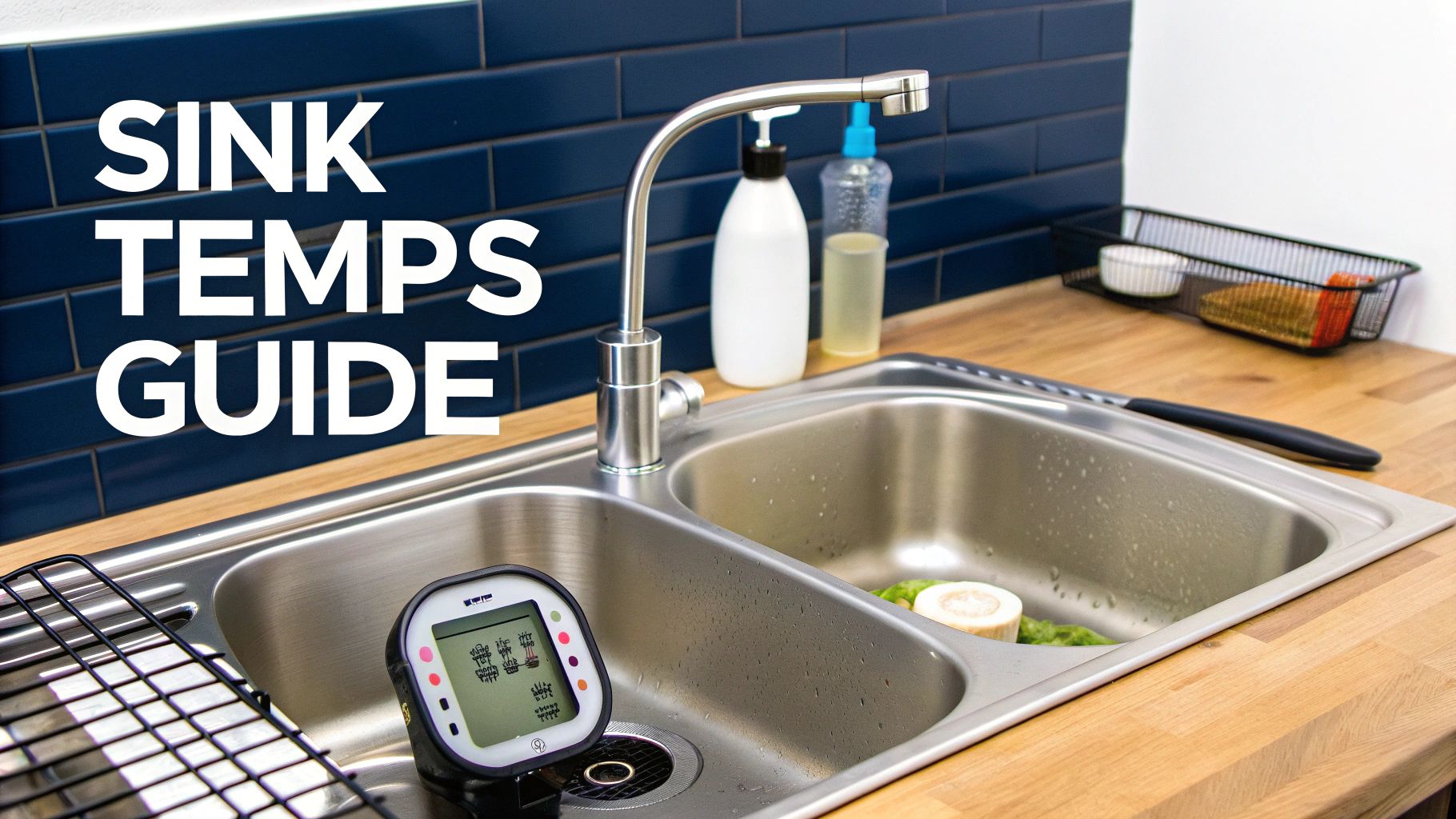
Getting the water temperatures right in your 3 compartment sink is a make-or-break part of kitchen safety. You’re aiming for at least 110°F in the wash sink to cut through grease and a blistering 171°F in the final sink if you’re using hot water to sanitize. If you're using chemicals instead, that final sink is usually around 75°F, though you'll need to check the specific requirements for your sanitizer. Nailing these numbers is the bedrock of a safe, health-code-compliant dishwashing station.
Your Guide to Perfect Sink Temperatures
Anyone who's worked in a busy kitchen knows that manual dishwashing is more than just a chore—it’s a craft. It’s not just about making plates sparkle; it’s about keeping your diners safe from foodborne illness and making sure you pass that next health inspection with flying colors. The classic three-compartment sink is your main tool for this, and it only works if you get the water temperatures spot-on in every single basin. By staying informed on industry best practices and equipment trends, you can ensure your setup is both efficient and safe.
Think of it like an assembly line. Each sink has one critical job to do before passing the dish to the next station. If the temperature is wrong in any of them, the whole process falls apart, and you risk putting public health on the line.
The Critical Temperature Zones
Across the country, health codes are built around very specific temperature rules for a reason. That first sink, your wash basin, has to be at least 110°F (43°C). This isn't just for comfort; that heat is essential for activating your detergent and breaking down stubborn grease and food particles.
After a clean rinse in the middle sink, the real magic happens in the third compartment. If you're using the hot water sanitizing method, that water needs to be held at a steady 171°F (77°C). Dishes have to be fully submerged for at least 30 seconds to achieve the required 99.999% reduction in bacteria. These aren't just arbitrary numbers—they're the scientifically-backed temperatures needed to kill dangerous pathogens.
A well-run three-compartment sink is your first line of defense against cross-contamination. It’s a core piece of your kitchen’s food safety plan and shows everyone, from your staff to your customers, that you take quality seriously.
To make this whole process manageable, investing in the right gear is key. A solid stainless steel sink is a must, but a booster heater is what really helps you consistently hit and hold that critical 171°F sanitizing temperature. These tools create a reliable system that can handle the chaos of a dinner rush and satisfy any health inspector. This is a foundational part of any HACCP food safety program, a topic we cover in more detail in our guide.
Here's a quick cheat sheet to keep these crucial numbers straight.
Three-Compartment Sink Temperature Requirements at a Glance
This table breaks down the FDA Food Code guidelines for each sink, giving you a fast way to check your setup.
| Compartment | Purpose | Required Temperature (Hot Water) | Required Temperature (Chemical Sanitizer) | Key Action |
|---|---|---|---|---|
| Sink 1 | Wash | Min. 110°F (43°C) | Min. 110°F (43°C) | Scrub with detergent to remove food soil |
| Sink 2 | Rinse | Warm, flowing water | Warm, flowing water | Remove all soap and food residue |
| Sink 3 | Sanitize | Min. 171°F (77°C) for 30 sec | 75°F-120°F (24°C-49°C) per chemical specs | Kill remaining pathogens |
Remember, these are the minimum standards. Consistently hitting these targets is what keeps your operation safe and compliant.
The "Why" Behind Each Sink Compartment
Knowing the required 3-compartment sink temperatures is step one. But understanding why those numbers matter is what turns a daily chore into a bulletproof food safety system. Each basin in the line-up has a specific job to do, and they work together as a team to knock out pathogens. When your crew gets the science, they're not just following rules—they're actively protecting your customers.
Let's start where the action begins: the wash sink. This is where the initial battle against grease and grime is won.
The Wash Sink: Breaking Down the Mess
Think of the 110°F minimum temperature in your wash sink as the key that unlocks your detergent's cleaning power. This isn't an arbitrary number. That specific level of heat is critical because it melts and loosens fats, oils, and other gunk, making them way easier to scrub off. Trying to clean a greasy pan in cold water is a losing battle; the heat helps break down that stubborn food soil so your detergent can get to work.
Speaking of detergent, that 110°F water is also what wakes it up. The soap's molecules need that heat to effectively grab onto the grease and lift it away from the dish, suspending it in the water so it doesn’t just stick to the next plate you wash. This first sink is all about getting things physically and chemically clean for the next step.
The temperature guidelines we rely on today are born from decades of food safety research. The FDA's move to a 110°F minimum wash temperature was solidified in the 1993 Food Code, largely to combat rising norovirus outbreaks. Before that, kitchens often used cooler water, which studies linked to much higher rates of cross-contamination. You can dive deeper into the history of these crucial temperature rules on zanduco.com.
With the gunk gone, it’s time for the middle sink.
The Rinse Sink: The Unsung Hero
The rinse sink might seem like a simple step, but it’s arguably one of the most important. Its job is to wash away every last trace of detergent and any tiny food particles left behind. Think of it as creating a clean slate for the final, most critical stage.
Why does this matter so much? Chemical sanitizers are designed to attack germs on a clean surface. If leftover soap gets into your sanitizer, it can completely neutralize it, making it useless. A good, thorough rinse in clean, warm water ensures your sanitizer can do its job effectively, saving you from wasting chemicals and, more importantly, from failing to kill dangerous pathogens.
The Sanitizer Sink: Delivering the Final Blow
This is where the magic happens. The third sink is all about eliminating any lingering microorganisms that survived the wash and rinse. You’ve got two main ways to get this done, and each relies on a different scientific principle.
-
Hot Water Sanitizing (171°F): This method is pure physics. By submerging dishes in water heated to at least 171°F for a minimum of 30 seconds, you create a "heat shock" that kills bacteria on contact. The intense heat causes the proteins inside the bacterial cells to basically cook and fall apart, killing them instantly. It’s a powerful, chemical-free way to sanitize.
-
Chemical Sanitizing (75°F): This approach uses specific chemical solutions—like chlorine, quat (quaternary ammonium), or iodine—to poison the germs. These chemicals work by destroying the cell walls of bacteria or scrambling their metabolism. While it works great at cooler temperatures (around 75°F), this method requires you to be exact with your measurements and timing to be effective.
Choosing Your Sanitizing Method
Once your dishes are washed and rinsed, that final sanitizing step is what stands between your customers and a foodborne illness. You've got two main paths to take here: high-temperature water or a chemical sanitizer. There's no single right answer—the best choice really comes down to what makes sense for your kitchen's workflow, budget, and equipment. By staying informed on the latest restaurant equipment and supplies, you can make the most cost-effective decision.
Sanitizing with hot water is about as straightforward as it gets. You're simply using a blast of heat—specifically, water heated to a scalding 171°F for at least 30 seconds—to kill off any lingering bacteria. The big upside is that there’s no chemical residue left behind. On the flip side, keeping water that hot requires a dedicated booster heater, which means higher energy bills. It also introduces a serious burn risk for your dishwashing crew if they aren't careful.
Chemical Sanitizers As An Alternative
If you're looking to save on energy costs, chemical sanitizers are your go-to. They work their magic at much lower water temperatures, usually around a comfortable 75°F, which can make a real dent in your utility spending. Instead of heat, you're relying on a specific concentration of a chemical solution to do the germ-killing work.
The trade-off here is that you're swapping a high utility bill for a need for constant vigilance. Your team has to be on the ball, mixing solutions to the correct strength and testing them throughout the day with test strips to make sure they haven't lost their punch.
It all boils down to a simple process: cut through the grease with soap and hot water first, then knock out the bacteria in the final sink.
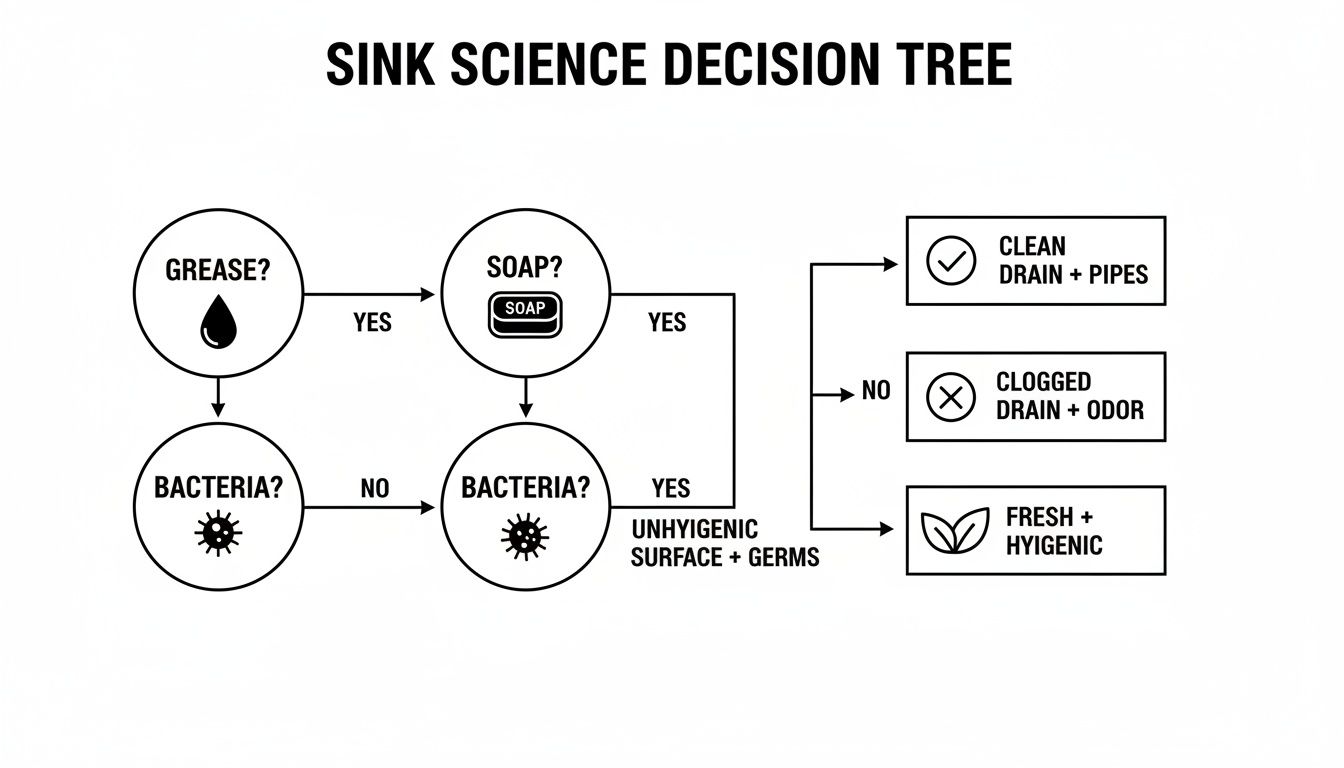
As you can see, no matter which route you take, the mission is always the same: tackle grease, then soap, and finally bacteria to ensure every dish is completely safe.
Comparing Common Chemical Options
If you go the chemical route, you’ll typically be choosing between three main players. Each has its own recipe for success, with specific concentrations—measured in parts per million (PPM)—and required contact times.
-
Chlorine (Bleach): This is the old standby for a reason. It's cheap, effective, and works fast. You're aiming for a concentration of 50–100 PPM, and the dishes only need to be submerged for about 7 seconds. For a potent, reliable option, many operators use products like Sodium Hypochlorite 14.5% Available Chlorine.
-
Quaternary Ammonium (Quat): Quat solutions are a great choice because they don't have a harsh smell, aren't corrosive to your equipment, and tend to stay active in the water longer than bleach. The concentration needs to be higher, usually 200–400 PPM (check the label), with a contact time of at least 30 seconds.
-
Iodine: You don’t see iodine as much these days, but it’s still an approved option. It works well at a low concentration of 12.5–25 PPM and also requires a 30-second contact time.
A pro tip: your decision should factor in your budget, how much training you can commit to, and even the hardness of your water. Some chemicals just don't work as well in hard water, so know what you're dealing with.
Deciding between heat and chemicals is a critical choice. Here’s a quick breakdown to help you weigh the pros and cons.
Comparison of Sanitizing Methods: Hot Water vs. Chemical
| Factor | Hot Water Sanitization (171°F+) | Chlorine Sanitizer (50-100 ppm) | Quaternary Ammonium (200-400 ppm) |
|---|---|---|---|
| Initial Cost | High (requires booster heater) | Low (bleach is inexpensive) | Moderate |
| Operating Cost | High (energy consumption) | Very Low | Low |
| Effectiveness | Highly effective against a broad range of pathogens | Fast-acting and effective, but can be unstable | Very effective, stable, and long-lasting |
| Safety Concerns | Significant burn risk for staff | Can be corrosive; irritating to skin/eyes | Generally safer and less irritating |
| Residue | None | May leave a slight odor if not rinsed properly | Odorless and non-corrosive |
| Contact Time | 30 seconds | 7 seconds (minimum) | 30 seconds (minimum) |
| Monitoring | Requires a calibrated thermometer | Daily testing with chlorine test strips is a must | Daily testing with quat test strips is essential |
| Water Hardness | Not affected | Can be less effective in hard water | Less affected by water hardness than chlorine |
Ultimately, the best method is the one you can execute perfectly, every single shift. If you have a well-trained crew that you trust to handle testing procedures, chemical sanitizers can save you a lot of money. But if you want a more foolproof system and have the right equipment, hot water is a reliable and powerful choice. For a deeper dive, you can explore the full set of three-compartment sink rules and get all the details.
Keeping Your Sink Temperatures on Point During Service
Knowing the right temperatures for your three-compartment sink is one thing. Actually keeping them there during a hectic service is a whole different ball game. This is where a solid routine separates the pros from the amateurs and turns good intentions into genuine food safety. The main challenge? Temperature decay.
As you wash dishes, that hot water inevitably cools down, and its effectiveness plummets. This isn't a small drop, either. Studies have shown wash water that starts at a perfect 110°F can fall to a lukewarm 80°F in just a few hours. That's a 40% loss in cleaning power, turning your wash sink into a bacterial soup.
On the flip side, the power of proper heat is undeniable. Holding that final sanitizing rinse at 171°F for a mere 30 seconds achieves a 99.999% reduction in nasty pathogens like Listeria. That’s a level of clean that, according to some lab tests, even outperforms chemical sanitizers. Hobart actually has some great insights on this over on their blog.
A Simple Monitoring Routine That Actually Works
Your best defense against cooling water is a proactive monitoring schedule. This isn't about creating more busywork; it's about building a simple, repeatable system that everyone on the team can follow. A good thermometer is your most important tool here—a reliable pocket digital thermometer is a worthwhile investment for any kitchen.
Here’s a practical schedule you can start using today:
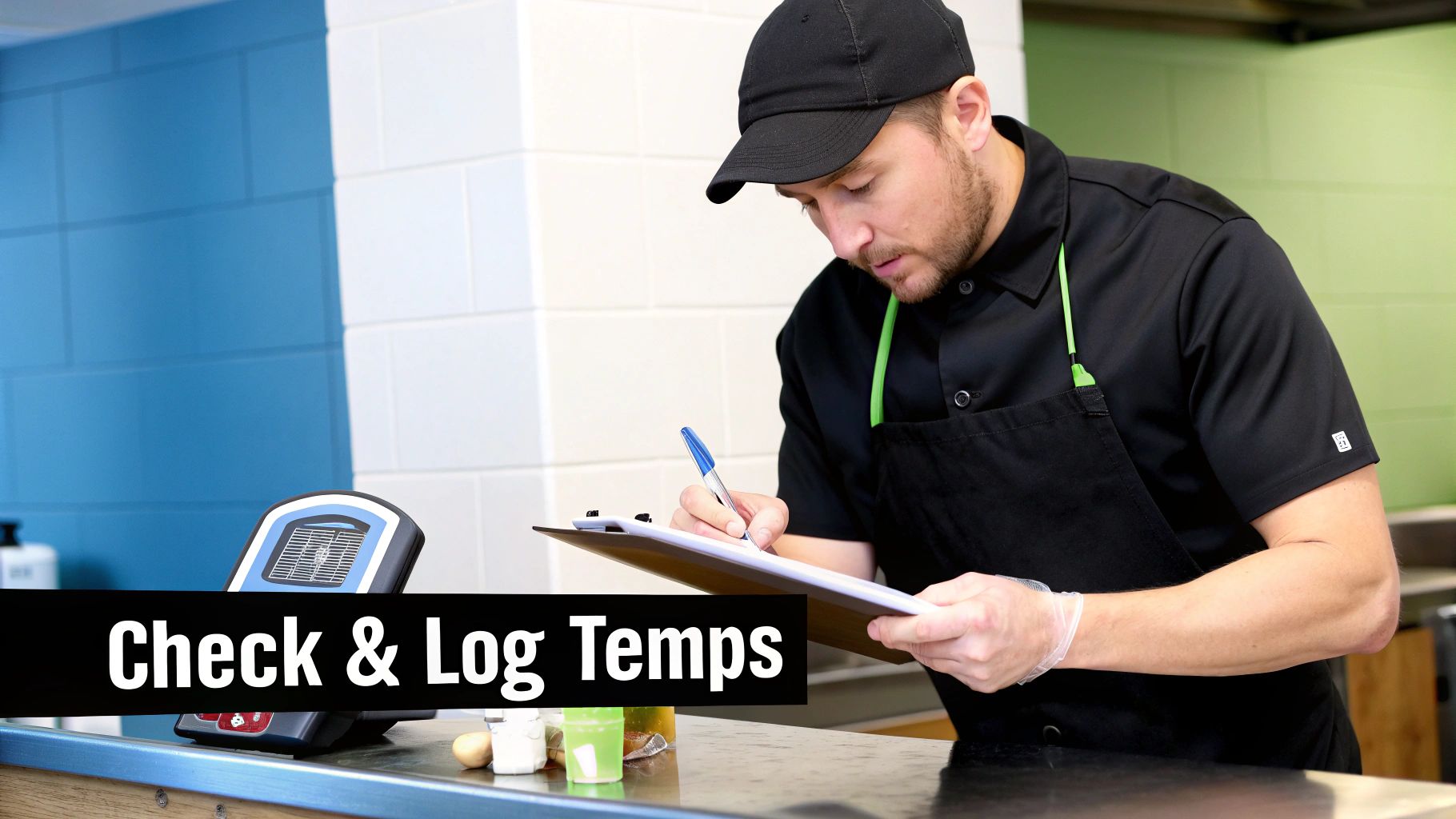
- Before Service: Start the day right. Calibrate your thermometer and check your sanitizer test strips. Log the starting temperatures and concentrations before the first dish hits the water.
- Mid-Shift: Check again right before and after the main rush. This is prime time for water to get dirty and for temperatures to drop below the safe zone.
- As Needed: Trust your eyes. If the water looks greasy, cloudy, or is full of suds, it’s time for a change, no matter what the clock says.
The real goal here is to make temperature and sanitizer checks an automatic reflex for your dish crew. When logging becomes just another part of the workflow, compliance happens naturally instead of being a forgotten chore.
Practical Tips for Holding the Heat
Beyond just checking temperatures, a few smart habits can help you keep your sinks in the right range all day. These small tweaks make a huge difference in both safety and efficiency.
Here are a few tricks of the trade:
- Get a Booster Heater: If you’re using hot water to sanitize, a booster heater isn't optional—it's essential. It’s the only reliable way to guarantee your final rinse consistently hits that critical 171°F mark.
- Change Water Strategically: Don’t wait for the water to look like sludge. Make it a rule to drain and refill the wash and rinse sinks every 2-4 hours during a busy shift. This keeps the water hot and effective.
- Dose Your Soap Properly: Make sure your team knows the right soap-to-water ratio. Too much soap actually cools the water and can leave a film on dishes, while too little won’t cut through the grease.
- Cover the Sinks During Downtime: Got a lull between rushes? Simple sink covers can trap a surprising amount of heat. This little trick saves energy and gets your water back up to temp faster when things pick back up.
Troubleshooting Common Sink Temperature Problems
Even in the most buttoned-up kitchens, things go wrong. When it comes to your three-compartment sink, keeping the water at the right temperature can feel like a constant battle, especially during a chaotic dinner rush. Tackling these issues head-on is the key to staying compliant and keeping your dish station from grinding to a halt.
Let's start with the most common headache: the wash water in the first sink just won't stay hot. Your team is trying to keep it above that critical 110°F mark, but it keeps dipping. More often than not, the culprit is an over-taxed central water heater trying to supply hot water to every hand sink, prep sink, and machine in the building.
Why Your Wash Water Gets Cold
Before you start pricing out new water heaters, do a little detective work. Is your dish pit located on the other side of the building from the heater? A long pipe run means the water loses a lot of heat just getting there. Also, pay attention to how often your team is dumping and refilling the sink—while that’s a good practice, it puts a heavy, constant demand on your system.
If you've checked these boxes and the problem still persists, it might be time for a more direct solution.
A dedicated under-sink booster heater can be a total game-changer. These small, powerful units are installed right at the source, ensuring your wash water stays at a consistent 110°F. This means your detergent can do its job effectively, no matter what else is happening in the kitchen. Keep an eye out for exclusive deals on restaurant equipment like this to upgrade your setup.
When Your Sanitizer Stops Sanitizing
Another frequent issue pops up in the third sink, particularly with chemical sanitizers. You mix a perfect batch, the test strips read great, but an hour later, the concentration is too low to be effective. What gives?
The number one cause is soap carryover. If your crew isn't rinsing dishes thoroughly in the second sink, detergent residue gets dragged into the sanitizer, instantly neutralizing its active ingredients.
The fix here is all about process. Emphasize the importance of a clean, thorough rinse. Make sure your team is changing the rinse water frequently, so it doesn’t just become a tub of soapy, lukewarm water.
What to Do When the Water is Too Hot
Finally, what about the other extreme? If you're using the high-heat sanitizing method, you might hear staff complain that the water is dangerously hot. Remember, 171°F is the minimum—it can easily get much hotter, creating a serious burn hazard.
This is a non-negotiable safety issue. Staff must use long-handled baskets or racks to submerge and retrieve items. You never want someone putting their hands directly into that water. Investing in proper, NSF-certified equipment from the start, from the sink itself to the booster heater, is your best defense against many of these common temperature and safety headaches.
Gearing Up for Compliance and Safety
Getting your 3-compartment sink temperatures right isn't just about passing the next health inspection. It's about protecting your customers and safeguarding the reputation you've poured your heart into. To nail those temperatures shift after shift, you need more than just well-trained staff—you need the right tools in your arsenal. Restaurant owners and chefs who stay informed about industry trends often have the most efficient and compliant kitchens.
Think of it this way: a high-quality, NSF-certified stainless steel sink is built to hold heat. That simple upgrade makes it dramatically easier to keep your wash water at that crucial 110°F, even during the dinner rush. Investing in the right foundation sets your team up for success from the start.
Your Sanitation Station Toolkit
From the big-ticket items to the small gadgets, having the right gear turns a compliance headache into a smooth, repeatable process. A well-equipped station empowers your crew and prevents those frustrating, time-wasting problems.
Here are the absolute must-haves:
- A Reliable Booster Heater: If you're using hot water to sanitize, this is non-negotiable. It’s the only practical way to ensure your final rinse bay hits and stays at the required 171°F.
- An Accurate Digital Thermometer: Don't guess. A calibrated, waterproof thermometer is your best friend for daily temperature checks in every compartment.
- The Right Sanitizer Test Strips: Using chemical sanitizers? You need the specific test strips for your chosen chemical (chlorine, quat, or iodine) to prove the concentration is on point.
Working with a reputable restaurant equipment supplier is more than a transaction; it's a partnership. They can offer real-world advice and exclusive deals on building a sanitation system that’s not just compliant, but also efficient for your specific kitchen's workflow.
Still Have Questions? Let's Clear Things Up.
Even with a perfect setup, a few questions always seem to come up on the floor. Let's tackle some of the most common ones I hear from restaurant managers and kitchen staff about keeping their sink stations compliant.
How Often Should We Be Changing This Water?
The standard answer is every 2-4 hours of continuous use. But let's be realistic—during a Saturday night rush, that water gets grimy fast.
The real rule is to change the water in all three sinks the moment it gets visibly dirty, greasy, or when the temperature drops out of the safe zone. If you see a film on top or the suds are gone, it's time for a refresh. Don't wait for the clock; trust your eyes.
Can I Just Grab My Food Thermometer to Check the Water?
Please don't. You really want a separate thermometer just for your warewashing station. It's a simple way to eliminate any chance of cross-contaminating your food prep areas.
Make sure this dedicated thermometer is calibrated and can handle high heat—it needs to accurately read up to at least 180°F so you can confidently verify that 171°F sanitizing rinse.
Fun fact: The most common health code dings for three-compartment sinks aren't for anything complicated. It's almost always wrong water temperatures or incorrect sanitizer levels. Right behind that is not having the right test strips on hand for the chemical you're using—an easy fix!
We Have a High-Temp Dishwasher. Do We Really Need a Three-Compartment Sink?
Yep, you almost certainly do. Most local health departments require a three-compartment sink as a non-negotiable backup. What happens if your dishwasher goes down mid-service? You can't just stop washing dishes.
It's also essential for all those bulky items that never fit in a dish machine, like big stock pots, sheet pans, and whisks. Think of it less as a redundant piece of equipment and more as a crucial part of your kitchen's operational safety net.
At Encore Seattle Restaurant Equipment, we know that running a compliant kitchen comes down to having the right gear. From heavy-duty stainless steel sinks to the booster heaters and thermometers that keep you in the clear, we’ve got your back. Check out our complete lineup of warewashing essentials and get expert advice at https://encoreseattle.com.