
Water filtration system for restaurants: The smart choice for taste & savings
A water filtration system for restaurants isn't just another piece of equipment; it's the invisible foundation for everything you serve. Think of it as the secret ingredient that guarantees consistency and quality in every dish, beverage, and even the ice in your drinks. For restaurant owners and chefs looking to stay ahead of industry trends, investing in the right filtration is less of a luxury and more of a critical tool for protecting flavor, preventing expensive equipment damage, and upholding the reputation you've worked so hard to build.
The Secret Ingredient Hiding in Your Tap Water
Picture this: a beloved Seattle coffee shop, famous for its perfectly pulled espresso shots. One week, the coffee is rich and aromatic, drawing in regulars and earning five-star reviews. The next, customers are complaining that it tastes flat, almost bitter. Nothing has changed—not the beans, not the grind, not the barista's technique. So what’s the problem? The city’s tap water, which can fluctuate in mineral and chlorine content from one day to the next.
This is a real-world challenge that every restaurateur faces. Water is a core ingredient in almost everything, yet its quality is so often overlooked. While municipal tap water is treated to be safe for drinking, it carries a cocktail of elements that can quietly undermine your menu.
Why Tap Water is an Unreliable Ingredient
Even minor shifts in water composition can create major inconsistencies, the kind that can slowly tarnish your brand. Here's what might be flowing through your pipes:
- Chlorine: This is the go-to disinfectant for city water, but it leaves behind a chemical taste and odor that can easily overpower the delicate notes in coffee, tea, and fountain drinks.
- Sediment: We're talking about tiny particles of sand, rust, and dirt. They can make your water look cloudy and give your ice a gritty, unpleasant texture—not exactly a great first impression.
- Hard Minerals: Calcium and magnesium are the notorious culprits behind limescale. This chalky buildup clogs pipes, chokes the efficiency of your equipment, and ultimately leads to expensive repairs and early replacements.
This isn't just a Seattle problem; it's a challenge the entire food service industry is grappling with. From a fine-dining spot in Sodo to a small neighborhood cafe, clean, consistent water is non-negotiable. The global demand for water treatment solutions tells the same story. Valued at $14.23 billion in 2025, the water filtration systems market is expected to jump to $35.18 billion by 2034, growing at a steady 9.61% each year. This boom is fueled by health standards and the growing recognition that safe, predictable water is essential in commercial kitchens everywhere.
Inconsistent water quality is a silent profit killer. It doesn't just mess with the taste of your food and drinks; it slowly eats away at your most valuable kitchen appliances, from espresso machines to commercial steamers.
When you get right down to it, a high-quality water filtration system for restaurants is not an optional add-on. It's a fundamental investment in consistency, quality, and the long-term health of your business. It protects the integrity of your menu and the expensive equipment you rely on every day.
If you're just starting to look into this, you can find helpful general information on water filtration systems to get a handle on the basics. Remember, clean water is also key for keeping appliances like your ice machine running smoothly—our guide on ice machine cleaners and sanitizers dives deeper into that. Here at Encore Seattle, we specialize in helping Pacific Northwest restaurants master this crucial element, ensuring every customer walks away happy.
Choosing the Right Filtration System for Your Kitchen
Picking the right water filtration system for your restaurant can feel like you're staring at a wall of confusing tech specs. But it doesn't have to be that complicated. The real goal is simple: find the perfect solution for each specific job in your kitchen, from the coffee brewer to the combi oven. Savvy chefs know that staying informed about the latest equipment trends is key to optimizing their kitchen.
Let’s skip the jargon and think about it like building a team. Each player has a very specific role, and you win by putting the right one in the right position. Before diving into the specifics for your restaurant, it helps to get a feel for the different types of general water filtration systems available on the market. This gives you a solid starting point for making a smart decision.
If you're noticing specific problems—like funky-tasting water or scale buildup on your equipment—this chart can help you pinpoint the likely cause and the best solution.
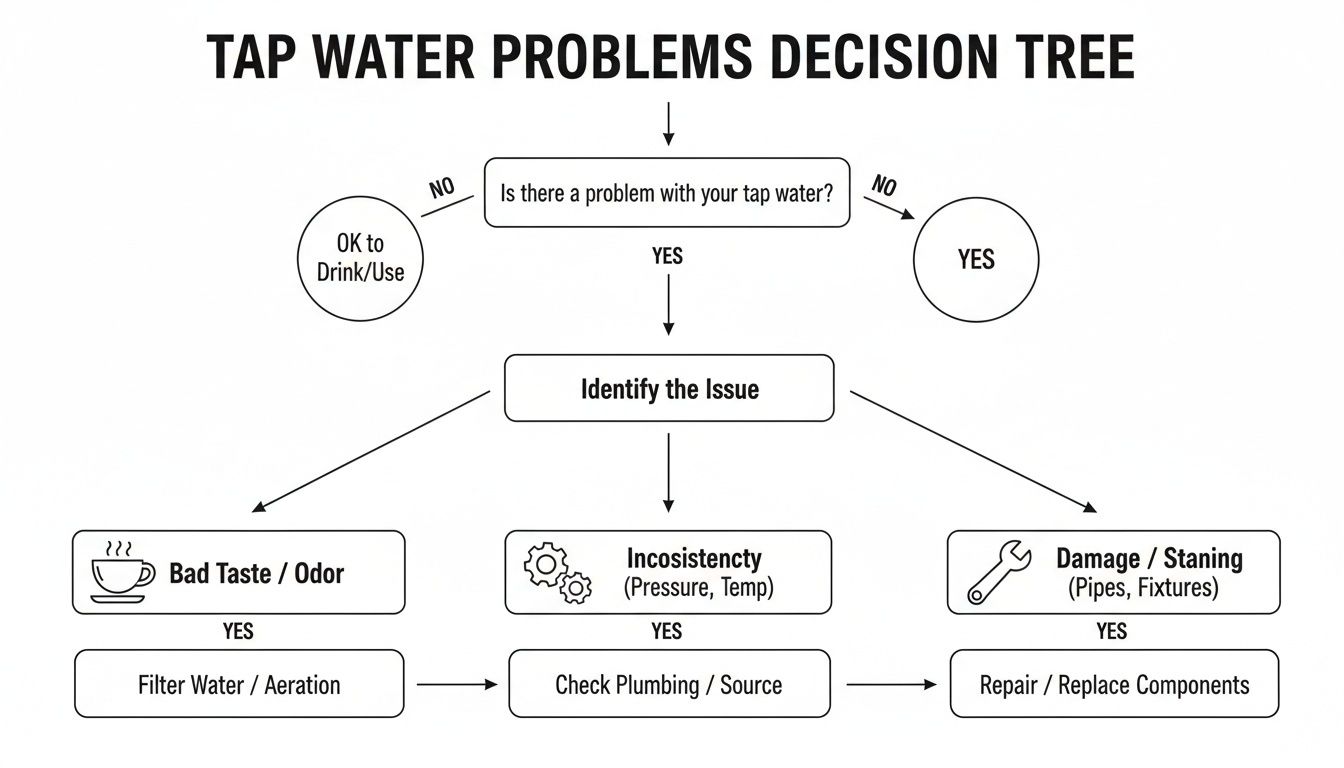
This kind of visual guide is great for connecting the dots between an issue you're seeing every day and the type of filter designed to fix it.
Matching Filtration Technology to Your Needs
To make the best choice, you need to understand what each type of filter actually does. Let's meet the key players on your water filtration team and see where they really shine in a busy kitchen environment.
The Flavor Sponge: Activated Carbon Filters
Imagine a sponge that’s engineered to soak up only bad flavors and smells. That's essentially what an activated carbon filter does. Its main job is to pull out chlorine, chloramines, and other compounds that make your water and beverages taste "off."
- Best For: Coffee and espresso machines, tea brewers, and soda fountains.
- Why It Matters: Chlorine is the enemy of good coffee, making it taste bitter and flat. When your beverages are over 98% water, you can't afford to get this part wrong. This filter is a must-have for quality.
The Heavy Lifter: Sediment Filters
Think of sediment filters as the bouncer at the front door of your kitchen's plumbing. They catch all the bigger, visible gunk—like dirt, rust, and sand—before it can get inside and cause chaos in your expensive equipment.
- Best For: Acting as a pre-filter for more sensitive systems or as a standalone solution if your local water has a lot of visible particles.
- Why It Matters: All it takes is a tiny piece of grit to clog a valve in an ice machine or espresso maker, leading to a frustrating breakdown and a costly service call.
The Ultimate Guardian: Reverse Osmosis Systems
Reverse Osmosis (RO) is the gold standard of water filtration. It’s the ultimate guardian for your most sensitive and valuable equipment. This system works by forcing water through an incredibly fine membrane, stripping out up to 99% of all dissolved solids, including scale-causing minerals like calcium and magnesium.
- Best For: Combi ovens, commercial steamers, high-end espresso machines, and any ice maker where crystal-clear cubes are essential.
- Why It Matters: Scale buildup is the silent killer of kitchen equipment. It acts like cholesterol in your machine's arteries, forcing it to work harder, driving up energy bills, and eventually causing it to fail. An RO system is a direct investment in the longevity of your gear.
To make it even clearer, here’s a quick-reference guide to help you match the right filtration system to specific kitchen applications.
Matching Filtration Technology to Your Restaurant's Needs
| Filtration Type | Primary Function | Best For | Example Use Case |
|---|---|---|---|
| Activated Carbon | Removes chlorine, chemicals, bad tastes, and odors. | Beverage quality and taste consistency. | Ensuring coffee and fountain drinks taste clean and crisp. |
| Sediment Filter | Catches physical particles like sand, dirt, and rust. | Protecting equipment from clogs and physical damage. | Placed before an ice machine to prevent spray nozzles from clogging. |
| Reverse Osmosis | Removes up to 99% of dissolved solids and minerals. | Preventing scale buildup in high-value equipment. | Protecting the delicate heating elements inside a combi oven or steamer. |
This table should help you quickly see which technology is the best fit for the different water-using stations throughout your kitchen.
A Smart Investment in Your Business
Choosing the right filtration system isn't just about buying another piece of equipment; it's a serious business decision. The market for these systems is booming for a reason. It's projected to jump from $10.5 billion in 2024 to $19.0 billion by 2029, growing at a 12.5% compound annual growth rate.
That growth shows a clear trend: restaurants are realizing the massive return on investment that comes from clean water. The U.S. market alone is expected to grow from $11.01 billion in 2025 to $20.17 billion by 2033, with whole-restaurant systems leading the charge. This isn't just industry noise—it’s proof that a proper water filtration system for restaurants delivers real, tangible value by protecting your assets and elevating the customer experience.
The right water filter isn't an expense; it's a strategic investment. It protects your equipment from scale, ensures your coffee tastes exceptional, and delivers the consistency that builds a loyal customer base.
In the end, the best strategy is often a hybrid approach. You might have a sediment filter protecting the whole building, an activated carbon filter dedicated to the beverage station, and a powerful RO system hooked up to the combi oven. By matching the right technology to the right job, you create a complete solution that safeguards your equipment, wows your customers, and strengthens your bottom line.
How to Correctly Size Your System and Maximize Efficiency
Choosing the wrong size for your water filtration system is one of those classic, costly mistakes I see all the time in the restaurant world. An undersized system will inevitably choke during your busiest hours, creating a bottleneck that slows down everything from the dishwasher to the coffee machine. On the flip side, an oversized system is just a waste of capital and precious kitchen space, giving you capacity you’ll simply never use.
Getting this right is all about matching the system's horsepower to your kitchen’s real-world demands. It ensures every dollar you invest is working for you, preventing operational headaches and giving you the best possible return. For chefs and owners looking for an edge, this is a key industry trend to follow.
Demystifying Flow Rate and Water Usage
First things first, let's talk about flow rate, which is measured in Gallons Per Minute (GPM). The easiest way to think of GPM is as the speed at which water can move through your filter. If your kitchen needs 10 gallons of water every minute during the dinner rush, but your filter can only push out 5 GPM, you're going to have a serious problem with low water pressure.
To figure out your required flow rate, you need to calculate your peak water usage. This isn’t about your average daily consumption; it's about the busiest moment of your busiest day.
Calculating Your Restaurant's Peak Demand
Let's walk through a practical example. Picture a bustling Seattle cafe during the Saturday morning rush, say from 8 AM to 11 AM. During that peak window, you've got a ton of appliances all pulling water at the same time.
To calculate your total GPM, you just need to list all of your water-dependent equipment and their individual flow rates. You can find this info right in the manufacturer's spec sheets.
- Three-Group Espresso Machine: 1.5 GPM
- Commercial Dishwasher (High-Temp): 2.0 GPM
- Ice Machine (Water-Cooled): 1.5 GPM
- Soda Fountain (8 Heads): 1.0 GPM
- Three-Compartment Sink Faucet: 2.5 GPM
- Handwashing Sinks (2): 1.0 GPM (0.5 GPM each)
Add those up, and you get a total potential demand of 9.5 GPM. This number is your baseline, your starting point for finding a water filtration system for restaurants that can handle your peak load without breaking a sweat.
It's a common misconception to size a system based on pipe size alone. The real key is to calculate the cumulative flow rate of all appliances that could be operating at the same time. This data-driven approach prevents underperformance and service interruptions.
Factors That Influence Your Sizing Decision
Beyond that raw GPM calculation, a few other factors come into play. Your final choice should be a smart balance of all these elements to ensure your system runs efficiently for years to come.
1. Daily Customer Volume
A high-volume operation will burn through filter cartridges much faster. If you're serving 500 customers a day, you'll be replacing filters far more often than a restaurant serving 100. Sizing up just a little can extend the time between those costly filter changes.
2. Type of Appliances
Different pieces of equipment have different needs. Your ice machine, for example, needs a steady, uninterrupted supply of filtered water to produce that crystal-clear, taste-free ice everyone wants. A sudden drop in pressure can mess with cube size and clarity. If your ice machine is acting up, checking its water supply is a great first step, and you can find more tips in our guide to commercial ice machine troubleshooting.
3. Future Growth Plans
Are you thinking about adding another espresso machine or maybe a combi oven in the next year? If growth is on the horizon, it's smart to choose a system with a bit more capacity than you need today. This foresight saves you from the massive headache and expense of replacing your entire filtration setup when your business expands. Sizing your system correctly from the get-go is an investment in both your present operations and your future success.
Your Step-by-Step Installation and Maintenance Plan
You’ve done the research and picked out the perfect water filtration system for restaurants. Now comes the part that makes it all worthwhile: a proper installation and a solid plan for keeping it running smoothly. This isn't something to be nervous about. With a professional setup and a simple, consistent maintenance routine, you’ll protect your investment and guarantee top-notch water quality for years to come.
Getting your kitchen's water supply upgraded starts with a professional installation. I know it can be tempting to save a few bucks and try a DIY approach, but this is one area where calling in a certified technician pays off. They know how to prevent leaks, avoid pressure drops, and make sure your new system doesn't get damaged right out of the box.
A pro will handle everything, from tapping into the main water line to hooking up individual appliances. Most importantly, they’ll ensure every connection is secure and up to local health codes—something you don’t want to get wrong.
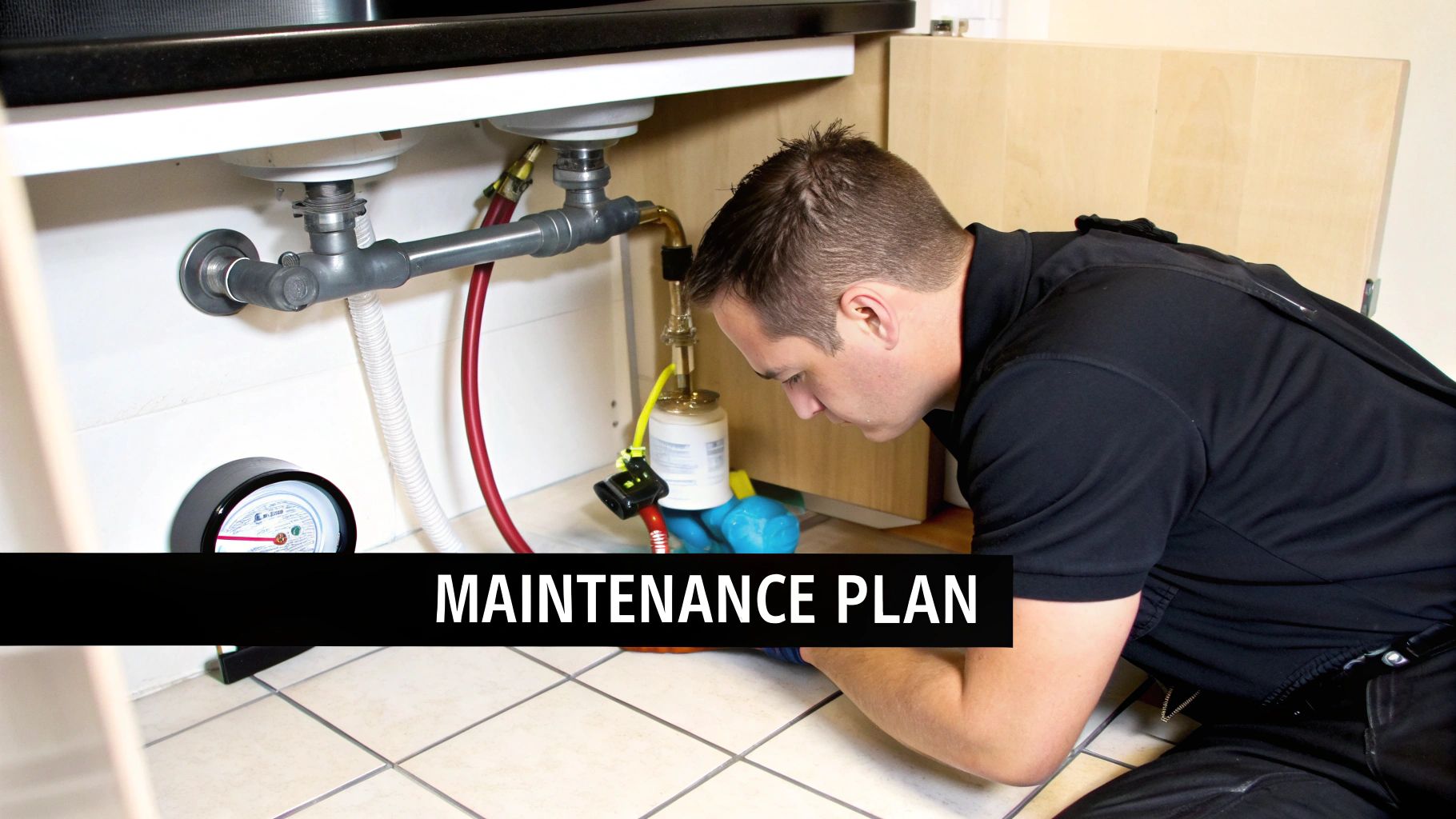
Think of the installation as your first hands-on lesson. The technician can walk you through the key components, show you how to read the pressure gauges, and teach you how to shut off the water in an emergency. It's a great opportunity to ask questions.
Creating Your Proactive Maintenance Schedule
The secret to avoiding surprise breakdowns and expensive emergency repairs is proactive care. A simple maintenance checklist, broken down into daily, weekly, and monthly tasks, makes upkeep totally manageable, even in the middle of a dinner rush.
Daily Checks (Less than 5 minutes):
- Visual Inspection: Give the system a quick once-over. Look for any drips or leaks around the filter housings and connections. Catching a tiny leak early can save you from a massive water damage headache down the road.
- Pressure Gauge Reading: Glance at the inbound and outbound pressure gauges. A big drop in the outbound pressure is the classic sign that a filter is getting clogged and needs to be changed soon.
Weekly Tasks (10-15 minutes):
- System Flush: If your system has a flush valve, let it run for a couple of minutes. This simple step clears out any gunk or sediment that has built up and can help your filters last longer.
- Log Your Readings: Keep a small notebook nearby and jot down the pressure readings. Over time, this data trail helps you see patterns and predict exactly when filters will need to be swapped out.
"A water filtration system is like any other critical piece of kitchen equipment—it requires routine care. A five-minute daily check is far cheaper than a five-hour service call to repair a scale-damaged combi oven."
The Importance of Timely Filter Changes
If you remember only one thing about maintenance, make it this: change your filter cartridges on schedule. It’s the single most important task. When filters get old and clogged, they don't just stop working effectively. They can actually restrict water flow, which puts a serious strain on the pumps in your appliances and could even release trapped contaminants back into your water.
In the high-stakes world of a busy coffee shop or cocktail bar, water quality is everything. It affects your espresso shots and the clarity of your ice. It’s no surprise that point-of-use (POU) systems, perfect for beverage stations, already held a 75% market share in 2024. To keep these systems working at peak performance, ensuring 99% contaminant removal, many owners are switching to automated filter replacement subscriptions. It's a win for suppliers, too, as these services can boost their recurring revenue by 30-40%.
For many restaurant owners, an automated filter replacement service is the ultimate peace of mind. A subscription plan means new filters show up right when you need them, taking all the guesswork out of maintenance. It guarantees your water quality never dips. After all, just like a proper draft beer system installation needs attention to detail for the perfect pour, your water system needs consistent care to deliver a perfect product.
Calculating the Real Cost and Return on Your Investment
When you're looking at a high-quality water filtration system for restaurants, it's easy to get fixated on the initial price tag. But that's just a fraction of the story. The real value is in the long-term savings and the impressive return on investment (ROI) that a good system delivers. Let's break down the numbers, because this piece of equipment often pays for itself much faster than you might think. Keep an eye out for exclusive deals that can make this essential upgrade even more affordable.
Thinking about the total cost of ownership is a lot like planning a road trip. The price of the car is just the start; you also have to factor in gas, oil changes, and maintenance along the way. It’s the same with a filtration system—you have the initial purchase, the installation, and the ongoing upkeep.

Getting this complete financial picture helps you see the true value and make a smart, profitable investment that will actually strengthen your bottom line.
Breaking Down the Total Cost of Ownership
Before you can calculate your ROI, you need a clear-eyed view of all the expenses involved. These costs generally fall into three buckets.
- Initial Purchase Price: This is what you pay for the unit itself. It can be a few hundred bucks for a simple under-counter carbon filter or run into several thousand for a high-capacity reverse osmosis system.
- Installation Fees: Unless you have a licensed plumber on staff, you'll need to hire a professional. Depending on how complex the job is and what labor rates are in your area, this will likely run between $300 and $800.
- Ongoing Maintenance: This is mainly the recurring cost of replacement filter cartridges. Plan on spending anywhere from $100 to over $500 annually, depending on your water usage and the system you choose.
Add these three numbers up, and you’ll have a realistic idea of your total investment for the first year.
Quantifying Your Savings and Boosting Your Bottom Line
Okay, now for the fun part—tallying up the returns. A water filtration system generates savings in a few key areas that directly boost your profitability. The biggest one? Protecting your expensive kitchen equipment.
We see it all the time in the field: unfiltered water is behind over 50% of espresso machine leak problems and is a top cause of failure in combi ovens and ice machines. Preventing just one major repair can often pay for the entire filtration system right there.
Here’s a look at how the savings start to pile up:
- Reduced Equipment Repairs and Downtime: Scale buildup from hard water is public enemy number one for any appliance that uses water. It clogs up valves, forces heating elements to work overtime, and leads to breakdowns. Clean, filtered water cuts these problems down dramatically, saving you thousands in repair bills and—just as importantly—lost revenue from equipment downtime.
- Lower Utility Bills: When your appliances are free of scale, they run more efficiently. A combi oven or dishwasher that doesn't have to fight through a layer of mineral buildup uses less energy to heat water. That translates directly into lower monthly energy bills.
- Elimination of Bottled Water Costs: Are you buying bottled water for drinking or cooking? A filtration system can wipe that expense off your books completely. That could mean hundreds or even thousands of dollars back in your budget every year.
- Enhanced Product Quality and Sales: When your coffee, tea, and fountain drinks are made with pure, great-tasting water, they just are better. That consistency and improved quality make for happier customers, glowing reviews, and more sales. It's a direct, tangible boost to your revenue.
Encore Seattle: Your Partner in the Pacific Northwest
Choosing the right water filtration system is a huge decision, but you don't have to go it alone. We're not just another supplier; think of Encore Seattle as your dedicated partner, right here in the Pacific Northwest. Our whole mission is to equip your restaurant for peak performance and absolute quality. We've spent decades working alongside chefs and restaurateurs just like you, so we know the industry inside and out, keeping you informed on the latest news and industry trends.
Come visit our showroom in Seattle’s Sodo District. It's a hands-on space where you can actually see and touch top-tier filtration brands. We take a consultative approach—meaning we listen. We want to understand your specific operation, whether you're running a high-volume coffee bar or need pristine water for a new combi oven. Our team is here to guide you, every step of the way.
From Picking a System to Getting it Installed
Let's be honest, the technical side of sizing and selection can get confusing fast. That’s where our team shines. We help you translate your menu, your daily customer count, and your equipment list into a smart filtration strategy. Our job is to make sure you get the perfect system—one that meets your flow rate and protects your expensive appliances, without you having to overspend on a system that’s too big for your needs.
But our partnership doesn't end when you make a purchase. We're committed to making premium equipment accessible and affordable for every food service business in our community. That's why we offer a few key benefits and exclusive deals to help you out:
- Free Freight: We'll cover the freight shipping on equipment orders anywhere in Washington State. It's one less cost for you to worry about.
- Flexible Financing: We've teamed up with The Restaurant Warehouse to offer financing that helps you get the gear you need without tying up your cash.
- Competitive Pricing: We are committed to offering the best brands at prices that make sense for your budget, so you always get outstanding value.
At Encore Seattle, our goal is to build lasting relationships. We succeed when your restaurant thrives. That's why we focus on providing the right tools, the latest industry news, and expert advice to help you elevate quality, improve efficiency, and protect your bottom line.
Whether you’re running a food truck, a bustling restaurant, or a catering company, our team is invested in your success. We get the challenges of the local market and are here to provide the equipment and support you need to serve with confidence. By helping you find the right water filtration system, we empower you to deliver the kind of quality and consistency that turns first-time visitors into loyal regulars.
Got Questions? We’ve Got Answers.
Diving into the world of commercial water filtration can feel a bit overwhelming at first. To clear things up and help you feel confident about your choice, we’ve put together answers to some of the questions we hear most often from restaurant owners and chefs just like you.
How Often Should I Be Changing My Filters?
There’s no magic number here, because it really boils down to two things: how much water you're using and what the quality of your local water is like. A bustling downtown restaurant dealing with hard water will clog up filters way faster than a small neighborhood cafe with relatively clean city water.
Your best bet is to keep an eye on your system's pressure gauges. A noticeable drop in pressure is the classic sign that a filter is full and ready to be swapped out. For budgeting and planning, you can generally expect most carbon and sediment filters to last 3 to 6 months. The heavy-duty reverse osmosis membranes, on the other hand, can go for 2 to 3 years before needing replacement.
Will a Filtration System Really Make My Food and Drinks Taste Better?
Without a doubt. In fact, this is often the first thing chefs and baristas notice. The chlorine used to treat city water is great for safety, but it leaves behind a chemical or "swimming pool" taste that can completely overpower the subtle notes in a great cup of coffee, a delicate tea, or even the syrup in your soda fountain.
A quality water filtration system for restaurants gives you a clean slate. By stripping out chlorine, sediment, and other off-flavors, it lets the real taste of your ingredients come through. Think of it as the difference between painting on a dirty canvas versus a pristine white one—the final product is just brighter and more true to your vision.
What's the Difference Between POU and POE Systems?
The easiest way to think about this is to picture your restaurant's layout. It all comes down to where the water is being filtered.
- Point-of-Use (POU): These are smaller systems that get installed right where you need that purified water. Think of the filter tucked under the counter for your espresso machine or the one hooked up directly to your ice maker. They’re perfect for targeting specific needs at individual stations.
- Point-of-Entry (POE): This is your "whole-house" solution. It’s a larger system installed right where the main water line enters your building. A POE system treats every drop of water coming into your restaurant, providing a foundational level of clean water for everything from handwashing sinks to dishwashers.
Honestly, a lot of restaurants end up using a combination of both. They might install a big POE sediment filter to protect all their plumbing from grit and then add smaller, more specialized POU filters for the equipment that needs pristine water, like a combi oven or coffee brewer. It’s a smart strategy that gives you broad protection and targeted quality where it counts the most.
Ready to find the perfect water filtration system for your restaurant? The team at Encore Seattle Restaurant Equipment is here to help you navigate your options, from sizing the right system to securing flexible financing. Visit us online or stop by our Seattle showroom to get expert advice, discover exclusive deals, and stay informed on the latest trends in restaurant equipment and supplies.