
Your Guide to the Perfect Food Truck Griddle
For most food truck owners and chefs, the food truck griddle isn't just a piece of equipment—it's the heart of the entire operation. This flat-top powerhouse is where the magic happens, churning out everything from smash burgers and breakfast burritos to classic cheesesteaks, all within a few square feet. Honestly, picking the right one is one of the most critical decisions you'll make for your truck's speed, efficiency, and profit.
The Engine of Your Food Truck Success
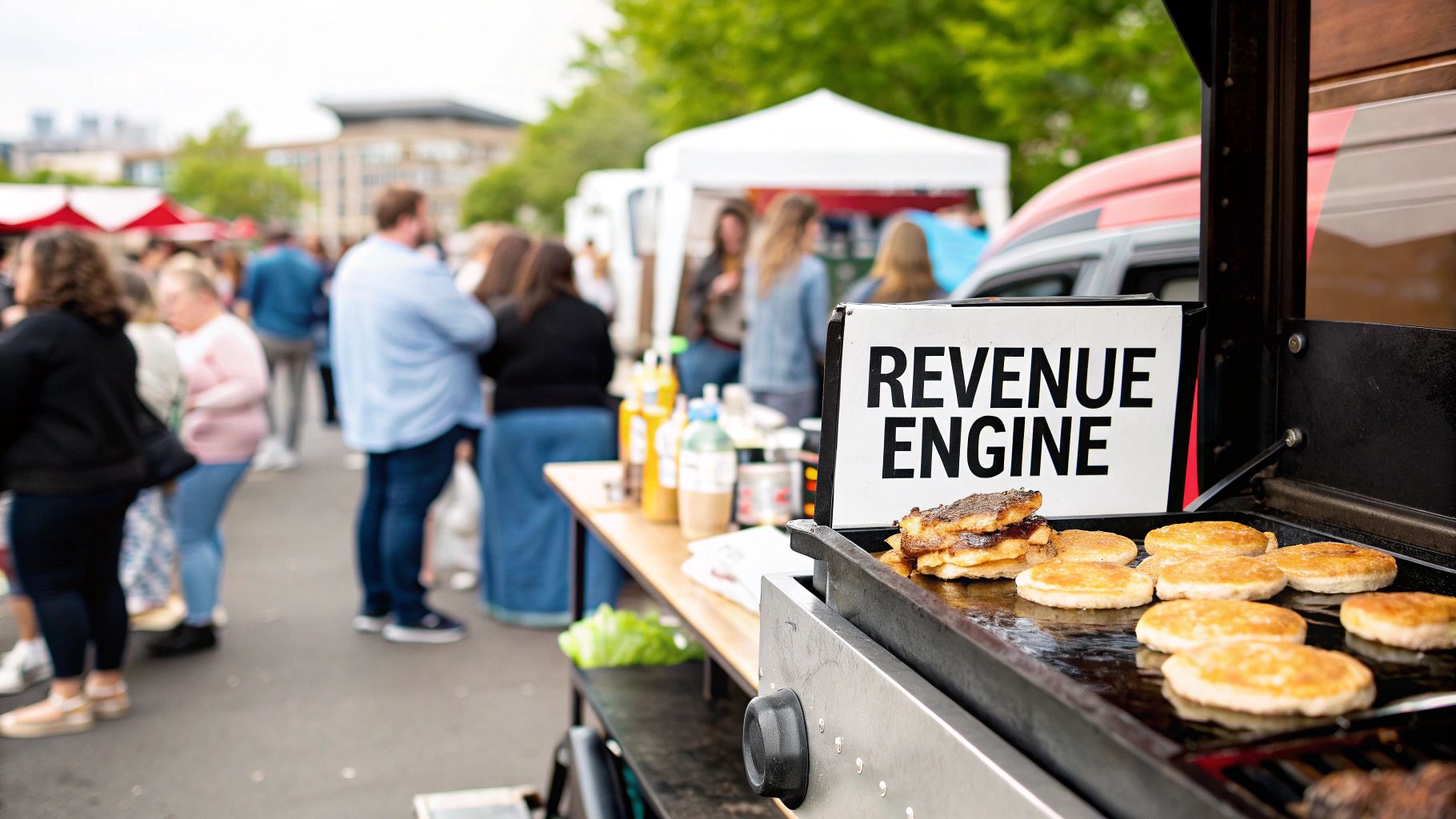
Picture a busy street fair. You can smell the sizzle of onions and bacon from a block away, hear the scrape of a spatula on hot steel, and see a line of eager customers forming. Right in the middle of that action is the griddle, the undisputed workhorse of almost every successful food truck.
This isn't just another appliance; it’s the operational core of your mobile business. Think of it like the engine in a race car. A powerful, dependable engine lets you get off the line fast, keep up the pace, and leave your competitors in the dust. In the same way, the right griddle lets you fly through orders, shrink ticket times, and serve up consistently fantastic food that builds a loyal following.
Why Your Griddle Choice Matters
The griddle you choose has a direct, daily impact on your workflow, what you can put on your menu, and, ultimately, your bank account. A griddle with hot and cold spots will waste food and frustrate your cooks. One that’s too small will create a bottleneck that brings your whole line to a screeching halt during the lunch rush. It's the sheer versatility of a great griddle that allows you to execute a diverse, profitable menu from a kitchen that’s measured in square feet, not yards.
This reality is playing out across the country. The U.S. food truck market is exploding, and it’s all built on the back of versatile, high-output restaurant equipment and supplies like the griddle. Valued at USD 1.16 billion in 2026, the market is on a steady climb, projected to hit USD 1.59 billion by 2031. This is a key industry trend for restaurant owners to watch. You can dig into more of the numbers on the food truck market's growth over at Mordor Intelligence.
Think of this guide as your complete roadmap. We're here to help you choose, install, and maintain the perfect griddle for your mobile kitchen, cutting through the noise to focus on what actually works on a truck.
We’ll get into the nitty-gritty of fuel types, plate materials, and how to deal with the real-world constraints of limited space, power, and ventilation. By the end, you'll have the practical know-how to pick a unit that not only fits your truck but also fuels your growth, one perfectly seared meal at a time.
Choosing Your Griddle Fuel and Plate Material
The first big decisions you'll make when picking a food truck griddle—what fuels it and what the cooking surface is made of—will set the stage for your entire operation. This isn't just about specs on a sheet. These choices dictate your daily workflow, what you can realistically put on your menu, and even where you can park and serve.
Think of it like choosing the engine and tires for a race car. The engine (your fuel type) is all about power and performance, while the tires (the plate material) are about how that power actually connects with the track. You need the right combination to win. Let’s break down what that means for your truck.
Gas Versus Electric: The Power Plant of Your Griddle
The gas vs. electric debate is a classic one in any kitchen, but it's especially critical in a mobile setup. Each has its own personality, with pros and cons that fit different menus, venues, and truck builds.
Gas (Propane) Griddles
In the food truck world, propane is the undisputed king of raw power. It brings the intense, roaring heat you need to get a perfect, crusty sear on a smash burger or to blast through a mountain of onions and peppers for cheesesteaks. Gas is for when you need sheer, unadulterated BTUs.
- Serious Heat: Gas griddles get hotter, faster. That high-heat capability is non-negotiable for a lot of classic street food.
- Go-Anywhere Freedom: Because you're running off propane tanks, you're completely self-sufficient. This is huge. It means you can say yes to gigs at festivals, parks, or remote spots where plugging in isn't an option.
- Instant Control: Chefs love gas for a reason. Turn the knob, and the flame reacts instantly. This lets you make quick temperature adjustments on the fly, which is a lifesaver during a chaotic lunch rush.
Electric Griddles
If gas is the muscle, electric is the brain. Electric griddles are all about precision, consistency, and control. They're the go-to for anything delicate that needs a steady, even temperature.
- Rock-Solid Temperature Stability: An electric unit excels at holding an exact temperature across the entire cooktop. This is crucial for things like pancakes, crepes, and eggs that will burn in a heartbeat if the heat fluctuates.
- Indoor Event-Friendly: This is a big one. Many indoor venues, convention centers, and even some farmers' markets have strict "no open flame" rules. In those cases, electric isn't just a choice; it's your only ticket in.
- Simpler Install: You don't have to worry about running complex gas lines and the ventilation that goes with them. The trade-off? They are a major drain on your truck’s electrical system, so you need a generator or shore power that can handle the load.
This push towards cleaner, event-friendly equipment is a major force in the industry. The global food truck market is booming, expected to jump from USD 2.88 billion in 2026 to USD 4.17 billion by 2034. A huge driver of this industry trend is the demand for sustainability, with electric and alternative-fuel trucks growing at an incredible 22.3% compound annual growth rate as operators look to reduce noise and emissions. You can dig into more of these numbers over at Fortune Business Insights.
Your fuel choice is a core part of your business strategy. If your brand is built on slinging perfectly seared burgers at outdoor festivals, gas is your best friend. If you specialize in delicate crepes for indoor corporate lunches, electric gives you the precision and compliance you absolutely need.
To make the decision a little easier, here’s a head-to-head comparison.
Gas vs Electric Food Truck Griddle Comparison
| Feature | Gas Griddle | Electric Griddle |
|---|---|---|
| Heat Output | Very high, powerful searing | Moderate, consistent heat |
| Temperature Control | Good, but with hot spots | Excellent, very precise |
| Heat-Up Time | Fast | Slower |
| Portability | Excellent (runs on propane) | Limited by power source |
| Best For | Burgers, cheesesteaks, stir-fry | Pancakes, eggs, delicate items |
| Venue Access | Ideal for outdoor, remote events | Required for many indoor venues |
| Installation | Requires gas lines, ventilation | Needs heavy-duty electrical wiring |
| Upfront Cost | Generally lower | Generally higher |
Ultimately, the best choice comes down to your menu and where you plan to sell. There's no single right answer, only the right answer for your truck.
Steel Versus Chrome: Your Griddle's Cooking Surface
Just as critical as the fuel source is the griddle plate itself. This is where the magic happens, and the material directly affects heat transfer, food quality, and—most importantly for your sanity—cleanup. The two main players here are old-school steel and modern chrome.
Standard Steel Griddles
Think of a standard steel griddle as the rugged, all-terrain tire of the kitchen. It’s a tough, no-nonsense workhorse that can take a beating day in and day out. Steel plates are thick, hold their heat incredibly well, and are perfect for all-around cooking. You’ll need to season them properly to build up that beautiful, non-stick patina, but once you do, they’re nearly indestructible.
Chrome Top Griddles
If steel is the all-terrain tire, a chrome-plated griddle is the high-performance racing slick. It’s got a mirror-smooth, non-porous surface that’s naturally non-stick and offers some amazing performance benefits for specific jobs.
Chrome’s biggest advantage is preventing flavor transfer. If you’re cooking salmon right next to pancakes, this is a game-changer. It also radiates heat incredibly efficiently, pushing more energy directly into the food. This means faster cook times and, as a bonus, a cooler kitchen. Cleanup is also a breeze. The downside? Chrome is more delicate and you must use non-metallic utensils to avoid scratching it. It also costs more upfront, but many operators find the gains in speed and the time saved on cleaning are well worth the investment.
Sizing and Installing Your Griddle in a Compact Kitchen
In a food truck, every square inch is gold. Choosing a powerful food truck griddle is one thing, but making it fit and function safely in a tiny space is a whole different ballgame. It’s less like a standard kitchen installation and more like building a ship in a bottle—every piece has to be perfectly measured and placed for the whole system to work. Get this wrong, and you're staring down the barrel of failed inspections, a clunky workflow, or even dangerous conditions.
It all starts with a tape measure and a deep respect for clearances. Before you even think about buying a griddle, you need to map out your entire cook line. Measure the width, depth, and height of where you plan to put it, then add crucial buffer zones. You need space on all sides, not just for safety and to keep from scorching adjacent equipment, but for daily cleaning and maintenance. Forgetting to leave a few inches for a scraper to get behind the griddle can turn a quick wipe-down into a daily nightmare.
Matching Power to Your Truck
Once you’ve got your physical dimensions locked down, it's time to match your griddle's energy appetite to what your truck can actually supply. This is where a small mistake can cost you big time. A griddle is a power-hungry beast, whether it's gas or electric, and your truck has to be able to feed it without blowing a fuse.
With a gas griddle, you need to understand its BTU (British Thermal Unit) rating. Your truck’s entire propane system, from the regulators to the supply lines, must be professionally set up to handle the total BTU load of all your gas appliances put together. Trying to power a 90,000 BTU griddle on a system built for half that load will leave you with weak flames, slow recovery times, and uneven cooking—a total momentum killer during a lunch rush.
For an electric griddle, the magic numbers are wattage and voltage. These units put a massive strain on your generator or shore power. You have to be certain your truck’s electrical panel and wiring are beefy enough to handle the draw, which is often 208V or 240V and needs its own dedicated, high-amperage circuit. Skimping on this isn't just a bad idea; it’s a fire hazard.
A classic rookie mistake is buying the biggest, baddest griddle on the market, only to find out their truck’s infrastructure can’t handle it. Always start with your truck’s limitations and pick a griddle that works within them—not the other way around.
Ventilation: The Unseen Safety System
Proper ventilation is completely non-negotiable, and it’s one of the first things a health inspector will zero in on. Your ventilation hood isn't just there to pull out smoke and cooking smells; it's a critical safety system that wrangles grease-laden vapors, a primary cause of kitchen fires. The rules for gas and electric griddles are a bit different.
- Gas Griddles: These demand a Type 1 hood (sometimes called a grease hood). It needs to be larger than the griddle itself, usually extending six inches beyond the cooking surface on all sides. This setup must include a powerful exhaust fan and a fire suppression system, as required by nearly all local fire codes.
- Electric Griddles: They don't produce combustion fumes like carbon monoxide, but electric griddles still pump out plenty of heat and grease. To safely manage those vapors and prevent dangerous grease buildup, they also require a Type 1 hood.
This simple flow chart really shows how those first decisions—fuel and surface material—have a domino effect on your cooking experience and entire operational setup.
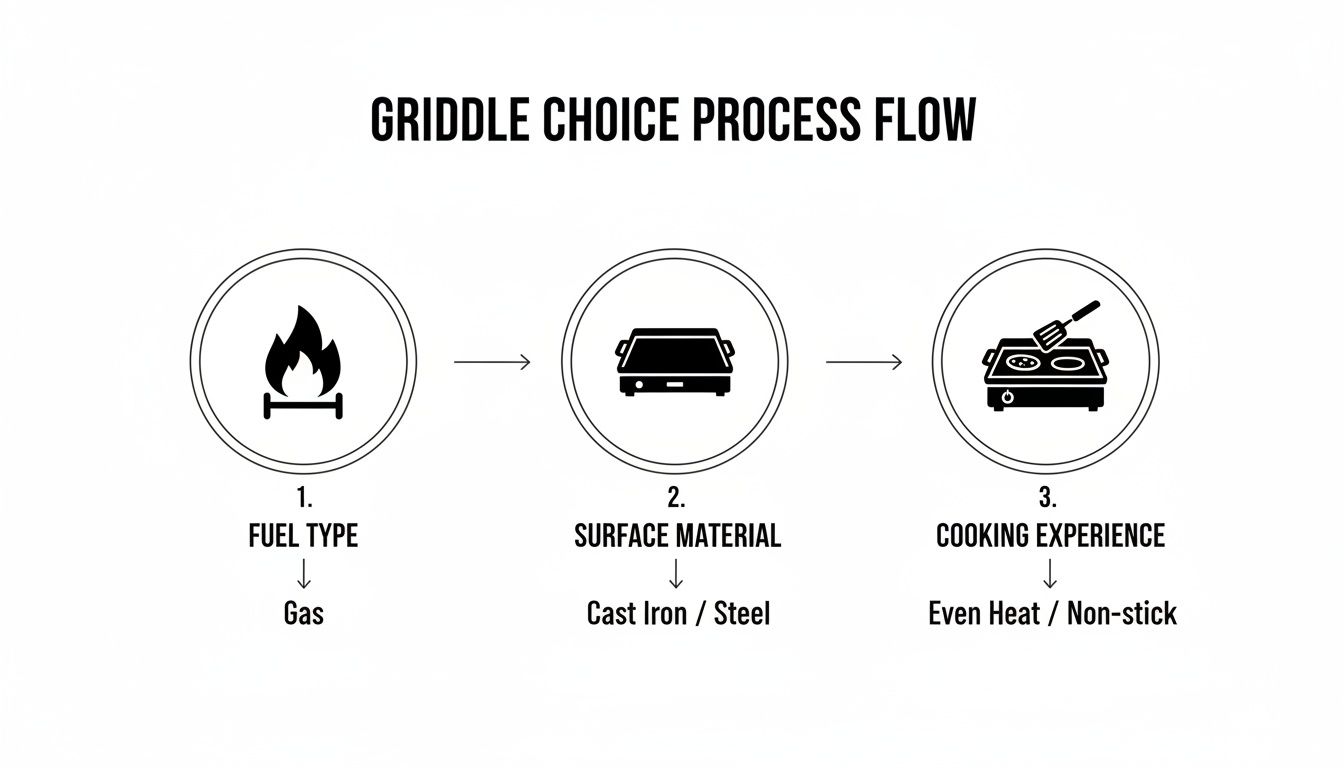
As you can see, choosing a griddle is a chain of dependent decisions. Each choice you make narrows the path for what comes next.
Your Actionable Layout Checklist
Finally, positioning and securing the griddle is the last piece of the installation puzzle. It absolutely must be anchored down to handle the bumps, shakes, and rattles of being on the road. Run through this checklist for a smart, safe install:
- Workflow First: Place the griddle at the heart of your operation. It should be an easy reach from your prep station and fridges to minimize steps and maximize speed.
- Secure for Travel: Use heavy-duty, commercial-grade mounting brackets or bolts to anchor the griddle to the countertop. Never, ever rely on its weight to hold it in place.
- Accessible Connections: Make sure gas lines or electrical plugs are easy to get to for service but are also protected from getting bumped or damaged. Flexible, commercial-grade gas hoses are a must.
- Confirm Clearances: Do one last check of all your clearances—sides, back, and overhead. You need to meet both the manufacturer's specs and your local health code requirements.
Getting the sizing and installation of your food truck griddle right is a foundational step that sets the tone for your whole business. For a deeper look at outfitting your mobile kitchen, you can learn more about equipment for food truck kitchens in our detailed guide.
Mastering Daily Griddle Operations and Maintenance
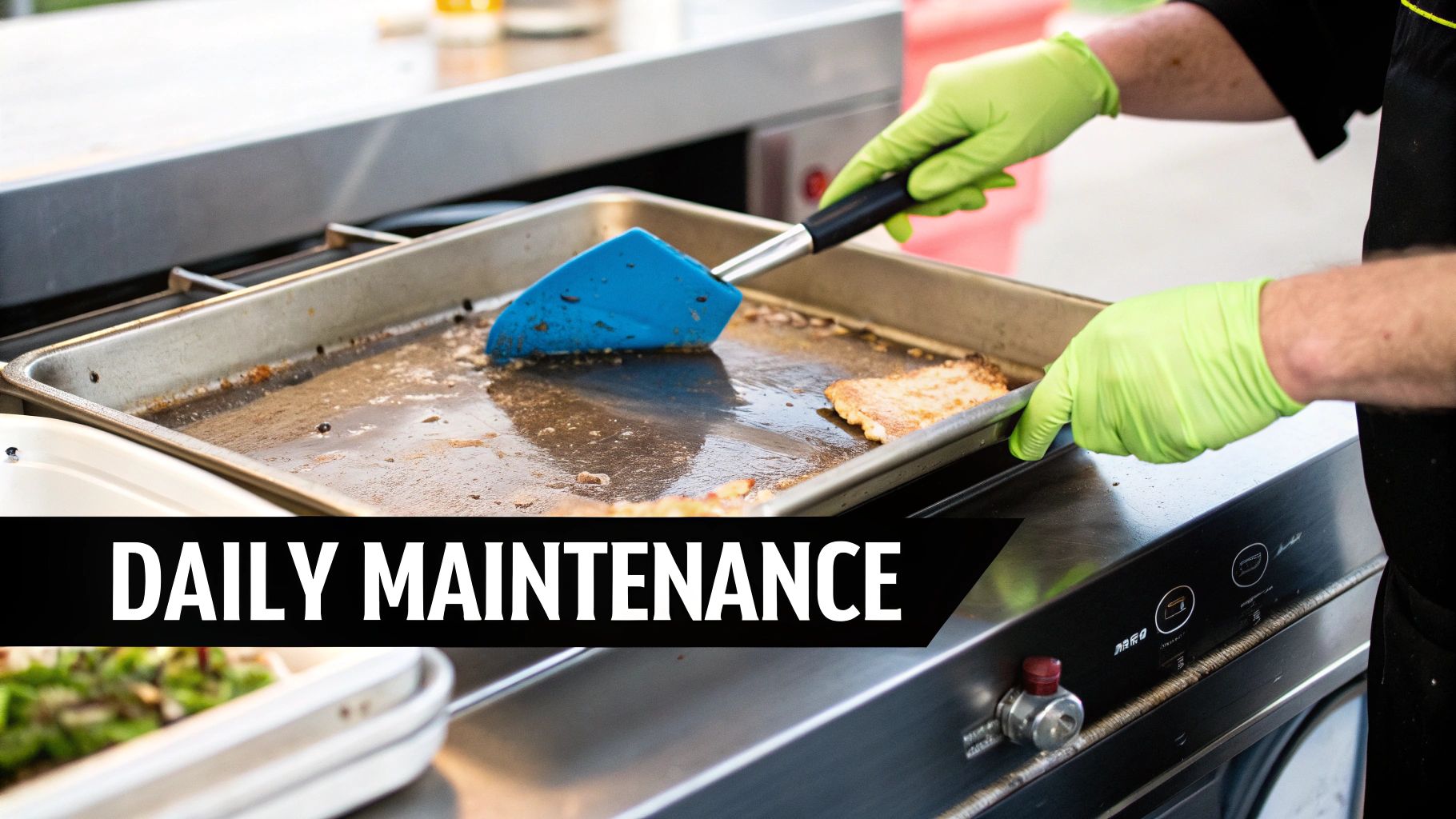
Alright, your food truck griddle is in. Now the real fun starts. Getting that griddle selected and installed is one thing, but mastering its day-to-day operation is what really separates the pros from the rookies. When you treat it right, your griddle isn't just a slab of steel; it's the most reliable, money-making workhorse in your truck.
This all comes down to a few core practices. It starts with seasoning the surface properly, turning it into a non-stick machine. From there, it's about learning to manage your heat across different zones and sticking to a cleaning routine like your business depends on it—because it does.
The Art of Seasoning Your Griddle
Think of a new griddle like a brand-new cast iron skillet. It's not ready to cook right out of the box. You have to "break it in" through a process called seasoning. This is where you apply super-thin layers of oil and heat them up until they bond to the metal, creating a slick, glass-like surface. This natural patina is your secret weapon for pancakes that glide off the surface and burgers that get a perfect crust without tearing apart.
That first seasoning session is the most important one you'll ever do. You’ll start by scrubbing off the factory's protective shipping oil. Then, wipe on a paper-thin layer of a high-smoke-point oil (canola or grapeseed work great) and heat the griddle until the oil just starts to smoke. Let it cool down, and then do it again. And again. A few cycles will build a durable, dark, non-stick foundation that only gets better with every cook.
A perfectly seasoned griddle is your best friend during a chaotic lunch rush. Food won't stick, you'll use less oil, and cleanup at the end of a long day becomes worlds easier.
After that initial effort, a quick "maintenance season" should become part of your closing checklist. Just a light wipe of oil after cleaning is all it takes to protect the steel from rust and keep that beautiful non-stick layer ready for tomorrow's service.
Managing Temperature Zones for Maximum Efficiency
Here’s where a bigger griddle—think 36 to 48 inches—really earns its keep. You can set up different temperature zones across the surface, which completely changes your workflow. It’s like having three separate pans ready to go at all times, all on one piece of equipment.
It's as simple as setting the individual burner controls to different levels. A classic setup looks like this:
- Hot Zone: Crank one side up to 400-450°F. This is your searing station for getting a killer crust on burgers and cheesesteaks.
- Medium Zone: Set the middle section to a more moderate 325-350°F. This is perfect for cooking bacon, sautéing onions, or finishing off proteins that you seared in the hot zone.
- Cool/Holding Zone: Keep the far side on low, around 200-250°F. Use this spot for toasting buns, melting cheese, or holding finished food for a few seconds before it goes out the window.
With this system, you’re not constantly fiddling with the knobs for every single order. You just slide food from one zone to another, creating a smooth assembly line that keeps your ticket times down and your food quality consistently high. This is why countertop griddles are such a huge part of the commercial griddle market, which was valued at USD 1.61 billion and is expected to climb to USD 2.84 billion by 2034. They are built for the kind of high-volume punishment a busy food truck dishes out.
A Clear Maintenance and Cleaning Schedule
Your griddle is an investment. The only way to protect it is with consistent, disciplined maintenance. If you let it go, you'll be dealing with caked-on carbon, a sticky cooking surface, and eventually, a dead piece of equipment. For a deeper dive, our guide on commercial kitchen equipment maintenance is a great resource.
A simple schedule is the easiest one to stick with. We've put together a daily, weekly, and monthly checklist to keep your griddle in peak condition for years to come.
Food Truck Griddle Maintenance Schedule
| Frequency | Task | Purpose |
|---|---|---|
| Daily | Scrape debris between orders. | Prevents carbon buildup and stops flavors from mixing. |
| Daily | Deep clean with water/solution while warm. | Removes grease and caked-on food from the day's service. |
| Daily | Wipe down with a thin coat of oil after cleaning. | Protects the steel surface from rust and reinforces the seasoning. |
| Weekly | Empty and wash the grease trap. | Prevents grease buildup, reduces fire risk, and avoids pests. |
| Weekly | Inspect burner controls and knobs. | Ensures all zones are heating correctly and controls are responsive. |
| Monthly | Check gas lines and connections for leaks. | A critical safety check to prevent dangerous propane leaks. |
| Monthly | Calibrate the thermostat (if applicable). | Guarantees accurate and consistent cooking temperatures. |
Following this routine might feel like a chore at first, but it quickly becomes second nature. More importantly, it ensures your most valuable piece of cooking equipment is always ready to perform when the rush hits.
Navigating Health Codes and Safety Compliance
Getting through your health and safety inspections can feel like the final boss battle before you can open your food truck's window. It’s the one step you absolutely can't skip, and every little detail counts—especially when it comes to your primary workhorse, the food truck griddle.
Try to see health inspectors less as adversaries and more as professional safety partners. Their mission is simple: to make sure your mobile kitchen is safe for you, your crew, and every customer who walks up. They aren't trying to trick you; they're just checking that your restaurant equipment and day-to-day habits meet the standards designed to prevent fires, foodborne illness, and other accidents in a tight space. Your griddle, naturally, gets a lot of their attention.
What Inspectors Are Really Looking For
The moment an inspector steps on your truck, their focus will zero in on your high-heat cooking line. For your griddle, their assessment really comes down to three key things: certified equipment, correct installation, and clear, documented safety procedures. They're looking at the whole system, not just the appliance.
Here are the specific compliance points they’ll be verifying:
- NSF Certification: Your griddle must have that NSF (National Sanitation Foundation) mark. This is non-negotiable. It proves the unit is built for commercial use with non-porous surfaces that are easy to properly clean and sanitize.
- Clearance from Combustibles: You need enough breathing room between the griddle and any flammable materials, like walls or wooden shelves. Your griddle's manual will specify these minimum clearances, and inspectors often bring a tape measure to check them.
- Proper Ventilation: They will check that your Type 1 hood extends at least six inches beyond the griddle's edges and confirm your exhaust fan is strong enough to handle the BTU output.
- Fire Suppression System: A functioning, recently certified fire suppression system is mandatory. Inspectors will look at the inspection tags and ensure the nozzles are aimed correctly over the entire cooking surface.
Having a solid health and safety management system gives you a reliable framework for handling all the risks that come with running a food truck, especially those related to your griddle.
Staying Compliant Beyond Day One
Passing that first inspection and getting your permit is a huge milestone, but it's just the start. Staying compliant is an everyday job that takes commitment from everyone on your team. You want safety to be a reflex, not something you only think about when an inspector might be around. The best way to do this is to weave your safety protocols right into your daily operations.
An inspector once told me, "I can tell everything I need to know about a kitchen's safety culture by looking at their grease trap and their cleaning logs." A clean setup and documented procedures show you're taking safety seriously.
To operate with confidence and stay ready for a surprise visit, build these habits into your routine:
- Maintain Cleaning Logs: Keep a simple daily and weekly log for cleaning the griddle, hood filters, and grease trap. This gives an inspector physical proof that you're sticking to a consistent maintenance schedule.
- Train Your Staff: Every single person on the truck should know how to safely operate and shut down the griddle, and exactly what to do if a grease fire ever starts. Be sure to document these training sessions.
- Perform Regular System Checks: Once a month, make it a habit to check the gauge on your fire suppression system and visually inspect gas lines for any cracks, kinks, or signs of wear.
Getting a handle on these rules isn't just about dodging fines. It's about building a professional, safe, and long-lasting business from the wheels up. For a closer look at the specific paperwork you'll need, head over to our guide on food truck permit requirements.
Thinking About the Money: Your Griddle as an Investment
Your griddle isn't just another piece of equipment; it's the engine of your food truck's profitability. To really get a handle on the true cost, you have to look past the price tag and think about the total cost of ownership. This includes every dollar you'll spend to keep it sizzling day in and day out.
It's a lot like owning a car. The sticker price is just the beginning; you also have to pay for gas, insurance, and maintenance. For your griddle, that means budgeting for propane or electricity, cleaning supplies like bricks and scrapers, and setting aside a little for those inevitable repairs down the road.
Getting the Most Bang for Your Buck
Whether you're eyeing a shiny new unit or a battle-tested used one, the goal is the same: maximize the return on your investment. A new griddle gives you a warranty and the latest in energy efficiency, which can mean lower utility bills. A carefully chosen used griddle, however, can slash your initial startup costs, freeing up cash for ingredients, marketing, or other essentials.
The right griddle directly impacts your bottom line. It lets you cook more food faster, so you can serve that long line of hungry customers during the lunch rush. Quicker ticket times lead to happier people and faster turnover. Ultimately, a reliable griddle that produces consistently great food is what builds a loyal following and grows your business.
The best griddle for your bottom line isn't always the cheapest one. It's the one that reliably cranks out quality food, never breaks down during a rush, and keeps your operating costs in check for years to come.
When you're figuring out how to pay for it all, exploring options like restaurant equipment financing can be a game-changer. Financing can put a top-of-the-line, super-efficient griddle within reach, even if you're just starting out. Keep an eye out for exclusive deals that can make new restaurant equipment even more affordable, setting you up for success right from the start.
Got Questions About Your Griddle? We've Got Answers.
When you're fitting out a kitchen on wheels, every piece of equipment counts. It's no surprise we get a lot of questions from food truck owners trying to pick the perfect griddle. Let's tackle some of the most common ones.
What’s the Best Griddle Size for a Small Truck?
If you're working in a smaller truck, say anything under 18 feet, you'll want to look at a countertop griddle between 24 and 36 inches. This range is the sweet spot.
It gives you enough real estate to pump out orders—think a full run of burgers or a bunch of breakfast platters—without gobbling up all your precious counter space. A 36-inch model is especially clutch because you can set up different heat zones. You can sear on one end, gently cook in the middle, and keep finished food warm on the other, all at the same time. It’s a game-changer during a crazy rush.
Should I Get a Steel or a Chrome Griddle Top?
This one comes down to your menu.
A classic steel griddle is the undisputed workhorse of the food truck world. If you're slinging burgers, bacon, cheesesteaks, or anything that can take a beating, this is your guy. They're tough, dependable, and built for high-volume service.
But, if you're cooking more delicate items like fish, eggs, or pancakes, a chrome griddle is worth every penny. The super-smooth, non-porous surface is fantastic at preventing flavors from transferring—nobody wants their pancakes to taste like last night's salmon. It also uses less oil. Just be gentle with it; you'll need to stick to non-metal spatulas to avoid scratching that beautiful finish.
How Often Do I Really Need to Season My Griddle?
That first, big seasoning when the griddle is brand-new is non-negotiable. That's what builds up the initial non-stick surface you'll rely on.
After that, you only need to do a full-blown re-seasoning if you start seeing rust spots or if food is sticking like crazy. For day-to-day care, just wipe on a very thin coat of cooking oil after you clean it down. That's it.
This simple habit keeps the patina in perfect shape and protects the steel, making sure your griddle is always ready to fire up.
Ready to build the mobile kitchen you've been dreaming of? Check out the huge selection of new and used griddles at Encore Seattle Restaurant Equipment. You'll find the best brands and get solid advice to outfit your truck for success. Find your perfect griddle and discover exclusive deals on restaurant equipment and supplies at their online store.