
10 Profitable Concessions Stand Ideas to Boost Sales in 2026
In the competitive world of food service, a successful concession stand is more than just a place to grab a quick snack; it's a powerful revenue engine. For restaurant owners and chefs, optimizing these high-traffic operations can significantly boost profitability. This guide moves beyond the basics to provide 10 actionable, equipment-focused concessions stand ideas designed to maximize efficiency, attract customers, and increase sales.
We'll dive into specific layouts, menu concepts, and the essential equipment needed to execute them flawlessly. Whether you're outfitting a stadium, movie theater, or event venue, you'll find exclusive insights on the restaurant equipment and supplies that form the backbone of a high-performing concession business. This comprehensive roundup is tailored for seasoned operators and entrepreneurs looking to stay informed about critical industry trends and discover innovative strategies.
Instead of generic advice, this listicle offers detailed blueprints for building profitable concession models. You will learn about everything from setting up a premium hot holding station and designing a modular cold beverage system to implementing a gourmet menu theme and a mobile kiosk strategy. Each idea is structured to provide practical, immediate value, helping you select the right equipment, design an effective workflow, and ultimately, reinvent your concession strategy for maximum returns. Explore these concepts to discover fresh approaches that will set your operation apart and capture more customer spending.
1. Premium Hot Holding & Display Equipment Setup
One of the most effective concessions stand ideas centers not on a specific food, but on the strategic presentation of your entire menu. A premium hot holding and display setup uses commercial-grade equipment to keep food like hot dogs, pretzels, and nachos at perfect serving temperatures while making them irresistibly visible to customers. This equipment-focused approach transforms your serving area into a powerful sales tool, driving impulse buys by showcasing delicious, ready-to-eat options.
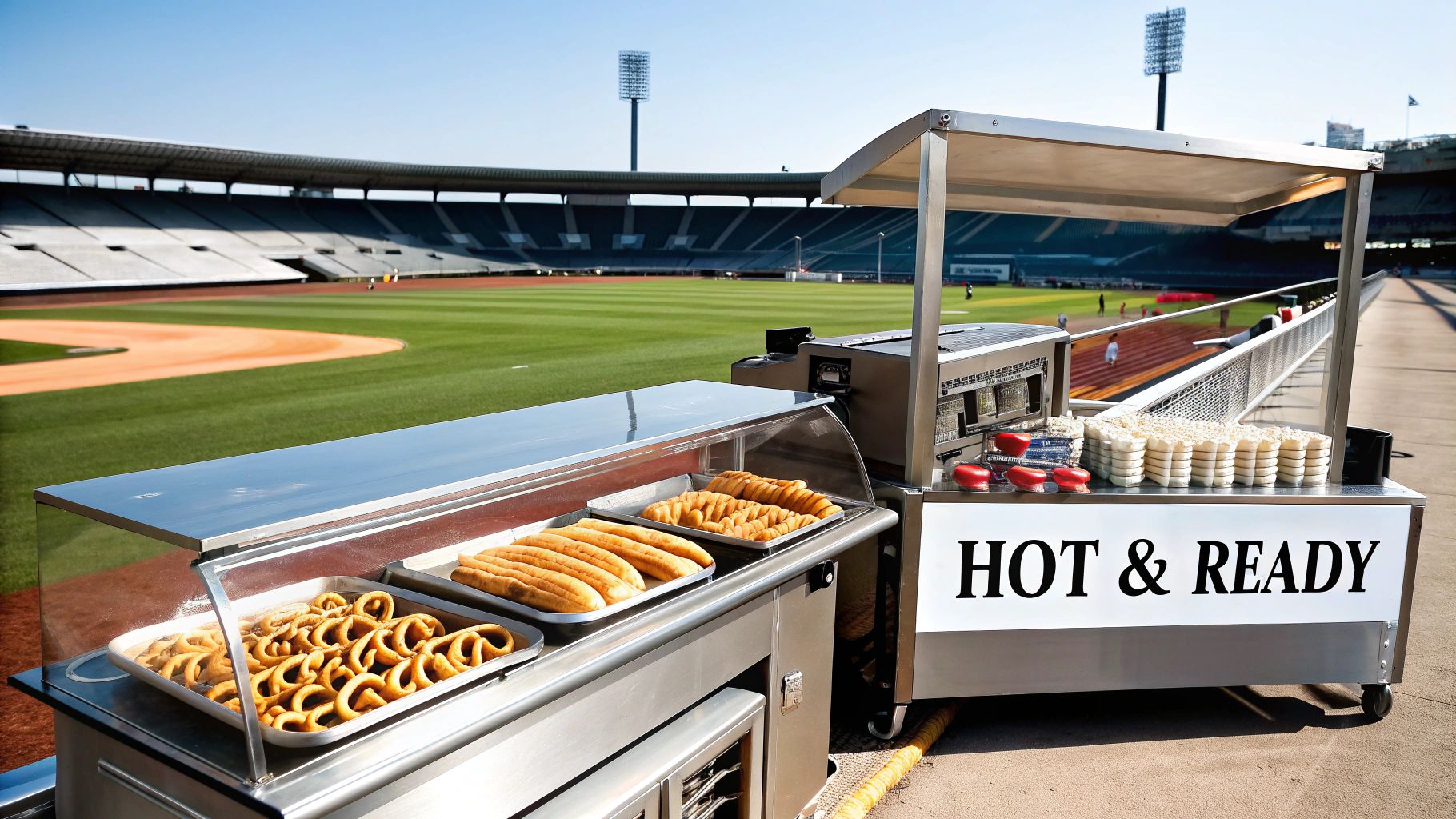
This method is ideal for high-volume environments where speed and visual appeal are critical, such as stadiums with roller grills for sausages, movie theaters with brightly lit popcorn warmers, or fairgrounds with heated pretzel display cases. The core principle is simple: what customers see, they buy. By placing these units near the point-of-sale, you ensure your most profitable items are always in your customers' line of sight.
Implementation and Operations
To get started, focus on acquiring the right equipment mix for your menu. Consider purchasing used equipment from trusted suppliers like Encore Seattle to significantly lower your initial investment. When arranging your layout, place hot holding units front and center and pair them with nearby cold storage for drinks and condiments to streamline your workflow. To complement your premium hot holding and display efforts, understanding the various types of our recommended hot holding solutions like these specialized efficient Catering Food Warmers for concession stands is essential for maintaining optimal food quality.
Actionable Tips for Success
- Strategic Placement: Position heated displays and warmers directly next to your cash register or ordering station to maximize visibility and encourage last-minute additions.
- Maintenance Schedule: Implement a strict daily cleaning routine for all equipment to prevent grease buildup, ensure food safety, and keep the units looking pristine for customers.
- Smart Financing: If new equipment is necessary, explore flexible financing options. Some suppliers, like The Restaurant Warehouse, offer partnership programs that make premium equipment more accessible.
- Learn the Tech: Stay informed about the latest industry trends in holding technology. Educating yourself on the different types of food warming tables and steam tables can help you select the most efficient models for your specific menu items.
2. Modular Cold Beverage Dispensing Station
Beverages are a high-margin cornerstone of any concessions business, and a modular cold beverage dispensing station is one of the most profitable concessions stand ideas you can implement. This approach integrates commercial refrigeration, multi-flavor fountain drink dispensers, and ice storage into a compact, reconfigurable unit. The goal is to maximize beverage options and serving speed within a minimal footprint, turning your drink counter into an efficient revenue-generating hub.
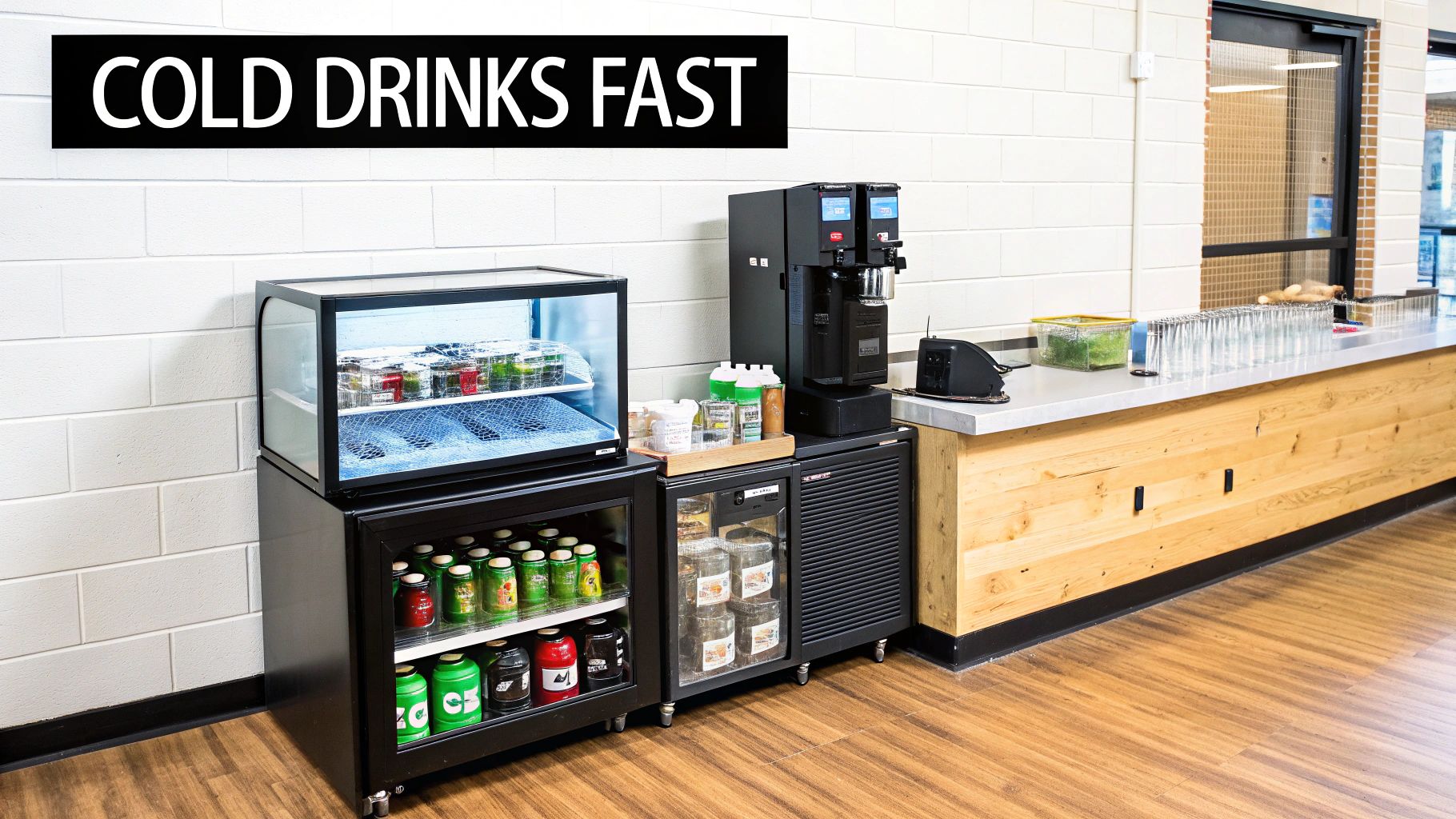
This setup is perfect for high-traffic environments where flexibility and speed are paramount. Think of movie theaters with sprawling fountain stations, stadium beverage kiosks serving thousands on game day, or festival drink tents that need to adapt to changing crowd flows. The modular design allows you to scale your operations up or down, making it an intelligent investment for both permanent venues and pop-up vendors.
Implementation and Operations
To begin, assess your space and volume needs to determine the right combination of equipment. Focus on a layout that positions the ice bin, fountain dispenser, and cup storage in a logical sequence to create a smooth workflow for staff or customers in a self-serve model. Acquiring reliable used equipment is a great way to manage initial costs; trusted suppliers like Encore Seattle often have quality pre-owned refrigeration units available. For venues serving alcohol, integrating a draft system can further boost profits; staying informed on the specifics of a draft beer system installation is crucial for a successful setup.
Actionable Tips for Success
- Strategic Stocking: Offer high-margin specialty beverages like craft sodas or lemonades alongside standard options to increase the average transaction value.
- Modular Flexibility: Invest in modular units that can be easily reconfigured or expanded. This allows your station to evolve with your menu or event-specific demands.
- Rapid Cleaning Protocols: Implement and train staff on quick, between-rush cleaning procedures for nozzles and drip trays to prevent downtime and maintain hygiene.
- Explore Financing: Don't let upfront costs be a barrier. Explore flexible equipment financing options to spread out the investment and conserve capital for other operational needs.
3. Efficient Compact Fryer Station Configuration
One of the most profitable concessions stand ideas involves creating a dedicated and highly efficient frying station. This setup centers on using commercial-grade deep fryers with compact footprints, integrated filtration, and proper ventilation to safely and rapidly produce high-demand fried foods. By optimizing a small space for maximum output, you can serve items like french fries, onion rings, corn dogs, and chicken tenders with incredible speed, capitalizing on the universal appeal of hot, crispy snacks.
This approach is essential for any high-traffic venue where quick service is non-negotiable, such as fairgrounds, sports stadiums, and concert venues. A well-configured fryer station minimizes ticket times and maximizes throughput, ensuring customers get their food fast. The key is to create a self-contained module for frying that streamlines the entire process from frozen product to finished serving, keeping your operation efficient and your lines moving.
Implementation and Operations
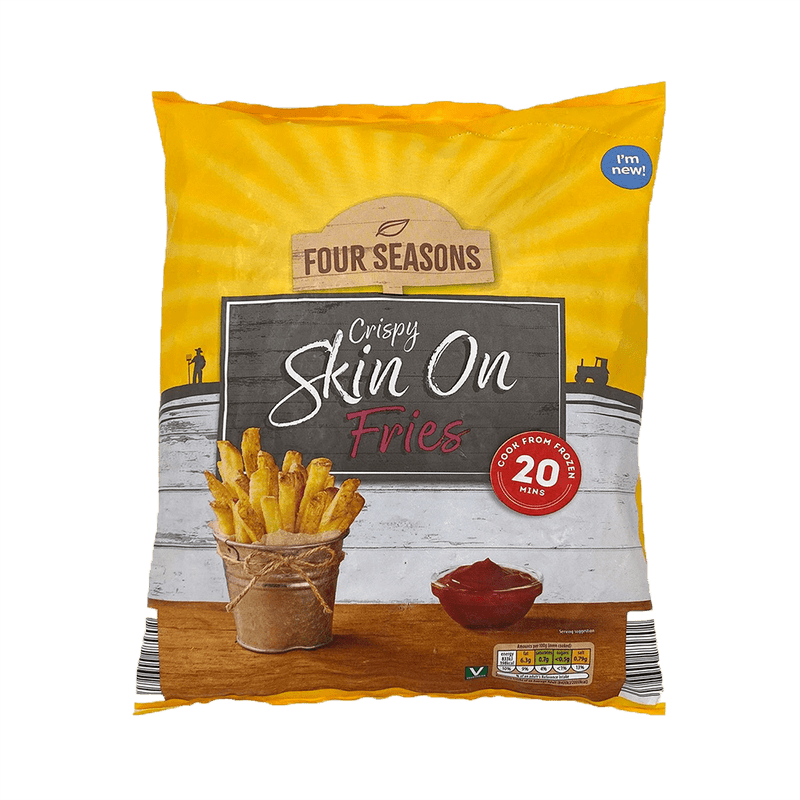
To begin, assess your space and menu to select the right fryer. For outdoor or mobile setups, exploring the benefits of different portable propane deep fryers can help you find a flexible and powerful solution. When configuring your station, it is also crucial to source high-quality ingredients like high-quality ingredients like Skin On Fries to ensure a consistently delicious product. Arrange your layout with a logical workflow: freezer, fry baskets, fryer, and then a landing/draining station with seasoning and packaging.
Actionable Tips for Success
- Safety First: Install an appropriate fire suppression system directly above or near your fryer station, and ensure all staff are thoroughly trained on safe frying procedures and emergency protocols.
- Extend Oil Life: Use a cooking oil filtration system daily to remove food particles and extend the life of your cooking oil, significantly reducing supply costs over time.
- Budget-Smart Equipment: Maximize your budget by purchasing quality used commercial fryers from trusted suppliers like Encore Seattle, which allows you to invest in a higher-capacity unit for less.
- Preventative Maintenance: Schedule monthly maintenance checks on your fryers to inspect thermostats, heating elements, and safety features, preventing costly breakdowns during peak hours.
4. Themed Menu Strategy: Regional/Seasonal Offerings
One of the most engaging concessions stand ideas involves creating a dynamic menu that rotates based on seasonal availability and regional tastes. This themed approach leverages local ingredients and timely events to generate excitement, encourage repeat business, and differentiate your stand from competitors offering static menus. By aligning your offerings with the time of year or local culture, you create a sense of novelty and premium quality that customers value.
This strategy is perfect for farmers' markets, community festivals, and venues with a regular customer base. For example, a stand in the Pacific Northwest could feature fresh berry desserts in the summer, shift to warm apple cider and pumpkin-spice treats in the fall, and offer local seafood chowder during salmon season. The core principle is to tap into the "buy local" and "buy fresh" trends, transforming your menu into a destination experience rather than just a quick bite.
Implementation and Operations
To begin, build strong relationships with local farmers, roasters, and suppliers to secure a steady stream of seasonal ingredients. Plan your menu calendar 1-2 months in advance to align purchasing, equipment needs, and marketing efforts. For instance, if you plan a hot chocolate bar for winter, ensure you have the necessary commercial beverage dispensers and supplies ready. This proactive planning helps you stay informed about industry trends and secure the best deals on restaurant equipment.
Actionable Tips for Success
- Supplier Partnerships: Develop direct relationships with Pacific Northwest producers to access the freshest ingredients and potentially co-market your offerings.
- Test and Refine: Introduce new seasonal items during slower periods or as limited-time offers to gauge customer response before a full rollout.
- Promote Your Launch: Use social media to build anticipation around your seasonal menu launch. Post high-quality photos and stories about your local ingredients.
- Staff Training: Thoroughly train your team on each new menu item, including its ingredients, origin, and talking points, to enhance the customer experience.
- Track Performance: Keep detailed sales metrics on all seasonal items. This data is invaluable for deciding which offerings to bring back next year and which to replace.
5. Multi-Station Parallel Layout Design
Shifting focus from menu items to operational efficiency, this concessions stand idea revolves around a strategic layout designed for maximum speed and customer throughput. A Multi-Station Parallel Layout Design abandons the traditional single-file line, instead creating multiple independent stations for ordering, payment, and pickup. This system breaks down the transaction process into parallel streams, dramatically reducing bottlenecks and customer wait times during peak rushes.
This high-efficiency model is perfect for large-scale venues where crowd management is paramount, such as stadium concourses with separate points for different food items, theme park quick-service counters with multiple ordering kiosks, or major event venues with distributed concession points. The core concept is to divide and conquer the customer journey. By separating tasks, you allow staff to specialize and move customers through the process much faster, preventing a single slow order from holding up the entire queue.
Implementation and Operations
To implement this layout, begin by mapping out a clear customer flow path. Use prominent signage, floor markings, and stanchions to guide guests intuitively from ordering to payment to pickup. A networked Point of Sale (POS) system is crucial, as it allows all stations to communicate in real-time, ensuring orders are fired to a central production area and tracked seamlessly. This system is key to keeping staff informed and operations synchronized.
When designing the layout, position the production and prep area centrally to allow for efficient restocking of all front-facing stations. This minimizes downtime and keeps service moving. Cross-training your staff is also essential; an employee who can seamlessly transition from taking orders to managing payments provides the flexibility needed to adapt to fluctuating customer demand and keep every station running smoothly.
Actionable Tips for Success
- Invest in Technology: A modern, networked POS system is non-negotiable. It acts as the central nervous system of your parallel layout, connecting all stations for synchronized service.
- Create Clear Visual Cues: Use color-coding, large overhead signs, and distinct lane markers to clearly differentiate stations (e.g., "Order Here," "Pay Here," "Pickup"). This prevents customer confusion and maintains an orderly flow.
- Optimize Production Workflow: Design your back-of-house to support multiple service points. Ensure hot holding units, drink dispensers, and condiment stations are easily accessible for staff from the central production zone.
- Train for Flexibility: Prepare your team to handle any role within the parallel system. This adaptability allows you to reallocate staff to busier stations on the fly, balancing the workload and maintaining service speed.
6. Limited-Time Promotional Events with Daily Specials
Instead of relying on a static menu, one of the most dynamic concessions stand ideas involves creating a sense of urgency and excitement through limited-time promotional events. This strategy uses rotating daily specials and time-sensitive offers to drive customer traffic during specific periods, encourage repeat visits, and efficiently manage inventory. By creating a "get it before it's gone" atmosphere, you turn your stand into a daily destination rather than just a convenience.
This approach is exceptionally effective for venues with predictable traffic patterns, such as sports bars offering wing specials on game days or movie theaters running a "Free Popcorn Tuesday" with a drink purchase. A fair or festival vendor can also thrive with this model by featuring a different combo deal each day, keeping the menu fresh for multi-day attendees. The core idea is to give customers a compelling reason to buy now and come back tomorrow to see what's new.
Implementation and Operations
To launch this strategy, start by analyzing your customer flow and inventory. Identify your peak hours and which items have slower turnover. Build specials that align with these patterns, such as offering an early-bird discount before a concert starts or bundling a slow-moving item with a bestseller. Announce these promotions clearly on a prominent menu board, and leverage social media to build anticipation a few days in advance. Ensure your staff is trained to enthusiastically mention the daily special to every customer at the point of sale.
Actionable Tips for Success
- Align with Traffic: Schedule your best promotions during typically slower periods to boost sales or during peak times to maximize high-volume transactions.
- Build Anticipation: Use social media channels like Instagram and Facebook to announce your "Special of the Day" each morning, creating a habit for followers to check in.
- Upsell with Urgency: Train staff to frame the special as a limited opportunity, using phrases like, "Today's special is the BBQ brisket sandwich, and we only have a limited amount."
- Track Everything: Use your point-of-sale system to monitor which promotions perform best. This data is crucial for refining your future offers and maximizing profitability.
7. Upscale 'Gourmet Concessions' Theme & Menu
Transform your operation by moving beyond standard fare with an upscale gourmet concessions theme. This strategy elevates typical concession offerings to a premium level by incorporating artisanal ingredients, sophisticated preparation methods, and complex flavor profiles. Instead of competing on price, this approach targets discerning customers willing to pay more for a superior culinary experience, turning a simple snack break into a memorable part of their event.
This concept is ideal for venues like premium sports arenas, boutique movie theaters, high-end festivals, and private clubs where the audience appreciates quality and novelty. The core idea is to reframe expectations of what concession food can be, offering items like truffle-parmesan popcorn, artisan sausages with craft beer mustard, or handcrafted gelato. It’s a powerful way to increase average transaction value and build a reputation for excellence.
Implementation and Operations
Getting started requires a mindset shift from high volume to high value. Partnering with a local chef can add instant credibility and culinary expertise to your menu development. Your kitchen setup must support this quality, so investing in versatile commercial equipment capable of precise cooking is key. Sourcing from local artisanal suppliers not only enhances flavor but also creates a compelling story to share with customers, justifying the premium price point.
Actionable Tips for Success
- Forge Local Partnerships: Collaborate with local chefs, bakeries, or creameries to co-create signature menu items. This adds a unique local flavor and marketing angle.
- Invest in Quality Equipment: Gourmet preparations require reliable equipment. Consider financing options to acquire versatile pieces like commercial-grade panini presses, immersion circulators, or high-end convection ovens to ensure consistency.
- Source Premium Ingredients: Build relationships with local Pacific Northwest purveyors for unique, high-quality ingredients. Highlighting a specific farm or artisan on your menu adds value.
- Train for Upselling: Your staff are brand ambassadors. Train them thoroughly on ingredient origins, flavor profiles, and ideal pairings to confidently explain the value of premium items and encourage upselling.
8. Mobile Concession Cart/Kiosk Strategy
Instead of relying on a fixed location, one of the most agile concessions stand ideas is to take your offerings directly to the crowd with a mobile cart or kiosk strategy. This flexible service model uses compact, easily movable equipment to deploy your business to multiple locations within a venue or event. This approach maximizes customer reach, allows you to adapt to traffic patterns in real-time, and captures sales that would otherwise be missed by stationary stands.
This strategy is exceptionally effective in large-scale environments where customers are dispersed and may be unwilling to walk long distances for a snack or drink. Think of beverage carts roaming through stadium seating areas, specialty snack vendors weaving through theme park crowds, or mobile coffee kiosks positioned near the entrance of a busy morning conference. The core principle is to eliminate the customer's travel time, placing high-demand items directly in their path and capitalizing on immediate convenience.
Implementation and Operations
To launch this strategy, your primary focus will be on acquiring lightweight yet durable equipment that can withstand frequent movement. Consider sourcing used, high-quality carts or kiosks to minimize your initial investment. Design your carts with efficiency in mind, incorporating pre-positioned utility hookups for quick setup and breakdown. A crucial component is a mobile Point-of-Sale (POS) system with reliable cloud connectivity, allowing you to process transactions anywhere without being tethered to a central hub.
Actionable Tips for Success
- Focus the Menu: Center your mobile offerings on a few high-margin, simple-to-serve items like canned beverages, popcorn, or single-serve ice cream to ensure speed and easy inventory management.
- Establish Traffic Patterns: Before an event, map out designated routes and strategic selling locations for your carts to avoid congestion and maximize exposure to different crowds.
- Use Lightweight Equipment: Select carts and holding units that are easy for one or two people to maneuver. Exploring used equipment can provide access to professional-grade, lightweight models at a fraction of the cost.
- Implement Tracking: Equip your carts with simple GPS trackers for operational oversight, allowing you to monitor staff locations, identify popular sales zones, and optimize deployment for future events.
9. Integrated Grab-and-Go Refrigerated Display Cases
Among the most profitable concessions stand ideas for high-traffic venues is the integrated grab-and-go refrigerated display. This strategy involves offering pre-packaged and pre-assembled items like sandwiches, salads, parfaits, and cold drinks in commercial refrigerated cases, allowing customers to select their food and pay without waiting for preparation. This model maximizes transaction speed, significantly reduces labor costs during peak hours, and boosts overall efficiency by shifting food prep to slower periods.
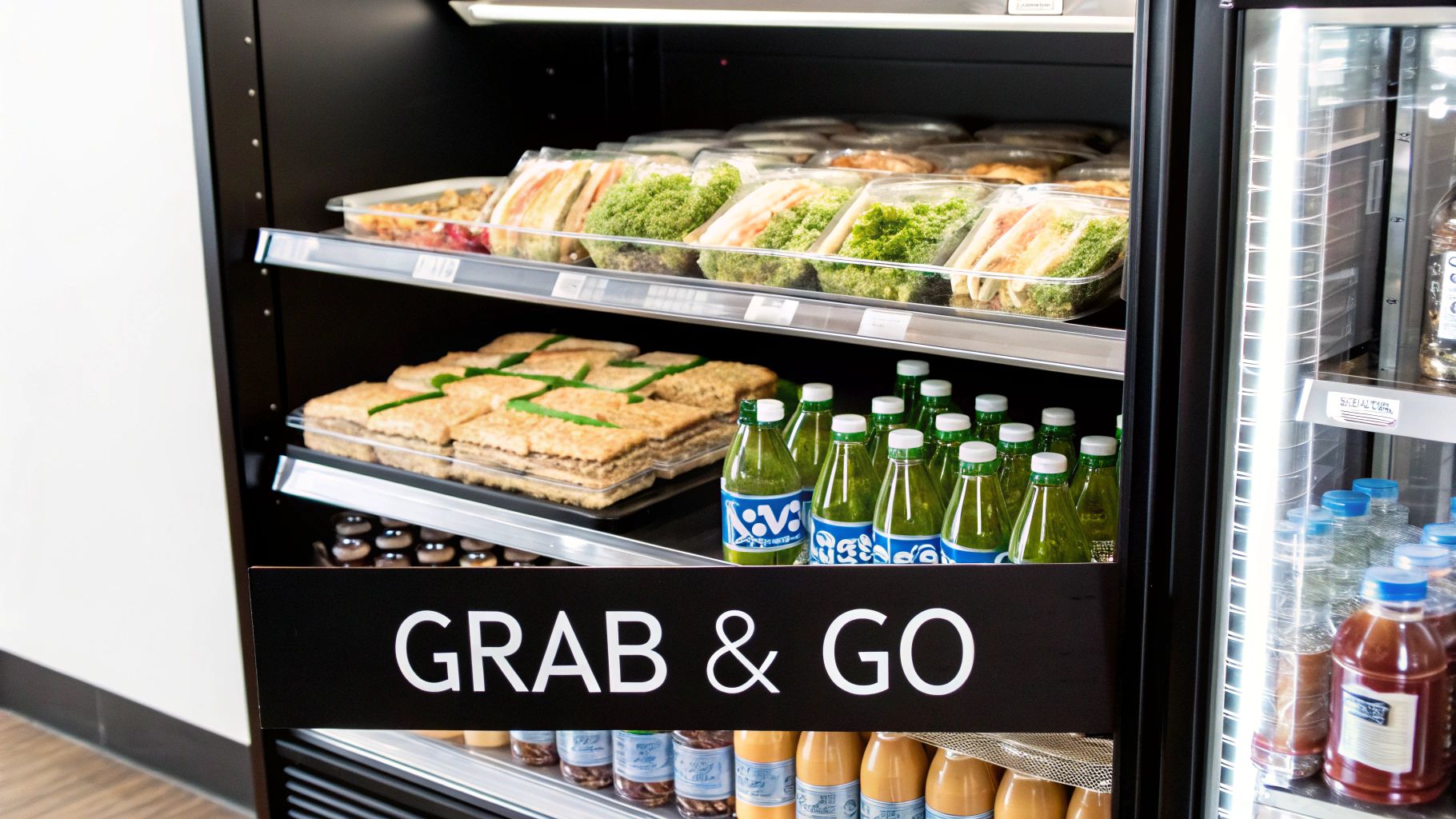
This setup is ideal for environments where customers prioritize speed, such as airport kiosks, convention centers, and busy sports arenas. By eliminating the bottleneck of on-demand food assembly, you can serve a much higher volume of guests. The visual appeal of a well-stocked, brightly lit refrigerated display also drives impulse purchases, encouraging customers to grab an extra drink or a premium sandwich they might not have otherwise considered.
Implementation and Operations
To launch a grab-and-go system, the primary investment is in reliable commercial refrigeration. Operators can find the latest industry trends and deals on equipment to stay informed. Consider sourcing high-quality used refrigeration units to significantly lower your initial setup costs. Arrange your layout to place these display cases in the direct path of customer flow, ideally near the entrance or checkout counter, to capture their attention immediately. Food preparation should be scheduled for off-peak hours, allowing your team to stock the units efficiently before the rush begins.
Actionable Tips for Success
- Strategic Placement: Position refrigerated display cases at eye level and close to the point-of-sale to maximize visibility and encourage impulse buys.
- Invest in Lighting: Use high-visibility LED lighting inside your display cases. Bright, clean lighting makes products look fresh and more appealing to customers.
- Branded Packaging: Use attractive, professionally branded packaging for all items. This elevates the perceived value and helps justify premium pricing.
- Inventory Management: Implement a strict first-in, first-out (FIFO) inventory system to track expiration dates, minimize waste, and ensure food safety and quality.
10. Community-Focused 'Concessions as Social Hub' Strategy
This innovative strategy pivots your concessions stand from a simple transaction point into a vibrant community hub. The goal is to create an experience that encourages customers to linger, connect, and return, transforming your stand into a destination. This approach integrates comfortable seating, local partnerships, and community-centric events to build a loyal customer base that values the social atmosphere as much as the food.
This model is perfect for locations with a strong local identity, such as farmers' markets, community sports complexes, or seasonal festivals. Think of a local sports venue featuring food from beloved regional restaurants, a festival concession area showcasing local artists' work, or a permanent park stand with café-style seating and free WiFi. By fostering a sense of belonging, you create an environment where sales are a natural byproduct of a positive community experience.
Implementation and Operations
To begin, dedicate a portion of your space to customer comfort. Invest in durable, weather-protected seating like benches, picnic tables, or café-style chairs. Next, actively seek partnerships with local artists, musicians, or community organizations to host small events. Your menu should reflect this local focus, so highlight partnerships with nearby farms, bakeries, or breweries. This synergy not only enhances the customer experience but also provides valuable cross-promotional opportunities, a key industry trend for growth.
Actionable Tips for Success
- Host Regular Events: Schedule recurring activities like open mic nights, local artist features, or community meetups to create a consistent draw and build a following.
- Forge Local Partnerships: Collaborate with nearby businesses, artists, and suppliers. Feature them in your marketing and on your menu to show genuine community investment.
- Create Comfortable Spaces: Offer inviting seating with amenities like shade umbrellas, string lights, or even charging stations to encourage customers to stay longer.
- Build a Loyalty Program: Develop a rewards program that benefits community participation, offering discounts to members of local clubs or volunteers from partner organizations.
- Leverage Social Media: Use your social channels to celebrate community partners, promote events, and share photos of customers enjoying the social hub you've created.
Concessions Stand Ideas: 10-Point Comparison
| Item | 🔄 Implementation Complexity | ⚡ Resource Requirements | 📊 Expected Outcomes | 💡 Ideal Use Cases | ⭐ Key Advantages |
|---|---|---|---|---|---|
| Premium Hot Holding & Display Equipment Setup | Medium–High: electrical/plumbing, maintenance schedules | High upfront cost, high energy use, counter space | Increases impulse sales, consistent hot holding, lower serve-time labor | Stadiums, theaters, fairs, high‑footfall counters | Visibility drives sales; consistent food safety |
| Modular Cold Beverage Dispensing Station | Medium: plumbing/CO2 setup, routine maintenance | Moderate equipment cost, syrup/CO2 supply, refrigeration | Strong beverage margins, reduced labor with self-serve | Movie theaters, stadium beverage kiosks, parks | High-margin drinks; compact footprint |
| Efficient Compact Fryer Station Configuration | High: ventilation, fire suppression, safety protocols | High energy, oil management, dedicated ventilation | Fast production, high-volume fried items, good margins | Fairs, stadiums, concert venues, high-demand stands | Fast output; versatile fried menu items |
| Themed Menu Strategy: Regional/Seasonal Offerings | Medium: recipe R&D, supplier coordination | Moderate: seasonal sourcing, staff retraining | Increased repeat visits, perceived freshness, local appeal | Seasonal festivals, regional venues, market-based concessions | Differentiation via local/seasonal sourcing |
| Multi-Station Parallel Layout Design | High: space planning, networked POS, staffing coordination | Higher tech and space costs, multiple POS terminals | Reduced waits, higher throughput, improved satisfaction | Airports, large stadiums, major event venues | Significantly increases throughput and customer flow |
| Limited-Time Promotional Events with Daily Specials | Medium: marketing cadence, daily execution | Low–Moderate marketing and promo management | Drives traffic on slow days, higher repeat visits, inventory turnover | Sports bars, theaters, fair concessions, slow periods | Creates urgency and boosts frequency |
| Upscale 'Gourmet Concessions' Theme & Menu | High: skilled staff, premium supply chain, branding | High food/labor costs, specialized equipment | Higher spend per customer, strong brand loyalty, premium margins | Premium venues, boutique theaters, festivals | Premium positioning yields larger margins |
| Mobile Concession Cart/Kiosk Strategy | Medium: compliance, quick-disconnect utilities, logistics | Moderate capital per cart, staffing for mobility | Flexible coverage, impulse sales, lower fixed overhead | Stadium seating areas, parks, festivals, roaming events | Mobility maximizes reach and adapts to traffic |
| Integrated Grab-and-Go Refrigerated Display Cases | Medium: refrigeration setup, inventory systems | High equipment cost, ongoing refrigeration maintenance | Rapid service, lower labor, higher throughput, reduced waste | Airports, busy venues, convenience-focused concessions | Fast transactions and efficient peak handling |
| Community-Focused 'Concessions as Social Hub' Strategy | High: space allocation, events management, partnerships | Moderate–High for seating, amenities, staffing | Longer dwell time, stronger loyalty, community engagement | Farmer’s markets, community centers, family-friendly venues | Builds loyalty and differentiates via experience |
Equipping Your Concession Stand for Success
Transforming a simple food stall into a profitable, high-traffic destination is no small feat. Throughout this guide, we have explored a diverse range of innovative concessions stand ideas, moving far beyond the traditional to embrace concepts that capture customer attention and maximize revenue. From the strategic efficiency of a Modular Cold Beverage Dispensing Station to the community-building power of the 'Concessions as Social Hub' model, the central theme is clear: success lies in a combination of a compelling concept, operational excellence, and the right physical tools.
We detailed how a Premium Hot Holding & Display setup can preserve food quality and drive impulse buys, and how a Compact Fryer Station can become a high-output profit center. We also examined conceptual strategies, such as developing a Themed Menu with regional specialties or launching an Upscale 'Gourmet Concessions' brand to attract a premium clientele. Each of these ideas, whether it’s a Multi-Station Parallel Layout for high-volume events or an agile Mobile Concession Cart for flexible positioning, hinges on a solid operational foundation. The true takeaway is that your creativity is only as effective as your execution.
From Concept to Reality: Your Actionable Next Steps
The journey from a great idea to a thriving business requires deliberate action. As you reflect on the ten distinct strategies covered, the next phase is to build a tangible plan. This involves moving from brainstorming to practical implementation, a process that requires careful consideration of logistics, finances, and infrastructure.
Here are the critical next steps to bring your chosen concession stand concept to life:
- Finalize Your Concept and Menu: Select the idea that best aligns with your target venue, audience, and operational capacity. Solidify your core menu, focusing on items with high profit margins and operational simplicity, as highlighted in our discussions on gourmet hot dogs or themed offerings.
- Develop a Detailed Equipment List: This is the most critical investment you will make. Based on your menu, create a comprehensive list of necessary appliances. Will you need high-capacity fryers, specialized beverage dispensers, refrigerated grab-and-go cases, or advanced hot-holding units? Be specific about capacity, dimensions, and power requirements.
- Create a Financial Blueprint: Outline your startup costs, including equipment, initial inventory, permits, and branding materials. Project your revenue based on realistic pricing strategies and sales volume estimates. Securing financing or exploring equipment leasing options can be a crucial step in this phase.
- Source Your Equipment and Supplies: Your equipment is the engine of your operation. Partnering with a reliable supplier who understands the unique demands of the food service industry is non-negotiable. Look for vendors who offer a mix of new and used equipment to fit your budget, provide expert advice, and understand local health codes.
Mastering these steps ensures your operation is built on a foundation of quality and efficiency. A well-equipped stand not only produces a superior product but also enhances speed of service, reduces waste, and improves staff morale, directly impacting your bottom line and customer satisfaction. The right equipment isn't just a purchase; it's a strategic investment in your brand's long-term success and ability to compete in a dynamic market. Staying informed about industry trends and the latest equipment innovations will give you a continuous competitive edge.
Ready to build the high-performance concession stand you’ve envisioned? Encore Seattle Restaurant Equipment provides the essential new and used commercial kitchen equipment needed to bring any of these innovative concessions stand ideas to life. Explore their extensive inventory online to find the perfect tools to launch your profitable venture.