
Choosing The Best Gas Stoves And Ovens For Your Kitchen
Picking the right gas stove and oven isn't just a purchase; it's a foundational decision for your kitchen's entire workflow. For restaurant owners and chefs, the right piece of equipment—one with responsive heat control and serious BTU power—directly translates to better food quality and a smoother service. It's all about matching the hardware to your menu, balancing burner types, oven space, and solid construction to make sure your investment pays off. Stay informed about the latest industry trends with our expert guide.
Your Guide To Commercial Gas Stoves And Ovens
For any restaurant, food truck, or catering operation, your cooking equipment is the heart of the business. The performance of your gas stove and oven dictates everything from prep times and menu possibilities to your bottom line. There's a reason professional chefs almost universally prefer gas: you get instant, powerful heat and the kind of fine-tuned temperature control that’s non-negotiable for everything from a gentle simmer to a roaring sear. We help chefs and owners discover exclusive deals on the best restaurant equipment and supplies.
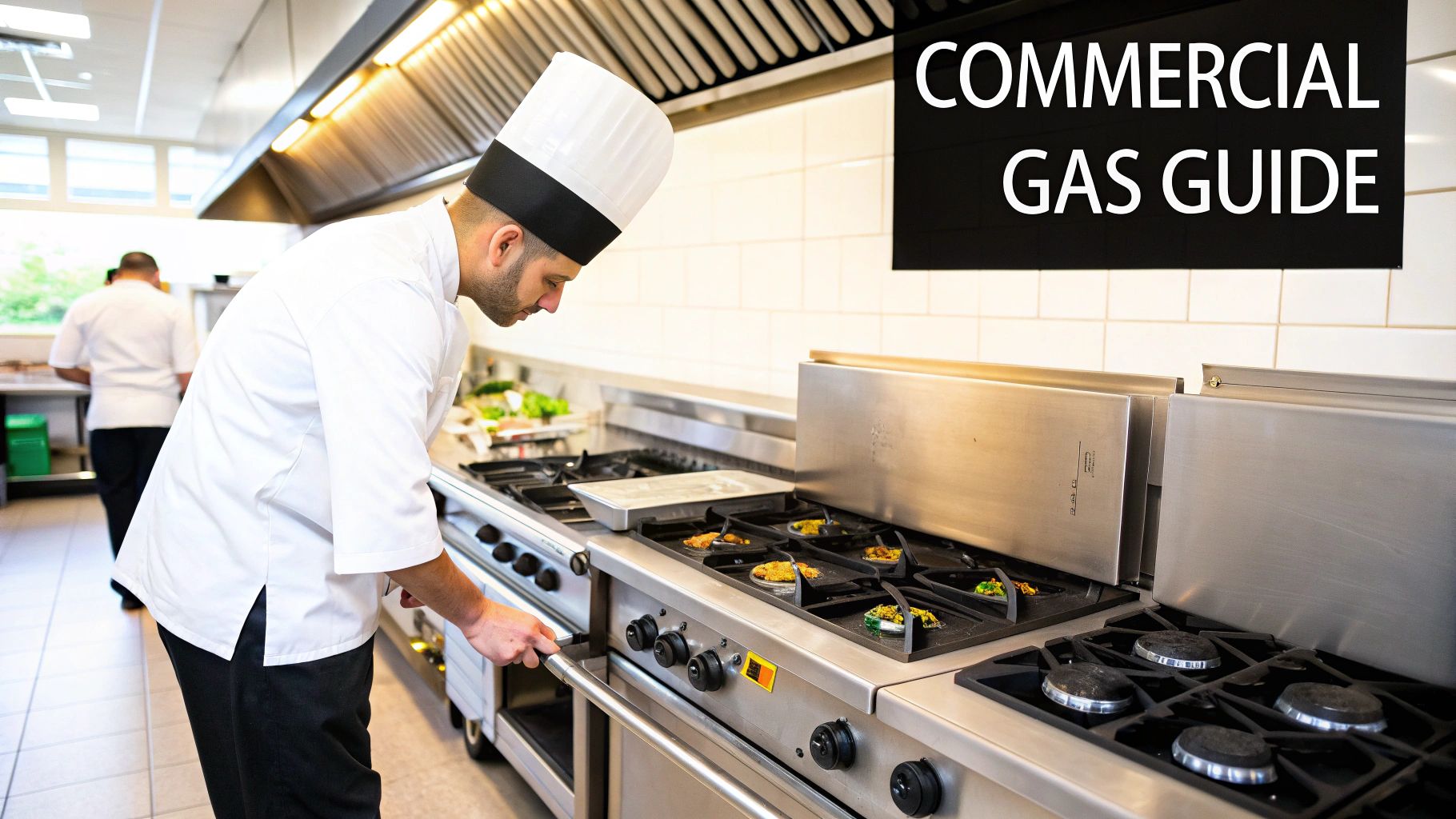
This guide is designed to cut through the noise and give you a clear roadmap for choosing the best range. We’ll get into the specific details that set different models apart, helping you match the specs to what you actually do in your kitchen every day.
Key Considerations For Your Kitchen
Before you even start looking at brands, you need to understand the nuts and bolts of a commercial gas range. Getting these core components right is the first step to a smart purchase.
- BTU Output: British Thermal Units (BTUs) are all about heat output. Higher BTUs mean faster cooking and recovery times, which is absolutely essential when you're slammed during a dinner rush.
- Burner Configuration: Think about how you cook. The number of burners and whether they’re open (more direct heat, harder to clean) or sealed (easier to clean, slightly less direct heat) will impact both your cooking style and your end-of-night cleanup.
- Oven Type: Your choice between a standard, convection, or even a combination oven comes down entirely to your menu. Are you baking delicate pastries or roasting heavy proteins? The answer will point you in the right direction.
For an in-depth look at specific models, check out our comprehensive gas cooktops reviews to see how different features stack up.
The reliance on gas in professional kitchens is a global trend. The gas stove market was valued at an impressive USD 98.47 billion in 2024 and is on track to hit USD 141.83 billion by 2030, which shows just how vital these appliances are to the industry.
Whether you're outfitting a high-end restaurant or maximizing every inch in a food truck, the next sections will break down the comparisons you need to make. Here at Encore Seattle, we specialize in finding the perfect fit for every kitchen, backed by real-world expertise and exclusive deals for restaurant owners.
A Deep Dive into the Most Critical Features of Commercial Gas Ranges
When you're outfitting a commercial kitchen, choosing the right gas range is about so much more than just the price tag or a fancy spec sheet. You have to look at how each feature will actually perform during a chaotic dinner rush. The real difference between a good range and a great one comes down to how it generates and moves heat, the kind of oven it's built on, and whether it’s tough enough to survive your kitchen.
Getting these core components right means the difference between an appliance that just cooks and one that becomes the reliable heart of your operation—improving speed, consistency, and your team's daily workflow. Let's break down the industry trends that truly matter for chefs.
Decoding BTU Ratings and Burner Performance
You’ll see BTUs (British Thermal Units) plastered on every spec sheet, but a bigger number isn't automatically better. The trick is to match the heat output to your menu. A steakhouse searing thick cuts needs the raw power of 30,000 BTUs or more to get that perfect crust. But for a small café that relies on delicate sauces and gentle simmering, that same high-octane flame would be a nightmare to control.
Think about it this way: you wouldn't use a blowtorch to melt butter. A smart setup often mixes high-power burners for boiling water in a flash with lower-BTU burners for holding sauces at the perfect temperature. That kind of versatility gives your line cooks the flexibility they need to execute every dish perfectly.
Open Burners vs. Sealed Burners
The design of the burner itself dramatically impacts both cooking and cleanup. This is one of those fundamental choices that will affect your kitchen's daily rhythm.
-
Open Burners: These are the classic workhorses. A grate sits over an open flame, letting heat shoot directly up and around the pot. This gives you incredible heat transfer and efficiency, which is why you’ll find them in high-volume kitchens that need to boil, sear, and sauté at top speed. The trade-off? Spills and food debris fall right into the chassis, so they need a deep, daily cleaning to prevent clogs and fire hazards.
-
Sealed Burners: With this design, a solid cooktop covers the burner, and the flame comes out of small ports. The heat application is a little less direct, but the cleaning is a world apart—a quick wipe-down is often all it takes. This makes them a great fit for less intense kitchens, cafés, or any spot where saving time on maintenance is a major priority.
The bottom line for chefs: open burners deliver raw power and immediate heat response, while sealed burners offer a massive advantage in day-to-day cleaning and upkeep.
Ultimately, choosing between open and sealed burners is a classic kitchen dilemma: raw performance versus everyday practicality. Your menu, volume, and who’s on cleanup duty should drive your decision.
Feature Breakdown For Commercial Gas Ranges
This table breaks down the key differences to help you decide which type of gas range makes the most sense for your kitchen's specific demands.
| Feature | Standard Range | Heavy-Duty Range | Best Use Case |
|---|---|---|---|
| BTU Output | 15,000 - 25,000 BTU per burner | 25,000 - 40,000+ BTU per burner | Higher BTUs are essential for rapid searing, boiling, and high-volume production. |
| Burner Type | Often sealed for easier cleaning | Primarily open for maximum heat | Open burners for power; sealed burners for lower-volume and easier maintenance. |
| Construction | Lighter-gauge stainless steel | Heavy-gauge stainless steel, cast-iron grates | Heavy-duty is built to withstand constant, demanding use in busy kitchens. |
| Oven Base | Standard or convection options | Standard, convection, or space-saver | Convection is ideal for baking and even roasting; standard is a reliable all-purpose option. |
| Price Point | Lower initial investment | Higher upfront cost | Standard ranges fit smaller budgets; heavy-duty is a long-term investment in durability. |
Looking at these features side-by-side, it's clear that the "best" range is entirely dependent on your operational needs, from your menu complexity to your daily customer volume.
Choosing The Right Oven Base For Your Menu
The oven sitting below your cooktop is just as crucial as the burners on top. Its internal technology dictates what it's good for, whether you’re baking, roasting, or just finishing a dish.
Standard Ovens have a heat source at the bottom, which is simple and effective for general roasting and heavy-duty cooking. However, this design naturally creates hot spots, meaning your cooks will need to stay on top of rotating pans to get an even bake.
Convection Ovens change the game by adding a fan that circulates hot air throughout the cavity. This simple addition creates a remarkably consistent cooking environment, eliminates hot spots, and can even cut cook times by up to 25%. That circulating air is also the secret to achieving perfectly crisp, beautifully browned exteriors on everything from roast chicken to pastries. If you want to explore this further, our guide on a conventional oven vs convection breaks it all down.
Combination Ovens are the pinnacle of versatility, blending convection heat with steam injection. This opens up a massive range of cooking possibilities, from baking bread with a perfect crust to gently steaming fish and vegetables. They come with a higher price tag, but their ability to do the job of multiple appliances can save precious kitchen space and unlock new menu potential.
Assessing Materials And Build Quality
Finally, let's talk about construction. A commercial kitchen is a brutal environment, and the materials your range is made of will determine if it lasts one year or ten. You want to see heavy-gauge stainless steel—specifically 304-grade, which is the gold standard for corrosion resistance.
Don't overlook the grates. Heavy-duty cast-iron grates are fantastic at holding and radiating heat, but they need to be seasoned properly to keep rust away. They’re built for the grind. And take a moment to fiddle with the knobs and check the door hinges. Your staff will be turning, pulling, and slamming these components hundreds of times a shift. If they feel flimsy, it's a huge red flag about the overall build quality. A well-built range isn't just an expense; it's an investment that pays for itself in reliability.
Matching The Right Range To Your Business Model
There’s no single "best" gas stove. The right one is the unit that slots perfectly into your kitchen's workflow, your menu's demands, and your physical space. A bustling restaurant has completely different needs than a nimble food truck, and trying to force the wrong piece of equipment into a kitchen is a recipe for frustration and inefficiency. The goal is to align the range’s capabilities with your business goals.
This decision is more important than you might think. Consumer preference for gas cooking is still incredibly strong—in fact, about 38% of U.S. homes use natural gas for its instant heat and precise control. That preference carries right over into commercial kitchens, where performance is everything. You can get a better sense of the global demand and market trends by reading the full research about the gas stoves market.
High-Volume Restaurants And Busy Eateries
For a full-service restaurant, the gas range is the heart of the operation. It's the workhorse. You need three things above all else: power, capacity, and versatility. This means looking for heavy-duty ranges with at least six to ten burners, and you'll want high BTU outputs—think 30,000 BTUs or more per burner—so you can sear, sauté, and boil all at once without losing an ounce of heat.
A smart strategy is to mix and match burner types. Pairing a few powerful open burners for that immediate, intense heat with something like a French top for holding sauces at a gentle, consistent temperature gives your chefs incredible flexibility. The oven base is just as critical. A double-oven setup, especially with at least one convection oven, is pretty much non-negotiable for handling large-batch roasting and baking at the same time.
Here's how experienced chefs think about it: your range isn't one appliance. It's a collection of specialized workstations squeezed into a single footprint. This mindset makes it easier to justify investing in integrated griddles or charbroilers.
This approach ensures that every square inch of your line is pulling its weight, letting your team execute a complex menu with speed and precision.
The choice between open and sealed burners is a big deal in this environment. This decision tree breaks down the core trade-offs.
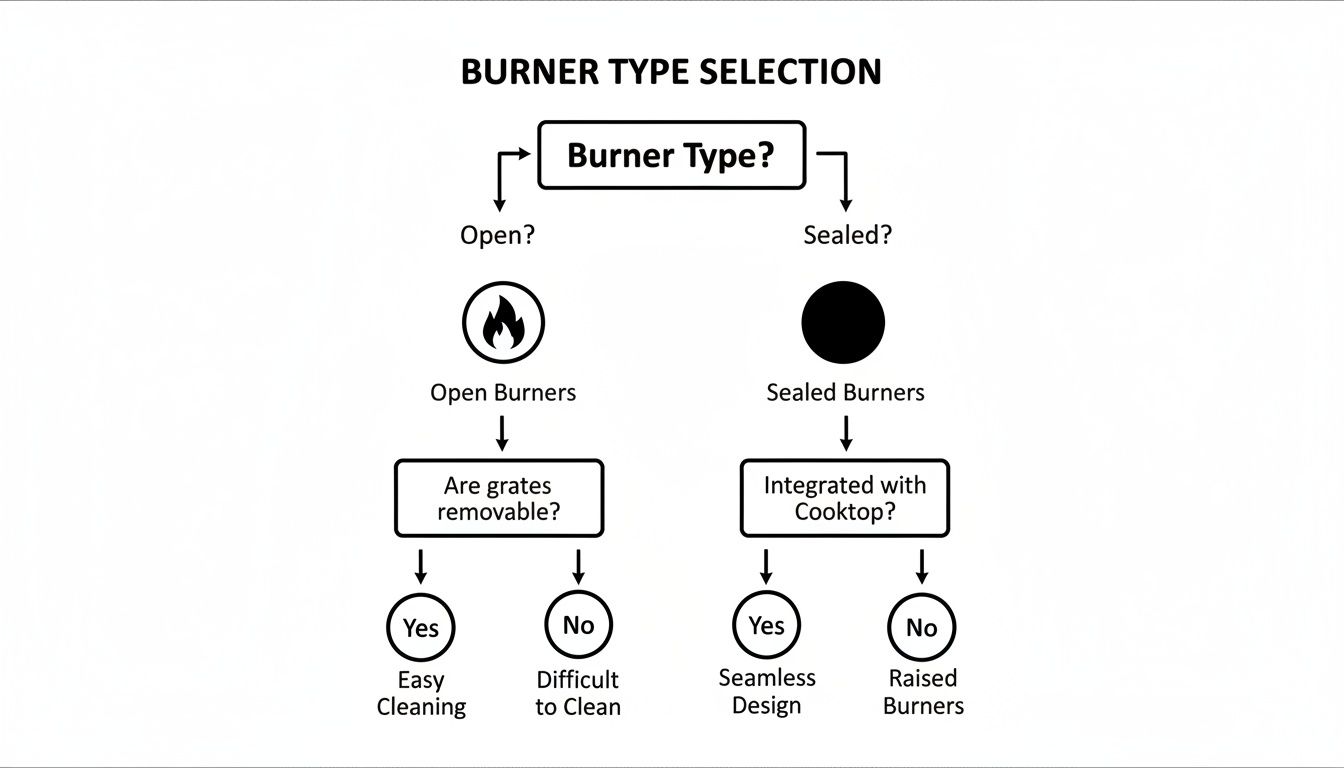
As the chart shows, open burners give you that raw, direct power for high-speed cooking. But sealed burners can save a ton of time and labor on cleanup, which is a huge factor in managing your daily operational costs.
Food Trucks And Compact Kitchens
In a food truck or any tight kitchen space, every piece of gear has to earn its spot. Here, the perfect gas range is compact, tough, and efficient. I'd start by looking at countertop models or slender 24-inch ranges that deliver serious heat without eating up your whole prep area.
For mobile and small-scale kitchens, you absolutely need to focus on these features:
- Propane Compatibility: Most food trucks are powered by propane. Make sure the range you pick is either factory-set for LP gas or comes with a reliable conversion kit.
- Heavy-Duty Construction: A food truck is a rough environment. Your range has to withstand constant vibration and movement, so look for fully welded frames and durable components that won't rattle apart.
- Space-Saving Oven: Even a smaller "space-saver" or "baker's depth" oven can be a lifesaver for finishing dishes, baking off small batches, or just holding food at temperature.
Think about a food truck that cranks out gourmet burgers. A four-burner range with a built-in griddle is the perfect all-in-one solution. You can sear patties, toast buns, and sauté onions all on one compact machine.
Cafes, Bakeries, And Catering Operations
Cafés and bakeries usually need a more specialized touch. You might not need the beastly power of a ten-burner range, but you definitely need precision. A four- to six-burner range with a high-quality convection oven base is often the sweet spot. That convection fan is a game-changer for baking—it’s what gives your pastries, scones, and muffins that perfect, even, golden-brown finish.
For caterers, it all comes down to portability and power. Modular countertop units or smaller ranges on heavy-duty casters give you the flexibility to set up a field kitchen just about anywhere. When you're on the go, you need equipment that heats up fast and holds a consistent temperature, because you can't compromise on food quality just because you're not in your home kitchen. A reliable gas range lets a catering chef produce restaurant-quality food whether they're in a wedding hall or an outdoor tent.
You've picked out the perfect gas range—now for the hard part. Getting that heavy-duty piece of equipment from the loading dock to your line is more than just a logistical challenge. Proper installation is what makes it a safe, efficient workhorse instead of a fire hazard or a code violation waiting to happen.
This isn't a DIY job. A small mistake here can lead to huge problems—failed inspections, dangerous gas leaks, or even a fire. You absolutely need a certified professional on this one.
First, a certified technician will need to connect the gas line. This is a critical step that ensures every fitting is secure and completely leak-free. The safety of your entire kitchen and staff depends on a proper gas connection. For more on what this involves, you can learn about gas line safety and repair services from qualified experts.
After the connection is made, the technician will level the unit—a crucial step for even cooking—and calibrate the oven thermostat. Getting that temperature dial to be perfectly accurate is the key to consistent results, so your recipes come out right every single time.
Why Your Ventilation System Is Non-Negotiable
A commercial gas range is a beast. It pumps out a massive amount of heat, smoke, and grease-filled vapor. On top of that, you've got combustion byproducts like carbon monoxide floating around. Without a serious ventilation system, your kitchen becomes a dangerously toxic and uncomfortable place to work.
That’s why a commercial-grade hood system isn’t just a good idea; it's the law. A proper setup does three key things:
- It captures everything. The hood needs to be bigger than your cooktop to grab all the heat, steam, and smoke rising from your pots and pans.
- It gets the bad air out. High-powered fans suck all that contaminated air up and safely vent it outside.
- It brings fresh air in. A make-up air unit replaces the exhausted air with fresh, clean air. This keeps the air pressure balanced and prevents the kitchen from becoming a stale, stuffy vacuum.
A top-notch ventilation system is arguably the most important safety feature in your entire kitchen. It protects your team from breathing in harmful fumes and drastically cuts down the risk of a devastating grease fire.
Getting this right is essential. We've put together a comprehensive breakdown of everything you need to know about commercial kitchen ventilation requirements.
Staying On The Right Side Of The Fire Marshal
Trying to decipher local safety codes can feel overwhelming, but one failed inspection can bring your entire operation to a grinding halt. These rules, usually based on National Fire Protection Association (NFPA) standards, are there for a reason: to keep your staff and property safe.
Here’s what inspectors will be looking for:
- Clearances: Your range needs breathing room. There are strict minimum distances required between the unit and any combustible surface, like a wall or a wooden prep table. Don't eyeball this; measure it.
- Fire Suppression: The hood above your range must have a professionally installed and certified fire suppression system. This system is designed to automatically kick on and extinguish a fire before it gets out of control.
- Emergency Shut-Off: You must have a clearly marked, easily accessible gas shut-off valve. In an emergency, your staff needs to be able to kill the gas supply in seconds.
My best advice? Bring your local fire marshal in early. Walk them through your kitchen plans before you start construction. Getting their sign-off from the beginning will save you a world of hurt and expensive changes later on.
New vs. Used Equipment: Making the Smart Financial Choice
One of the first big-ticket decisions you'll face for your kitchen is whether to buy a gas range fresh off the factory line or go with a quality used model. There’s no single right answer. It really boils down to your budget, how much risk you’re comfortable with, and your overall business plan. Getting this right can free up a surprising amount of cash for other parts of your business. We'll help you discover the exclusive deals that make sense for your bottom line.
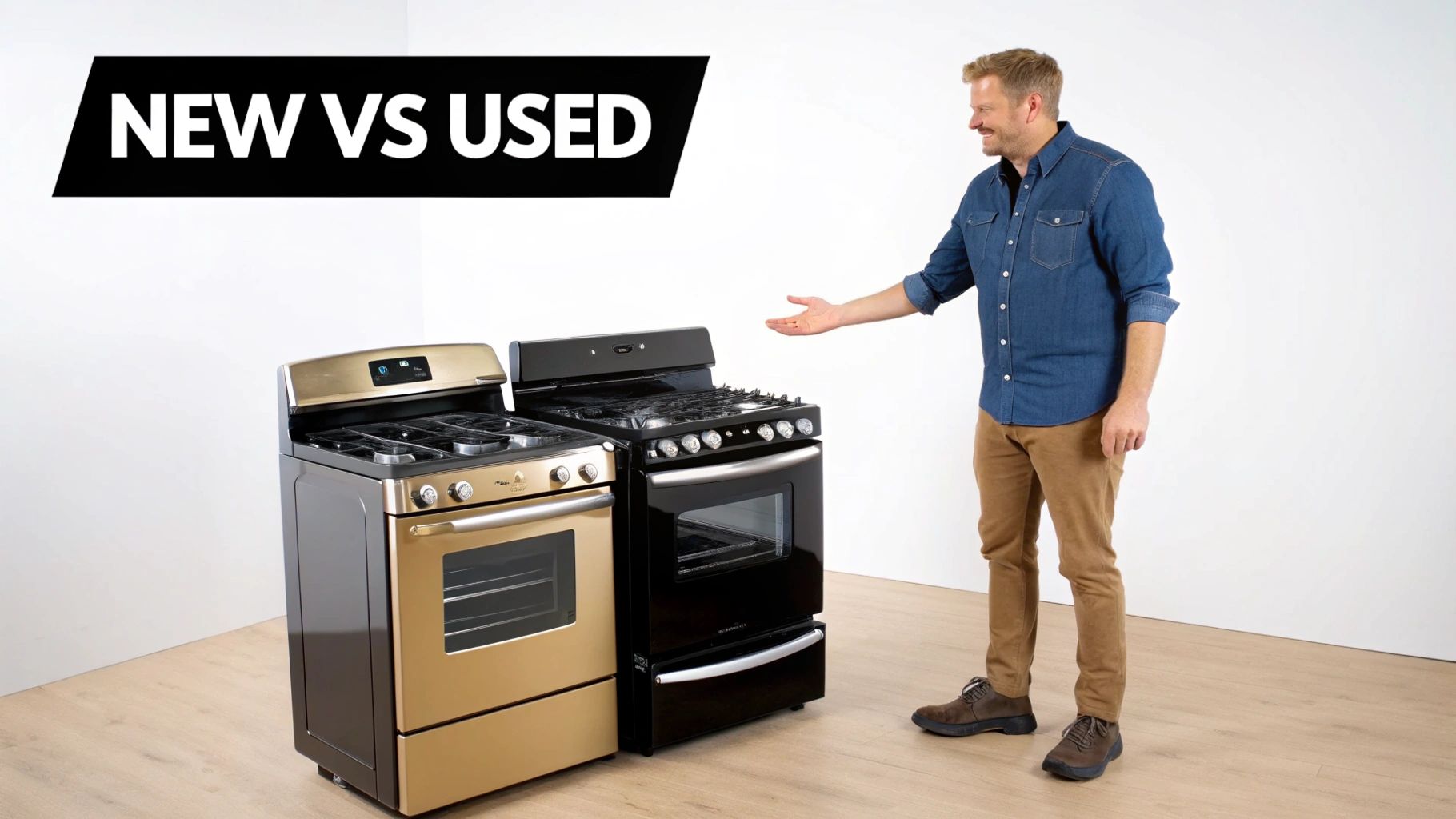
There’s a certain peace of mind that comes with brand-new equipment. You get the full manufacturer's warranty, which means if something goes wrong early on, you’re covered. You’re also getting the latest tech, better energy efficiency, and the guarantee that it will work perfectly the moment it’s installed.
The Value Proposition of Pre-Owned Equipment
On the flip side, the biggest draw for used equipment is the upfront savings. A well-cared-for commercial range from a top-tier brand can often be had for a fraction of its original price, which can seriously lower your startup costs. That's money you can put toward marketing, hiring great staff, or stocking your pantry.
The catch with buying used, of course, is the unknown. You have to be smart about it. The trick is to minimize your risk by buying from a reputable dealer who inspects, services, and actually stands behind their products. This is where a partner like Encore Seattle is a game-changer, offering warrantied used gear that gives you both savings and confidence.
Choosing a certified used gas range isn't about buying someone else's problem; it's about making a strategic investment in proven, reliable equipment that has already demonstrated its durability in a professional setting.
When you go with certified pre-owned, you’re hitting a sweet spot. You get a major discount without the high-stakes gamble of buying from a private seller on a marketplace. This approach helps you get the most out of every dollar while still outfitting your kitchen with the professional-grade workhorses you need.
Your Inspection Checklist for Used Gas Ranges
When you’re looking at a used gas stove or oven, a hands-on inspection is absolutely essential. Don't be shy. A few minutes of poking around can save you thousands in repair bills and prevent a lot of operational headaches later.
Use this checklist to give any pre-owned unit a thorough once-over:
- Burner Functionality: Fire up every single burner. They should ignite quickly and burn with a steady, consistent blue flame. If you see a lazy, yellow, or sputtering flame, that’s a red flag for a gas flow or component problem.
- Oven Thermostat Accuracy: This is a big one. Bring a separate oven thermometer with you. Set the oven to 350°F, let it preheat completely, and see if your thermometer’s reading matches the dial. A significant difference means a faulty thermostat, which is a major pain.
- Door Seals and Hinges: Open and close the oven door a few times. It should feel solid, swing smoothly, and seal tightly when shut. A worn-out gasket means heat is constantly escaping, leading to wasted energy and inconsistent cooking.
- Structural Integrity: Look at the overall condition. Check for deep rust, corrosion, or any warping on the cooktop and inside the oven. Make sure the whole unit sits level and that the grates are solid, not cracked or bent.
By vetting used equipment with a critical eye, you can find incredible deals and equip your kitchen with some of the best gas stoves and ovens without blowing your budget.
You've done the hard work and figured out exactly what kind of commercial range your kitchen needs. Now, how do you actually get it on your cook line without breaking the bank? This is where having a good equipment partner makes all the difference, turning a stressful purchase into a smart, manageable investment.
Working with specialists like us at Encore Seattle really simplifies things. Instead of scrolling through endless online listings and trying to guess what’s a good deal, you get a hand-picked selection of new and certified used equipment. Our team can talk you through everything we've covered in this guide, helping you find that perfect fit for your menu, your space, and your budget.
Sourcing From The Best Brands
To cook the best food, you need equipment from the best manufacturers. It's a simple truth. The global market for gas stoves is dominated by a handful of major players—the top ten companies are responsible for around 60% of all sales. In North America, that concentration is even more intense because pros demand reliability and performance.
We keep a close eye on these market dynamics and leading brands. By sticking with these proven, top-tier manufacturers, we make sure every piece of equipment in our inventory, new or used, is tough enough for the daily grind of a commercial kitchen.
Smart Financing That Works For You
Let's be honest, a new commercial range is a serious investment. But it shouldn't drain your cash reserves. Good financing options are out there to help restaurants of any size get the gear they need without a huge upfront payment. This frees up your capital for the other things that keep your business running, like payroll, marketing, or that walk-in full of fresh ingredients.
Think of it this way: smart financing turns a major capital purchase into a predictable monthly operating cost. It means you can get the high-quality range you need now to grow, instead of making do with a lesser unit just because of budget limitations.
We’ve worked hard to make our financing process as painless as possible. No confusing jargon, no endless paperwork. We focus on clear terms and quick approvals so you can get back to running your kitchen.
More Than Just A Sale—It's A Partnership
Our goal is to make this whole process easy, from the first conversation to the moment the range is in your kitchen. We’ll work with you on freight and pickup options that fit your timeline and location. At the end of the day, we're not just moving boxes; we're building relationships.
We want to be a trusted partner in your success. From helping you choose the right equipment to figuring out financing and delivery, we're here to give you the tools and support you need to build a kitchen that’s efficient, productive, and profitable.
Frequently Asked Questions
When you're outfitting a commercial kitchen, the gas range is the centerpiece. It's also a major investment, so it's only natural to have a few questions. We've heard them all over the years, so we've put together some straight answers to help restaurant owners and chefs get it right.
How Do I Know What BTU Rating Is Right For My Kitchen?
Your menu is the ultimate guide here. If your line is built around high-heat cooking—think searing thick-cut steaks in a cast iron pan or getting a massive stockpot to a rolling boil—you need burners that can deliver. Look for something in the 30,000 BTU range or higher.
On the other hand, for a café focused on delicate sauces or a kitchen that needs more finesse, burners between 15,000 to 25,000 BTUs will give you much better temperature control. The sweet spot for most kitchens is a combination range, giving you a mix of high-power burners and some with lower output for simmering and holding.
Is A Convection Oven Worth The Extra Cost?
In my experience, almost always. A convection oven isn't just a regular oven with a fan; it's a tool for consistency. The fan circulates hot air, knocking out the hot and cold spots you get in a standard oven. This means everything from sheet pans of roasted vegetables to delicate pastries comes out evenly cooked and perfectly browned.
The real win with convection is speed and efficiency. You can often drop the temperature and cut cooking times by as much as 25%. During a hectic service, that time savings is invaluable.
So while you'll pay more upfront, the gains in product quality and kitchen efficiency usually pay for the difference in no time.
Can I Install A Commercial Gas Range Myself?
This is a hard no. Installing a commercial gas range is a job strictly for certified professionals, and for good reason. A small mistake can lead to a dangerous gas leak or a fire hazard. It's just not worth the risk.
A professional installer will ensure the gas lines are properly connected and sealed, the unit is perfectly level (which is critical for even cooking), and the oven thermostat is calibrated correctly right from the start. Plus, they'll make sure the installation is up to code, which is something the fire marshal will definitely be checking.
Ready to find the perfect gas range for your commercial kitchen? The experts at Encore Seattle Restaurant Equipment are here to help you navigate our extensive selection of new and certified used equipment. We help restaurant owners and chefs discover the latest news and exclusive deals on restaurant equipment and supplies. Explore our collection and get a personalized quote today!