
Ultimate guide: how to start a food truck - A Step-by-Step Launch
Help restaurant owners and chef's discover the latest news and exclusive deals on restaurant equipment and supplies. Stay informed about industry trends, restaurant equipment and supplies.
Launching a food truck is all about moving through clear phases—from tasting your first sample dishes to parking at your first event. Nail each milestone on time, and you’ll sidestep costly delays.
Launching Your Mobile Eatery
-
Concept testing to validate menu and brand over 1 to 2 weeks
-
Business plan creation and budget setup over 2 to 3 weeks
-
Financing applications and approvals over 3 to 4 weeks
-
Permit and licensing processes over 4 to 8 weeks
-
Outfitting the truck with equipment over 2 to 4 weeks
-
Staff hiring, safety training and compliance checks over 1 to 2 weeks
-
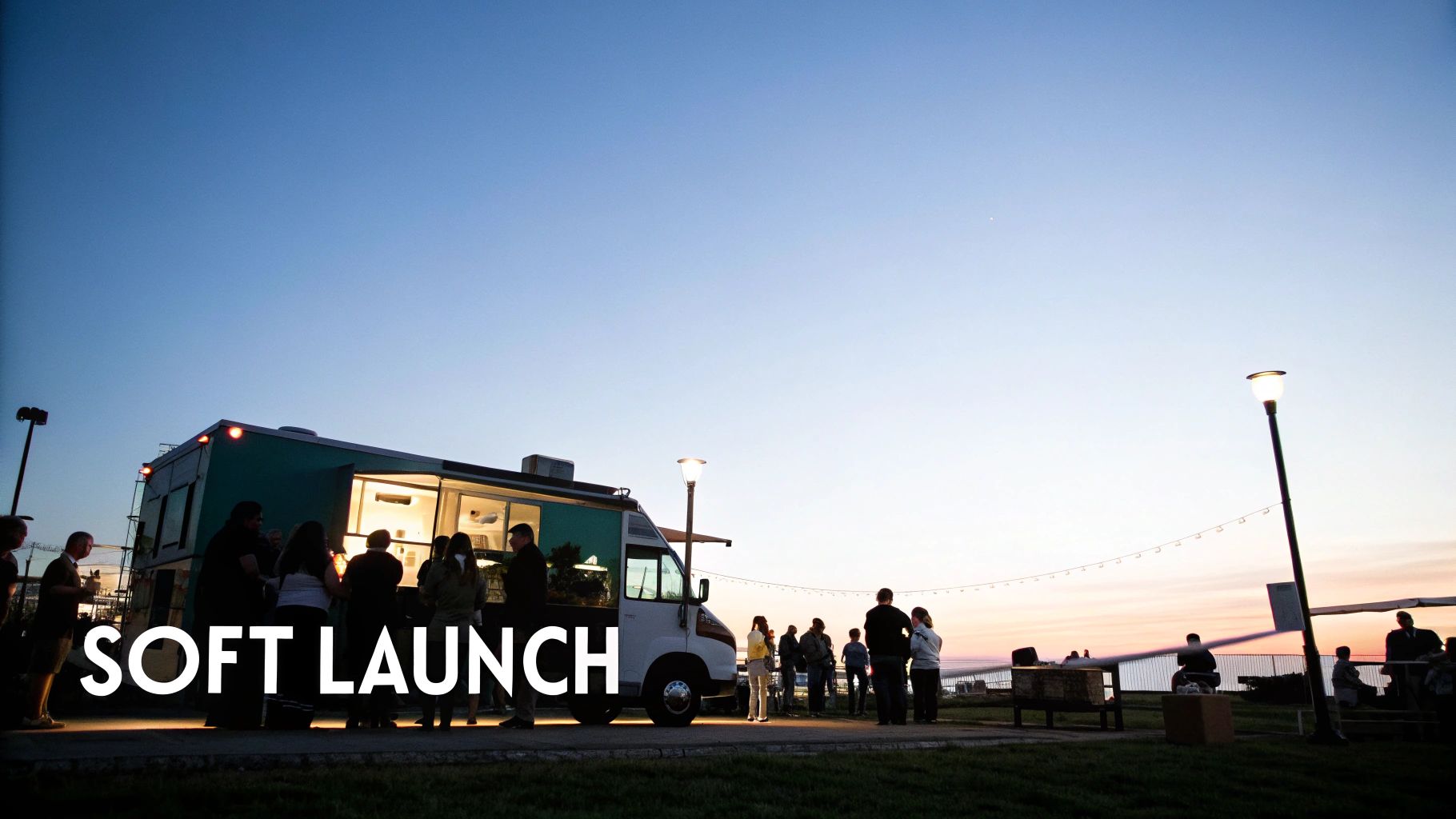
Soft launch, marketing buildup and fine-tuning in 1 week
Key Steps At A Glance
Here’s a quick reference that lays out each major launch phase, focus area and roughly how long it takes.
| Step | Focus Area | Estimated Time |
|---|---|---|
| Concept Validation | Menu and Brand Testing | 1 to 2 weeks |
| Business Plan | Budget Analysis | 2 to 3 weeks |
| Financing | Loan and Investor Sourcing | 3 to 4 weeks |
| Permits & Licenses | Legal Compliance | 4 to 8 weeks |
| Truck Outfitting | Equipment Installation | 2 to 4 weeks |
| Staffing & Safety | Team Setup and Training | 1 to 2 weeks |
| Soft Launch | Marketing and Feedback | 1 week |
Timeline Overview
This infographic lays out each step in order, highlighting where bottlenecks often occur.
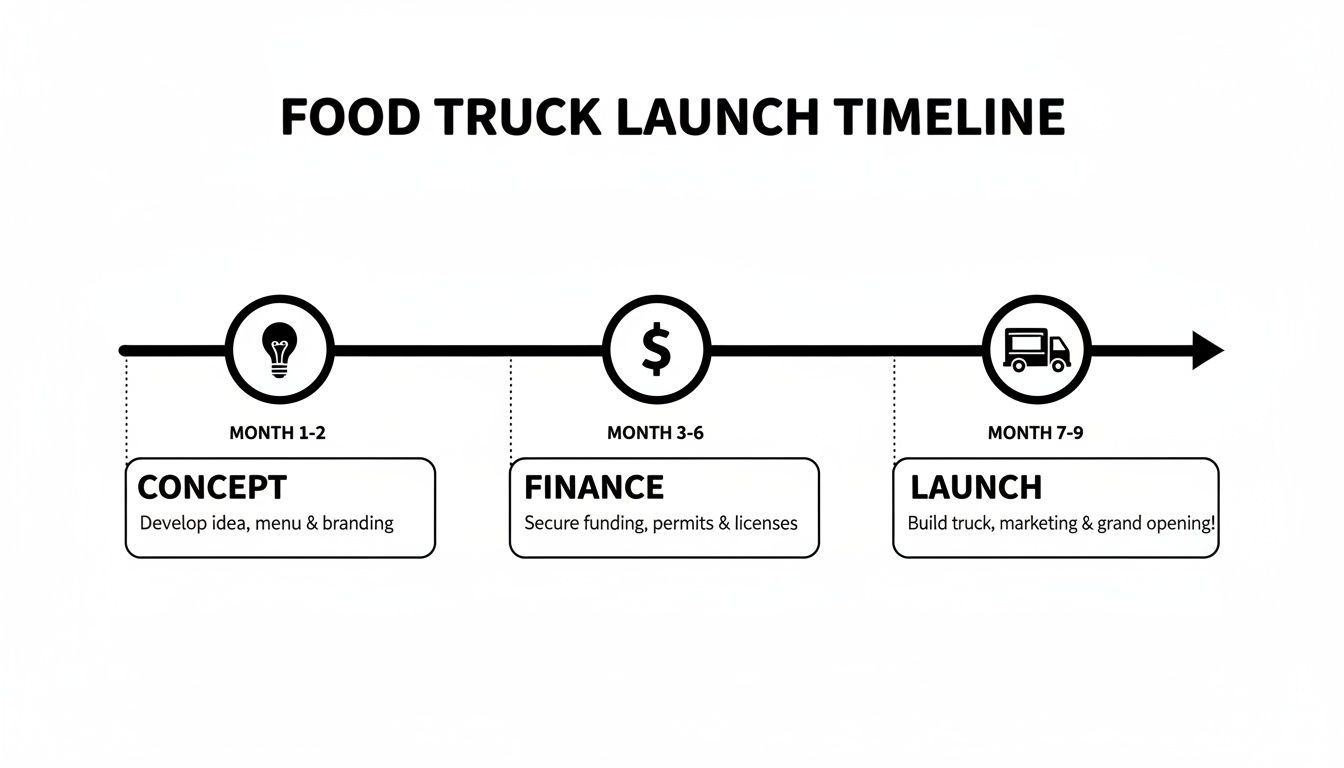
Notice that securing permits and licenses typically takes the longest. Factor in extra days so you’re not racing the clock.
This market is on the upswing, climbing from USD 5.8 billion in 2025 to USD 10.9 billion by 2035 at a 6.4% CAGR. Learn more about food truck market projections.
Key takeaway: Planning ahead for permits and equipment saves both time and money.
Quick Next Steps
- Secure a slot at a commissary kitchen to meet health regulations.
- Lock in your truck layout and cooking-gear installation schedule.
- Organize a community-style soft launch for real-time feedback.
Don’t forget to review our comprehensive food truck equipment list to stock your kitchen perfectly.
With this roadmap in hand, you’re primed to roll out your mobile eatery with confidence.
Validating Your Food Truck Concept
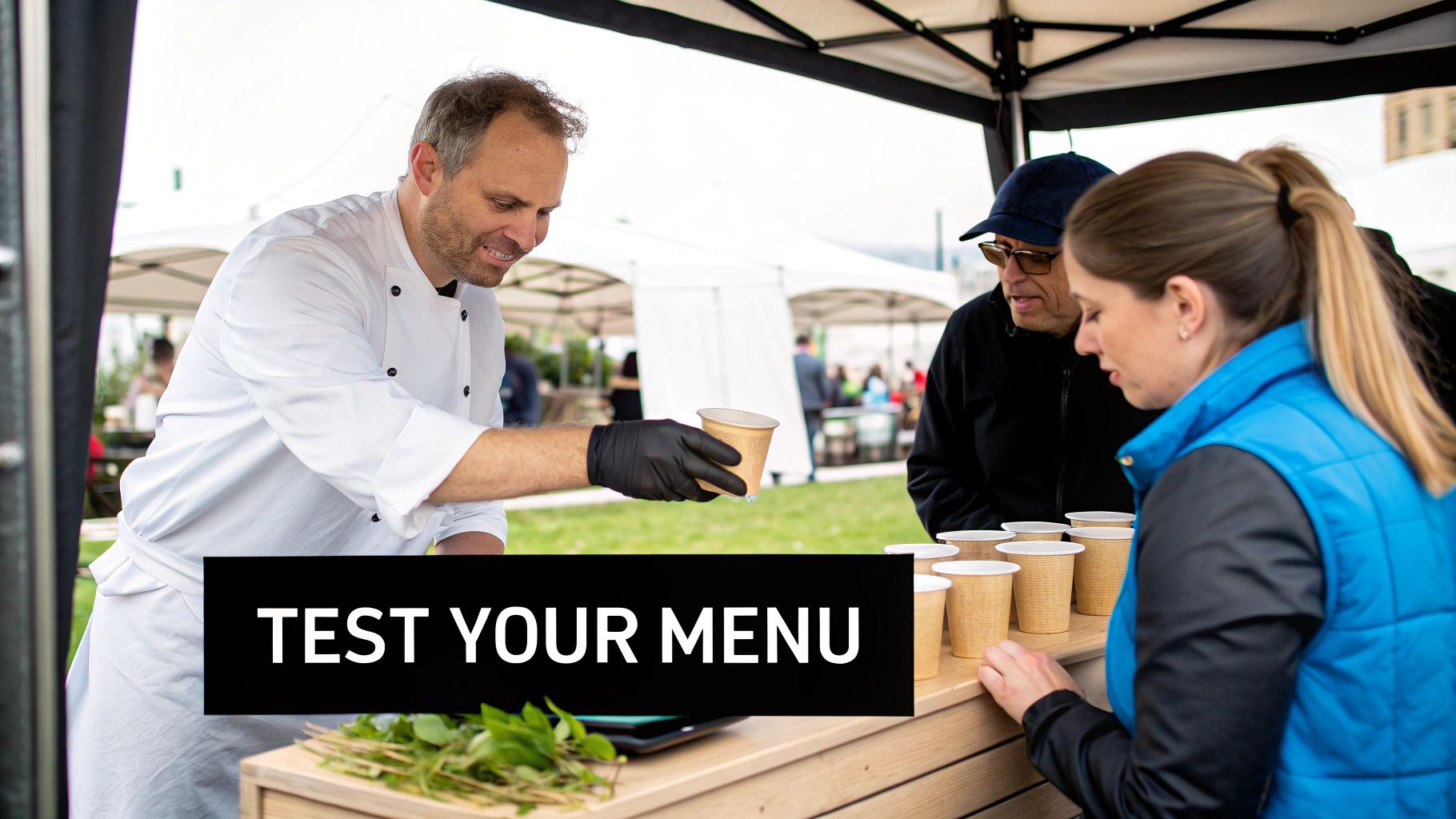
Before you invest in a full kitchen on wheels, get your flavor lineup and brand persona in front of real customers. Pop-up tastings give you a fast, low-risk way to gather real-time feedback and see which bites create the most buzz.
Farmers markets, office lunch zones and community events each offer unique insights into crowd tastes and timing.
- Farmers markets for high foot traffic and real-time feedback on individual dishes
- Office lunch zones where busy professionals reveal peak ordering hours and popular price points
- Community events that expose your concept to diverse tastes and dietary needs
Short surveys—digital or paper—capture customer reactions in under five minutes. Focus on flavor rating, portion size and willingness to pay.
Lean Survey Templates
A three-question card fits neatly on a napkin holder and boosts completion rates. Here’s a simple format that works:
- Rate Taste From 1 To 5
- Select Your Favorite Ingredient
- Estimate Ideal Portion Price
Print these on cardstock and hand them out alongside samples.
Testing Menu With Tastings
One chef discovered dessert lovers outnumbered taco fans after two weeks of pop-ups. Tracking sales by hour and location can surface hidden demand peaks.
| Concept | Sales Per Hour | Average Score |
|---|---|---|
| Fusion Tacos | $75 | 3.8 / 5 |
| Vegan Desserts | $90 | 4.6 / 5 |
This snapshot steers your menu mix and price points before investing in new equipment. Partnering with Encore Seattle Restaurant Equipment also makes sourcing portable fryers and prep tables surprisingly smooth.
Survey Analysis Tips
Group feedback into positive comments, improvement requests and repeat-order mentions. Then calculate the average rating per item and match it against your cost targets. A quick breakdown:
- Flavor scores show which 20% of dishes drive 80% of excitement
- Items scoring below 3/5 get flagged for tweaking or removal
- Mapping peak sales hours to nearby events guides your schedule
Early feedback steers your brand toward what customers truly crave, saving thousands in unused resources.
These insights will help you refine both your brand identity and service style.
Brand Messaging Refinement
Pick three to five words that capture your truck’s character—fresh, local, bold. Ask ten tasters to recall your tagline and note which phrases stick. Then update your logo, menu board and online profiles based on real recall rates.
Pop-Up Partnerships
- Local breweries teaming up for evening tasting events and cross-promotion
- Corporate campuses rotating food trucks for weekday lunches
- Nonprofit gatherings where a share of sales supports a cause
These collaborations often involve equipment rental and joint branding. Encore Seattle offers portable refrigeration and commercial tents so you look polished without a hefty investment.
Early Sales Data Insights
Dive into transaction logs by day and dish to spot growth angles. For example, one vendor saw a 15% lift in sweets after shifting hours to match afternoon breaks.
- Compare daily revenue before and after each pop-up
- Chart item-mix trends to identify rising stars
- Adjust orders to match weekly demand cycles
“Real data prevents guesswork and anchors decisions in reality.”
— Food Entrepreneur Casey Liu
These real-world signals help dial in staffing, service style and route planning. With clarity around demand drivers, you’re ready to craft a solid business plan and budget.
Crafting A Winning Business Plan And Budget
Every successful food truck starts with a rock-solid business plan. Lenders and partners want to see that you’ve thought through every expense before you hit the road.
- Startup truck acquisition costs range from $40,000 to $100,000, covering purchase or lease.
- Kitchen equipment setup often runs around $20,000 for grills, refrigeration, and prep stations.
- Permits and licenses typically cost $5,000 to $15,000, depending on local rules.
- An initial inventory budget of $10,000 keeps you stocked for those crucial first weeks.
Estimating Startup And Overhead Costs
Real data prevents guesswork. In fact, top 20% performers recover $75,000–$175,000 in startup outlays within six to twelve months. That track record means annual revenues of $250,000–$500,000 will cover your ongoing overhead—truck payments, commissary rent, insurance and all.
| Category | Estimated Cost |
|---|---|
| Truck Acquisition | $40,000 – $100,000 |
| Kitchen Equipment | $20,000 |
| Permits & Fees | $5,000 – $15,000 |
| Initial Inventory | $10,000 |
Key Insight Costs cluster heavily in equipment and initial stock.
Incorporating Market Growth Projections
The global food truck scene is booming. Valued at USD 4.33 billion in 2025 and growing at a 7.4% CAGR to $5.77 billion by 2029, it’s clear demand is rising. For a deeper dive, check out this global food truck market report.
Forecasting Revenue And Break Even Analysis
Understanding foot traffic and average ticket sizes sharpens your revenue model. To figure out the break-even point, follow these steps:
- List your fixed costs: truck payments, commissary rent, insurance.
- Calculate variable cost per dish: ingredients, packaging, disposables.
- Apply the formula:
daily_break_even = total_fixed_costs / (average_ticket − variable_cost_per_order)
Tip Model cash flow on a monthly basis to spot seasonal dips early.
Exploring Funding Options
When you present clear budgets and forecasts, bankers listen. Common capital sources include:
- SBA loans: attractive interest rates and extended repayment terms.
- Equipment leasing: spreads out the cost of grills, refrigerators, and more.
- Community crowdfunding: builds local excitement and validates your menu.
- Private investors: often bring both funds and hard-won industry contacts.
Learn more about crafting a food truck business plan in our detailed guide.
Setting Menu Prices For Profit
Price your dishes by first calculating the food cost percentage (ingredient cost ÷ menu price). Aim for a 30% food cost ratio to safeguard your margins. Then:
- Factor in overhead: fuel, labor, commissary fees per dish.
- Adjust prices seasonally, based on ingredient availability and customer demand.
Budget Tip Update your spreadsheet monthly to track variances in food costs and seasonality.
Use this break-even formula to test different menu items and routes:
daily_break_even = total_fixed_costs / (average_ticket − variable_cost_per_order)
Sample Business Plan Outline
A concise, lender-ready plan typically includes:
- Executive Summary: Your concept, mission, and what sets you apart.
- Market Analysis: Local demographics, competition, and foot traffic insights.
- Operations Plan: Kitchen layout, supply chains, staffing workflows.
- Financial Projections: Income statements, cash flow forecasts, balance sheets.
Final Thought Investing time up front in these numbers pays off. A clear budget turns your food truck dream into figures bankers trust and customers love.
Navigating Permits And Licensing
Launching a food truck means juggling a handful of permits, each with its own requirements. Health inspections look for precise kitchen layouts and detailed menu breakdowns. At the same time, fire safety certificates demand suppression diagrams and proof of staff training.
A commissary kitchen agreement and the right parking permit can easily stretch your timeline by weeks. Remember, the US food truck scene grew by 23.8% CAGR since 2020, reaching 92,257 businesses in 2025. In cities like Los Angeles, you’re staring down a 10-page health application and $1,000+ in annual fees. For deeper market stats, visit Mordor Intelligence.
City Rules In Major Markets
| City | Key Steps | Timeline | Fee |
|---|---|---|---|
| Los Angeles | 10-page health permit, fire clearance, commissary agreement | 4–6 weeks | $1,000+ |
| Chicago | Mobile Food Vendor License | 3-week review | $450 |
| New York City | Mobile Food Vending Unit Permit, health inspection, proof of commissary use | Varies | $600 |
Most municipalities let you apply online or in person. Be ready with liability insurance proof, food handler cards and a detailed equipment inventory.
Commissary Kitchen Agreement
- Verify the facility carries a valid health department license.
- Secure separate storage for raw ingredients and cooked goods.
- Check cleaning schedules and daily log requirements.
In Chicago, one vendor avoided a last-minute shutdown by scheduling a fire marshal inspection six weeks before opening. They’d sent suppression system diagrams early—and it paid off.
“Booking the fire marshal ahead of time prevented a last-minute red card and kept us on track.” – Vendor Marcus Lee
Avoid Zoning Pitfalls
- Confirm local parking rules to dodge fines and towing.
- Map out approved vending zones and time-of-day restrictions.
- Ensure your spot complies with fire lane and ADA regulations.
Using Associations For Faster Approvals
- Access fill-in-the-blank permit templates.
- Bundle applications with other vendors to reduce fees.
- Unlock priority scheduling with select city departments.
Signage And Documentation Supplies
Investing in the right display hardware can simplify every inspection. Encore Seattle Restaurant Equipment is offering 20% off their permit-ready solutions:
- Lockable window display cases to keep permits secure.
- Dry-erase menu boards built with FDA-compliant surfaces.
- Temperature-log binders with customizable inserts.
Check out our guide on food truck permit requirements in Seattle for detailed filing timelines and fee breakdowns: Food Truck Permit Requirements
Checklist Of Required Licenses
- Business License from city hall
- Health Department Permit (layout and menu approval)
- Fire Safety Certificate (suppression system sign-off)
- Commissary Kitchen Agreement (prep and cleaning access)
- Parking Permit or Zoning Approval for vending locations
- Seller’s Permit or Sales Tax License
- Annual Renewal Fees and Inspection Scheduling
Use a simple spreadsheet to track deadlines and set reminders at least 30 days in advance.
Don’t forget to align your permit timeline with your equipment delivery and installation schedule. Once approvals are locked in, you’re ready to outfit your truck and finalize safety protocols.
Stay compliant always.
Setting Up Operations And Safety Compliance
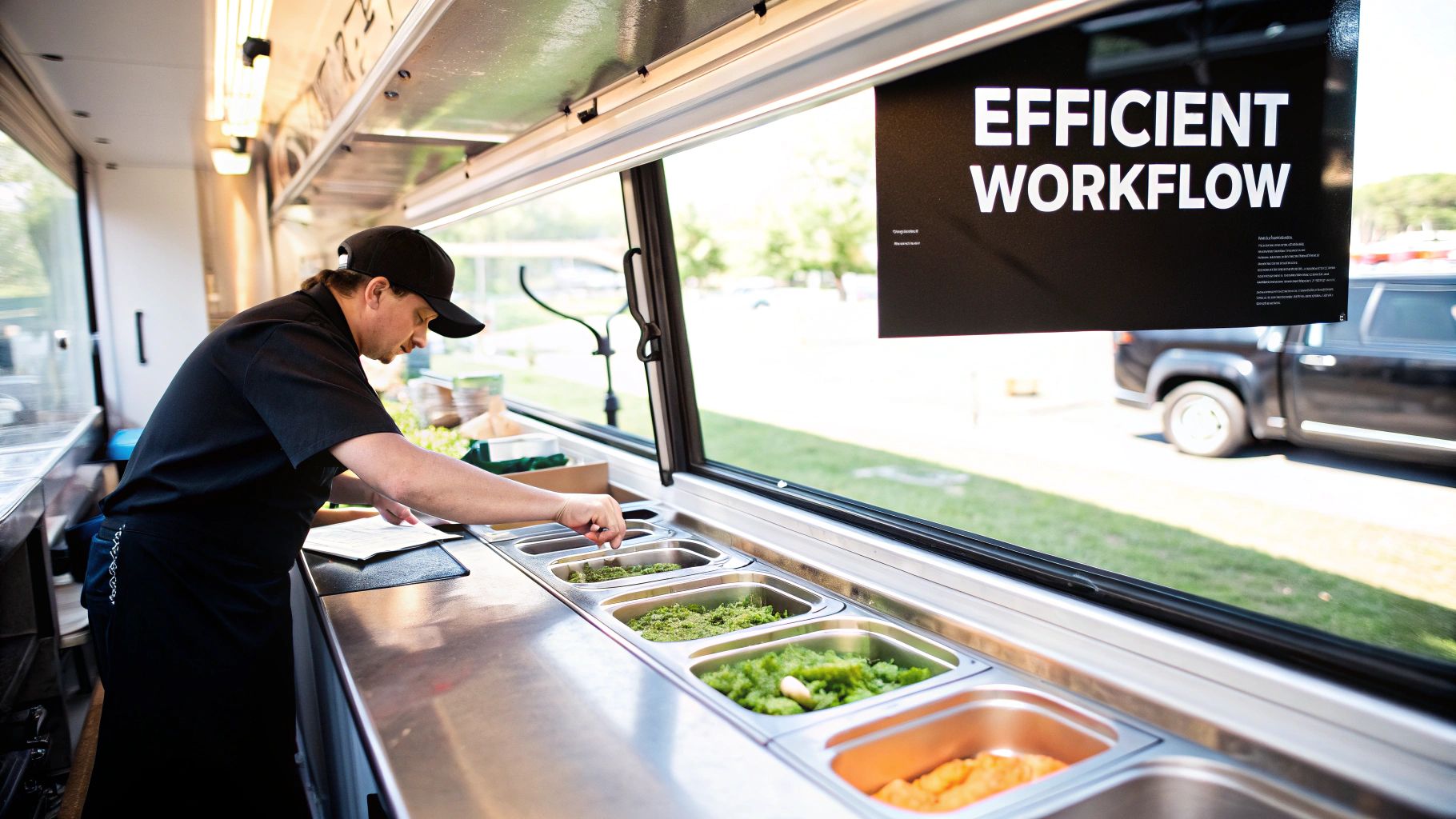
Designing a food truck kitchen is all about finding the sweet spot between speed and safety.
When stations flow logically, orders move faster—and mistakes slip down.
Group related tasks—think cold prep by refrigeration—and aim for at least 30 inches of aisle space. Position handwash sinks near cooking zones to encourage fast, frequent cleanups.
Once the layout clicks, match equipment choices to both your menu needs and your power limits. Smart buys keep your startup budget lean without cutting corners on performance.
Choosing The Right Equipment
The gear you select will define how smoothly a shift runs. High-volume fryers and grills range from $1,000 to $5,000, while refrigeration can start around $1,200 for a compact unit and climb past $8,500 for dual-zone models.
Below is a side-by-side look at common kitchen equipment, showing both cost and how much real estate each takes up.
Equipment Cost Comparison
| Equipment Type | Estimated Cost | Space Footprint |
|---|---|---|
| Griddle | $1,500 – $5,000 | 4 sq ft |
| Deep Fryer | $2,000 – $4,500 | 3 sq ft |
| Sandwich Prep Table | $1,200 – $3,000 | 2 sq ft |
| Refrigeration | $1,200 – $8,500 | 5 sq ft |
| Exhaust Hood | $800 – $2,500 | 6 sq ft |
Use this comparison to balance your budget and footprint before you lock in your floor plan.
Encore Seattle Restaurant Equipment offers free freight on Washington orders and flexible financing to ease those upfront costs.
Negotiating Volume Discounts
Buying in bulk is where seasoned operators save big. You can cut per-unit packaging and ingredient costs by up to 15% when you:
- Partner with trusted wholesale distributors.
- Secure six-month ingredient contracts to dodge sudden spikes.
- Ask Encore Seattle reps about seasonal deals on cookware and refrigeration.
That extra cash can fuel menu testing or ramp up your launch marketing.
Building Staffing And Workflows
In a tight space, every role counts. With just two people, you can handle prep, cooking, and service—provided everyone knows their turf.
- Use a simple log sheet for shift handovers.
- Assign a floater role for peak rushes and break coverage.
- Cross-train staff on all stations to prevent bottlenecks.
Veteran truckers often see labor costs drop by double digits when they master these routines.
Implementing HACCP Safety Program
A solid HACCP Program Guidelines setup stops hazards before they start. Digital logs and clear cleaning schedules build a safety-first culture.
Key actions include:
- Identifying critical control points (e.g., cooking temperatures, cooling times).
- Logging temperatures every four hours right after each cycle.
- Running weekly audit drills and recording the results.
- Reviewing logs daily to spot trends and nip drift in the bud.
These habits kept one operator at zero critical violations in year one.
Key Takeaways From Veteran Operators
“Mapping every second of service showed us exactly where orders stalled—then we adjusted equipment and timing until ticket times plummeted to 20 seconds on average.”
To replicate their success:
- Chart each step of the service flow to find slow spots.
- Test different gear layouts during lull periods.
- Review menu items quarterly, matching them to your strongest equipment.
These tweaks often lift throughput by 8% or more.
Maintaining Equipment For Longevity
Preventive upkeep keeps breakdowns—and surprise expenses—at bay.
- Wipe and inspect fryer baskets after each shift to shield oil quality.
- Lubricate hinges, slides, and couplings weekly so doors seal right.
- Schedule professional hood cleaning every three months to meet fire codes.
- Rotate compressor coils twice a year for peak refrigeration efficiency.
Encore Seattle stockists carry maintenance kits and spare parts at pre-owned prices.
Power And Ventilation Systems
Your generator must handle your peak load. Overloading by just 10% risks voltage dips and gear failures.
- Calculate total wattage before choosing a generator size.
- Consider a noise-reduction enclosure if you’re near homes.
- Install a power monitor to guard against spikes and brownouts.
- Clean exhaust hoods weekly to preserve airflow and curb fire hazards.
Good ventilation keeps your team cooler and inspections green.
Sourcing Supplies And Packaging
Packaging sets the tone for your brand and affects your bottom line. Eco-friendly picks may cost 10% more but attract conscious consumers.
- Compare distributors on per-case price, delivery fees, and order minimums.
- Bundle packaging with ingredient buys to hit free-shipping thresholds.
- Use reusable pans in-house and compostable wraps for takeout.
- Track usage weekly to prevent overstock and waste.
Encore Seattle partners can help you build a cost-effective supply chain—and financing those bulk orders can extend your runway.
Managing Waste And Sanitation Supplies
Proper waste handling keeps you inspection-ready and eco-friendly.
- Use color-coded bins for recycling, compost, and trash.
- Empty grease traps daily and log levels before disposal.
- Stock FDA-approved sanitizers and test strips for surface checks.
- Keep a spill kit on board to tackle leaks fast.
These steps reduce contamination risks and fines.
Documenting Compliance Records
Clear records prove your team follows every rule. Digital logs and cloud backups beat paper clutter.
- Keep temperature logs accessible for 30 days to meet most health codes.
- Store maintenance and audit reports for one year to support renewals.
- Include timestamped photos for hood cleaning and sanitation checks.
- Set up mobile alerts for missed logs or temperature swings.
Reliable documentation smooths audits and holds everyone accountable.
Continuous Improvement Cycles
Your food truck should evolve as you learn. Monthly debriefs help refine operations and drive down waste.
- Review ticket-time reports to spot new bottlenecks.
- Invite staff ideas on layout tweaks and tool placement.
- Update your equipment lifecycle plan based on actual usage hours.
Staying sharp today means you’ll be ready for tomorrow’s menu challenges—and keep that service humming.
Driving Buzz With Soft Launch And Marketing
Launching a soft run ahead of your big debut lets you iron out kinks and spark early interest. I once teamed up with a neighborhood brewery for a ticketed tasting that drew 150 attendees. That pilot event exposed prep bottlenecks and helped refine our entire service flow.
Planning Your Soft Launch
I always start with a 7-day timeline that syncs equipment arrivals and staff training. During that week, I slot in menu dry-runs, permit checks and test stops at busy spots. Spotting issues early means your grand opening goes off without a hitch.
- Venue Collaboration Aaron’s Brewery offered 20% discount on drafts to ticket holders
- Ticketed Menu Offer A concise menu tests popular dishes while keeping prep lean
- Data Capture Tablets at the counter help gather emails and track favorite orders for SMS follow-up
Crafting Geo-Targeted Campaigns
Geo-targeted ads on Facebook and Instagram zero in on hungry crowds within a two-mile radius. One local launch saw click-through rates hit 12%, far above the 4% norm for similar ads.
- Food Truck Locator Apps Pop up on customer maps when appetites strike
- Community Cross-Promotions Pair with charity taco nights or weekend markets to tap into built-in crowds
“Our charity taco night generated 300 new email sign ups and free press coverage.”
This mix of tactics boosts your social ROI and weaves you into the neighborhood fabric.
Building Loyalty Early
Turning first-time curiosity into regular visits pays off fast. A simple punch card or app-based loyalty program can lift repeat traffic by 30%.
- First Order Discount Reward new loyalty members with 15% off
- Welcome Email Share your launch story and upcoming route
- Encore Seattle Deals Outfit POS stands and menu boards using partner financing
Collect contacts on branded tablets during your soft launch, then use early feedback to tweak your menu and service timing. By grand opening day, you’ll have fan favorites dialed in and a smoother flow.
- Schedule social posts announcing routes and menu highlights
- Email your list with exclusive early-access passes and loyalty punch cards
- Drop flyers at nearby offices and community boards to capture the lunch crowd
Tracking Metrics And Feedback
Keep a close eye on email open rates and SMS click-throughs to gauge engagement. Use your POS to track daily sales by item and location, then tweak promotions on the fly.
- Compare results against your 1 week soft launch goals
- Highlight top sellers and trim underperformers
- Adjust staffing during peak hours based on real-time data
FAQ
How long does launching a food truck take in reality?
Most teams move from concept testing to full operation in about 12 weeks. Permits often require 4–8 weeks, truck build-outs take 2–4 weeks, and soft launches plus marketing can add 1–2 weeks.
Plan for a few extra days to handle inspection delays or unexpected paperwork.
What drives service area selection for food trucks?
You’ll balance foot traffic, nearby venues and competitor density. One operator saw a 30% bump when parking next to a brewery during happy hour.
Another discovered weekend farmers markets were gold mines for breakfast trucks.
Essential Apps For Daily Operations
- POS Solutions that manage orders, payments and tipping seamlessly
- Inventory Trackers for real-time alerts when key ingredients dip below thresholds
- Route Optimizers to cut driving time by 10% and save on fuel
- Staff Scheduling Apps that send automated shift reminders and handle swaps
“Switching to a handheld POS eliminated line backups and cut errors by 15%.”
— Veteran Food Truck Owner
Margin Management Tactics
- Secure bulk ingredient purchases to lock in 5–10% discounts
- Engineer menus that highlight high-margin dishes during peak hours
- Adjust pricing dynamically based on weekly ingredient cost reports
- Perform waste audits to track trim usage and turn surplus into specials
Troubleshooting Common Challenges
- Permit Delays – Use permit templates from local associations to speed approvals
- Equipment Breakdowns – Keep an emergency parts kit on board and note your vendor’s service line
- Staff Shortages – Cross-train team members and maintain a pool of on-call staff
These insights stem from real operator stories and link to tools for every stage of your food truck journey. They’ll help you save time, cut costs and launch with confidence.
Ready to outfit your kitchen on wheels with quality gear? Visit Encore Seattle Restaurant Equipment to explore reliable appliances and flexible financing.